
Sorting out your will in Ontario can feel overwhelming, especially when legal terms like notarization start popping up. Most people think notarizing a will is required and complicated but the real story is very different. In Ontario, notarization is actually optional for wills and skipping it could keep things simpler while staying fully legal. Surprised? Discover how the process works and why getting the facts straight can save you stress and money.
Table of Contents
- Understanding Notarization For Wills In Ontario
- Step-By-Step Process To Notarize A Will
- Key Legal Requirements And Costs In Ontario
- Tips For Businesses And Individuals In Ontario
Quick Summary
| Takeaway | Explanation |
|---|---|
| Notarization is optional for wills in Ontario | While notarization enhances legal credibility, it is not always a requirement for a will to be valid. |
| Key elements ensure will validity | A will must have a sound testator, be signed voluntarily, and include proper witnessing to be legally binding. |
| Selecting a qualified notary public is crucial | Choose a notary who is licensed, experienced, and reputable to ensure proper notarization. |
| Costs of will notarization vary significantly | The expenses for preparing and notarizing a will in Ontario can range from DIY efforts to comprehensive legal services. |
| Regular updates to your will are necessary | Keeping your will current is essential as life changes can affect asset distribution and executor selection, avoiding potential conflicts. |
Understanding Notarization for Wills in Ontario
Navigating the legal landscape of will preparation in Ontario requires a clear understanding of notarization requirements. While many people assume all wills need notarization, the reality is more nuanced. Ontario’s legal framework provides specific guidelines for creating valid and legally binding wills.
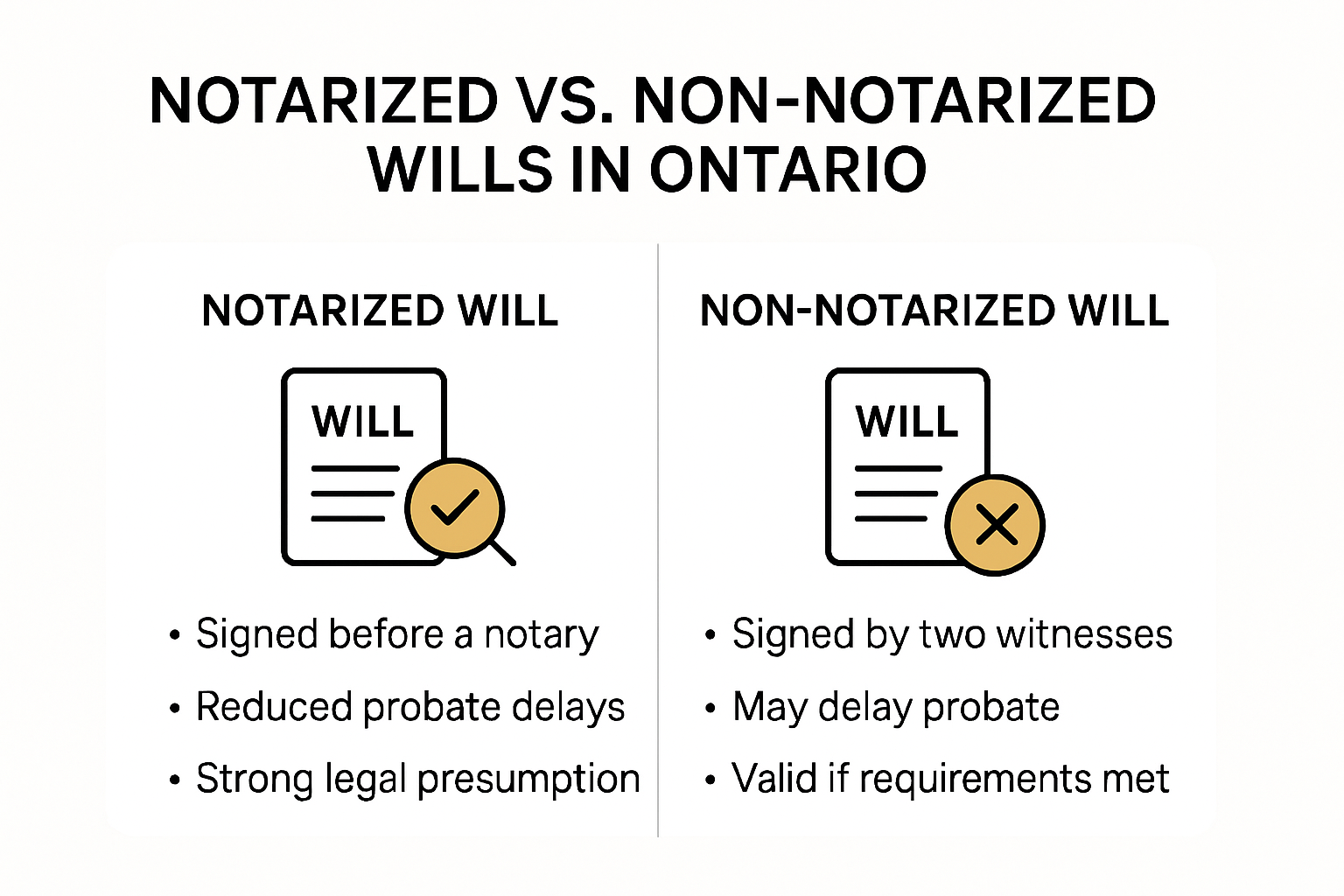
The Legal Framework of Will Execution in Ontario
In Ontario, not all wills require notarization to be considered legally valid. The primary concern is ensuring the will meets specific legal requirements for proper execution. Learn more about the intricacies of legal document verification.
According to the Law Society of Ontario, as of April 19, 2021, the province permits remote execution and witnessing of wills through audio-visual communication technology. This means testators can now complete their will signing process with greater flexibility, provided at least one witness is a licensed lawyer.
The key elements for a valid will in Ontario include:
- Testator’s Capacity: The person making the will must be of sound mind and legal age.
- Voluntary Signing: The will must be signed willingly without undue influence.
- Proper Witnessing: At least two witnesses must be present during the signing.
Here is a summary table outlining the core legal requirements for a valid will in Ontario:
| Requirement | Description |
|---|---|
| Age | Must be at least 18 years old |
| Mental Capacity | Testator must understand the consequences of the will |
| Voluntary Execution | Must be signed willingly, without undue influence |
| Number of Witnesses | At least 2 independent witnesses required |
| Witness Qualifications | Cannot be beneficiaries or spouses of beneficiaries |
| Allowed Will Types | Formal (typed), or holographic (handwritten) wills |
When Notarization Becomes Important
While notarization is not always mandatory, it can provide additional legal credibility to your will. Notarization involves a licensed professional verifying the identity of the person signing the document and confirming they are doing so voluntarily.
Devry Smith Frank LLP highlights that effective August 1, 2020, Ontario regulations allow for more flexible will execution methods. This includes the use of audio-visual technology for witnessing, with the requirement that at least one witness be a lawyer licensed by the Law Society of Ontario.
It is crucial to understand that as of October 23, 2024, remote or virtual notarization is not directly permitted in Ontario. The Notaries Act allows for potential remote notarization through regulation, but no such specific regulation has been enacted.
Practical considerations for will notarization include:
- Enhanced Legal Protection: Notarization can help prevent future challenges to the will’s validity.
- Professional Verification: A notary provides an additional layer of legal authentication.
- Peace of Mind: Knowing your document has been professionally verified can provide significant reassurance.
While notarization is not always a strict legal requirement, it offers valuable benefits for individuals seeking to create a robust and legally sound will in Ontario. Consulting with a legal professional can help you determine the most appropriate approach for your specific circumstances.
Step-by-Step Process to Notarize a Will
Navigating the process of notarizing a will in Ontario requires careful attention to detail and understanding of legal requirements. While notarization is not always mandatory, following a structured approach can ensure your will is legally sound and professionally verified.
Preparing Your Will Documentation
Before seeking notarization, you must have a comprehensive and well-drafted will. This involves several critical preparatory steps. Learn about professional document verification strategies.
According to the Law Society of Ontario, the initial stages of will preparation require:
- Complete Personal Information: Full legal name, address, and identifying details
- Asset Inventory: Comprehensive list of assets and their estimated values
- Beneficiary Details: Complete information about intended beneficiaries
- Executor Designation: Name and contact information of your chosen executor
Finding a Qualified Notary Public
Selecting the right professional is crucial for will notarization. Ontario government guidelines specify that notaries public in Ontario are typically lawyers or paralegals licensed by the Law Society of Ontario. When choosing a notary, consider the following factors:
- Professional Credentials: Verify the notary’s current licensing status
- Experience: Look for professionals with specific experience in will notarization
- Accessibility: Choose a notary who can accommodate your scheduling needs
- Reputation: Check professional references and reviews

Executing the Notarization Process
The actual notarization involves several precise steps. During the appointment, you will need to:
- Bring valid government-issued photo identification
- Present the original will document
- Confirm your identity and willingness to execute the document
- Sign the will in the presence of the notary
- Have the notary verify and stamp the document
Important considerations during notarization include demonstrating testamentary capacity proving you understand the contents of the will and are making it voluntarily. The notary will typically ask questions to confirm your mental competence and lack of external pressure.
While notarization adds an extra layer of legal authentication, it is not a substitute for proper will drafting. Consulting with a legal professional who specializes in estate planning can provide comprehensive guidance tailored to your specific circumstances.
Remember that each will is unique, and the notarization process may vary slightly depending on individual circumstances. Professional guidance ensures your will meets all legal requirements and effectively protects your final wishes.
To make the steps of the notarization process easy to follow, here is a process table summarizing each stage:
| Step | Action | Purpose |
|---|---|---|
| 1 | Bring valid government-issued photo ID | Proves your identity |
| 2 | Present the original will document | Ensures authenticity |
| 3 | Confirm your identity and willingness | Prevents fraud or coercion |
| 4 | Sign the will in presence of notary | Legally executes the will |
| 5 | Notary verifies and stamps the document | Provides legal authentication |
Key Legal Requirements and Costs in Ontario
Creating a legally valid will in Ontario involves understanding specific legal requirements and associated costs. Navigating these complexities ensures your final wishes are properly documented and legally enforceable. Learn more about professional notary services.
Legal Validity and Formal Requirements
According to the Ontario government’s estate planning guidelines, a valid will must meet several critical legal criteria. The Law Society of Ontario emphasizes the importance of these foundational requirements:
- Age Requirement: You must be at least 18 years old
- Mental Capacity: Demonstrate sound mental understanding of the will’s contents
- Voluntary Execution: Sign the will without external pressure or undue influence
- Proper Witnessing: Have at least two independent witnesses present during signing
The legal landscape recognizes different types of wills, including formal typed documents and holographic (handwritten) wills. Each type has specific requirements to ensure legal standing.
Cost Breakdown for Will Notarization
The costs associated with will creation and notarization in Ontario can vary significantly. Clear Estate provides insights into the potential financial considerations:
DIY Will Preparation: $20 – $100
- Online templates
- Self-guided document creation
Lawyer-Drafted Will: $300 – $1,000
- Comprehensive legal review
- Personalized estate planning advice
- Complex asset protection strategies
Notarization Services: $50 – $250
- Professional verification
- Identity confirmation
- Document authentication
The following table summarizes the typical costs and inclusions for each will preparation and notarization method in Ontario:
| Method | Typical Cost | Key Inclusions |
|---|---|---|
| DIY Will | $20 – $100 | Online templates, self-creation |
| Lawyer-Drafted | $300 – $1,000 | Legal advice, complex planning |
| Notarization Only | $50 – $250 | Identity check, professional verification |
Additional Legal Considerations
Beyond basic requirements, Ontario law provides nuanced guidelines for will execution. Key factors to consider include:
- Executor Selection: Choose a reliable person to manage your estate
- Asset Comprehensive Listing: Detailed inventory of all personal and financial assets
- Potential Tax Implications: Understanding how your will might impact estate taxes
While notarization is not always mandatory, it provides an additional layer of legal credibility. The process involves a professional verifying your identity and confirming you understand and willingly execute the document.
Professional legal advice remains the most reliable approach to creating a robust will. Each individual’s circumstances are unique, and generic solutions may not adequately protect your specific estate planning needs. Consulting with a legal professional can help you navigate the complexities of will preparation and ensure your final wishes are precisely documented and legally sound.
Tips for Businesses and Individuals in Ontario
Creating a legally sound will requires strategic planning for both businesses and individuals in Ontario. Understanding the nuanced approaches to estate documentation can protect your assets and ensure your final wishes are accurately represented. Explore comprehensive notary guidance.
Strategic Considerations for Business Owners
Ontario’s estate planning guidelines highlight unique challenges for business owners creating wills. According to the Ontario government, business owners must address several critical aspects:
- Business Succession Planning: Clearly outline how your business will be managed or transferred after your passing
- Asset Valuation: Comprehensive documentation of business assets and their current market value
- Shareholder Agreements: Ensure existing partnership or shareholder agreements align with your will’s provisions
- Tax Implications: Consider potential tax consequences of business asset transfer
Business owners should work closely with legal and financial professionals to develop a comprehensive estate strategy that protects both personal and professional interests.
Personal Estate Planning Strategies
Research from Ontario’s legal resources reveals critical insights for individuals preparing their wills. Key strategies include:
Comprehensive Asset Documentation
- Create a detailed inventory of all personal and financial assets
- Include digital assets and online account information
- Provide clear instructions for accessing financial resources
Executor Selection
- Choose a trusted and financially responsible individual
- Discuss the role and responsibilities with your chosen executor
- Consider naming an alternate executor
Family Considerations
- Provide clear guidance for dependents
- Address potential guardianship for minor children
- Consider potential family dynamics and potential conflicts
Common Pitfalls to Avoid
Individuals and businesses in Ontario should be aware of potential will preparation mistakes. Key considerations include:
- Incomplete Asset Listing: Failing to document all assets comprehensively
- Outdated Documentation: Not regularly updating will to reflect life changes
- Unclear Language: Using ambiguous or imprecise terminology
- Lack of Professional Guidance: Attempting to create complex wills without legal expertise
While DIY will preparation might seem cost-effective, professional legal guidance ensures your document meets all legal requirements and effectively protects your interests.
Remember that each will is unique. The complexity of your personal or business situation will determine the level of detail and professional support required. Consulting with a legal professional who specializes in estate planning can provide tailored advice that addresses your specific circumstances and protects your long-term interests.
Ultimately, a well-prepared will serves as a critical tool for providing clarity, reducing potential family conflicts, and ensuring your wishes are respected. Taking a proactive and comprehensive approach to will preparation can offer peace of mind for both individuals and business owners in Ontario.
Frequently Asked Questions
Is notarization required for a will in Ontario?
Notarization is optional for wills in Ontario. A will can be legally valid without being notarized, as long as it meets specific execution requirements.
What are the key legal requirements for a valid will in Ontario?
To be legally valid in Ontario, a will must be signed by a testator of at least 18 years old, made voluntarily, and witnessed by at least two independent witnesses who are not beneficiaries of the will.
How do I find a qualified notary public in Ontario?
You can find a qualified notary public in Ontario by checking with the Law Society of Ontario. It’s best to choose a lawyer or paralegal who has experience with will notarization.
What costs should I expect for notarizing a will in Ontario?
The costs for notarizing a will in Ontario can vary. DIY will preparation may range from $20 to $100, while lawyer-drafted wills can cost between $300 to $1,000. Notarization services typically range from $50 to $250.
Take the Stress Out of Ontario Will Notarization – Let Us Help You Do It Right
Completing your will in Ontario can feel confusing. You want to protect your wishes, but legal jargon like notarization and proper witnessing can leave you second-guessing. Many people worry about getting the details wrong or wonder if their documentation is really strong enough. You do not need extra stress as you work on one of life’s most important documents. The peace of mind that comes from knowing your identity and intentions are verified is priceless.

Why risk unnecessary challenges or confusion for your loved ones later? Get your will and other critical documents professionally notarized without the usual hassles. Visit The Online Notary now to explore secure, reliable online notary services in Ontario. Learn how simple document verification can protect your final wishes and reduce uncertainty for your family. If you want to better understand how online notarization works in Ontario, check our online notary process for Ontario. Take action today and make your estate planning process truly worry-free.
Recommended
- Why Opt for an Online Notary in Ontario – The Online Notary CA
- The Complete Guide to Using an Online Notary Public for Affidavits and Declarations in Ontario (2025) – The Online Notary CA
- Everything You Need to Know About Online Notarization in Ontario: Fast, Legal, and Convenient for Affidavits and Declarations (2025) – The Online Notary CA
- What is an Online Notary? – The Online Notary CA