
An affidavit of compliance sounds like another piece of paperwork, but it is much more than a formality. This sworn statement carries real legal weight and can be the deciding factor in court cases or regulatory reviews. In fact, making a false statement in one of these documents can lead to criminal charges of perjury. That flips the script, turning a quiet signature into a powerful promise with serious consequences.
Table of Contents
- Defining The Affidavit Of Compliance: What Is It?
- The Importance Of An Affidavit Of Compliance: Why It Matters
- Structure And Components Of An Affidavit Of Compliance: How It Works
- Common Uses Of An Affidavit Of Compliance In Ontario
- Legal Context And Implications Of An Affidavit Of Compliance
Quick Summary
| Takeaway | Explanation |
|---|---|
| Affidavit of compliance confirms legal adherence | This document verifies that an individual or organization meets specific legal or regulatory requirements. |
| Notarization enhances legal credibility | Official notarization transforms a written statement into a legally recognized document, ensuring its authenticity. |
| Used in diverse professional contexts | Affidavits of compliance serve various sectors, including business, healthcare, and education, to demonstrate adherence to standards. |
| Protects against legal challenges | It acts as a formal record that helps defend organizations in legal disputes by proving regulatory compliance. |
| Precision is crucial for validity | Each affidavit must follow strict formatting and content guidelines to ensure it holds legal standing. |
Defining the Affidavit of Compliance: What is it?
An affidavit of compliance is a legally binding written statement that confirms an individual or organization has met specific legal, regulatory, or contractual requirements. This document serves as a sworn declaration, typically signed in the presence of a notary public or commissioner for taking affidavits, providing an official verification of adherence to established standards.
Legal Significance and Purpose
The affidavit of compliance carries significant legal weight because it represents a voluntary and truthful statement made under oath. When individuals or businesses create this document, they are essentially declaring their commitment to following particular rules, regulations, or obligations. The primary purposes include:
- Demonstrating legal conformity with specific regulations
- Providing official documentation of meeting required standards
- Creating a formal record of compliance for governmental or administrative purposes
For instance, businesses might use an affidavit of compliance to confirm they have met workplace safety regulations, tax obligations, or professional licensing requirements. The document becomes a critical piece of evidence that can be used in legal proceedings or administrative reviews.
Key Components of an Affidavit of Compliance
Typically, an affidavit of compliance includes several essential elements that establish its authenticity and legal standing. These components usually encompass:
- Full legal name and contact information of the person making the declaration
- Specific details about the regulations or requirements being confirmed
- A clear and concise statement of compliance
- Date of the declaration
- Signature of the declarant
- Notarization or official witnessing by a qualified professional
The online notary services available in Ontario provide a convenient way to complete these crucial documents, ensuring they meet all legal standards. According to the Ontario Court of Justice guidelines, documents must adhere to specific formatting requirements, which further underscores the importance of precision and accuracy in creating an affidavit of compliance.
The following table breaks down the essential components typically included in an affidavit of compliance document, making it easier to understand what comprises this important legal record.
| Component | Description |
|---|---|
| Full Legal Name & Contact Info | Identifies the declarant, providing official name and ways to reach them |
| Details of Requirement Confirmed | Specifies the regulations, rules, or standards being verified |
| Statement of Compliance | Declares, in clear terms, that compliance has been achieved |
| Date of Declaration | Indicates when the document was signed and the statement made |
| Signature of Declarant | Personal sign-off attesting to the truth of the statement |
| Notarization/Official Witnessing | Performed by a notary or commissioner to authenticate the document and add legal authority |
The Importance of an Affidavit of Compliance: Why It Matters
An affidavit of compliance plays a critical role in establishing legal credibility, accountability, and transparency across various professional and personal contexts. By providing an official, sworn statement of adherence to specific requirements, these documents serve as powerful tools for verifying individual and organizational integrity.
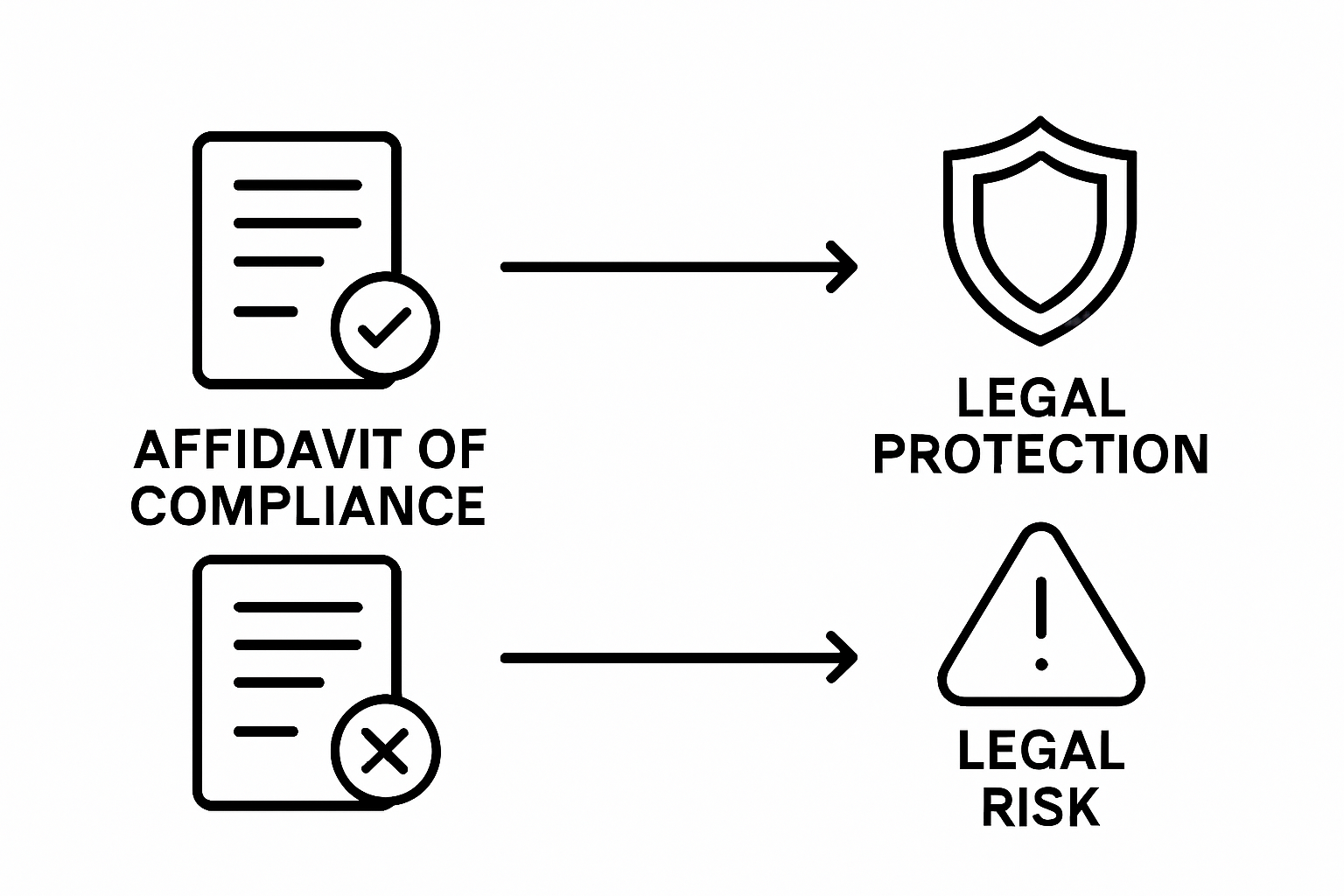
Legal Protection and Risk Mitigation
One of the primary reasons affidavits of compliance matter is their ability to protect individuals and organizations from potential legal challenges. These documents create a formal record that demonstrates proactive commitment to meeting established standards and regulations. By generating a clear, documented trail of compliance, entities can effectively:

- Defend against potential accusations of negligence
- Provide transparent evidence of regulatory adherence
- Establish a professional reputation for reliability
In legal proceedings, an affidavit of compliance can serve as crucial evidence, helping to resolve disputes and validate an organization’s commitment to following prescribed guidelines. This preventative approach significantly reduces the risk of potential litigation or administrative penalties.
Practical Applications Across Different Sectors
The significance of affidavits of compliance extends across multiple professional domains. Different industries rely on these documents to confirm adherence to specific standards. For example:
- Businesses can verify tax compliance and regulatory requirements
- Healthcare providers can document patient care standards
- Educational institutions can confirm academic credential authenticity
- Construction companies can validate safety and building code adherence
In the context of Ontario, online notary services have made the process of creating these critical documents more accessible and efficient. According to the Department of National Defence guidelines, these sworn statements are fundamental in maintaining organizational accountability and legal transparency.
This table summarizes the common uses of affidavits of compliance across various sectors in Ontario, helping readers quickly see how this document supports compliance in different professional and legal areas.
| Sector/Context | Example Use Case |
|---|---|
| Business | Confirming tax compliance or meeting regulatory requirements |
| Healthcare | Documenting adherence to patient care standards |
| Education | Proving authenticity of academic credentials |
| Construction | Validating building code and safety standard adherence |
| Legal Proceedings | Providing evidence of regulatory compliance in court |
| Government Contracts | Verifying eligibility and regulatory fulfillment |
| Property Transactions | Certifying legal compliance in real estate deals |
| Immigration Processes | Substantiating adherence to legal residency requirements |
Structure and Components of an Affidavit of Compliance: How It Works
An affidavit of compliance is a meticulously structured legal document designed to provide clear, verifiable evidence of meeting specific requirements. Understanding its components and format is crucial for creating a legally valid and effective document that stands up to professional and judicial scrutiny.
Essential Structural Elements
Every affidavit of compliance follows a standardized format that ensures clarity, authenticity, and legal reliability. The core structural elements typically include:
- Title clearly indicating it is an “Affidavit of Compliance”
- Full legal name and contact information of the declarant
- Precise statement of the specific regulations or standards being confirmed
- Detailed description of how compliance has been achieved
- Date of declaration
- Sworn statement of truthfulness
- Signature of the declarant
These elements work together to create a comprehensive and credible record of an individual’s or organization’s commitment to meeting established legal or regulatory standards. The precision of each component is critical in establishing the document’s legal weight.
Notarization and Verification Process
The credibility of an affidavit of compliance hinges on its official verification. Notarization transforms a simple written statement into a legally recognized document. This process involves:
- Appearance before a licensed notary public or commissioner for taking affidavits
- Verification of the declarant’s identity through official documentation
- Confirmation that the declarant understands the contents of the document
- Administration of an oath or solemn affirmation
- Official stamping and signing of the document
Online notary services have modernized this process, making document verification more accessible while maintaining legal standards. According to the Ontario Court of Justice guidelines, these documents must adhere to specific formatting requirements, including font size, spacing, and page numbering, to ensure legal acceptability.
Common Uses of an Affidavit of Compliance in Ontario
An affidavit of compliance serves multiple critical functions across various professional and personal contexts in Ontario. These documents provide a formal mechanism for individuals and organizations to demonstrate their adherence to specific legal, regulatory, and contractual requirements.
Business and Professional Applications
Businesses and professionals rely on affidavits of compliance to validate their operational integrity across multiple domains. These documents become essential tools for:
- Confirming tax reporting accuracy and regulatory adherence
- Demonstrating professional licensing requirements
- Verifying workplace safety standard implementations
- Proving contractual obligation fulfillment
For instance, a construction company might use an affidavit of compliance to confirm they have met all building code regulations, while a healthcare provider could use it to document adherence to professional practice standards. The document serves as an official record of commitment to established guidelines.
Legal and Administrative Contexts
In legal and administrative settings, affidavits of compliance play a pivotal role in establishing transparency and accountability. These documents are frequently used in:
- Court proceedings as evidence of regulatory adherence
- Government contract applications
- Professional credential verifications
- Property and estate transactions
- Immigration and citizenship documentation processes
Online notary services have streamlined the process of creating these critical documents, making them more accessible for individuals and organizations. According to the Department of National Defence documentation, these sworn statements are fundamental in maintaining organizational and individual accountability across various administrative contexts.
Legal Context and Implications of an Affidavit of Compliance
An affidavit of compliance operates within a complex legal framework that establishes its authority, validity, and potential consequences. Understanding the legal context is crucial for individuals and organizations to recognize the serious implications of these sworn statements.
Legal Validity and Consequences
The legal standing of an affidavit of compliance is rooted in its status as a sworn document. When an individual signs an affidavit, they are making a legally binding declaration under oath, which carries significant legal implications:
- False statements can result in criminal charges of perjury
- The document can be used as evidence in court proceedings
- Intentional misrepresentation can lead to civil and criminal penalties
- The affidavit creates a legal record that can be challenged or verified
This means that individuals must exercise extreme care and honesty when preparing and signing an affidavit of compliance. The legal system treats these documents as formal declarations of truth, with potential serious repercussions for deliberate misstatements.
Jurisdictional Considerations in Ontario
In Ontario, the legal framework surrounding affidavits of compliance is specifically governed by provincial regulations. These documents must adhere to precise legal standards to maintain their validity. Key jurisdictional aspects include:
- Compliance with the Rules of Civil Procedure
- Specific formatting and content requirements
- Mandatory verification by authorized professionals
- Recognition by provincial and federal administrative bodies
Online notary services have adapted to these legal requirements, ensuring that digital verification meets the same stringent standards as traditional in-person notarization. According to the Ontario Regulation 226/07, the legal framework provides clear guidelines for document service and verification, ensuring the integrity of affidavits of compliance across various legal and administrative contexts.
Make Your Ontario Affidavit of Compliance Fast and Worry-Free
Are you feeling overwhelmed by the legal requirements and strict formatting needed for an affidavit of compliance in Ontario? This article shows just how easy it is to lose valuable time and risk costly mistakes. Missing out on proper notarization or failing to meet Ontario’s official rules can put your credibility at risk and even expose you to legal trouble.

Take control now by choosing Ontario’s trusted online notary service for your affidavits and compliance documents. With our secure platform, you can quickly create, notarize, and finalize your affidavit online in Ontario from the comfort of your home or office. Don’t wait until you are in a legal bind. Visit theonlinentoary.ca and get started today for peace of mind and legal confidence.
Frequently Asked Questions
What is an affidavit of compliance?
An affidavit of compliance is a legally binding statement confirming that an individual or organization has met specific legal, regulatory, or contractual requirements. It serves as a sworn declaration and is often notarized.
Why is an affidavit of compliance important?
An affidavit of compliance is important because it creates a formal record demonstrating adherence to established regulations, which can protect individuals and organizations from legal challenges and enhance accountability and transparency.
What are the key components of an affidavit of compliance?
Key components include the declarant’s full legal name and contact information, specific regulations being confirmed, a clear statement of compliance, date, signature, and notarization or official witnessing.
How is an affidavit of compliance notarized in Ontario?
In Ontario, an affidavit of compliance is notarized by appearing before a licensed notary public or commissioner, who verifies the declarant’s identity, confirms understanding of the document, administers an oath, and provides an official stamp and signature.