

Notarizing documents in Ontario might seem straightforward at first. You gather your papers, show up in person, and expect a quick stamp or signature. But get this. Since January 2024, Canada has joined the Hague Apostille Convention, which means certain documents can be authenticated for international use more easily than ever before. If you think notarization is just a formality, think again. The new rules and requirements mean what used to take weeks across borders can now move in days, turning old paperwork headaches into something surprisingly simple.
Table of Contents
- Understanding Document Notarization In Ontario
- Steps To Notarize Documents In Ontario
- Who Can Notarize Your Documents Locally
- Tips For Businesses Needing Document Notarization
Quick Summary
| Takeaway | Explanation |
|---|---|
| Notarization Process | Notarization involves validating document authenticity and signing identities. Ensure original documents, valid ID, and signers are present when visiting a notary public. |
| Local Notary Options | In Ontario, licensed lawyers, paralegals, and certain government employees can notarize documents. Always verify credentials and expect fees to range from $20 to $50 per document. |
| International Authentication | With Canada’s membership in the Hague Apostille Convention, documents intended for use outside Canada may require additional authentication steps. Ensure proper notarization for international recognition. |
| Business Strategies | Businesses should establish internal notarization protocols, train specific employees on document preparation, and consider bulk processing to reduce costs associated with notarization. |
Understanding Document Notarization in Ontario
Document notarization plays a critical role in legal verification and authentication in Ontario. When you need to ensure the legitimacy of important papers, understanding the notarization process becomes essential. A notary public serves as an impartial witness who confirms the identity of individuals signing documents and helps prevent fraud.
What is Document Notarization?
Notarization is a formal process where a certified professional validates the authenticity of a document and the identity of the signatories. In Ontario, this crucial legal service helps protect individuals and organizations by providing an official stamp of credibility. Learn more about online notary services that can simplify this process.
According to the Law Society of Ontario, both licensed lawyers and paralegals in good standing can be appointed as notaries public. This means they have the legal authority to witness document signatures, administer oaths, and certify copies of original documents.
Types of Documents Typically Notarized
Notarization is not a one-size-fits-all process. Different documents require specific levels of authentication. Commonly notarized documents in Ontario include:
- Affidavits: Legal statements sworn under oath
- Statutory Declarations: Formal statements of fact
- Property Transfers: Real estate and land transaction documents
- Powers of Attorney: Legal authorizations for representation
- Immigration Documents: Paperwork requiring official verification
As of January 2024, Canada joined the Hague Apostille Convention, which has simplified the authentication process for documents intended for international use. This change means certain Ontario-issued documents can now be authenticated more easily, particularly those from vital statistics and specific court systems.
The notarization process involves more than just adding a stamp. A notary public must verify the identity of the individuals signing the document, ensure they understand the contents, and confirm they are signing voluntarily. This rigorous approach helps prevent potential fraud and provides legal protection for all parties involved.
Individuals seeking notary services in Ontario have multiple options. Traditional in-person notarization remains common, but online notary services are increasingly popular. These digital platforms offer convenience while maintaining the same legal standards as traditional notarization methods.
Understanding the nuances of document notarization can save you time, prevent legal complications, and ensure your important documents are recognized as legitimate. Whether you are dealing with personal, business, or legal paperwork, knowing the right steps for proper notarization is crucial in today’s complex legal landscape.
To clarify the range of documents that frequently require notarization in Ontario, the table below organizes the most common types and their typical purpose:
| Document Type | Typical Purpose |
|---|---|
| Affidavit | Legal statement sworn under oath |
| Statutory Declaration | Formal statement of fact |
| Property Transfer | Real estate or land transaction |
| Power of Attorney | Authorization for representation |
| Immigration Document | Official verification for immigration |
Steps to Notarize Documents in Ontario
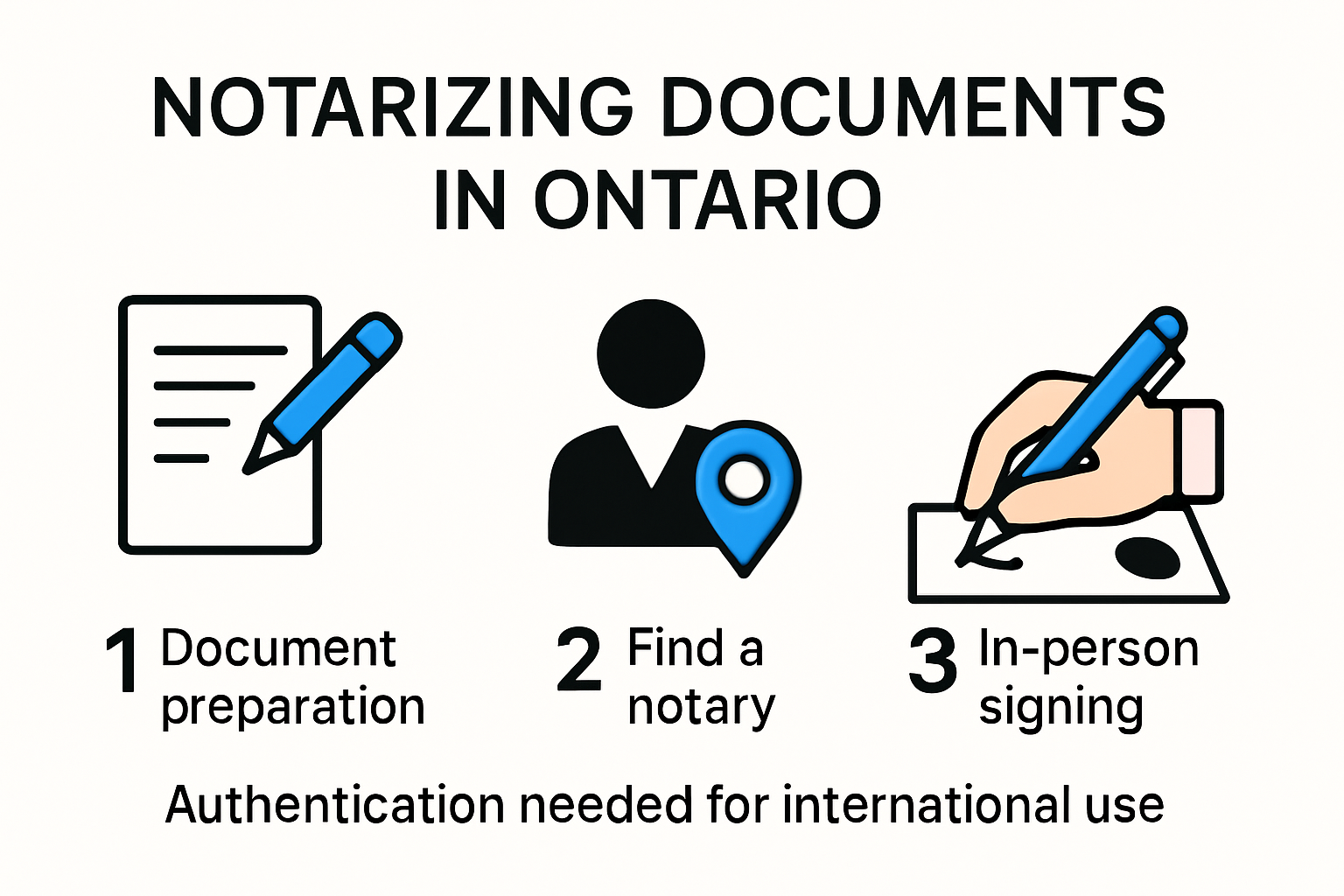
Notarizing documents in Ontario requires careful preparation and understanding of the specific requirements. The process involves several critical steps to ensure your documents are legally recognized and authenticated. While the procedure might seem complex, breaking it down into manageable stages can help you navigate the notarization process smoothly.
Preparing Your Documents
Before seeking notarization, thorough document preparation is essential. First, gather all original documents that require notarization. Explore online notary services to understand the preliminary requirements. According to the Law Society of Ontario, you must have:
- Original Documents: Photocopies are generally not acceptable
- Valid Government Identification: Government issued photo ID required
- All Signatories Present: Everyone must sign in front of the notary
- Complete Understanding: Signers must comprehend document contents

It is crucial to note that as of October 23, 2024, all notarizations in Ontario must be conducted in person. Remote or virtual notarization is currently not permitted under the existing legal framework.
Locating a Notary Public
Finding a qualified notary public is your next critical step. In Ontario, licensed lawyers, paralegals, and specific commissioners of oaths can provide notarization services. Options include:
- Law firms
- Some government service centers
- Certain financial institutions
- Professional notary service providers
The Ontario government website recommends verifying the professional’s credentials before proceeding. Each notary will require you to:
- Present original documents
- Show valid government identification
- Sign documents in their physical presence
- Pay the applicable notarization fee
Authentication and International Use
For documents intended for use outside Canada, additional steps might be necessary. Since January 2024, Canada has been a member of the Hague Apostille Convention, which has simplified international document authentication. Authenticate your documents through Official Documents Services (ODS) if you plan to use them internationally.
Authentication involves verifying the notary’s signature and official seal. This extra step ensures your notarized documents are recognized in other countries that are part of the Hague Apostille Convention.
Remember that each document type might have unique requirements. Complex documents like property transfers, powers of attorney, or immigration paperwork often demand precise notarization. When in doubt, consult with a legal professional who can guide you through the specific nuances of your particular document.
By following these structured steps and understanding the legal requirements, you can successfully navigate the document notarization process in Ontario. Attention to detail and proper preparation will help ensure your documents are legally valid and professionally authenticated.
To help you visualize the step-by-step process, here is a table outlining the main steps and what is required at each stage:
| Step | What’s Required |
|---|---|
| 1. Prepare Documents | Original documents; review for completeness |
| 2. Gather Identification | Government-issued photo ID |
| 3. Locate Notary Public | Find authorized provider; verify credentials |
| 4. Attend Appointment | All signers present; sign documents in notary’s presence |
| 5. Pay Fees | Pay applicable notarization fees ($20–$50/document) |
| 6. For International Use | Authenticate/Apostille document via ODS if needed |
Who Can Notarize Your Documents Locally
Navigating the landscape of document notarization in Ontario requires understanding the specific professionals authorized to provide these critical services. Not everyone can notarize documents, and knowing the right professionals can save you time and ensure legal compliance.
Professional Notarization Authorities
In Ontario, several professionals are legally authorized to notarize documents. Learn more about online notary services to understand the nuanced requirements. According to the Law Society of Ontario, the primary authorized professionals include:
- Lawyers: All licensed lawyers in Ontario are automatically commissioners for taking affidavits
- Paralegals: Registered paralegals can also notarize documents
- Specific Civil Servants: Certain government employees have notarization permissions
- Appointed Commissioners: Professionals who meet specific governmental criteria
Eligibility for Non-Legal Professionals
Interestingly, non-lawyers and non-paralegals can also become notaries public under specific conditions. The Ontario government guidelines outline clear requirements for such appointments:
- Must be eligible to work in Canada
- Notarization must be a required part of their job
- Employed by businesses needing sworn affidavits
- Pass necessary background checks and applications
Typical non-legal professionals who might qualify include:
- Bank managers
- Insurance agents
- Real estate professionals
- Certain corporate executives
Local Notarization Options
When seeking local notarization, you have multiple convenient options. Consider these reliable sources:
- Law firms
- Local government service centers
- Some financial institutions
- Professional notary service offices
- Municipal administrative buildings
Each location has specific procedures and potential fees. Some institutions might offer free notarization for existing clients, while others charge a standard fee ranging from $20 to $50 per document.
Remember that all notarizations in Ontario must be conducted in person. The notary or commissioner must physically witness the document signing and verify the identities of all parties involved.
Pro tip: Always call ahead to confirm availability, required documents, and potential fees. Some professionals might specialize in specific types of document notarization, so matching your needs with their expertise can streamline the process.
Understanding who can notarize your documents locally empowers you to make informed decisions. By knowing the authorized professionals and their specific qualifications, you can efficiently navigate the notarization process and ensure your important documents receive proper legal authentication.
To summarize the main professionals who can perform notarial services in Ontario and their key criteria, see the table below:
| Authorized Professional | Key Criteria/Requirements |
|---|---|
| Licensed Lawyer | In good standing; automatic commissioner for affidavits |
| Registered Paralegal | Licensed; authorized for most notarial acts |
| Appointed Civil Servant | Must meet govt. job requirements for notarization |
| Appointed Commissioner (Non-legal) | Eligible work status; job requires notarization; approved by Ontario govt. |
Tips for Businesses Needing Document Notarization
Businesses operating in Ontario face complex document authentication requirements that demand strategic approach and careful planning. Understanding the nuances of document notarization can significantly streamline your organizational processes and ensure legal compliance. Explore professional online notary services to optimize your document management strategy.
Establishing Internal Notarization Protocols
Creating a standardized approach to document notarization is crucial for business efficiency. According to the Law Society of Ontario, businesses should consider these key strategies:
- Designate Authorized Signatories: Identify and train specific employees who can handle document notarization
- Develop Clear Guidelines: Create internal policies for document preparation and authentication
- Maintain Comprehensive Records: Implement a systematic approach to tracking notarized documents
- Stay Updated on Legal Requirements: Regularly review current notarization regulations
Businesses might benefit from having in-house legal staff appointed as notaries public. This approach can significantly reduce external processing time and associated costs.
International Document Authentication
For businesses operating across borders, understanding international document requirements is essential. As of January 2024, Canada joined the Hague Apostille Convention, which simplifies document authentication for international use. Key considerations include:
- Verify document requirements for specific target countries
- Ensure original documents are prepared correctly
- Obtain necessary notarization and authentication stamps
- Understand country-specific legal documentation standards
Importantly, all notarizations in Ontario must be conducted in person. Remote or virtual notarization remains prohibited under current legal frameworks, which means businesses must plan physical notarization meetings.
Cost-Effective Notarization Strategies
Managing document notarization costs can be challenging for businesses. Practical approaches to minimize expenses include:
- Batch processing multiple documents during single notarization sessions
- Establishing long-term relationships with local notary services
- Training internal staff for basic document preparation
- Implementing digital document management systems
- Negotiating bulk notarization rates with service providers
Typical notarization fees range from $20 to $50 per document, so strategic planning can lead to significant cost savings. Some financial institutions and professional services offer discounted rates for business clients.
Businesses should also consider the potential legal risks of improper document notarization. Investing time and resources in understanding proper protocols can prevent costly mistakes and potential legal complications.
By approaching document notarization systematically and strategically, businesses can transform what often feels like an administrative burden into a streamlined, efficient process. Proactive planning, continuous education, and leveraging professional resources are key to successful document authentication in Ontario’s complex legal landscape.
Frequently Asked Questions
What is document notarization in Ontario?
Notarization in Ontario is a formal process where a certified professional verifies the authenticity of documents and the identities of the signatories to prevent fraud and ensure legal compliance.
Who can notarize documents in Ontario?
In Ontario, licensed lawyers, paralegals, and certain government officials are authorized to notarize documents. It’s essential to verify their credentials before proceeding.
What documents typically need notarization in Ontario?
Commonly notarized documents in Ontario include affidavits, statutory declarations, property transfer documents, powers of attorney, and immigration papers.
How do I prepare my documents for notarization?
Before visiting a notary public, gather all original documents, ensure valid government identification is available, and make sure all signatories are present and understand the contents of the documents.
Make Notarization in Ontario Simple and Stress-Free
Have you ever worried that notarizing your documents in Ontario will be confusing or time-consuming? You are not alone. Many people feel the pressure of gathering papers, finding the right notary public, and making sure every legal detail is handled correctly—especially now that the Hague Apostille Convention has changed international requirements. Whether you need an affidavit, invitation letter, statutory declaration, or something else, the concern about costly mistakes and wasted time is real. Why risk delays or rejection when your documents matter so much?

Visit theonlinentoary.ca and unlock a smooth way to notarize your papers online. Enjoy peace of mind, clear guidance, and trusted service made just for Ontarians. Ready to save time? Get started with Ontario’s online notary experts now—make sure your documents are accepted here and abroad.
Recommended
- The Complete Guide to Using an Online Notary Public for Affidavits and Declarations in Ontario (2025) – The Online Notary CA
- Why Opt for an Online Notary in Ontario – The Online Notary CA
- Everything You Need to Know About Online Notarization in Ontario: Fast, Legal, and Convenient for Affidavits and Declarations (2025) – The Online Notary CA
- What is an Online Notary? – The Online Notary CA
- 2024 Guide to Notary Public in Ontario, What is a Notary Public in Ontario? A Beginner’s Guide – My Mobile Notary