
So you need to sign an affidavit in Ontario, and you want to be sure it counts in court. Over 80 percent of affidavits get rejected each year due to preventable errors or unauthorized signatures. Most people think anyone can stamp their approval and move on, but actually, only a very specific group is allowed—and missing that detail could throw your whole case off track.
Table of Contents
- Understanding Affidavit Signing Rules In Ontario
- Who Is Eligible To Sign An Affidavit In 2025
- What Notaries And Commissioners Need To Know
- Common Mistakes When Signing Affidavits
Quick Summary
| Takeaway | Explanation |
|---|---|
| Only authorized professionals can sign affidavits. | Commissioners, notaries, and certain legal professionals are the only individuals permitted to witness affidavit signatures, ensuring legal validity. |
| Illiteracy requires special signing procedures. | When the signatory cannot read or write, specific protocols must be followed to confirm their understanding and intent before signing. |
| Corporations need designated representatives to sign. | An authorized representative must sign on behalf of a corporation, verifying their legal capacity to make such declarations. |
| Avoid common documentation errors. | Ensure complete information, proper witnessing, and factual statements in affidavits to prevent rejection or legal issues. |
| Understanding the legal weight of affidavits is crucial. | An affidavit is a legally binding document, and misconceptions can lead to serious consequences, including potential perjury accusations. |
Understanding Affidavit Signing Rules in Ontario
Affidavit signing in Ontario involves specific legal requirements that ensure the document’s validity and authenticity. These rules govern who can sign an affidavit, the conditions under which it can be executed, and the legal implications of proper documentation.
Authorized Signatories and Legal Requirements
In Ontario, who can sign an affidavit depends on several critical factors. Commissioners for taking affidavits play a central role in this process. According to the Ontario Courts of Justice Act, specific professionals are authorized to witness and validate affidavit signatures. These include:
- Lawyers registered with the Law Society of Ontario
- Notary publics with valid credentials
- Court clerks in official judicial capacities
- Municipal clerks in their professional roles
The Rules of Civil Procedure outline precise guidelines for affidavit execution. Not everyone can simply sign an affidavit. The signatory must be a recognized official who can verify the identity of the person making the sworn statement and ensure the document meets legal standards.
Special Considerations for Affidavit Signing
Certain scenarios require additional scrutiny when signing affidavits. For individuals who are illiterate, blind, or unable to physically sign, specific protocols exist. The commissioner must confirm the deponent understands the document’s contents and intends to swear or affirm its truthfulness.
Corporations and partnerships have unique requirements. A designated representative with proper authorization must sign on behalf of the organization. This representative typically needs to demonstrate their legal capacity to make such declarations.
With the introduction of Bill 245, the Accelerating Access to Justice Act, Ontario has begun recognizing audio-visual communication technologies for certain legal documents. While this primarily impacts will execution, it signals a potential shift towards more flexible verification methods.
For those seeking a comprehensive understanding of the process, our guide on obtaining affidavits online provides additional insights into modern documentation practices.
It is crucial to understand that an improperly signed affidavit can be challenged or rejected in legal proceedings. The signature must not only come from an authorized individual but also meet stringent documentation standards. This means clear identification, voluntary consent, and a thorough understanding of the document’s contents are paramount.
The complexity of affidavit signing underscores the importance of working with qualified professionals who understand Ontario’s legal landscape. Whether you are an individual, business owner, or legal representative, adhering to these rules ensures your documents maintain their legal integrity and evidentiary value.
To help you scan at a glance who is authorized to sign affidavits in Ontario, here’s a summary table of eligible professional categories and their key requirements in 2025:
| Professional Category | Automatically Authorized? | Special Requirements |
|---|---|---|
| Lawyers (Ontario) | Yes | Must be licensed by Law Society of Ontario |
| Paralegals | Yes | Must be registered with Law Society of Ontario |
| Notary Publics | Yes | Must have valid provincial credentials |
| Court Clerks | Yes | Must be acting in official judicial capacity |
| Municipal Clerks | Yes | Must be operating in professional municipal role |
| Other Commissioners | No | Must complete training; be employed by business/organization |
| Corporate Representatives | No | Must show legal capacity & have proper authorization |
Who Is Eligible to Sign an Affidavit in 2025
Navigating the landscape of affidavit signing in Ontario requires understanding the specific professionals authorized to validate these critical legal documents. In 2025, the eligibility criteria for signing affidavits remain stringent to ensure legal integrity and proper documentation.
Professional Authorized Signatories
The primary group of professionals eligible to sign affidavits in Ontario includes several key categories. According to the Law Society of Ontario, the following professionals are automatically designated as commissioners for taking affidavits:
- Lawyers currently licensed to practice in Ontario
- Paralegals registered with the Law Society of Ontario
- Notary publics with valid provincial credentials
- Court clerks in official judicial capacities
- Municipal clerks operating within their professional roles
The Commissioners for Taking Affidavits Act provides clear guidelines about who can authenticate these important documents. Not all professionals can automatically serve as affidavit signatories, which underscores the importance of proper legal authorization.
Special Eligibility Considerations
Beyond traditional legal professionals, certain other individuals may qualify to sign affidavits under specific conditions. The Ontario Courts documentation outlines additional eligibility requirements for commissioners:
- Individuals must be eligible to work in Canada
- They must be employed by a registered Ontario business or organization
- The organization must require commissioner services as part of its standard operations
- Candidates must complete mandatory training and certification processes
Corporate representatives also have specific provisions. A designated organizational representative with proper legal authorization can sign affidavits on behalf of their entity. This representative must demonstrate clear legal capacity and understanding of the document’s implications.
Interested in understanding the nuanced process of obtaining legally valid affidavits? Learn more about online affidavit services that simplify document authentication in 2025.
Technology continues to reshape legal documentation practices. While traditional in-person commissioning remains standard, emerging digital verification methods are gradually being integrated into Ontario’s legal framework. The Accelerating Access to Justice Act signals potential future expansions in how affidavits might be authenticated.
Ultimately, the goal remains consistent: ensuring that affidavits are signed by qualified professionals who can verify the document’s authenticity, the signatory’s identity, and the voluntary nature of the declaration. Careful adherence to these eligibility requirements protects the legal standing of important documents and maintains the integrity of Ontario’s judicial processes.
What Notaries and Commissioners Need to Know
Notaries and commissioners play a critical role in Ontario’s legal documentation landscape, with specific responsibilities and professional standards that must be meticulously maintained in 2025. Understanding these requirements is essential for ensuring the legal validity of affidavits and other sworn documents.
Professional Responsibilities and Ethical Standards
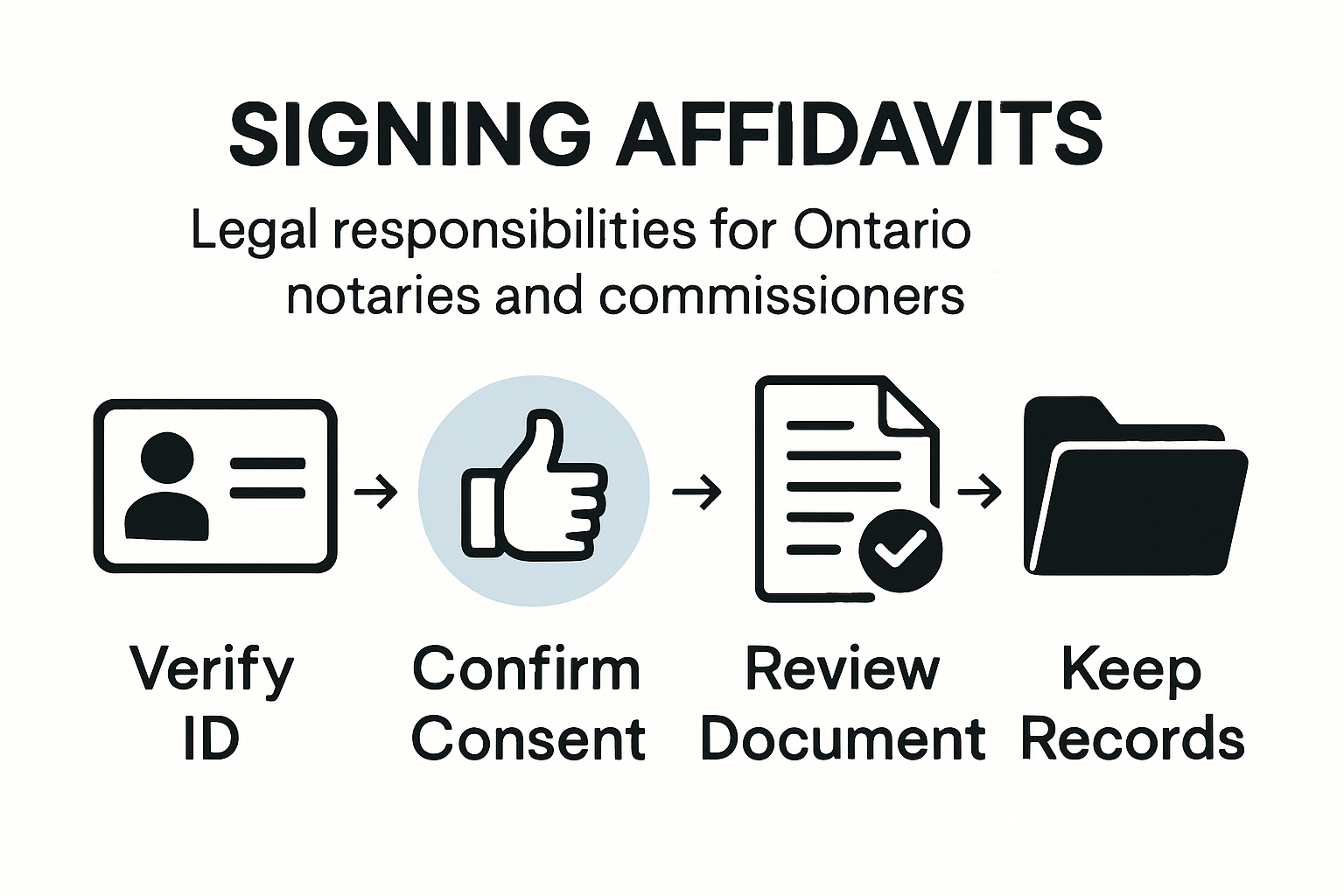
Commissioners and notaries must adhere to stringent professional guidelines that extend beyond merely witnessing signatures. According to the Ontario Guide for Newly Appointed Commissioners, their core responsibilities include:
- Verifying the identity of individuals signing documents
- Confirming the voluntary nature of the document signing
- Ensuring the deponent understands the contents of the document
- Maintaining accurate and detailed records of all commissioned documents
The Law Society of Ontario emphasizes that commissioners must exercise professional judgment and maintain the highest ethical standards. This involves being impartial, protecting the confidentiality of documents, and refusing to commission documents that appear fraudulent or incomplete.
Documentation and Verification Protocols
In 2025, notaries and commissioners must navigate an increasingly complex digital landscape while maintaining rigorous verification processes. Technological advancements are gradually transforming document authentication, requiring professionals to be adaptable and technologically proficient.
Key verification protocols include:
- Requesting multiple forms of government issued identification
- Carefully examining documents for signs of alteration
- Maintaining a detailed log of commissioned documents
- Understanding the specific legal requirements for different types of documents
For professionals seeking to stay updated on the latest authentication practices, our comprehensive notary guide provides in depth insights into current best practices.
Legal Risks and Professional Liability
Commissioners and notaries must be acutely aware of the potential legal consequences of improper document handling. Failing to follow proper protocols can result in:
- Professional disciplinary action
- Potential legal liability for fraudulent or improperly executed documents
- Suspension or revocation of commissioning credentials
- Potential criminal charges in cases of deliberate misconduct
The Commissioners for Taking Affidavits Act provides clear guidelines about the legal standards commissioners must maintain. Professionals must continuously educate themselves about evolving legal requirements and technological changes in document authentication.
Ultimately, notaries and commissioners serve as crucial gatekeepers in Ontario’s legal system. Their commitment to professional integrity, thorough verification, and adherence to ethical standards ensures the reliability and legal validity of critical documents. By maintaining high professional standards, they protect both individual rights and the broader legal framework.
To help notaries and commissioners remember the required protocols and risks involved, see the table below summarizing key responsibilities, protocols, and legal consequences:
| Task / Protocol | Description | Risk of Non-Compliance |
|---|---|---|
| Verify Signer Identity | Request valid government ID, check authenticity | Affidavit invalid; legal/disciplinary action |
| Confirm Voluntary Signing | Ensure signer isn’t under duress | Affidavit challenged or voided |
| Confirm Understanding of Document | Ensure deponent knows content & implication | Sworn document dismissed; possible legal challenge |
| Accurate Record Keeping | Maintain commission log and details | Loss of credentials; audit failure |
| Refuse Fraudulent/Incompleted Documents | Check for completeness, authenticity | Professional, legal, and criminal liability |
Common Mistakes When Signing Affidavits
Signing an affidavit involves more than simply putting pen to paper. Ontario’s legal landscape is unforgiving of documentation errors that can potentially invalidate crucial legal documents. Understanding and avoiding common mistakes is essential for anyone preparing or signing an affidavit.
Documentation and Content Errors
The most frequent mistakes occur during the preparation and content of the affidavit itself. According to the Ontario Rules of Civil Procedure, any alterations in an affidavit must be carefully managed. Uninitialized changes can render the entire document inadmissible.
Common documentation errors include:
- Incomplete personal information that fails to fully identify the deponent
- Unsigned or improperly witnessed documents
- Alterations without proper initialization
- Including speculative or hearsay statements
Legal experts advise that affidavits should strictly contain factual statements. Avoid including:
- Legal arguments
- Personal opinions
- Interpretations of law
- Citations of legal authorities
Identification and Verification Challenges
Identification represents another critical area where mistakes frequently occur. The Guide for Newly Appointed Commissioners emphasizes the importance of rigorous verification processes.
Potential identification mistakes include:
- Accepting insufficient or expired identification
- Failing to verify the authenticity of presented documents
- Not confirming the deponent’s understanding of the document
- Rushing through the verification process
For those seeking a comprehensive understanding of proper affidavit preparation, our online notarization guide offers detailed insights into avoiding common pitfalls.
Legal and Procedural Misconceptions
Many individuals misunderstand the legal implications of signing an affidavit. A sworn statement is not merely a formality but a legally binding document with potential serious consequences for false statements.
Key misconceptions include:
- Believing that an affidavit can be casually amended after signing
- Assuming that minor errors are inconsequential
- Failing to understand the oath or affirmation’s legal weight
- Thinking that a commissioner will automatically validate questionable content
The consequences of improper affidavit execution can be severe. Potential repercussions range from document rejection to potential legal liability or even accusations of perjury.
Professionals and individuals alike must approach affidavit signing with meticulous attention to detail. Each document represents a solemn declaration of truth, requiring careful preparation, thorough verification, and complete understanding of its contents and implications.
By recognizing and avoiding these common mistakes, you can ensure that your affidavits remain legally sound, credible, and effective in supporting your legal objectives.

Frequently Asked Questions
Who is allowed to sign an affidavit in Ontario?
Only authorized professionals such as lawyers, notaries public, court clerks, and municipal clerks can sign affidavits in Ontario. They must verify the identity of the signatory and ensure that proper legal standards are met.
What happens if an affidavit is improperly signed?
An improperly signed affidavit can be challenged or rejected in legal proceedings. This can arise from errors in documentation or from the lack of an authorized signature, which impacts the document’s legal standing.
Are there special procedures for individuals with disabilities signing affidavits?
Yes, special procedures are in place for individuals who are illiterate, blind, or unable to physically sign. A commissioner must confirm that the signatory understands the affidavit’s contents and that the signing is voluntary.
Can corporate representatives sign affidavits, and under what conditions?
Yes, corporate representatives can sign affidavits on behalf of their organization. They must demonstrate proper legal authorization and capacity to do so, ensuring that they are acting within their designated authority.
Avoid Affidavit Signing Mistakes With Secure Online Solutions
Are you feeling uncertain about who can legally sign your affidavit in Ontario or worried that a simple error could delay your legal matter? Recent legal changes and strict documentation rules mean that even small mistakes can lead to rejected affidavits, wasted time, and unnecessary stress. Navigating the list of authorized commissioners, confirming your identity, and following special procedures when needed can be overwhelming—especially when your case relies on getting it right the first time.

Take action now to protect your legal interests. With our trusted online notary services for affidavits, you get expert help from licensed professionals who handle each step with care. Everything is managed conveniently online, ensuring your documents meet Ontario’s 2025 requirements. Start your process today at https://theonlinentoary.ca and give yourself the confidence that your affidavit is handled by specialists who know every rule and safeguard. Don’t leave your important paperwork to chance—let us support you from start to finish.
Recommended
- How to Get an Affidavit Online in Ontario 2025 – The Online Notary CA
- Everything You Need to Know About Online Notarization in Ontario: Fast, Legal, and Convenient for Affidavits and Declarations (2025) – The Online Notary CA
- How to Notarize Documents in Ontario: Easy 2025 Guide – The Online Notary CA
- The Complete Guide to Using an Online Notary Public for Affidavits and Declarations in Ontario (2025) – The Online Notary CA