
Getting an affidavit sworn sounds straightforward. Every year, hundreds of affidavits are rejected in Ontario just because of simple paperwork mistakes. Most people scramble at the last minute for missing documents or forget one key requirement that throws off the entire process. Knowing the exact steps and where small errors derail things can make the difference between a valid legal statement and wasted time.
Table of Contents
- Step 1: Gather Required Documents And Information
- Step 2: Locate A Qualified Commissioner For Oaths
- Step 3: Schedule An Appointment To Swear Your Affidavit
- Step 4: Present Your Documents And Swear The Affidavit
- Step 5: Review And Obtain Copies Of The Affidavit
- Step 6: Verify Your Affidavit Is Accurate And Complete
Quick Summary
| Key Point | Explanation |
|---|---|
| 1. Gather all required documents | Ensure you have correct identification and supporting papers tailored to your affidavit’s purpose. |
| 2. Locate a qualified Commissioner | Verify credentials of Commissioners for Oaths to ensure legal validation of your affidavit. |
| 3. Schedule your swearing appointment | Organize your appointment timely to ensure your affidavit is officially recognized without delay. |
| 4. Present your documents carefully | Arrive organized and prepared so the Commissioner can efficiently verify and process your affidavit. |
| 5. Review and obtain document copies | Carefully check your affidavit for accuracy and obtain multiple certified copies for future use. |
Step 1: Gather Required Documents and Information
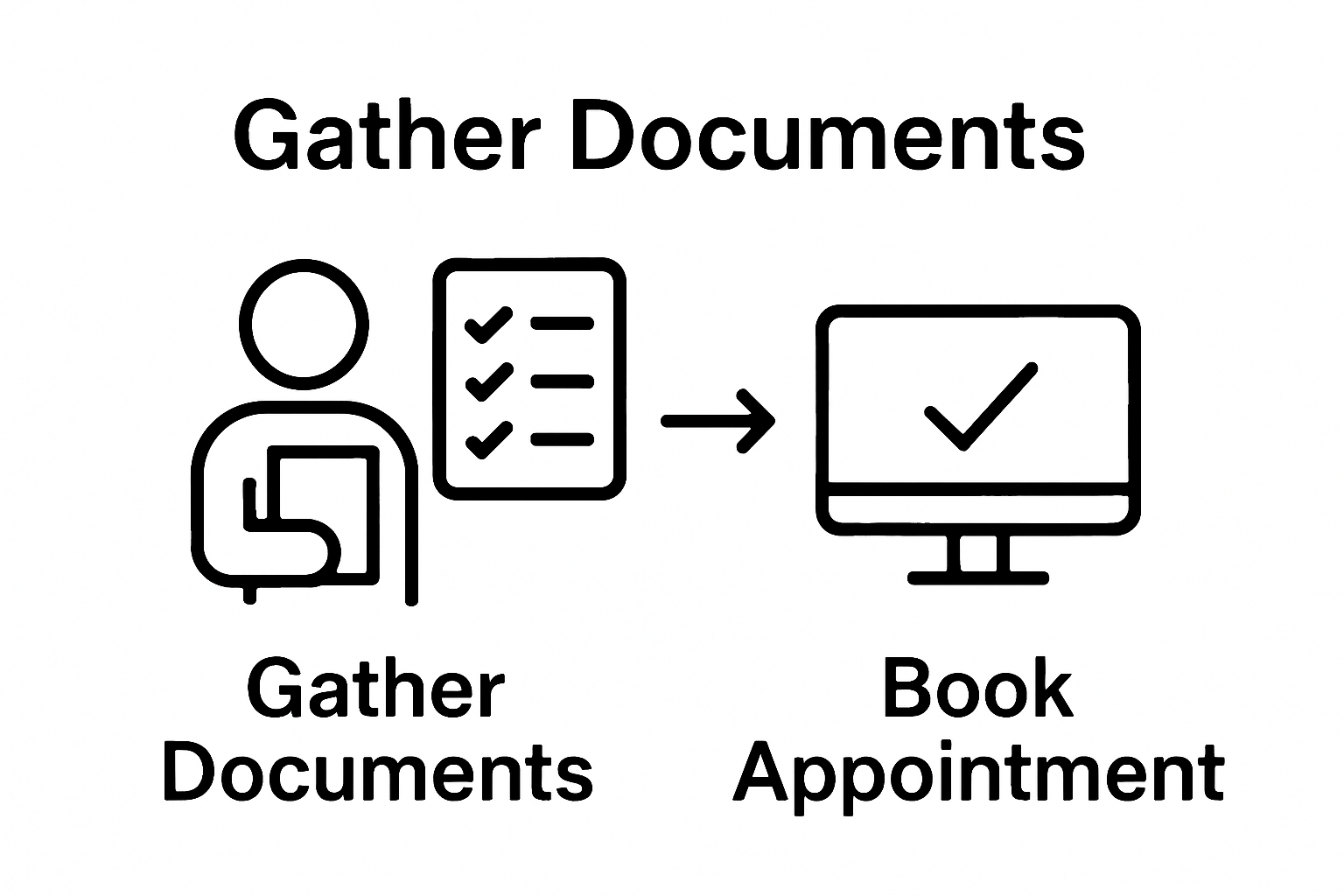
Swearing an affidavit requires meticulous preparation and precise documentation. The initial step of gathering required documents and information sets the foundation for a legally valid process. Understanding what materials you need and how to compile them correctly can make the difference between a smooth affidavit execution and potential legal complications.
The documentation process begins with identifying the specific type of affidavit you are preparing. Different legal scenarios demand unique supporting documents. For personal affidavits, you will typically need government issued photo identification such as a driver’s license, passport, or provincial ID card. If you are representing a business or organization, additional documentation like corporate registration papers, authorization letters, or official letterheads might be necessary.
Personal identification documents must be current and match the exact name used in the affidavit. Expired identification will not be accepted by notaries or legal authorities. Gather multiple forms of identification to ensure you have sufficient documentation. A combination of photo ID and secondary identification like a utility bill with your current address can provide comprehensive proof of your identity.
Beyond personal identification, the specific content of your affidavit will dictate supplementary documents. For instance, an affidavit regarding property transfer might require deed documents, while an affidavit about personal circumstances could need supporting records like birth certificates or marriage licenses. Learn more about document verification requirements to ensure you have the correct paperwork.
Key verification documents to consider include:
- Original or certified true copies of primary identification
- Supporting documentation specific to the affidavit’s purpose
- Proof of current residential address
- Any relevant legal or official records pertaining to the statement
Organize your documents systematically before your appointment. Arrange them chronologically or by category to demonstrate preparedness and professionalism. A well structured document package signals to the notary that you understand the significance of the affidavit process and are committed to accuracy and legal compliance.
Step 2: Locate a Qualified Commissioner for Oaths
Locating a qualified Commissioner for Oaths represents a critical step in the affidavit process. Not all individuals can legally witness and validate your sworn statement, making this stage fundamental to ensuring your document’s legal standing. A Commissioner for Oaths serves as an authorized professional who can administer oaths and witness legal declarations with official recognition.
In Ontario, several professional categories qualify as Commissioners for Oaths. Lawyers, paralegals, notary publics, court clerks, and specific government employees typically hold this authorization. Many municipalities, courthouses, and legal service centers employ individuals specifically designated to perform this function. Learn about our streamlined online notary services to simplify this process and understand your available options.
When selecting a Commissioner, verify their current legal authorization. Professional credentials matter significantly. Some Commissioners specialize in specific document types, so matching their expertise to your affidavit’s purpose can expedite the process. Provincial regulations require Commissioners to maintain current certification and adhere to strict professional standards. Confirm their credentials through official provincial directories or professional regulatory bodies before scheduling an appointment.
Consider multiple verification methods for finding a qualified Commissioner:
- Contact local courthouses for recommended Commissioners
- Check with professional legal associations in your region
- Verify credentials through official online provincial registries
- Request recommendations from law firms or legal service centers
While traditional in person commissioning remains standard, technological advancements now offer online commissioning options. These digital platforms provide convenient alternatives, allowing document verification and oath administration through secure video conferencing. Ensure any online service meets provincial legal requirements and provides equivalent legal validity to in person commissioning. The goal is selecting a Commissioner who can professionally validate your affidavit with legal authenticity and procedural accuracy.
Step 3: Schedule an Appointment to Swear Your Affidavit
Scheduling an appointment to swear your affidavit transforms your prepared documentation into a legally recognized instrument. This critical step bridges the gap between personal preparation and official validation. Timing and preparation are key elements that can significantly impact the efficiency and success of your affidavit process.
Contact potential Commissioners directly to arrange your appointment. Many legal professionals and notary services offer multiple scheduling options including in person and online commissioning platforms. When reaching out, be prepared to provide basic details about your affidavit’s purpose and the type of document you need commissioned. Explore convenient online notarization options that can streamline your affidavit process and save valuable time.
Professional Commissioners typically require advance notice and may have specific scheduling protocols.
Some may request you email or call their office to confirm availability. During initial contact, inquire about their specific requirements for document commissioning. Some professionals might request you send document copies in advance or complete preliminary paperwork before the actual appointment.
Key considerations when scheduling your appointment include:
- Availability of required identification documents
- Potential processing or appointment fees
- Preferred method of commissioning (in person or online)
- Estimated time required for document review and swearing
Be mindful of potential scheduling complexities. Courthouse and legal service providers often have limited availability, especially during peak business hours. Consider flexible timing and have alternative scheduling options prepared. Some Commissioners might offer extended hours or weekend appointments to accommodate diverse client needs. Confirm the exact location or virtual meeting platform, ensuring you understand all procedural requirements before your scheduled time. Successful appointment scheduling represents a crucial milestone in transforming your prepared affidavit into a legally recognized document.
Step 4: Present Your Documents and Swear the Affidavit
Presenting your documents and swearing the affidavit represents the pivotal moment where your legal declaration transforms from prepared paperwork into an officially recognized statement. This critical stage demands precision, confidence, and a clear understanding of the formal process involved in making a legally binding oath.
When you arrive for your appointment, remain composed and organized. Arrange your documents in a logical sequence, with identification papers readily accessible. The Commissioner will carefully review your supporting documentation, checking for completeness and authenticity. Discover more about streamlining your affidavit process to ensure a smooth experience. Bring multiple forms of identification, even if only one is technically required. This extra preparation demonstrates professionalism and can prevent potential delays.
The swearing process itself is formal but straightforward. The Commissioner will ask you to confirm the contents of your affidavit are true to the best of your knowledge. You will be required to verbally affirm or swear an oath, typically by raising your right hand and confirming the document’s truthfulness. Some Commissioners might use traditional religious texts, while others offer a secular affirmation option. Choose the method most comfortable for you that maintains the legal integrity of your declaration.
Important elements to remember during the swearing process include:
- Speak clearly and confidently when making your oath
- Verify all personal details are accurate before swearing
- Understand that intentionally false statements can have legal consequences
- Remain calm and follow the Commissioner’s specific instructions
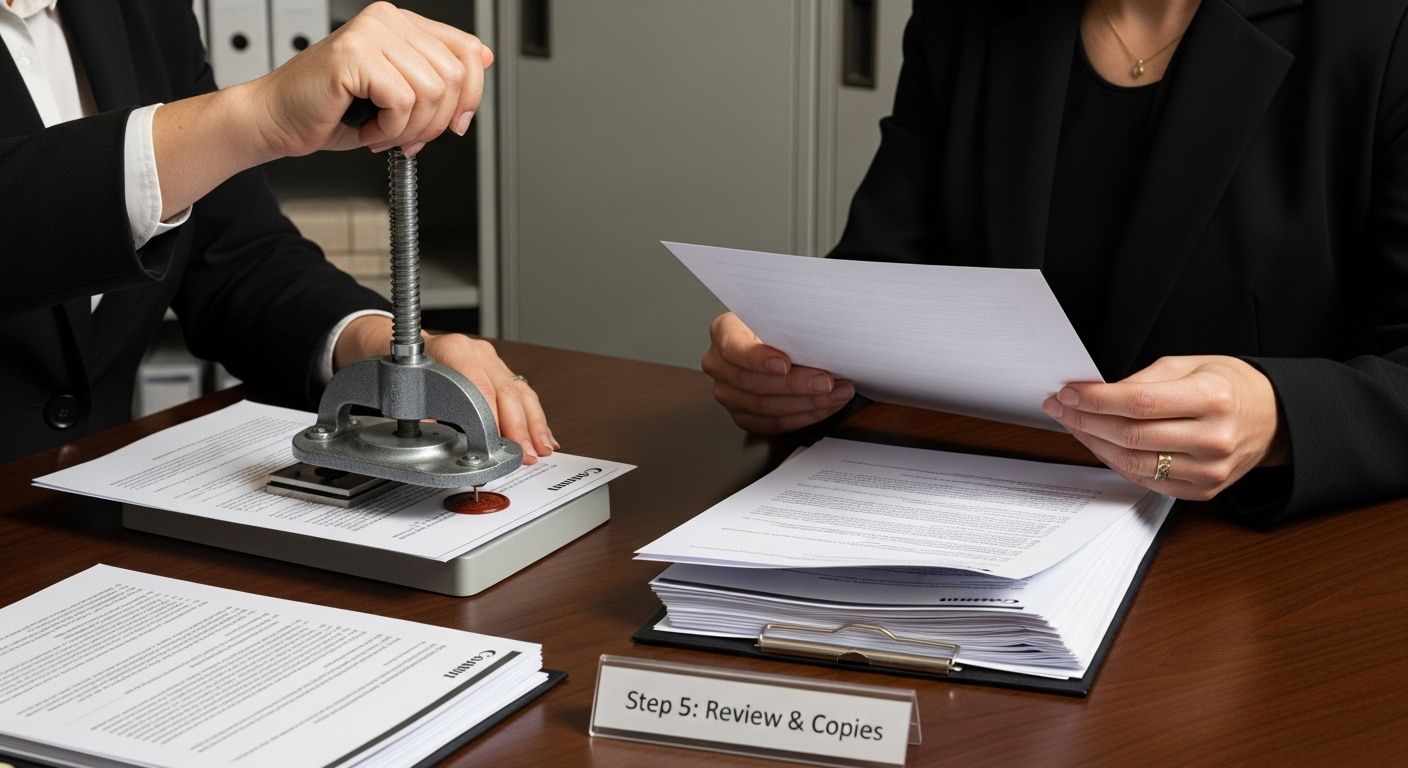
After completing the oath, the Commissioner will add their official seal or stamp, marking the document as legally commissioned. This validation transforms your affidavit from a personal document into a legally recognized instrument. Carefully review the completed document to ensure all details are correct before leaving the appointment. The Commissioner’s seal represents the critical final step in establishing your affidavit’s legal authenticity and credibility.
Step 5: Review and Obtain Copies of the Affidavit
Reviewing and obtaining copies of your affidavit represents the final crucial step in solidifying your legal documentation. This stage ensures the accuracy of your sworn statement and provides essential backup for potential future legal or administrative requirements. Meticulous document verification can prevent potential complications down the line.
Immediately after commissioning, carefully review every detail of the affidavit. Check that all personal information, dates, and substantive statements are exactly as you intended. Verify the Commissioner’s official seal is clearly visible and properly applied. Typographical errors or minor discrepancies can invalidate the entire document, so scrutinize each line with careful attention. Explore our comprehensive guide to document verification to understand the nuances of thorough document review.
Request multiple certified copies from the Commissioner. Legal and professional contexts often require original sealed documents, so having several copies provides flexibility. Some institutions might require a wet ink original with the Commissioner’s seal, while others may accept notarized photocopies. Professional document services can assist in creating additional certified copies if needed. Always request at least two or three copies to ensure you have backups for different potential uses.
Key considerations for document copies include:
- Confirm the number of copies required by different organizations
- Request copies immediately after commissioning
- Store original documents in a secure, fire resistant location
- Consider digital backup methods for additional protection
Maintain a detailed record of where each copy is distributed. Create a simple tracking system noting the date, recipient, and purpose of each document copy. This organizational approach provides a clear audit trail and helps prevent potential legal misunderstandings. Your diligence in reviewing and managing affidavit copies demonstrates professionalism and protects your legal interests through comprehensive documentation management.
Step 6: Verify Your Affidavit is Accurate and Complete
Verifying the accuracy and completeness of your affidavit represents the final safeguard in ensuring your legal document’s validity and reliability. This critical step transforms your sworn statement from a mere document into a legally robust instrument that can withstand potential scrutiny. Precision is paramount in this verification process, where even minor details can significantly impact the document’s legal standing.
Carefully review every section of the affidavit, comparing the final document against your original notes and supporting evidence. Cross reference each statement with your supporting documentation, ensuring absolute alignment between the written text and the factual information you intend to convey. Explore our comprehensive guide to document verification to understand the nuanced approach to thorough document review. Pay particular attention to names, dates, addresses, and specific claims, verifying that each element is exactly as you intended.
The verification process extends beyond simple proofreading. Consider the potential legal implications of each statement, understanding that an affidavit is a sworn document with significant legal weight. Assess whether the language is clear, unambiguous, and directly addresses the purpose for which the affidavit is being created. Consult with a legal professional if you have any doubts about the document’s content or potential interpretations. This additional layer of review can prevent future misunderstandings or legal complications.
Key verification criteria include:
- Confirm all personal information is accurate and current
- Verify dates, names, and specific details match supporting documentation
- Ensure the language is clear, concise, and unambiguous
- Check that the affidavit comprehensively addresses its intended purpose
Remember that an affidavit is a legal document carrying significant personal and professional responsibility. Your meticulous verification demonstrates integrity and commitment to accuracy. By thoroughly reviewing every aspect of the document, you protect yourself from potential legal challenges and ensure the affidavit serves its intended purpose with maximum effectiveness and credibility.
Below is a checklist table to help you verify your affidavit for accuracy and completeness, based on the critical review points discussed in the article.
| Verification Item | What to Check | Why It Matters |
|---|---|---|
| Personal information accuracy | Ensure names, addresses, and dates are correct | Incorrect info may invalidate the affidavit |
| Matching supporting documentation | Cross-reference all facts with supporting records | Reduces chances of discrepancies and challenges |
| Clear and unambiguous language | Review for confusing or vague statements | Ensures purpose and intent are legally understood |
| Complete detail coverage | Confirm every required fact is addressed | Prevents rejected filings due to missing information |
| Official seal and signatures | Check Commissioner’s seal and your own signature | Required for legal validity of the affidavit |
| Consistency throughout document | Look for contradictions or unclear sections | Maintains credibility and prevents disputes |
| Secure storage of originals | Plan secure, fire-resistant storage for originals | Protects legal rights and facilitates future access |
Ready to Swear Your Affidavit Without the Stress?
No more second-guessing documentation or stressing about missed legal steps. If you feel overwhelmed by organizing identification, verifying affidavits, or scheduling with a Commissioner for Oaths, you are not alone. Our article outlines just how challenging it can be to collect the right materials, avoid appointment hassles, and ensure complete accuracy in your sworn statements.

At The Online Notary, we turn these pain points into a seamless, secure online experience. Our simple process lets you gather your documents, easily verify your identity, and swear your affidavit with a qualified notary right from your own home. You save time, reduce paperwork errors, and gain peace of mind knowing your affidavit is correct and legally valid. Do not let confusion or long waits hold you back. Book your online affidavit appointment today and complete your legal paperwork in minutes. Protect your interests and move forward with confidence.
Frequently Asked Questions
What documents do I need to swear an affidavit?
You typically need government-issued photo identification, such as a driver’s license or passport, and any supporting documentation relevant to the affidavit’s purpose, like property deeds or personal certificates.
How do I find a qualified Commissioner for Oaths?
You can find a qualified Commissioner for Oaths by contacting local courthouses, checking professional legal associations, or verifying credentials through official provincial registries. Many legal services also offer online commissioning options.
What happens during the appointment to swear an affidavit?
During the appointment, you present your documents, affirm the truthfulness of your affidavit, and the Commissioner will administer your oath. They will also apply their official seal to validate the document.
How can I ensure my affidavit is accurate and complete?
To ensure accuracy, carefully review your affidavit against your original notes and supporting evidence. Check all names, dates, and details for alignment, and consult a legal professional if you have any doubts about the content.