
Starting a business in Ontario can feel overwhelming, yet more than 400,000 new businesses launch here every year. Choosing the right structure, registering with the government, and gaining proper permits all shape your success and compliance with local rules. Careful initial steps not only protect you from costly missteps but also lay a solid foundation for growth and financial stability.
Table of Contents
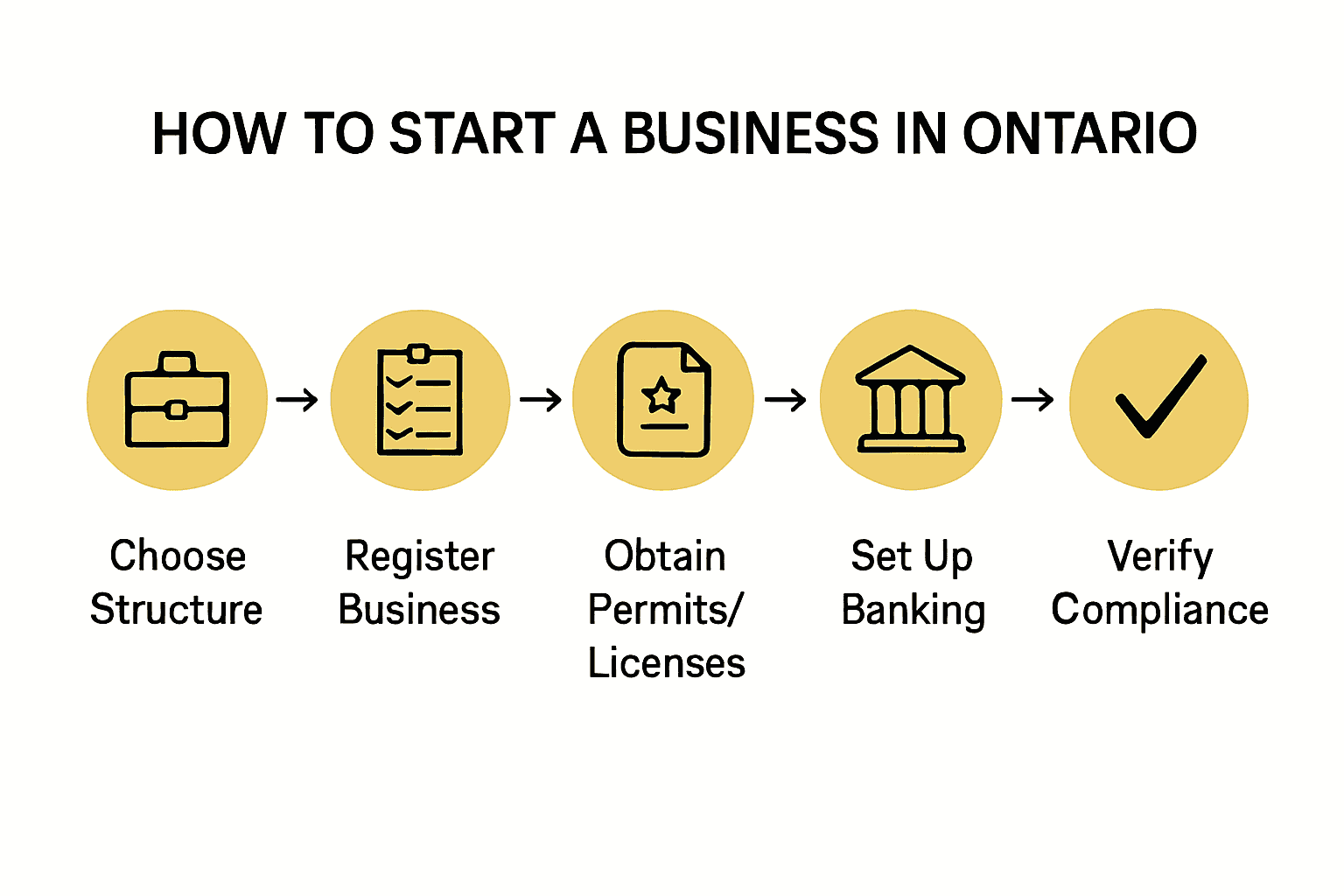
- Step 1: Define Your Business Structure And Idea
- Step 2: Register Your Business With Ontario Government
- Step 3: Obtain Necessary Permits And Licenses
- Step 4: Set Up Business Banking And Finances
- Step 5: Verify Legal Compliance And Operational Readiness
Quick Summary
| Key Point | Explanation |
|---|---|
| 1. Choose the right business structure | Selecting a sole proprietorship, partnership, corporation, or cooperative affects liability and taxes. |
| 2. Complete business registration | Register your business name through the Ontario Business Registry to ensure legal operation and protect your brand. |
| 3. Secure necessary permits and licenses | Use BizPaL to identify and obtain specific permits required for your industry to comply with regulations. |
| 4. Establish business banking | Open a separate business bank account to manage finances, ensuring legal compliance and clarity in accounting processes. |
| 5. Verify legal compliance | Regularly review documentation, renewals, and regulations to ensure your business meets all legal requirements before launch. |
Step 1: Define your business structure and idea
In this pivotal step, you will determine the foundational blueprint for your Ontario business by selecting the most appropriate business structure and crystallizing your entrepreneurial vision. Your choices here will impact everything from taxation to legal liability.
Ontario offers four primary business structures: sole proprietorship, partnership, corporation, and cooperative. According to Ontario.ca, each structure carries distinct legal and tax implications that can significantly influence your business trajectory.
Here’s a comparison of the four primary business structures in Ontario:
| Structure | Liability | Taxation | Best For |
|---|---|---|---|
| Sole Proprietorship | Unlimited | Personal income tax | Solo businesses Low risk |
| Partnership | Shared | Personal income tax | Small teams Shared ownership |
| Corporation | Limited | Corporate tax | Growing businesses Higher risk |
| Cooperative | Limited | Varies May be member-based | Member-owned ventures |
Start by honestly assessing your business goals. Are you launching a small personal service or planning a scalable enterprise? A sole proprietorship works well for solo entrepreneurs with minimal risk, while corporations provide stronger legal protection for larger ventures.
To develop a viable business concept, research is key. Business Development Canada recommends identifying a clear market need and validating your idea through potential customer feedback. Ask yourself: What problem does my business solve? Who specifically needs this solution?
Pro Tip: Before finalizing your structure, consult with a local business advisor or accountant who understands Ontario’s specific regulatory environment.
Your next step will involve registering your chosen business structure and preparing a comprehensive business plan that transforms your initial concept into a actionable roadmap.
Step 2: Register your business with Ontario government
In this step, you will officially establish your business’s legal identity with the Ontario government by completing the necessary registration process. Proper registration ensures your business operates legally and protects your brand name.
According to Ontario.ca, businesses must register their name through the Ontario Business Registry. You have two primary registration options: online submission or in-person registration at authorized service providers.
For businesses operating under a name different from the owner’s legal name, City of Toronto Business Resources confirms that registration is mandatory. This process involves selecting a unique business name and verifying its availability to prevent potential legal conflicts.
To begin, visit the Ontario Business Registry website and prepare key documents including your business structure details, owner information, and proposed business name. You will need to provide identification and potentially additional documentation depending on your business type.
Pro Tip: Double-check all submitted information for accuracy. A single mistake can delay your registration process and create unnecessary administrative challenges.
Essential Steps to Register a Business in Ontario can provide additional guidance on navigating this process smoothly. Your next step will involve paying the registration fees and obtaining your official business number from the government.

Step 3: Obtain necessary permits and licenses
In this crucial stage, you will secure the official permissions required to legally operate your business in Ontario. Identifying and obtaining the right permits and licenses ensures your business complies with local and provincial regulations.
According to SBEC Innovation, BizPaL is an invaluable tool to help navigate the complex landscape of business permits and licenses. This online resource simplifies the process by providing a comprehensive checklist specific to your business type and location.
Begin by identifying the specific licenses required for your industry. Different sectors have unique regulatory requirements. For instance, food service businesses need health permits, while construction companies require specific trade licenses. Use the BizPaL tool to generate a personalized list of necessary documentation.
Contact your local municipal office or visit their website to confirm exact requirements. Some permits might involve additional steps like inspections or specialized training certifications. Each permit typically requires an application fee and may have specific processing timelines.
Pro Tip: Start the permit application process early. Some licenses can take weeks or even months to process, and you cannot legally operate without the required permissions.
How to Verify Documents for Business in Ontario can provide additional guidance on document verification. Your next step will involve gathering all required documentation and submitting your permit applications systematically.
Step 4: Set up business banking and finances
In this critical phase, you will establish a solid financial foundation for your Ontario business by creating dedicated banking and accounting systems. Proper financial management begins with separating your personal and business financial activities.
According to T2 Inc, opening a separate business bank account is essential for distinguishing personal and corporate finances. This separation simplifies accounting processes and provides clear financial transparency.
SBEC Innovation emphasizes that segregating personal and business finances is crucial for legal compliance and financial management. When selecting a business bank account, compare options from different banks that offer services tailored to your specific business structure and needs.
Gather necessary documentation before visiting your bank, including your business registration documents, tax identification number, and government issued identification. Some banks may require additional paperwork depending on your business type such as partnership agreements or corporate documentation.
Pro Tip: Consider opening both a checking account for daily transactions and a savings account for tax preparations and emergency funds.
Affidavit for Registration in Ontario can provide supplementary information on financial documentation. Your next step involves developing a comprehensive bookkeeping system to track income, expenses, and financial performance.
Step 5: Verify legal compliance and operational readiness
In this pivotal stage, you will systematically confirm that your Ontario business meets all legal requirements and is fully prepared to launch operations. Comprehensive compliance checks protect your business from potential legal complications and regulatory challenges.
Ontario.ca emphasizes the critical importance of ensuring complete compliance with all legal registrations, permits, and tax obligations. This process involves a thorough review of your business documentation, licensing, and regulatory adherence.
According to Idea Mississauga, regularly reviewing your business’s compliance with legal and regulatory requirements helps maintain operational readiness. Begin by creating a comprehensive checklist that includes all necessary permits, tax registrations, insurance requirements, and industry specific regulations.
Consult with a local business advisor or lawyer who specializes in Ontario business regulations. They can help you identify any potential compliance gaps and provide guidance on addressing them proactively. Pay special attention to industry specific requirements that might not be immediately obvious.
Pro Tip: Create a compliance calendar that tracks renewal dates for licenses, permits, and regulatory filings to avoid unexpected lapses.
Understanding the Affidavit of Compliance in Ontario offers additional insights into regulatory documentation. Your next step involves finalizing your operational preparations and creating a strategic launch plan.
Simplify Your Ontario Business Startup with Trusted Online Notary Services
Starting a business in Ontario means navigating complex steps like obtaining permits, verifying legal documents, and ensuring full compliance. These crucial tasks can feel overwhelming when you are trying to focus on your core idea and business growth. Avoid costly delays and legal hassles by securing all your affidavits, statutory declarations, and other notarized documents quickly through trusted online resources.

Explore our Uncategorized – The Online Notary page to learn how we help entrepreneurs just like you complete essential documentation without leaving home. Don’t let paperwork slow your path to success. Visit The Online Notary now and take the next step with confidence by ensuring your official business documents are handled professionally and promptly.
Frequently Asked Questions
What are the steps to start a business in Ontario?
To start a business in Ontario, you should first define your business structure and idea. Next, register your business with the Ontario government, obtain necessary permits and licenses, set up business banking and finances, and verify legal compliance before launching.
How do I choose the right business structure for my Ontario business?
Evaluate your business goals and risk level to choose the best structure, such as sole proprietorship, partnership, corporation, or cooperative. Consider consulting with a local adviser to ensure you understand the implications of each option.
What documents do I need to register my business in Ontario?
You need to provide your business structure details, owner information, and a proposed business name to register your business. Gather your identification and any additional required documents based on your chosen business structure before starting the registration process.
How can I find out what permits and licenses I need for my business?
Use an online tool or consult local resources to identify permits and licenses specific to your business type and location. Begin by assessing the requirements for your industry and contact your municipal office if you need further clarification.
What should I include in my business plan when starting a business in Ontario?
Your business plan should outline your business concept, market analysis, financial projections, and operational plans. Start by conducting research on market needs and potential customer feedback to create a robust plan that addresses your business goals.
How can I ensure my business complies with local regulations?
Regularly review your business’s legal registrations, permits, and tax obligations to maintain compliance. Create a checklist to track your renewal dates for licenses and permits, and consult a business advisor to address potential compliance gaps.
Recommended
- Essential Steps to Register a Business in Ontario – The Online Notary
- How to Verify Documents for Business in Ontario – The Online Notary
- How to Become a Notary Online in Ontario, Canada – The Online Notary
- How to Become a Notary Online in Ontario, Canada – The Online Notary
- Form an LLC in Oxnard, Camarillo, Ventura Debt and personal finance Attorney | Law Offices of Eric Ridley