
Did you know that giving false information in an affidavit of support in Ontario can lead to criminal charges? Affidavits of support carry serious legal consequences, making it vital to get every detail right. Whether you need to verify financial commitments, support immigration applications, or help with family law matters, understanding what goes into a legally binding affidavit of support ensures you protect your rights and fulfill your responsibilities with confidence.
Table of Contents
- Defining Affidavit of Support in Ontario
- Types of Affidavit of Support Explained
- Legal Requirements and Eligibility in Ontario
- Key Roles, Rights, and Responsibilities
- Risks, Liabilities, and Common Pitfalls
Key Takeaways
| Point | Details |
|---|---|
| Legal Nature of Affidavits | An affidavit of support is a sworn, legally binding document that confirms specific facts and must be signed before an authorized official. |
| Types of Affidavits | Affidavits in Ontario include Family Law, Immigration Support, Financial Support, and Legal Proceedings, each serving distinct purposes with specific requirements. |
| Legal Requirements | Valid affidavits must contain truthful information, be sworn before an authorized individual, and the deponent must be of legal age and comprehend the document’s implications. |
| Risks of Misrepresentation | Providing false information can lead to serious legal consequences, including potential criminal charges and loss of credibility. |
Defining Affidavit of Support in Ontario
An affidavit of support is a legally binding written document that serves as a sworn statement confirming specific facts or providing critical information under oath. According to Ontario.ca, an affidavit is a document where the contents have been sworn to be true, and it must be signed before an authorized legal professional like a lawyer, commissioner of oaths, or notary public.
In the context of Ontario, affidavits play a crucial role across various legal and administrative processes. Notarize Vaughan explains that these documents are commonly required for multiple purposes, including:
- Court legal proceedings
- Government application submissions
- Immigration process documentation
- Personal and professional verification needs
The key characteristics of an affidavit of support in Ontario include its legally binding nature and the requirement that the person making the statement (known as the affiant) swears or affirms that the information provided is true to the best of their knowledge. This means the document carries significant legal weight and the affiant can be held accountable for any intentional misrepresentations. The process of creating an affidavit involves carefully documenting facts, having them verified by an authorized official, and signing the document under oath or solemn affirmation.
While affidavits might seem complex, they are essentially formal written statements that provide a legally recognized method of presenting truthful information. Whether you’re supporting a legal case, verifying personal details, or facilitating an administrative process, understanding the fundamental structure and purpose of an affidavit of support is crucial for navigating Ontario’s legal landscape effectively.
Types of Affidavit of Support Explained
Affidavits of support in Ontario encompass a diverse range of legal documents designed to provide sworn statements across different contexts. Justice Canada highlights one specific type: the Affidavit in Support of an Application under Part I of the Family Orders and Agreements Enforcement Assistance Act, which is particularly crucial in family law proceedings.
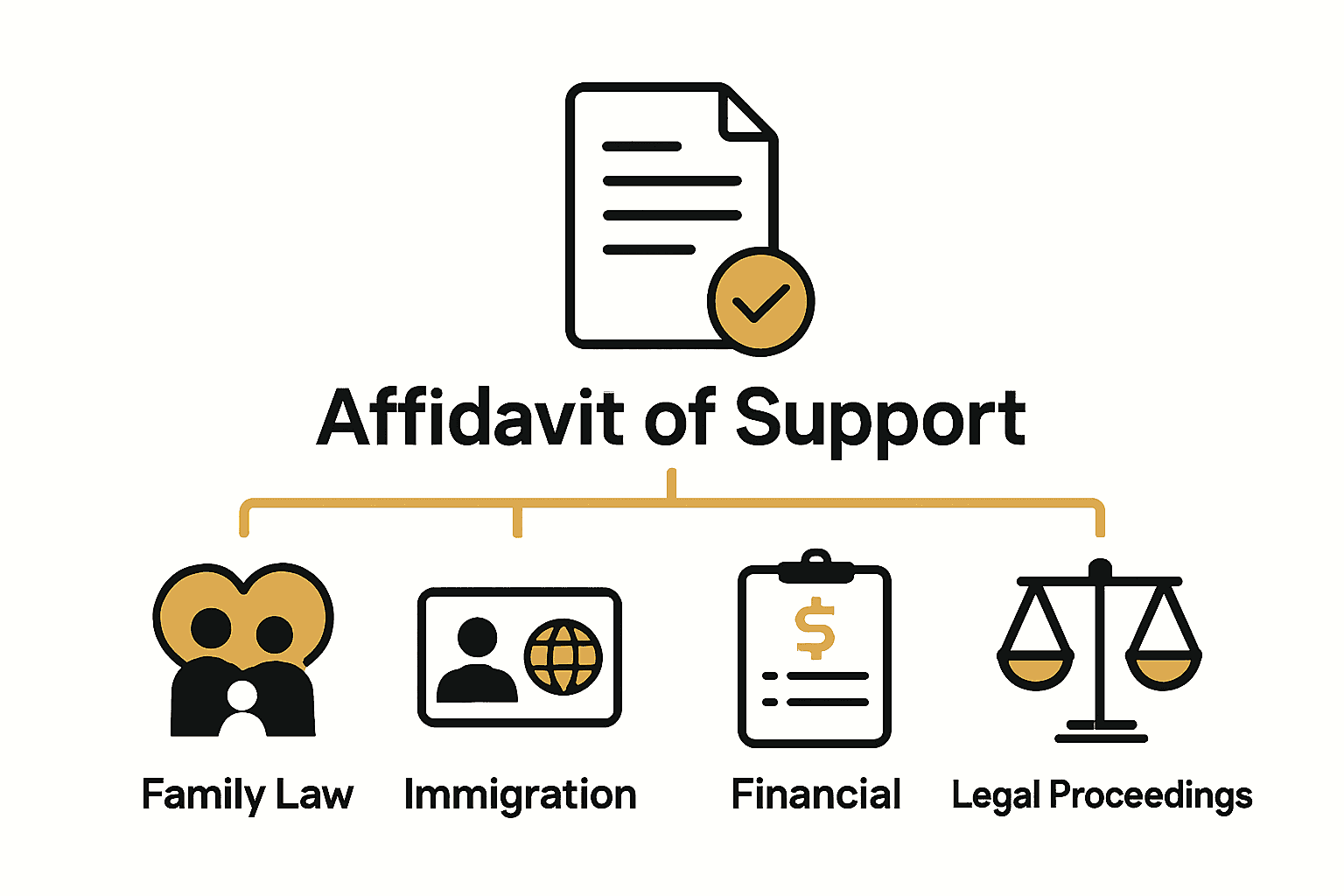
The primary types of affidavits of support in Ontario include:
Family Law Affidavits
- Supporting divorce proceedings
- Child custody and support documentation
- Property division claims
Immigration Support Affidavits
- Sponsorship declarations
- Financial support commitments
- Relationship verification
Financial Support Affidavits
- Verifying financial standing
- Proving income and economic capability
- Supporting loan or credit applications
Legal Proceedings Affidavits
- Court case supporting documents
- Witness statement verifications
- Evidence submissions
Each type of affidavit serves a unique purpose and follows specific legal requirements. The affiant must provide accurate, truthful information and understand that these documents carry significant legal weight. Misrepresentation can lead to serious legal consequences, making precision and honesty paramount.
Here’s a comparison of the primary types of affidavits of support in Ontario:
| Affidavit Type | Common Uses | Key Requirements |
|---|---|---|
| Family Law Affidavits | Divorce proceedings Child custody Property division | Proof of relationship Legal age Factual evidence |
| Immigration Support Affidavits | Sponsorship Financial support Relationship verification | Identity verification Proof of funds Authorized official’s approval |
| Financial Support Affidavits | Proving income Loan applications Credit support | Accurate financial data Supporting documents Sworn statement |
| Legal Proceedings Affidavits | Court cases Witness statements Evidence submissions | Personal knowledge No hearsay Proper notarization |
Whether you’re navigating complex legal matters, supporting immigration processes, or verifying personal circumstances, understanding the nuanced types of affidavits of support helps ensure you select the most appropriate document for your specific needs.
 For those unfamiliar with legal documentation, consulting with a professional notary or legal expert can provide crucial guidance in preparing the right type of affidavit.
Legal Requirements and Eligibility in Ontario
Legal requirements for affidavits of support in Ontario are stringent and precise. Ontario Works Policy Directives defines an affidavit as the written equivalent of giving oral evidence under oath by the deponent, who is the person making the affidavit. The fundamental legal criteria revolve around the authenticity and truthfulness of the document.
To be legally valid, an affidavit of support must meet several critical requirements:
Authorized Verification
- Must be sworn or affirmed before an authorized official
- Requires signature of a lawyer, commissioner of oaths, or notary public
- Official must validate the identity of the deponent
Content Integrity
- Information must be factual and provable
- Personal knowledge of the statements is crucial
- No hearsay or speculative information allowed
Personal Eligibility
- Deponent must be of legal age (18 years or older)
- Must have mental capacity to understand the document’s significance
- Must not be under duress or undue influence
Tribunals Ontario emphasizes that for an affidavit to be valid, the deponent must explicitly swear or affirm before an authorized person that all statements are true, which is essential for the document to serve as legitimate evidence.
Eligibility to create an affidavit of support extends to individuals who can provide direct, factual information relevant to the specific legal or administrative context.
This might include family members, employers, financial institutions, or other parties with direct knowledge of the circumstances being attested. The key is maintaining absolute transparency and accuracy, as any misrepresentation can result in serious legal consequences.
Key Roles, Rights, and Responsibilities
Ontario.ca highlights the critical importance of understanding the specific roles and responsibilities within the affidavit process. The Administrator and designated commissioners play a pivotal role in ensuring the legal integrity of affidavits, with strict procedural guidelines outlined in the Commissioner for Taking Affidavits Act.
The key roles in an affidavit of support process include:
The Deponent
- Primary responsibility for providing truthful information
- Must have direct knowledge of the statements
- Legally accountable for the content’s accuracy
- Responsible for understanding the document’s implications
Authorized Officials
- Lawyers
- Commissioners of Oaths
- Notary Publics
- Verify the deponent’s identity
- Witness the swearing or affirmation
- Ensure legal compliance of the document
Supporting Parties
- May provide supplementary information
- Must have direct, verifiable knowledge
- Cannot introduce speculative or hearsay evidence
Tribunals Ontario emphasizes that an affidavit serves as a sworn legal document, essentially functioning as written testimony with significant legal weight. This means each party involved carries substantial responsibilities and potential legal consequences for their actions.
The rights associated with creating an affidavit of support are balanced with serious responsibilities. Deponents have the right to present factual information truthfully, while also bearing the legal obligation to ensure absolute accuracy. Authorized officials have the right to reject an affidavit that does not meet legal standards, protecting the integrity of the legal process. Understanding these nuanced roles helps ensure that affidavits of support serve their intended purpose of providing reliable, legally recognized documentation.
Risks, Liabilities, and Common Pitfalls
Ontario.ca warns that making a false statutory declaration is a serious legal offense. The consequences of misrepresentation extend far beyond simple paperwork errors, potentially resulting in criminal charges and significant legal repercussions for the deponent.
Common risks and potential pitfalls in creating an affidavit of support include:
Factual Misrepresentation
- Providing inaccurate or deliberately false information
- Presenting incomplete or misleading statements
- Failing to verify the authenticity of supporting evidence
Legal Compliance Issues
- Improper execution of the document
- Lack of proper authorization
- Failure to follow specific legal formatting requirements
Personal and Professional Consequences
- Potential criminal charges
- Loss of professional credibility
- Financial penalties and legal sanctions
- Potential civil litigation
Tribunals Ontario emphasizes that an affidavit is a sworn legal document with significant evidentiary value, meaning every statement must be carefully considered and verified before submission.
Navigating the complex landscape of affidavits requires meticulous attention to detail and an understanding of potential risks. Deponents must approach the process with utmost integrity, recognizing that even unintentional errors can have serious consequences. Consulting with legal professionals, double-checking all information, and maintaining complete transparency are critical steps in mitigating potential risks associated with affidavits of support.
Simplify Your Affidavit of Support Process in Ontario
Navigating the complexities of an affidavit of support can feel overwhelming. With strict legal requirements and serious consequences for inaccuracies, you need a reliable solution to ensure your documents are properly sworn, verified, and accepted. Whether you are preparing a family law affidavit, immigration support affidavit, or any legal proceeding document, accuracy and legal compliance are essential to avoid costly delays or penalties.

Take control today by using professional online notarization services designed specifically for affidavits in Ontario. Visit our Uncategorized – The Online Notary page to learn how to get your affidavit sworn securely from the comfort of your home. Don’t risk mistakes when your affidavit can be verified quickly and conveniently online. Start your affidavit journey now at The Online Notary and ensure your sworn statements meet all legal standards with expert guidance and authorized officials ready to help.
Frequently Asked Questions
What is an affidavit of support in Ontario?
An affidavit of support is a legally binding written document that serves as a sworn statement confirming specific facts or providing critical information under oath. It must be signed before an authorized legal professional.
What are the types of affidavits of support in Ontario?
The primary types include Family Law Affidavits, Immigration Support Affidavits, Financial Support Affidavits, and Legal Proceedings Affidavits, each serving unique purposes in legal and administrative processes.
What are the legal requirements for creating an affidavit of support?
An affidavit must be sworn or affirmed before an authorized official, contain factual information known to the deponent, and meet eligibility criteria such as being of legal age and having mental capacity to understand its significance.
What are the potential risks of providing false information in an affidavit of support?
Providing false information can lead to serious legal consequences, including criminal charges, loss of professional credibility, financial penalties, and potential civil litigation.