
Students often find themselves buried in paperwork when applying for scholarships, financial aid, or handling university admin issues. Here is a surprise. One simple document called an affidavit can outweigh pages of paperwork by serving as sworn legal proof. The part nobody tells you. Mishandling this single sheet can lead to big trouble, because every statement on an affidavit is legally binding and could have real consequences.
Table of Contents
- What Is An Affidavit For Students?
- Why Affidavits Matter For Students
- How Affidavits Work In Ontario
- Key Concepts Related To Student Affidavits
- Practical Applications Of Affidavits For Students
Quick Summary
| Takeaway | Explanation |
|---|---|
| Affidavits are legally binding documents | They require an individual to declare facts under oath, making them crucial for various legal scenarios. |
| Accuracy is essential when creating affidavits | Any false information can lead to serious legal consequences, emphasizing the need for truthfulness and precision. |
| Authorized officials must witness affidavits | An affidavit needs to be signed in front of a lawyer, notary public, or commissioner to ensure its legal validity. |
| Affidavits support financial aid and immigration | These documents are often required for scholarships, loans, and residency verification, highlighting their importance in administrative processes. |
| Online notarization options exist for convenience | Digital platforms streamline the affidavit process, making it easier for students to meet legal requirements through accessible methods. |
What is an Affidavit for Students?
An affidavit represents a critical legal document that provides students with a formal method of declaring statements or facts under oath. These sworn statements carry significant legal weight and are used in various academic and administrative contexts where verifiable written testimony becomes essential.
Understanding the Legal Framework
An affidavit is a written statement confirmed by an individual who swears or affirms that the contents are true. According to Ontario Courts, this document must be signed in the presence of an authorized legal official such as a lawyer, commissioner of oaths, or notary public. The primary purpose is to provide a legally binding declaration that can be used as evidence in different scenarios.
For students, affidavits serve multiple purposes:
- Confirming personal identity details
- Verifying educational backgrounds
- Supporting financial aid applications
- Documenting residency status
- Providing legal evidence for academic disputes
Practical Applications for Students
Students encounter affidavits in numerous situations that require official documentation. Whether applying for scholarships, student loans, immigration processes, or resolving academic administrative matters, an affidavit offers a legally recognized method of presenting information. The document must be completed with absolute accuracy, as any false statements can lead to serious legal consequences.
The process involves appearing before an authorized official who will witness the signing and administer an oath or affirmation. This step ensures the document’s authenticity and legal standing. Students should prepare all necessary supporting documentation and be prepared to provide accurate, truthful information when creating an affidavit.
Why Affidavits Matter for Students
Affidavits play a pivotal role in students’ academic and legal journeys, serving as powerful tools for verifying personal information, supporting critical applications, and establishing legal credibility. These official documents transcend mere paperwork, providing students with a robust mechanism to validate their statements and circumstances.
Legal Validation and Credibility
In the complex landscape of academic and administrative processes, affidavits offer students a legally recognized method of documentation. According to Ontario Student Assistance Program, these documents are crucial for verifying personal details and supporting various applications. The legal weight of an affidavit stems from its requirement of being sworn or affirmed before an authorized official, which automatically elevates its credibility.
Students frequently require affidavits in scenarios such as:
- Proving residency status for educational institutions
- Documenting name changes
- Verifying financial circumstances for scholarships
- Supporting immigration or study permit applications
- Resolving academic administrative disputes
Practical Implications in Educational Settings
Beyond legal documentation, affidavits serve as critical tools for students navigating complex administrative landscapes. Institutions and government agencies rely on these documents to make informed decisions about student eligibility, financial support, and academic standing. An accurately completed affidavit can mean the difference between acceptance and rejection in scholarship applications, student loans, or international study programs.
Moreover, students can learn more about streamlining their affidavit process to ensure smooth administrative experiences. The precision and authenticity required in these documents underscore their importance in establishing trust and verifying student credentials across various institutional and legal contexts.
How Affidavits Work in Ontario
The process of creating and executing an affidavit in Ontario involves specific legal protocols designed to ensure accuracy, authenticity, and legal validity. Understanding these intricate procedures helps students navigate the complex landscape of official documentation with confidence and precision.
Legal Authorization and Execution
In Ontario, affidavits must be administered by authorized legal professionals who are specifically designated to witness and validate these important documents. According to Ontario’s Official Regulations, these professionals include commissioners for taking affidavits, notaries public, and specific legal representatives who can administer oaths and affirmations.
Key authorized officials who can execute affidavits include:
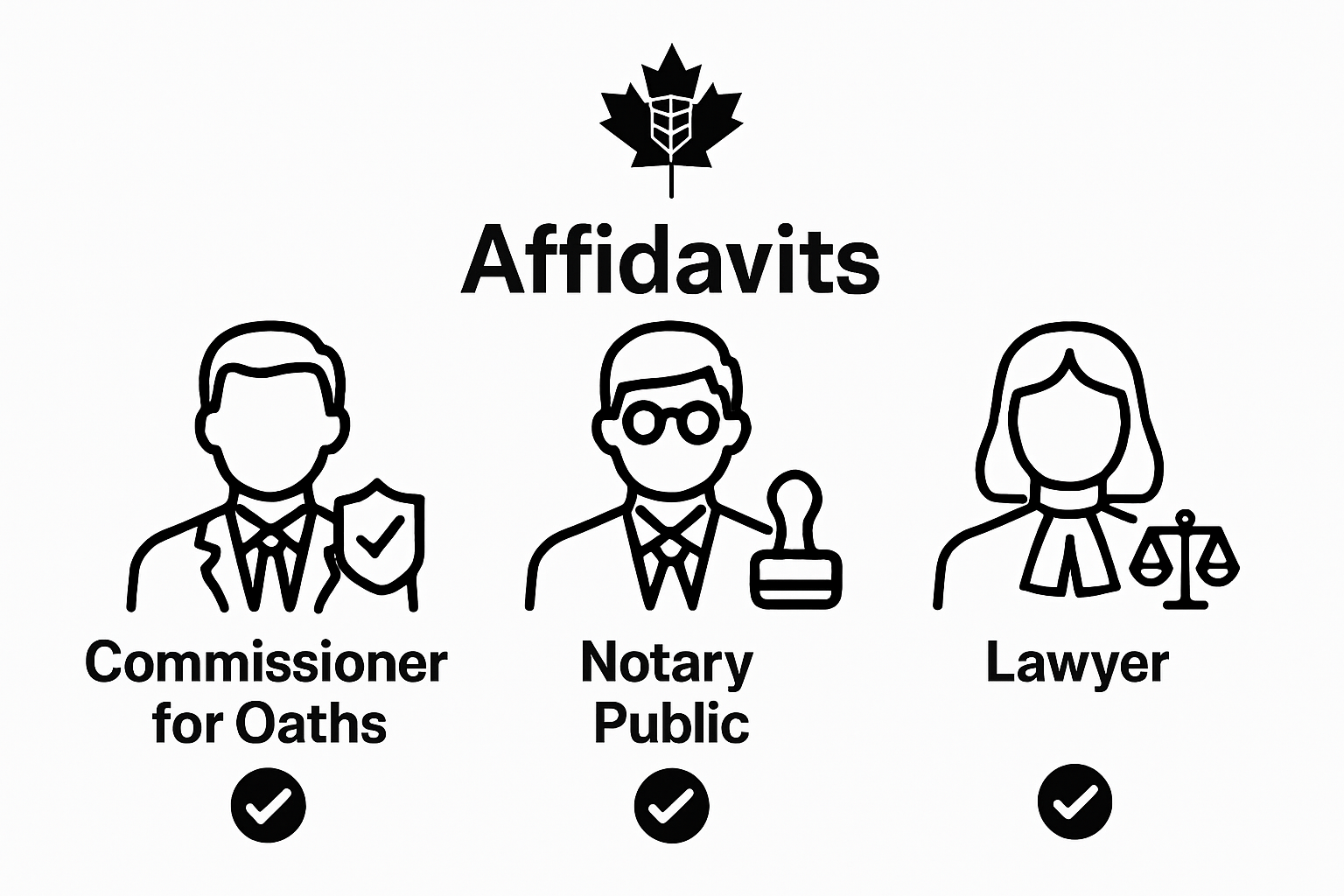
- Lawyers registered in Ontario
- Notaries public
- Commissioners for taking affidavits
- Specific municipal and provincial government officials
- Designated representatives at educational institutions
Technical Requirements and Verification Process
The affidavit creation process demands meticulous attention to detail. Students must prepare a written statement expressing facts in the first person, with each paragraph containing a distinct statement. The document requires precise formatting, including consecutively numbered paragraphs and a clear declaration of the deponent’s full legal name.
The verification process involves several critical steps:
- Appearing personally before an authorized official
- Swearing or affirming the truthfulness of the document
- Signing the document in the presence of the official
- Having the official validate and stamp the affidavit
Moreover, students can explore convenient online notarization options that streamline this traditional process, making document verification more accessible and efficient in the digital age. The technological advancements in legal documentation have transformed how affidavits are created and authenticated, providing students with more flexible and user-friendly methods of meeting legal requirements.
Key Concepts Related to Student Affidavits
Student affidavits represent more than simple legal documents. They are complex instruments that require precise understanding, meticulous preparation, and strict adherence to legal protocols. Navigating these requirements demands comprehensive knowledge of their fundamental principles and nuanced applications.
Legal Terminology and Fundamental Definitions
An affidavit is a sworn written statement made under oath, carrying significant legal implications. According to Ontario Student Assistance Program, these documents serve as critical verification tools in academic and administrative contexts. The terminology surrounding affidavits includes several key definitions:
Below is a table summarizing key legal terms and their definitions as they relate to student affidavits in Ontario, helping readers better understand important terminology in context.
| Term | Definition |
|---|---|
| Deponent | The individual making the sworn statement in the affidavit. |
| Commissioner | The authorized official witnessing the document and administering the oath or affirmation. |
| Oath | A solemn declaration of truthfulness made before an authorized official. |
| Affirmation | A formal pledge equivalent to an oath, used by individuals with conscientious objections to swearing. |
| Sworn Statement | A legally binding declaration of facts made under oath or affirmation. |
- Deponent: The individual making the sworn statement
- Commissioner: The authorized official witnessing the document
- Oath: A solemn declaration of truthfulness
- Affirmation: A formal pledge equivalent to an oath for those with conscientious objections
- Sworn Statement: A legally binding declaration of facts
Core Principles and Ethical Considerations
Students must understand that an affidavit is not merely a formality but a serious legal commitment. The document requires absolute truthfulness, with potentially severe consequences for intentional misrepresentation. Ethical considerations are paramount, as false statements can lead to legal penalties, academic disciplinary actions, or disqualification from important applications.
Key ethical principles include:
- Providing completely accurate information
- Understanding the full legal weight of the declaration
- Recognizing potential consequences of misrepresentation
- Seeking clarification when uncertain about specific requirements
- Maintaining personal integrity throughout the process
Moreover, students can discover more about streamlining their affidavit preparation to ensure they meet all necessary legal and administrative standards. The intricate nature of these documents underscores the importance of careful, informed preparation and a thorough understanding of their significant role in academic and legal landscapes.
Practical Applications of Affidavits for Students
Affidavits serve as powerful legal instruments that extend far beyond simple documentation. Students encounter numerous scenarios where these sworn statements become critical tools for verifying personal information, supporting academic pursuits, and navigating complex administrative processes.
This table provides an overview of common scenarios where students may need to use affidavits, along with the typical purpose for each scenario, to clarify their practical applications in educational and legal contexts.
| Situation | Purpose of the Affidavit |
|---|---|
| Scholarship or grant applications | Verifying financial or residency status for funding eligibility |
| Student loan applications | Confirming financial need and personal information |
| Immigration or study permit applications | Supporting residency, identity, or relationship claims |
| Name change documentation | Officially documenting and verifying a legal name change |
| Academic or administrative dispute resolution | Providing legal evidence to support a student complaint or appeal |
| Credential or academic background verification | Certifying prior education or academic record authenticity |
Academic and Administrative Documentation
Academic institutions rely heavily on affidavits as verification tools for student records and applications. According to Ontario Student Assistance Program, these documents play a crucial role in validating student circumstances across various administrative contexts. Universities and colleges frequently require affidavits to confirm:
- Academic history and credential verification
- Name change documentation
- Proof of residency status
- Financial hardship claims
- International student documentation
Legal and Financial Support Contexts
Beyond academic settings, affidavits become essential legal documents in multiple student-related scenarios. These sworn statements provide critical evidence for financial aid applications, immigration processes, and legal proceedings. Students might require affidavits when:
- Applying for scholarships and grants
- Supporting student visa or immigration applications
- Documenting family financial circumstances
- Resolving academic disputes
- Verifying personal identity for official records
Moreover, students can explore convenient online notarization methods that simplify the traditionally complex process of document verification. The digital transformation of legal documentation has made creating and processing affidavits more accessible, efficient, and user-friendly for students navigating complex administrative landscapes.

Take Control of Your Student Affidavit Process in Ontario
Are you feeling overwhelmed by the strict legal requirements and the pressure to ensure every detail of your student affidavit is accurate? Delays or mistakes can seriously impact your scholarship applications, documentation for academic institutions, and even immigration opportunities. You deserve a process that is easy, fast, and fully recognized by Ontario officials. That is where online notarization steps in to streamline your experience while meeting every legal standard mentioned in this article.

Why wait in long lineups or worry about outdated paperwork when you can secure your Ontario affidavit online from anywhere? Click to discover how our affordable online notary services make student affidavits simple, trusted, and ready for your next step. Visit https://theonlinentoary.ca now and complete your affidavit easily with confidence today.
Frequently Asked Questions
What is an affidavit for students in Ontario?
An affidavit for students in Ontario is a legal document in which a student formally declares facts or statements under oath. It can be used for verifying personal identity, educational background, and other important matters.
Who can administer an affidavit in Ontario?
An affidavit must be administered by an authorized legal professional, such as a lawyer, notary public, or commissioner for taking affidavits in Ontario. These officials are responsible for witnessing the signing and validating the document.
What are the common uses of affidavits for students?
Students commonly use affidavits for various purposes, including confirming residency status, verifying financial circumstances for scholarships, documenting name changes, and supporting applications for student loans and immigration.
What should I include in an affidavit?
When creating an affidavit, students should include a written statement expressing their facts in the first person, clearly numbered paragraphs, their full legal name, and ensure the accuracy of the information provided, as they are swearing to its truthfulness.