

Getting documents notarized in Ontario is changing fast. New regulations now let some legal documents be commissioned from home using real-time video and strict ID checks. Surprising, right? The catch is that full online notarization still isn’t allowed, so professionals and businesses need to tread carefully. Here’s what’s really happening behind the digital notary trend.
Table of Contents
- How Online Notary Services Work In Ontario
- Legal Requirements For Online Notarization In 2025
- Benefits For Ontario Residents And Businesses
- Choosing A Trusted Online Notary Service
Quick Summary
| Takeaway | Explanation |
|---|---|
| Flexibility in Notarization | New regulations in Ontario allow for remote notarization under specific guidelines, enabling legal documents to be commissioned electronically through real-time audio-visual communication and stringent identity verification. |
| Technological Infrastructure is Key | Successful online notarization requires secure video platforms, digital identity verification, and compliant electronic signature technologies, highlighting the need for robust technological support in the notarization process. |
| Caution Due to Regulatory Gaps | Current regulations do not permit full online notarization, necessitating that notaries exercise extreme caution and maintain compliance with existing legal standards, while businesses are advised to engage licensed professionals knowledgeable in these requirements. |
| Document Security and Authentication | Advanced security measures such as encrypted communication, multi-factor authentication, and comprehensive audit trails are essential when choosing an online notary service, ensuring the protection of sensitive information. |
| Proactive Engagement | As digital notary services evolve, staying informed about regulatory changes and technological advancements empowers individuals and businesses to maximize the benefits of online notarization. |
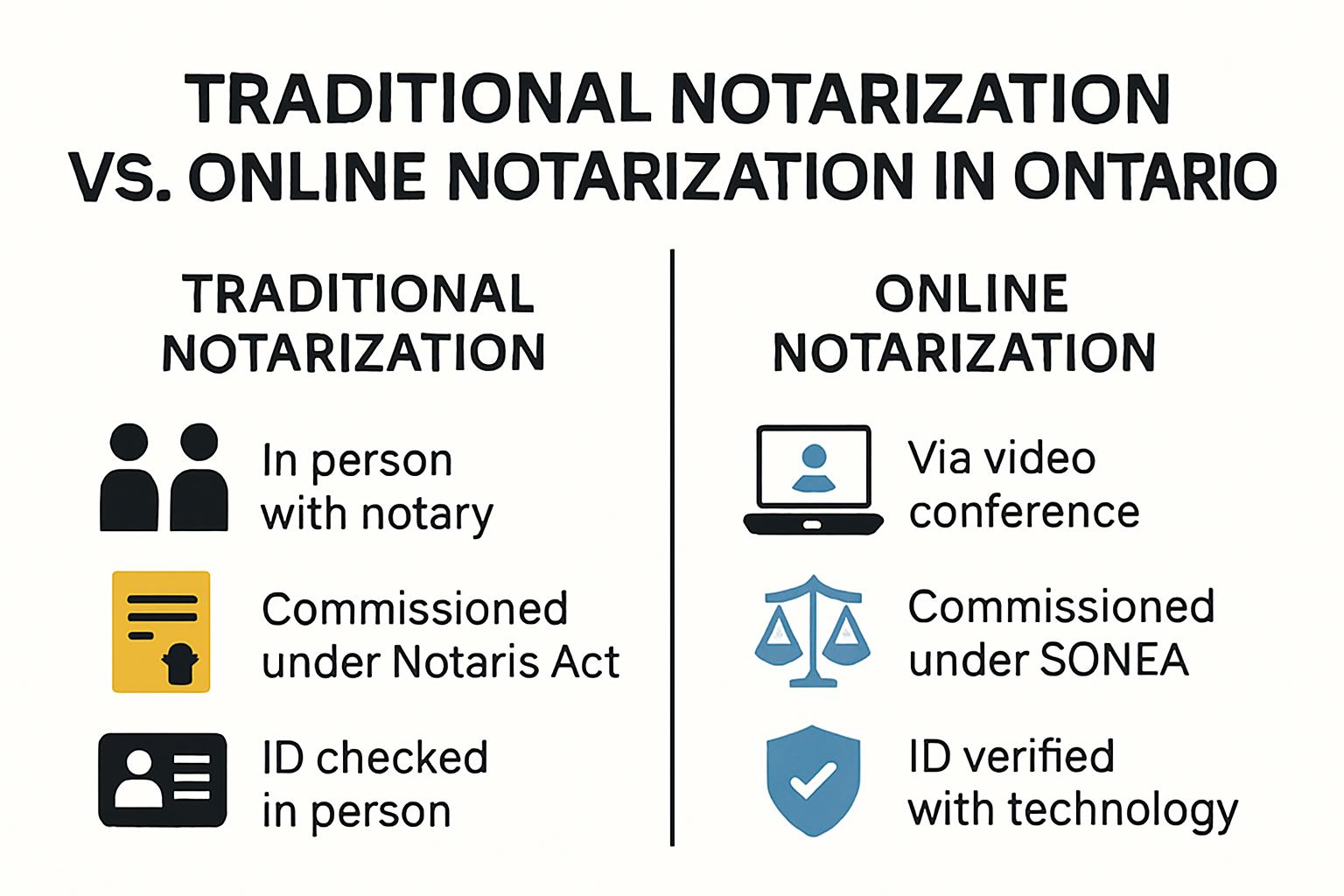
How Online Notary Services Work in Ontario
Online notary services in Ontario represent a complex legal landscape that requires careful navigation. While digital transformation has revolutionized many professional services, notarization remains subject to specific regulatory constraints that impact how these services can be delivered.
Legal Framework for Virtual Notarization
The current legal environment for online notary services in Ontario is nuanced. According to the Law Society of Ontario, traditional notarization typically requires physical presence. However, recent regulatory developments have introduced some flexibility through remote commissioning.
Ontario Regulation 431/20 provides a framework for remote administrative processes, permitting certain legal documents to be commissioned electronically. This regulation allows for real-time audio-visual communication with specific identity verification requirements. Professionals must ensure they meet stringent verification protocols to maintain legal validity.
Technical Requirements for Remote Notarization
Successful online notarization in Ontario demands robust technological infrastructure. Key technical components include:
- Secure Video Platforms: High-quality, encrypted video communication systems that support clear visual and audio interactions
- Digital Identity Verification: Advanced methods to confirm individual identities through government-issued documentation
- Electronic Signature Technologies: Compliant digital signature systems that meet provincial legal standards
Notaries must carefully document each step of the virtual notarization process. This includes maintaining comprehensive digital records of identification checks, verbal confirmations, and the actual notarization event. Ontario Legal Resources recommend meticulous documentation to ensure legal enforceability.
Compliance and Authentication Challenges
The most significant challenge in online notary services remains authentication. Traditional in-person notarization relies on physical presence and direct document inspection. Virtual processes must replicate these security measures through sophisticated technological solutions.
As of October 2024, the Notaries Act has not fully implemented comprehensive regulations for complete online notarization. This means professionals must exercise extreme caution, ensuring each virtual notarization meets existing legal standards.
Businesses and individuals seeking online notary services in Ontario should consult directly with licensed professionals who understand these intricate regulatory requirements. The digital landscape continues to evolve, and staying informed about the latest legal frameworks is crucial for maintaining document validity and legal compliance.

Legal Requirements for Online Notarization in 2025
The legal landscape for online notarization in Ontario continues to evolve, presenting a complex regulatory environment that demands careful understanding. As digital transformation reshapes professional services, notarization remains anchored in strict legal frameworks that prioritize document authenticity and personal verification.
Regulatory Constraints and Electronic Signature Validity
The Government of Canada provides critical guidance on electronic signatures, emphasizing that their legal validity depends entirely on the specific context and legal requirements. According to Canadian Electronic Signature Guidelines, not all documents can be signed electronically, particularly those requiring formal notarization.
The Law Society of Ontario has explicitly stated that traditional notary services still mandate physical presence. As of February 2025, no comprehensive regulations have been enacted to permit full online notarization, creating significant limitations for digital service delivery.
Identity Verification and Document Authentication
Legal requirements for online notarization center on robust identity verification processes. Key authentication standards include:
- Government-Issued Photo Identification: Mandatory verification through official documents
- Real-Time Video Confirmation: Requirement for live visual identity checks
- Comprehensive Digital Documentation: Detailed recording of verification processes
Ontario Regulation 431/20 provides a partial framework for remote commissioning, allowing certain administrative processes to occur electronically. However, Legal Experts at Ontario Bar Association emphasize that this does not constitute full online notarization authorization.
Compliance Challenges and Professional Responsibilities
Notaries and legal professionals face significant challenges in navigating these complex regulatory requirements. The absence of comprehensive online notarization regulations means practitioners must exercise extreme caution. Professional liability becomes a critical consideration when attempting any form of digital document certification.
Businesses and individuals seeking notarization services must work closely with licensed professionals who understand these intricate legal boundaries. The digital transformation of legal services continues to progress, but notarization remains one of the most carefully regulated areas of professional practice.
As the legal landscape evolves, staying informed about the latest regulatory changes is crucial. Professionals and clients alike must remain vigilant, understanding that current legal frameworks prioritize document security and personal verification over digital convenience.
Benefits for Ontario Residents and Businesses
The evolving landscape of notary services presents unique opportunities and advantages for Ontario residents and businesses, despite the current regulatory constraints. Understanding these potential benefits helps individuals and organizations prepare for future digital transformation in legal documentation.
Accessibility and Convenience Advantages
Statistics Canada highlights the growing importance of digital accessibility, particularly for individuals with mobility challenges or those residing in remote areas. Online notary services promise significant improvements in document processing for various population segments.
People with physical disabilities, rural residents, and professionals with demanding schedules can potentially benefit from virtual notarization processes. The ability to complete critical document authentication without geographical limitations represents a substantial improvement in service delivery. Remote accessibility becomes a key consideration for modern legal services.
Economic and Operational Efficiency
Businesses stand to gain considerable advantages from streamlined notarization processes. According to Ontario Chamber of Commerce, organizations that adopt digital documentation strategies can realize significant operational efficiencies:
- Reduced Transaction Times: Potential elimination of physical document transportation and in-person meetings
- Cost Savings: Minimized travel expenses and administrative overhead
- Enhanced Productivity: Faster document processing and authentication mechanisms
The Canadian Federation of Independent Business reports that small and medium enterprises could save approximately 15-20% in administrative costs through improved digital documentation processes.
Security and Technological Innovation
Modern digital platforms offer advanced security protocols that potentially surpass traditional notarization methods. Cybersecurity experts emphasize the sophisticated identity verification technologies emerging in digital authentication systems.
Key security innovations include:
- Encrypted Communication Channels: Advanced protection for sensitive document transmission
- Multi-Factor Authentication: Comprehensive identity verification processes
- Comprehensive Digital Audit Trails: Detailed documentation of every verification step
While current regulations limit full online notarization, these technological advancements position Ontario for future digital transformation. Businesses and residents must stay informed about evolving legal frameworks and emerging technological capabilities.
As digital service delivery continues to reshape professional interactions, understanding these potential benefits becomes crucial. Proactive engagement with emerging technologies and regulatory changes will be key to maximizing the advantages of future online notary services in Ontario.
Choosing a Trusted Online Notary Service
Selecting a reliable online notary service requires careful consideration and thorough evaluation. With the complex legal landscape surrounding digital notarization in Ontario, individuals and businesses must approach service selection with a strategic and informed mindset.
Verification of Professional Credentials
Certifid emphasizes the critical importance of validating a notary’s professional credentials. Legitimate online notary services must hold valid notary commissions and demonstrate specific authorization for remote notarization processes.
Key credential verification steps include:
- Professional Licensing: Confirming active notary public status with the Law Society of Ontario
- Professional Experience: Reviewing years of practice and specialized expertise
- Disciplinary Record: Checking for any professional misconduct history
Individuals should request and independently verify professional documentation before engaging any online notary service. Transparency in credentials serves as the first line of defense in ensuring service reliability.
Security and Technological Infrastructure
Project Managers Network highlights the critical role of technological infrastructure in online notarization. Trusted services must implement comprehensive security protocols that comply with international standards like the U.S. ESIGN Act and Know Your Customer (KYC) protocols.
Essential security features include:
- Multi-Factor Authentication: Robust identity verification processes
- Encrypted Communication Channels: Secure document transmission
- Comprehensive Audit Trails: Detailed documentation of verification steps
Digital document security becomes paramount when selecting an online notary service. Clients should request explicit explanations of the platform’s security mechanisms and data protection strategies.
Compliance and Legal Framework Understanding
The most critical aspect of choosing an online notary service involves understanding their approach to legal compliance. Ontario Legal Resources recommend working with professionals who demonstrate:
- Clear understanding of current regulatory limitations
- Transparent communication about document authentication processes
- Commitment to maintaining legal standards
Businesses and individuals must recognize that current Ontario regulations significantly restrict full online notarization. A reputable service will be upfront about these limitations, providing clear guidance on potential document processing approaches.
Navigating the online notary service landscape requires due diligence. While technological innovations continue to emerge, legal and regulatory frameworks remain complex. Potential clients should approach service selection as a comprehensive evaluation process, prioritizing professional credentials, technological security, and regulatory compliance.
Ultimately, the goal is to find a service that balances technological innovation with rigorous legal and professional standards. Careful research and direct communication with potential service providers will help individuals and businesses make informed decisions in this evolving digital landscape.
To help readers quickly compare the required features and responsibilities mentioned for trusted online notary services, here is a summary table organized by key evaluation criteria:
| Evaluation Criteria | What to Check |
|---|---|
| Professional Licensing | Confirm active status with Law Society of Ontario |
| Professional Experience | Years of practice and relevant expertise |
| Disciplinary Record | Absence of professional misconduct |
| Security Protocols | Multi-factor authentication, encrypted channels, audit trails |
| Legal Compliance | Understanding and communication of current regulatory limits |
| Transparency | Willingness to provide credential and process documentation |
| Technological Infrastructure | Use of secure, compliant online platforms |
Below is a table summarizing the types of technological and security features essential for remote notarization, as explained in the article:
| Security Feature | Description |
|---|---|
| Secure Video Platforms | Encrypted audio-visual communication for real-time notary |
| Digital Identity Verification | Use of government-issued documents and live confirmation |
| Electronic Signature Technologies | Compliant digital signature systems (provincial/national law) |
| Multi-Factor Authentication | Enhanced user verification using multiple credentials |
| Encrypted Communication Channels | Secure transmission of sensitive documents |
| Comprehensive Digital Audit Trails | Record of all actions and ID checks for legal enforceability |
Frequently Asked Questions
What is online notarization in Ontario?
Online notarization in Ontario involves the commissioning of documents through real-time audio-visual communication, allowing individuals to execute legal documents remotely while meeting stringent identity verification requirements.
What are the legal requirements for online notarization in Ontario in 2025?
As of 2025, online notarization in Ontario is guided by specific regulations that permit certain legal documents to be notarized electronically. These documents require real-time video confirmation and compliance with identity verification protocols.
What are the benefits of using an online notary service in Ontario?
Online notary services in Ontario provide enhanced accessibility and convenience, operational efficiency, and advanced security measures, making notarization faster and more reliable for individuals and businesses.
How can I choose a trusted online notary service in Ontario?
To select a trusted online notary service, verify the notary’s professional credentials, evaluate their security and technological infrastructure, and ensure they understand current compliance and regulatory frameworks.
Make Ontario Online Notarization Simple and Secure Today
Do you feel frustrated by Ontario’s complex rules for online notarization? If you are worried about missing strict verification steps or need urgent documents like affidavits or statutory declarations signed remotely, you are not alone. The digital shift means more convenience, but it also brings new challenges around compliance, document security, and real-time identity checks. You deserve a solution that lets you move forward with confidence while meeting all provincial standards discussed in the article.

Take control of your legal paperwork now. Our expert team at The Online Notary uses advanced secure video technology and precise authentication for every appointment, helping you commission affidavits, invitation letters, and solemn declarations online with ease. Don’t risk delays or legal uncertainty—book your secure online notary session and move your business or personal affairs ahead today. The right support is just one click away.