
Notarized documents are the backbone of secure transactions in Ontario and every signature has the power to protect your personal or business interests. Yet surprisingly, people rarely check if a notary is actually authorized and that opens the door to risk. Nearly 40 percent of Canadians admit they would not know how to verify a notary public’s credentials and that simple oversight can lead to rejected documents or even costly fraud.
Table of Contents
- Understanding Notary Publics In Ontario
- Official Ways To Verify A Notary
- Key Documents And Red Flags To Watch For
- Why Verification Matters For Ontario Businesses
Quick Summary
| Takeaway | Explanation |
|---|---|
| Verify Notary Credentials | Always confirm a notary’s professional standing with the Law Society of Ontario to ensure they are authorized to provide notarial services. |
| Use Multiple Verification Methods | Employ a combination of official government resources, professional checks, and online tools to thoroughly verify a notary public’s legitimacy. |
| Recognize Red Flags | Be vigilant of warning signs such as reluctance to show credentials, unreasonably low fees, or pressure to complete documents, as these may indicate potential fraud. |
| Understand Notarial Powers | Familiarize yourself with the full scope of a notary’s powers, including document authentication, oath administration, and true copy certification, to ensure proper handling of your legal documents. |
| Prioritize Verification in Business | For Ontario businesses, notarial verification is crucial for legal protection, financial security, and establishing credibility in international transactions. |
Understanding Notary Publics in Ontario
Notary publics play a critical role in Ontario’s legal documentation processes, serving as trusted professionals who authenticate and certify important documents. These authorized individuals provide essential verification services that help protect individuals and businesses from potential fraud and legal complications.
The Legal Framework of Notary Services in Ontario
In Ontario, the practice of notarization is governed by specific legal standards. Professionals authorized to become notaries include lawyers and paralegals in good standing with the Law Society of Ontario. According to the Notaries Act, these professionals have comprehensive powers that extend beyond simple document witnessing.
Notary publics in Ontario are empowered to perform several critical functions:
- Document Authentication: Verify the legitimacy of signatures and documents
- Oath Administration: Witness and administer legal oaths
- True Copy Certification: Certify documents as accurate representations of original materials
Scope of Notarial Powers
The role of a notary public goes far beyond a simple rubber stamp. These professionals serve as impartial witnesses who help prevent document fraud and ensure the integrity of legal paperwork. When a notary public certifies a document, they are providing a legally recognized confirmation that the document is genuine and the signatures are authentic.
In practical terms, this means notaries can assist with a wide range of documentation needs. From affidavits and statutory declarations to international business documents, their seal and signature carry significant legal weight. Learn more about online notary services that are increasingly becoming available to meet modern documentation requirements.
Notaries must adhere to strict professional standards. They are required to verify the identity of individuals signing documents, ensure that signatories are acting of their own free will, and maintain comprehensive records of their notarial acts. This rigorous approach helps maintain the highest levels of legal and professional integrity in document authentication.
The importance of notary services cannot be overstated. In a world where document fraud and identity theft are growing concerns, notaries provide a critical layer of protection. Their professional oversight helps safeguard personal and business interests, ensuring that critical documents can be trusted and relied upon in legal and administrative contexts.
Official Ways to Verify a Notary
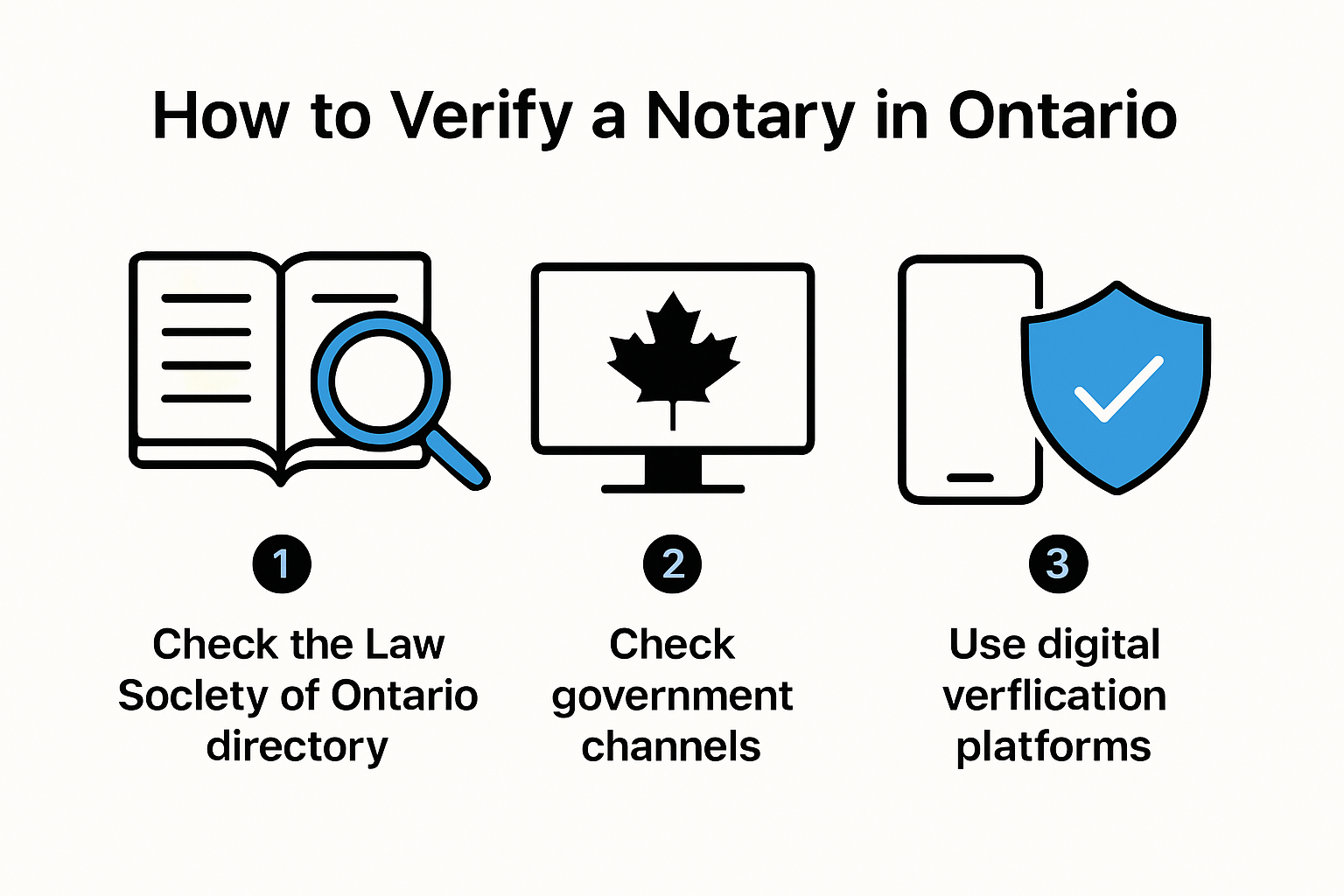
Verifying the credentials and legitimacy of a notary public in Ontario requires a systematic approach that involves multiple official channels and resources. Understanding these verification methods is crucial for ensuring the authenticity and reliability of notarial services.
Checking Professional Credentials
The primary and most authoritative method for verifying a notary involves confirming their professional standing with the Law Society of Ontario. Lawyers and paralegals who are notaries public must maintain active membership and good standing with this regulatory body. Individuals can use the Law Society’s online directory to verify a notary’s current professional status, ensuring they are legally authorized to provide notarial services.
Key verification steps include:
- Confirming the notary’s active legal license
- Checking for any disciplinary actions or professional misconduct
- Verifying their current registration status
Official Government Verification Channels
The Ontario government provides official resources for verifying notary credentials. Official Documents Services offers comprehensive information about document authentication and notary public appointments. Individuals can use these official channels to cross-reference a notary’s credentials and ensure they meet the provincial legal requirements.
Additional verification methods include:
- Requesting official identification from the notary
- Checking their seal and official stamp for authenticity
- Confirming their specific authorized notarial powers
Digital and Online Verification Options
With the advancement of digital services, verifying a notary has become more accessible. Online notary verification platforms now provide quick and efficient ways to confirm a notary’s credentials. These digital tools allow individuals to:
- Instantly check professional registrations
- Verify digital signatures and certifications
- Access real-time professional status updates
When verifying a notary, it is essential to be thorough and use multiple verification methods. Combining official government resources, professional regulatory checks, and digital verification tools provides the most comprehensive approach to ensuring the legitimacy of a notary public in Ontario.
Remember that a legitimate notary will always be transparent about their credentials and willing to provide proof of their professional standing. If you encounter any hesitation or resistance during the verification process, it is a potential red flag that warrants further investigation.
To help you compare the main methods for verifying a notary in Ontario, the table below summarizes features and benefits of each approach.
| Verification Method | Key Features | Where to Access |
|---|---|---|
| Law Society of Ontario Directory | Confirms notary’s license, checks disciplinary record | Online at Law Society website |
| Official Documents Services (ODS) | Government-backed verification, notary commission records | Ontario government, ODS website |
| Digital/Online Platforms | Real-time registration check, digital document reviews | Approved verification platforms |
| Professional Credentials Check | Direct confirmation of credentials & membership | Ask notary for documentation |
Key Documents and Red Flags to Watch For
When engaging with a notary public in Ontario, understanding the essential documents and potential warning signs is crucial for protecting yourself from potential fraud or unprofessional service. This section will guide you through the critical documents to verify and the red flags that should prompt immediate caution.
Essential Notarial Documents and Identification

The Law Society of Ontario emphasizes the importance of proper identification verification. When working with a notary, you should expect and request specific documentation that demonstrates their legitimacy and professional standing.
Key documents to examine include:
- Official Government Identification: A valid government-issued photo ID with current information
- Notary Commission Certificate: Proof of official appointment by the Ministry of the Attorney General
- Professional Membership Card: Current documentation from the Law Society of Ontario
Below is a checklist table of key notarial documents and red flags. Refer to it to ensure you request the right identification and remain alert for problematic signs.
| Document or Red Flag | Purpose/Warning | Should Be Present? |
|---|---|---|
| Official Government Photo ID | Confirms notary’s identity | Yes |
| Notary Commission Certificate | Proves notary’s official appointment | Yes |
| Law Society Membership Card | Shows professional standing | Yes |
| Reluctance to show credentials | May signal fraud or unregistered notary | No |
| Unusually low/high fees | Potential sign of scam or unethical conduct | No |
| Pressure to complete documents quickly | Could indicate lack of professionalism or fraud | No |
Recognizing Red Flags in Notarial Services
Certain warning signs can indicate potential issues with a notary public’s credibility or professional conduct. According to Ontario’s regulatory guidelines, being aware of these red flags can help you avoid potential legal complications.
Warning signs to watch for:
- Reluctance to show official credentials
- Pressuring you to complete documents quickly
- Charging unusually low or suspiciously high fees
- Inability to clearly explain their notarial powers
- Suggesting shortcuts in document authentication
Professional Verification and Authentication Techniques
Professional notaries follow strict protocols for document verification. Online notary services have developed advanced techniques to ensure document integrity and client protection. When working with a notary, expect them to:
- Carefully examine your original identification
- Verify the authenticity of documents
- Maintain detailed records of notarial acts
- Use official seals and stamps consistently
- Provide clear explanations of the notarization process
Protecting yourself requires diligence and understanding. A reputable notary will be transparent, patient, and willing to address any concerns you might have about their professional credentials or the notarization process. If something feels incorrect or uncomfortable, trust your instincts and seek additional verification or alternative notarial services.
Remember that legitimate notaries are professionals committed to maintaining the highest standards of legal documentation and personal integrity. By being informed and attentive, you can navigate notarial services with confidence and security.
Why Verification Matters for Ontario Businesses
In the complex landscape of business operations, document verification through notarial services represents a critical safeguard for Ontario businesses. The process of verifying notary credentials and understanding their importance goes far beyond a mere administrative formality.
Legal Protection and Risk Mitigation
The Government of Canada emphasizes the crucial role of notarization in authenticating corporate records, including commercial invoices, corporate bylaws, and articles of incorporation. For Ontario businesses, proper notarial verification serves as a fundamental protective mechanism against potential legal disputes and fraudulent activities.
Key legal protection aspects include:
- Establishing document authenticity
- Creating legally binding evidence
- Preventing potential corporate fraud
- Ensuring compliance with provincial regulations
Financial and Transactional Security
Notarial verification provides an essential layer of security in business transactions. Professional notary services play a pivotal role in ensuring the validity of legal documents, particularly in high-stakes financial interactions such as property transfers, contract negotiations, and partnership agreements.
Critical financial security benefits include:
- Reducing risks of contractual misunderstandings
- Providing independent third-party verification
- Creating reliable documentation for financial transactions
- Supporting legal enforceability of business agreements
The table below summarizes how notarial verification benefits Ontario businesses in legal, financial, and international contexts.
| Area | Key Benefits for Businesses |
|---|---|
| Legal Protection | Prevents fraud, creates binding evidence, ensures compliance |
| Financial Security | Reduces risk, enables reliable transactions, supports enforceability |
| International Credibility | Meets global standards, builds trust with partners, ensures documentation accepted abroad |
International Business Credibility
For Ontario businesses operating in global markets, notary verification becomes even more significant. International partners and regulatory bodies often require authenticated documents to establish trust and legal compliance.
International business advantages of proper notarization include:
- Enhanced credibility in cross-border transactions
- Meeting international documentation standards
- Facilitating smoother international business negotiations
- Demonstrating professional commitment to transparency
Businesses that prioritize thorough document verification through reputable notarial services protect themselves from potential legal and financial risks. The small investment in proper verification can prevent substantial future complications, making it an essential strategy for sustainable business operations.
Ultimately, notarial verification is not just a procedural requirement but a strategic business practice. It represents a commitment to legal integrity, transparent operations, and professional excellence in an increasingly complex business environment.
Frequently Asked Questions
How can I verify a notary public in Ontario?
You can verify a notary public in Ontario by checking their credentials with the Law Society of Ontario’s online directory, using official government verification channels, and utilizing digital verification platforms.
What documents should I request from a notary public to ensure their legitimacy?
You should request an official government-issued photo ID, a notary commission certificate, and a professional membership card from the Law Society of Ontario to verify a notary’s legitimacy.
What are the red flags to watch for when dealing with a notary?
Red flags include reluctance to show credentials, pressure to complete documents quickly, and unusually low or high fees, all of which may indicate potential fraud or unprofessional conduct.
Why is it important to verify a notary’s credentials?
Verifying a notary’s credentials is essential to protect legal and financial interests, ensure document authenticity, and prevent potential fraud in important transactions.
Get Verified Notarization Online — Protect Your Documents Instantly
You just read how critical it is to verify a notary’s credentials in Ontario and how even a small oversight can put your personal or business documents and money at risk. The uncertainty that comes with choosing the right notarial service is real. If you want the peace of mind that comes from working with fully verified professionals who use leading authentication techniques, you are in the right place.

Take the next step to safeguard your affidavits, invitation letters, or statutory declarations. The specialists at The Online Notary make document verification simple, secure, and 100 percent online. Every notarial service you request comes with professional transparency, verified by strict Law Society of Ontario standards. Ready to protect your important transactions? See how easy it is to get your documents notarized online right now.
Recommended
- What is an Online Notary? – The Online Notary CA
- Notarize Online in Canada – The Online Notary CA
- Why Opt for an Online Notary in Ontario – The Online Notary CA
- The Complete Guide to Using an Online Notary Public for Affidavits and Declarations in Ontario (2025) – The Online Notary CA
- California Trust Certification: Secure Your Family’s Future in 2025 – Law Office of Eric Ridley
- How to Get Food Safety Certification in Canada (2025 Guide) – Probe IT