
Legal documents need more than just signatures to carry real weight in courtrooms or across borders. Surprisingly, a document stamped by a notary public in your hometown might be totally worthless in another country. That is because while notarization only authenticates identity locally, broader legal recognition often calls for something much more involved, and that extra step can mean the difference between smooth approval and frustrating delays.
Table of Contents
- Defining Legalization And Notarization: Key Concepts
- The Purpose And Importance Of Legalization Vs Notarization
- How Legalization And Notarization Work In Practice
- Common Scenarios Requiring Legalization Vs Notarization
- Legalization And Notarization: Implications For Businesses And Individuals
Quick Summary
| Takeaway | Explanation |
|---|---|
| Notarization verifies identities and intentions | Notarization ensures that signers are who they claim to be and are willingly entering into agreements. |
| Legalization broadens document validity internationally | Legalization allows documents to be recognized across different jurisdictions, making them valid for international use. |
| Both processes prevent document fraud | Notarization and legalization serve as safeguards against forgery and identity theft in both local and international contexts. |
| Different scenarios require different authentication methods | Understanding when to use notarization or legalization is crucial to avoid legal complications in personal and business matters. |
| Proper authentication mitigates legal risks | Effective notarization and legalization protect parties from disputes and ensure compliance with legal responsibilities. |
Defining Legalization and Notarization: Key Concepts
Legalization and notarization are fundamental processes that authenticate documents, providing legal validity and credibility in various contexts. While these terms are often used interchangeably, they represent distinct legal procedures with unique purposes and implications.
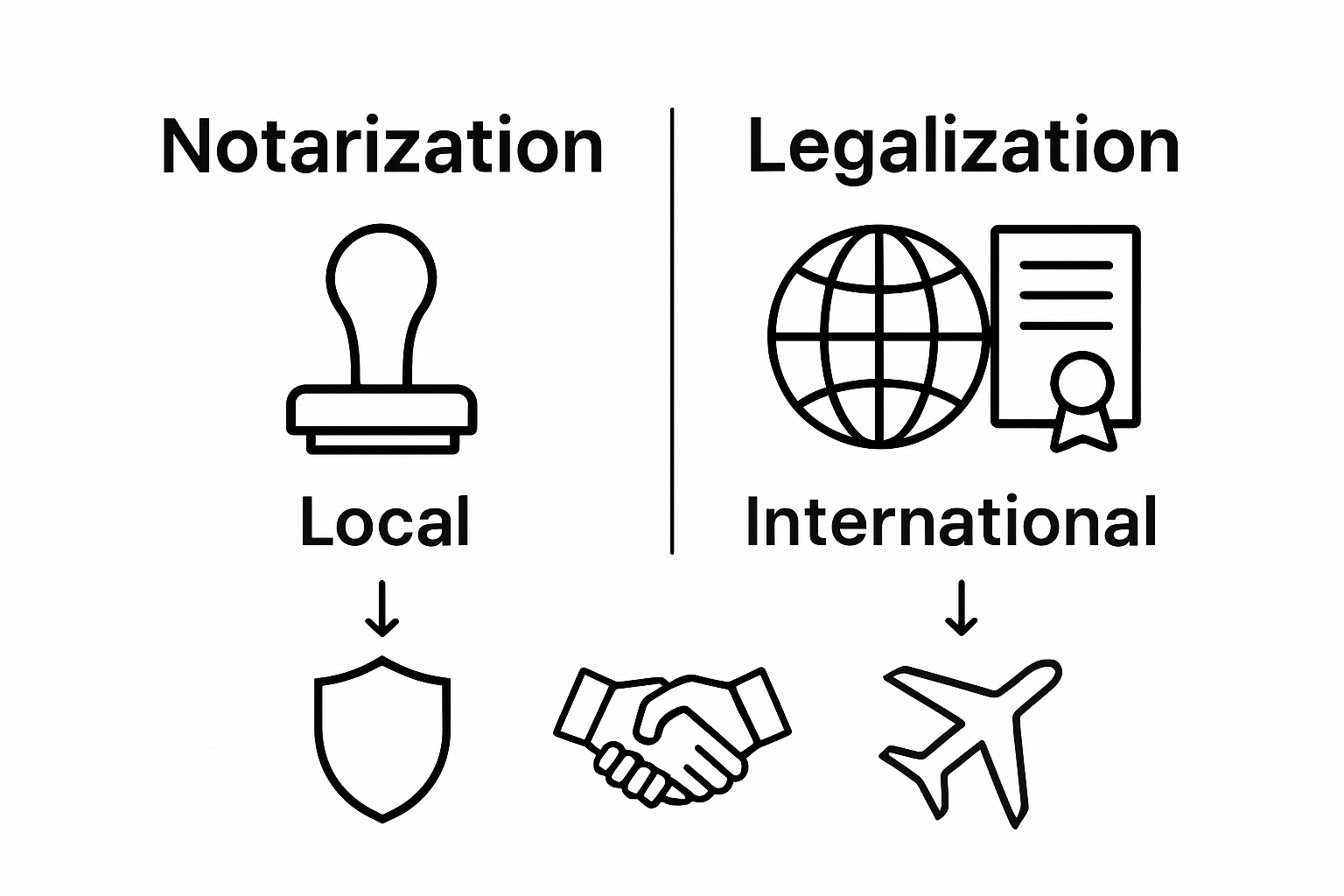
What is Notarization?
Notarization is an official process where a licensed notary public verifies the identity of individuals signing a document and witnesses their signature. This process serves as a critical fraud prevention mechanism, ensuring that signatories are who they claim to be and are willingly entering into an agreement. Learn more about document verification in Ontario.
Key aspects of notarization include:
- Confirming the identity of document signers
- Verifying the willingness of parties to sign
- Adding an official seal or stamp to validate the document
- Creating a trusted record of the signing event
Understanding Legalization
Legalization is a more complex process typically used for documents intended for international use. According to the U.S. Department of State Foreign Affairs Manual, legalization involves authenticating official documents to make them legally recognized across different jurisdictions or countries.
The legalization process often requires multiple layers of certification, which may include:
- Verification by the original issuing authority
- Confirmation from government departments
- Obtaining an apostille or additional diplomatic certification
- Translations when documents are in a different language
While notarization provides local credibility, legalization extends a document’s legal recognition internationally, ensuring it meets the specific requirements of foreign governments or institutions.
To help clarify the distinct roles and practical applications of notarization and legalization, the following comparison table outlines their main features, purposes, and common uses:
| Aspect | Notarization | Legalization |
|---|---|---|
| Primary Purpose | Verifies identity and witnesses signatures locally | Authenticates documents for international/legal use across jurisdictions |
| Who Performs the Process | Licensed Notary Public | Government authorities, consulates or embassies |
| Key Steps | Identity check, willingness to sign, seal/stamp added | Notarization, certification by officials, possible apostille or translation |
| Legal Recognition | Local or domestic | International/multiple jurisdictions |
| Typical Documents | Property deeds, powers of attorney, legal agreements | Immigration papers, academic credentials, business contracts |
| Protection Provided | Prevents local fraud and identity theft | Prevents cross-border fraud and establishes legal status abroad |
| When Required | Local agreements or domestic legal processes | Any time documents need acceptance in another country |
The Purpose and Importance of Legalization vs Notarization
Legalization and notarization serve critical roles in establishing document authenticity, legal validity, and trust across various personal and professional contexts. Understanding their distinct purposes helps individuals and organizations navigate complex legal requirements effectively.
Protecting Legal Integrity
Both legalization and notarization function as crucial safeguards against document fraud. Notarization provides local authentication by verifying signatories’ identities and intentions, while legalization extends this protection to international settings. Explore the benefits of document notarization in Ontario.
Key protective aspects include:
- Preventing identity theft and document falsification
- Creating official records of document signing
- Establishing a clear chain of legal accountability
- Ensuring voluntary and informed consent
Practical Applications in Different Contexts
Notarization and legalization play vital roles across multiple domains. According to research from Cornell Law, these processes are essential in scenarios ranging from real estate transactions to international business agreements.
Typical scenarios requiring these authentication methods include:
- Property deed transfers
- Power of attorney documents
- Academic and professional credential verifications
- International business contracts
- Immigration and citizenship documentation
For individuals and organizations operating across different jurisdictions, understanding the nuanced differences between notarization and legalization becomes paramount. While notarization provides local credibility, legalization ensures documents meet complex international legal standards, facilitating smoother cross-border interactions and reducing potential legal complications.
How Legalization and Notarization Work in Practice
Understanding the practical implementation of legalization and notarization helps individuals and organizations navigate complex document authentication processes effectively. Each method involves specific procedures designed to verify document integrity and legal standing.
The Notarization Process
Notarization transforms a private document into a trusted legal instrument. When a document requires notarization, the individual must appear before a licensed notary public who performs critical verification steps. Learn how to get documents notarized online in Ontario.
Typical notarization workflow includes:
- Presenting valid government issued photo identification
- Signing the document in the notary’s presence
- Verifying the signer’s understanding and willingness
- Applying an official notary seal and signature
Legalization for International Use
Legalization transforms a domestically validated document into an internationally recognized legal instrument. According to Cornell Law School, the process typically involves multiple authentication stages to ensure global legal acceptance.
Key international legalization steps often include:
- Initial notarization by a qualified professional
- Verification from relevant government departments
- Obtaining an apostille or diplomatic certification
- Potential translation into the destination country’s language
While notarization provides local credibility, legalization creates a comprehensive authentication trail that allows documents to be recognized across different legal jurisdictions, facilitating international business, academic, and personal transactions.
Understanding the steps involved in both the notarization and legalization processes can help individuals and businesses prepare the necessary documents with fewer complications. The table below offers a side-by-side breakdown of each process:
| Step | Notarization | Legalization |
|---|---|---|
| 1. Present Document and Identification | Yes | Yes (Initial step) |
| 2. Verify Identity and Willingness | Yes | Yes (Included in notarization) |
| 3. Add Notary Seal/Signature | Yes | Yes (Required before legalization proceeds) |
| 4. Submit to Government Department | No | Yes |
| 5. Apostille/Diplomatic Certification | No | Yes (If required for destination country) |
| 6. Translation (if necessary) | No | Yes (If needed for foreign authority) |
Common Scenarios Requiring Legalization vs Notarization
Different legal and professional contexts demand specific document authentication methods. Understanding when to use notarization or legalization can prevent potential legal complications and ensure smooth administrative processes.
Professional and Business Documentation
Business transactions frequently require precise document verification. Learn when a notary is essential in Ontario, as different scenarios call for different levels of authentication.
Common professional scenarios include:
- Corporate partnership agreements
- Real estate property transfers
- Employment contract validations
- Intellectual property documentation
- Business licensing and permit applications
International Document Requirements
According to research from the U.S. Department of State, international document authentication involves complex verification processes. Legalization becomes crucial when documents must be recognized across different legal jurisdictions.
Typical international scenarios requiring legalization involve:
- Academic credential verifications
- Immigration and citizenship documents
- Marriage and birth certificates for foreign registration
- International business contracts
- Medical and professional qualification transfers
While notarization provides local legal credibility, legalization ensures documents meet intricate international legal standards, bridging potential gaps in cross-border document recognition and facilitating smoother global interactions.
Legalization and Notarization: Implications for Businesses and Individuals
Document authentication processes like notarization and legalization create legal frameworks that provide crucial protections for both businesses and individuals. These mechanisms ensure transparency, reduce fraud risks, and establish clear lines of accountability in various professional and personal transactions.
Risk Mitigation and Legal Protection
Proper document authentication serves as a fundamental risk management strategy. Discover the key benefits of notarization in Ontario, which helps organizations and individuals safeguard their legal interests.
Key risk mitigation aspects include:
- Preventing potential fraudulent document submissions
- Creating verifiable records of legal agreements
- Establishing clear evidence of voluntary consent
- Protecting parties from potential legal disputes
- Ensuring compliance with regulatory requirements
Economic and Professional Consequences
According to research from the U.S. Department of Commerce, international document authentication involves complex processes that directly impact business operations and individual opportunities.
Significant implications encompass:
- Enabling cross-border business transactions
- Supporting international academic and professional credential recognition
- Facilitating global mobility for professionals
- Reducing bureaucratic barriers in international contexts
- Providing legal certainty in complex jurisdictional environments
By understanding and implementing appropriate notarization and legalization processes, businesses and individuals can navigate complex legal landscapes more effectively, minimize potential risks, and expand their professional and personal opportunities.

Streamline Document Authentication in Ontario
Struggling to understand if you need legalization or notarization for your vital documents? The differences matter, especially when deadlines, legal requirements, or cross-border submissions are at stake. Many Ontarians find it stressful and time-consuming to ensure their affidavits, statutory declarations, or invitation letters are properly authenticated. If you want peace of mind and guaranteed compliance, you deserve a simpler solution.

Stop second-guessing and get your documents notarized online without hassle. Our platform helps you avoid costly mistakes and saves you valuable time. Discover how our online notary services for Ontario transform complex document requirements into a fast and secure process. Ready to move forward confidently? Visit theonlinentoary.ca and get your documents professionally notarized today. Don’t let legal confusion slow you down—make sure your documents are valid where you need them, right now.
Frequently Asked Questions
What is the primary difference between notarization and legalization?
Notarization is the process of verifying the identity of individuals signing a document and witnessing their signature, creating a trusted record. Legalization, on the other hand, involves multiple layers of authentication to make documents legally recognized across different countries.
When is notarization needed?
Notarization is typically required for documents such as property deed transfers, powers of attorney, and certain legal agreements to verify the identities of the signers and ensure their willingness to enter into the agreement.
How does the legalization process work for international documents?
Legalization generally starts with notarization by a qualified professional, followed by verification from relevant government departments, obtaining an apostille or diplomatic certification, and may include translation into the language of the destination country.
Why is proper document authentication important for businesses?
Proper document authentication helps prevent fraud, establishes clear legal accountability, ensures compliance with regulations, and facilitates smoother international transactions, which are crucial for successful business operations.
Recommended
- How to Notarize Documents in Ontario: Easy 2025 Guide – The Online Notary CA
- Why Notarize Documents in Ontario? Key Benefits for 2025 – The Online Notary CA
- How to Get Documents Notarized Online in Ontario 2025 – The Online Notary CA
- When Is a Notary Required in Ontario? Essential 2025 Guide – The Online Notary CA