
People sign contracts and legal papers every day, but most never think twice about who actually verifies these signatures. A notary public confirms identities through government-issued photo ID and applies a unique seal to make signatures official. Surprisingly, the most powerful thing a notary does is not just about stamping documents, but about stopping fraud before it can even start.
Table of Contents
- What Is A Notary And Their Role In Society
- The Importance Of Notaries In Legal Transactions
- How Notaries Authenticate Documents And Signatures
- Key Concepts Related To Notary Services
- Real-World Examples Of Notary Applications In Ontario
Quick Summary
| Takeaway | Explanation |
|---|---|
| Notaries verify identities with official IDs | They confirm signers’ identities using government-issued photo identification to ensure authenticity. |
| Notaries prevent document fraud and disputes | By witnessing signatures and applying notarial seals, notaries create legally binding records that mitigate risks. |
| Notarial acts vary by legal requirements | Different jurisdictions may require specific types of notarizations based on local laws and document needs. |
| Notaries enhance trust in transactions | Their role as impartial witnesses fosters confidence in legal and financial dealings among parties involved. |
| Notaries maintain strict professional standards | Operating under provincial regulations, they ensure accountability and transparency in notarizing documents. |
What is a Notary and Their Role in Society
A notary public serves as an essential legal professional who acts as an impartial witness during critical document authentication and signature processes. These authorized professionals play a fundamental role in preventing fraud and ensuring the integrity of legal and official documents across various personal and business transactions.
Understanding the Core Functions of a Notary
At its core, a notary’s primary responsibility involves verifying the identity of individuals signing important documents and confirming that signatories are acting voluntarily and with full understanding. Their key functions include:
- Confirming the identities of document signers through government issued photo identification
- Witnessing signatures and applying an official notarial seal or stamp
- Administering oaths and affirmations for legal and official documents
These professionals serve as neutral third parties who validate the authenticity of signatures, helping to prevent potential document fraud and legal disputes. Learn more about notary public roles in Ontario to understand their specific local responsibilities.
The Social and Legal Significance of Notaries
Notaries contribute significantly to maintaining societal trust in legal and financial transactions. According to research from the National Notary Association, their work ensures document reliability by providing an official, state-recognized mechanism for verifying personal identities and intentions.
Whether dealing with real estate transactions, affidavits, contracts, or statutory declarations, notaries provide an extra layer of security and credibility. They help protect individuals and organizations from potential misrepresentation or fraudulent activities by meticulously documenting and validating critical interactions.
The Importance of Notaries in Legal Transactions
Notaries play a critical role in protecting individuals and organizations by providing an additional layer of legal verification and authenticity in complex transactions. Their involvement helps establish trust, prevent potential fraud, and create legally recognized documentation across numerous important scenarios.
Ensuring Document Legitimacy and Fraud Prevention
Legal transactions rely on verifiable documentation, and notaries serve as crucial gatekeepers in this process. By meticulously examining identification, witnessing signatures, and applying official seals, they create a formal record that significantly reduces the risk of document tampering or misrepresentation.
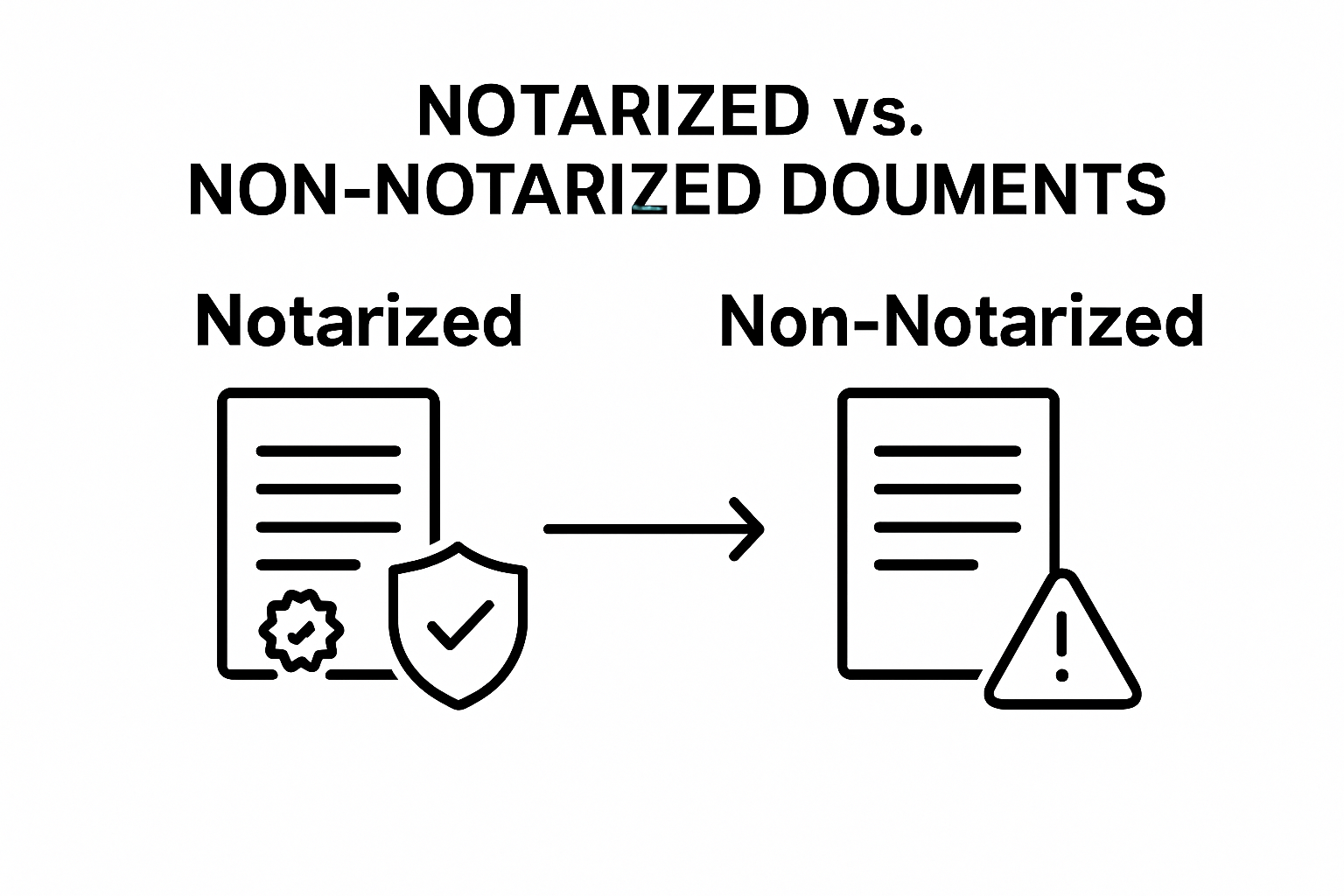
Key aspects of document legitimacy include:
- Confirming the genuine identity of all parties involved
- Validating that signatories understand the document’s contents
- Creating an official, state-recognized record of the transaction
Explore essential examples of notarized documents in Ontario to understand the breadth of transactions requiring notarial services.
Legal and Financial Risk Mitigation
According to research from the Canadian Bar Association, notarized documents provide a critical safeguard against potential legal disputes. They offer concrete evidence of the authenticity of signatures and the voluntary nature of agreements, which can be instrumental in preventing costly litigation.
Notaries help mitigate risks across various domains such as real estate transfers, affidavits, power of attorney documents, and international business contracts. Their impartial verification process creates a legally defensible record that protects all parties involved in a transaction.
How Notaries Authenticate Documents and Signatures
The authentication process performed by notaries is a sophisticated and precise legal procedure designed to verify document integrity and prevent potential fraud.
By implementing rigorous verification protocols, notaries ensure that signatures are genuine, voluntary, and legally binding across various personal and professional contexts.
Identity Verification and Document Examination
Thorough identification checks form the foundation of document authentication. Notaries meticulously validate the identity of individuals signing documents through multiple layers of verification. This critical process involves:
- Requesting government issued photo identification with current information
- Cross referencing identification details against the document being signed
- Confirming the signatory’s legal capacity and voluntary participation
Learn more about who can witness signatures in Ontario to understand the precise requirements for legal documentation.
The Authentication Procedure
According to research from the Ontario Ministry of the Attorney General, the authentication procedure involves several systematic steps to guarantee document validity. Notaries perform a comprehensive review that includes examining the physical document, verifying the authenticity of signatures, and applying an official notarial seal.
The notarial seal serves as a critical mark of verification, indicating that the document has been thoroughly examined and meets legal standards. This seal provides official confirmation that the signatures were witnessed, identities confirmed, and all parties understood the document’s contents during the signing process.
Key Concepts Related to Notary Services
Notary services encompass a complex legal framework that extends far beyond simple document signing. Understanding the nuanced principles governing these services helps individuals and organizations navigate legal documentation with greater confidence and precision.
Types of Notarial Acts and Legal Recognition
Notarial acts are not uniform across all scenarios, but represent specialized legal interventions tailored to specific transactional needs. These acts typically include:
- Acknowledgments of document signatures
- Administering oaths and affirmations
- Certifying copies of original documents
- Verifying the authenticity of foreign language documents
Discover what a notary does in Ontario to gain deeper insights into the comprehensive scope of notarial responsibilities.
Legal Authority and Professional Standards
According to research from the Canadian Bar Association, notaries operate under strict professional standards that mandate impartiality, integrity, and rigorous documentation practices. Their legal authority stems from provincial regulations, which define their specific powers and limitations in authenticating legal documents.
Notaries must maintain detailed records of their transactions, ensuring a transparent and accountable process that protects all parties involved. This meticulous approach helps prevent potential legal disputes and provides a reliable mechanism for verifying critical information in various personal and professional contexts.
The following table organizes and compares the main types of notarial acts mentioned in the article, providing a concise overview of their functions and the contexts in which they are applied.
| Type of Notarial Act | Description | Typical Use Case |
|---|---|---|
| Acknowledgment | Confirms the identity of a signer and their willingness to sign | Real estate transactions, contracts |
| Oath or Affirmation | Sworn or affirmed statement for legal purposes | Affidavits, statutory declarations |
| Certifying Copies | Verifies that a copy matches the original document | Passport and document authentication |
| Verification of Translations | Confirms the accuracy of translated documents | Marriage certificate, immigration documentation |
Real-World Examples of Notary Applications in Ontario
Notarial services play a crucial role in validating legal documents across numerous personal and professional scenarios in Ontario. These services provide essential legal authentication that ensures the integrity and credibility of critical documentation in complex transactions.
Personal Legal Documentation
Personal legal documentation represents a significant domain where notary services are fundamental. Individuals frequently require notarization for important life events and legal processes, including:
- Passport and travel document authentication
- Power of attorney declarations
- Affidavits for legal proceedings
- Marriage certificate translations
- Statutory declarations for immigration processes
Learn about public notary requirements in Ontario to understand the specific legal standards governing these critical documents.
Business and Professional Contexts
According to research from the Ontario Ministry of the Attorney General, notarial services are essential in various business and professional scenarios. Corporate documents requiring authentication include:
- Commercial contracts and agreements
- Real estate property transfer documents
- Business incorporation certificates
- International trade documentation
- Consent letters for minor travel
Notaries provide an additional layer of legal verification that helps businesses maintain compliance, prevent fraud, and establish trust in complex transactional environments. Their meticulous documentation and verification processes ensure that legal instruments meet rigorous provincial standards, protecting the interests of all parties involved.
This table summarizes common personal and business contexts in which notarial services are used in Ontario, helping readers quickly identify when notarization may be required.
| Context | Common Documents Involved |
|---|---|
| Personal Legal Documentation | Passports, power of attorney, affidavits, marriage certificate translations, statutory declarations |
| Business/Professional | Commercial contracts, real estate transfers, business incorporation, international trade documentation, consent letters for minors |

Secure Your Essential Documents with Trusted Online Notary Services
You have just learned how notaries are critical for protecting legal documents and verifying identities. If you are worried about complicated paperwork or delays in authenticating key documents like affidavits, invitation letters, or statutory declarations, you are not alone. As described in this article, the legal and emotional risks of missing proper verification are real. Mistakes or oversights can cause stress, wasted time, and even legal issues. That is why you need a service you can trust to handle your notary needs quickly and accurately.
Explore more legal topics in our knowledge center.

Take control of your important legal tasks today. Visit The Online Notary to get fast, easy, and fully recognized online notarization for affidavits, invitation letters, and more in Ontario. Do not leave the integrity of your documents to chance. Get started now and experience peace of mind knowing your paperwork meets all provincial standards.
Frequently Asked Questions
What is the role of a notary?
A notary serves as an impartial witness for document authentication, verifying identities and ensuring that signatories understand what they are signing.
Why is notarization important in legal transactions?
Notarization is crucial as it helps prevent fraud, establishes trust, and provides a legally recognized record that validates the authenticity of signatures and intentions.
How do notaries verify identities?
Notaries verify identities by requiring government-issued photo identification and ensuring that all signers understand the documents they are signing voluntarily.
What types of documents typically require notarization?
Common documents that require notarization include power of attorney forms, affidavits, real estate transactions, and contracts, among others.