
Misplacing a vital document can stall major life events and disrupt legal processes. Every year, thousands rely on affidavits to declare lost passports, property papers, or academic credentials. You might expect that hunting down replacements would be a bureaucratic nightmare. The real surprise is how a single sworn statement can open doors that seemed permanently closed.
Table of Contents
- Defining The Affidavit For Lost Documents
- The Importance Of Affidavits In Legal Contexts
- How Affidavits For Lost Documents Function
- Key Components Of An Affidavit For Lost Documents
- Real-World Applications And Examples
Quick Summary
| Takeaway | Explanation |
|---|---|
| An affidavit declares a document loss. | It formally states that a specific document has been lost or destroyed through a legal process. |
| Must include critical details for validity. | Essential elements include document type, loss circumstances, and an oath confirming its absence. |
| Requires notarization for legal standing. | An authorized official must witness the signing and administer an oath to solidify the document’s credibility. |
| Used in various official processes. | Common scenarios include replacing passports, resolving property disputes, and verifying academic credentials. |
| Legal consequences for false statements. | Providing incorrect information on an affidavit can lead to severe penalties, including perjury charges. |
Defining the Affidavit for Lost Documents
An affidavit for lost documents represents a crucial legal instrument designed to formally declare the disappearance or destruction of an important personal or official document. By understanding its purpose and significance, individuals can navigate document replacement processes more effectively.
What Constitutes a Lost Document Affidavit?
A lost document affidavit is a sworn written statement that confirms the absence of a specific document through a legal process. According to legal experts, this document serves as an official record explaining the circumstances surrounding the document’s disappearance. The affidavit typically includes essential details such as:
- The specific document that has been lost
- Date and potential location of the loss
- Circumstances leading to the document’s disappearance
- A sworn statement confirming the inability to locate the document
Individuals might require a lost document affidavit for various official processes, including passport replacement, property transactions, or legal proceedings where original documentation cannot be produced.
Legal Implications and Verification
When creating an affidavit for lost documents, the individual must provide a credible narrative supported by factual information. The document must be signed in the presence of an authorized official who can administer an oath, such as a notary public. Research from legal documentation standards indicates that the statement must be made voluntarily and contain truthful information.
The primary purpose of this legal document is to create an official record of the document’s loss and provide a formal mechanism for individuals to explain their circumstances. By presenting a comprehensive and truthful account, individuals demonstrate their commitment to transparency and legal compliance.
When to Use a Lost Document Affidavit
People might need a lost document affidavit in numerous scenarios, such as replacing government identification, resolving property disputes, or addressing academic credential issues. Our guide on lost passport documentation provides additional insights into specific document replacement processes.
While each situation varies, the fundamental goal remains consistent: providing an official, sworn statement that explains the absence of a critical document and supports subsequent replacement or verification procedures.
The Importance of Affidavits in Legal Contexts
Affidavits represent powerful legal instruments that serve multiple critical functions within judicial and administrative systems. These sworn statements provide a formal mechanism for individuals to present verified information under penalty of perjury, ensuring accountability and credibility in legal proceedings.
Establishing Legal Credibility
According to legal documentation standards, affidavits play a fundamental role in establishing credible evidence across various legal contexts. They function as legally binding written testimonies that can be used in multiple scenarios, including:
- Court proceedings and litigation
- Property and real estate transactions
- Government administrative processes
- Immigration documentation
- Academic and professional verification
The significant advantage of an affidavit lies in its ability to provide sworn testimony without requiring personal appearance in court, which can streamline legal and administrative processes.
Providing Evidentiary Weight
Courts and legal institutions grant substantial weight to affidavits because they are executed under oath. Research from legal documentation practices emphasizes that these documents carry significant evidentiary value. By requiring individuals to swear or affirm the truthfulness of their statements, affidavits create a powerful deterrent against providing false information.
The legal consequences of making a false affidavit are severe, potentially resulting in criminal charges of perjury. This inherent accountability ensures that individuals approach these documents with utmost sincerity and accuracy.
Versatility in Legal Applications
Affidavits demonstrate remarkable versatility across different legal domains. Our comprehensive guide on understanding affidavits explores the nuanced applications of these documents. Whether resolving disputes, supporting legal claims, or providing formal declarations, affidavits serve as critical tools for maintaining legal integrity and facilitating efficient information exchange.
By providing a standardized method for presenting sworn statements, affidavits help maintain transparency, reliability, and accountability within legal and administrative systems.
How Affidavits for Lost Documents Function
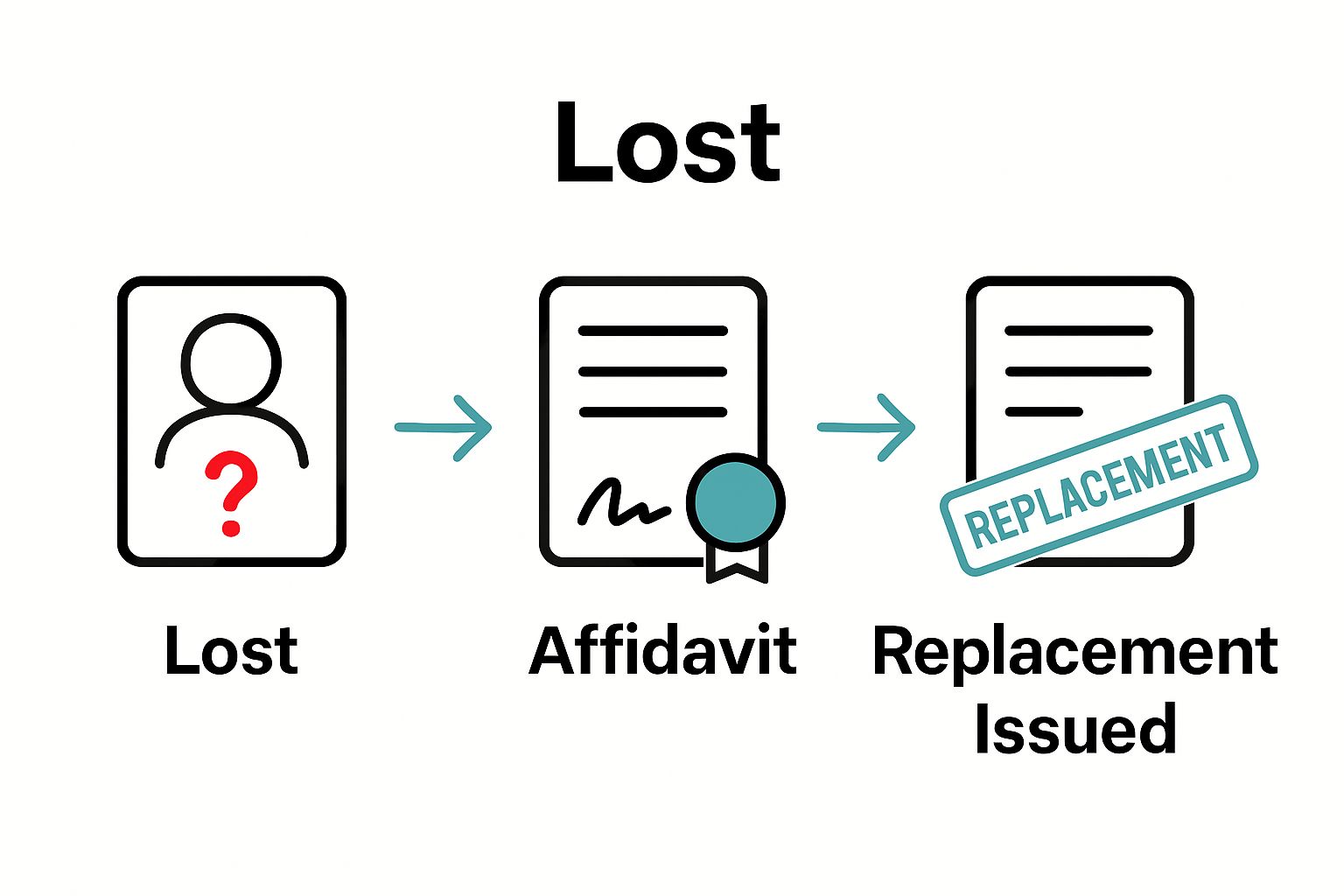
Affidavits for lost documents operate as specialized legal instruments designed to provide formal documentation when original records have disappeared or become unavailable. These crucial documents create an official narrative explaining the circumstances surrounding a document’s absence while establishing a verifiable record for administrative and legal purposes.
Structural Components and Requirements
Legal documentation standards outline specific structural requirements for crafting a valid affidavit for lost documents. The document must comprehensively address several critical elements:
- Precise description of the missing document
- Specific details about when and where the document was last known to exist
- Detailed explanation of efforts made to locate the original document
- Personal statement confirming the document’s genuine loss
- Notarized confirmation of the statement’s truthfulness
Each component serves a fundamental purpose in establishing the document’s credibility and providing context for its absence.
Verification and Authentication Process
The authentication process for a lost document affidavit involves rigorous verification mechanisms. Research from official legal procedures emphasizes the critical importance of sworn testimony administered by authorized officials such as notaries public.
The verification process typically includes:
- Confirming the individual’s identity
- Administering an official oath
- Witnessing the signature
- Applying official notarial seal or certification
These steps ensure the document’s legal standing and minimize potential fraudulent claims.
Practical Applications and Legal Implications
Lost document affidavits serve diverse practical functions across multiple domains. Our comprehensive guide on document replacement provides additional context about specific replacement scenarios. Whether addressing government identification, academic credentials, or property records, these affidavits offer a standardized mechanism for individuals to formally document and replace missing documentation.
Ultimately, affidavits for lost documents represent a crucial legal tool that balances individual needs with institutional requirements for verifiable documentation.
Key Components of an Affidavit for Lost Documents
An effective affidavit for lost documents requires meticulous preparation and comprehensive documentation to ensure legal validity and administrative acceptance. Each component serves a critical function in establishing the document’s credibility and providing a transparent account of the document’s disappearance.
Essential Identifying Information
Legal documentation standards emphasize the importance of precise personal and document identification. The affidavit must include comprehensive details that unequivocally establish the individual’s identity and the specific document’s characteristics:
- Full legal name of the affiant
- Current residential address
- Contact information
- Date of birth
- Government issued identification details
- Specific type and description of the lost document
- Last known date and location of the document
These identifying elements create a foundational framework for understanding the context of the document’s loss.
Detailed Narrative of Document Loss
Research from legal documentation practices highlights the significance of providing a comprehensive and truthful narrative. The affidavit must articulate a clear, logical explanation of how and when the document was lost:
- Precise circumstances leading to the document’s disappearance
- Specific timeline of events
- Documented attempts to locate the original document
- Reasons why the document cannot be recovered
- Potential witnesses or supporting evidence
A transparent and detailed account minimizes potential doubts about the document’s legitimacy.
Sworn Declaration and Notarization
The final critical component involves the legal validation of the affidavit. Our comprehensive guide on document replacement underscores the importance of proper sworn declaration. The document must be:
- Signed in the presence of an authorized official
- Sworn under penalty of perjury
- Witnessed by a qualified notary public
- Accompanied by official notarial seal
- Dated and signed by the affiant
These elements transform the document from a simple statement to a legally binding instrument with significant evidentiary weight.
The table below summarizes key components that must be included in an affidavit for lost documents, helping to ensure the statement meets legal and administrative standards.
| Component | Description |
|---|---|
| Identifying Information | Includes full legal name, residency, contact details, date of birth, and government ID info. |
| Document Description | Specifies the type, details, and last known status/location of the lost document. |
| Narrative of Loss | Details circumstances, timeline, efforts to recover, and any supporting evidence or witnesses. |
| Sworn Statement | A formal declaration under oath confirming the document’s loss and attempts to recover it. |
| Notarization | Signing before an authorized official, witnessed and sealed to validate the affidavit. |
Real-World Applications and Examples
Affidavits for lost documents serve critical functions across numerous professional and personal scenarios, providing individuals with a structured legal mechanism to address documentation challenges. These versatile instruments offer practical solutions in complex administrative and legal contexts.
Government and Official Documentation
Official government resources highlight the extensive applications of lost document affidavits in official documentation processes. Individuals frequently utilize these documents when dealing with critical government identifications:
- Replacing lost passports
- Reconstructing birth certificates
- Updating immigration documentation
- Resolving social security record discrepancies
- Reissuing driver’s licenses
Each scenario requires a meticulously prepared affidavit that demonstrates the genuine circumstances surrounding the document’s absence.
Financial and Property Transactions
Legal financial documentation standards emphasize the importance of lost document affidavits in property and financial contexts. Critical financial scenarios often require these documents:
- Proving property ownership when original deeds are missing
- Transferring vehicle titles
- Resolving inheritance and estate documentation issues
- Processing insurance claims for lost valuable documents
- Updating bank records and financial histories
In these instances, the affidavit serves as a credible substitute for missing original documentation.
Academic and Professional Verification
Our comprehensive guide on document replacement illustrates the significance of affidavits in academic and professional domains. Professionals and students frequently use these documents to:
- Replace lost academic transcripts
- Verify professional certifications
- Reconstruct employment records
- Support credential verification processes
- Validate professional training documentation
These affidavits provide a formal mechanism for individuals to substantiate their educational and professional backgrounds when original documents are unavailable.
This table provides an at-a-glance overview of the main categories where affidavits for lost documents are frequently used, along with representative examples from each area.
| Category | Typical Uses |
|---|---|
| Government & Official | Passport replacement, birth certificates, social security, licenses |
| Financial & Property | Property deeds, vehicle titles, estate/inheritance, insurance claims |
| Academic & Professional | Academic transcripts, certifications, employment records, credentials |
Don’t Let a Lost Document Hold You Back – Get Fast, Simple Affidavit Help Online
Misplacing a vital document can feel overwhelming. You may be worried about the complicated process of drafting an affidavit for lost documents or unsure if you have all the information needed to make your statement legally valid. As described in this article, providing sworn testimony with clear details is essential to moving forward with applications, legal matters, or personal affairs. The risk of further delays or legal issues only increases if you hesitate.
Discover how easy it is to get professional help with our online notarization solutions.

Why wait or stress over paperwork errors? Get your affidavit for lost documents drafted and notarized in minutes with The Online Notary. Take control and complete your affidavit today so you can resolve your document challenges fast. Start now and get peace of mind in just a few clicks.
Frequently Asked Questions
What is the purpose of an affidavit for lost documents?
An affidavit for lost documents serves to formally declare that an important document has been lost or destroyed. To use it, prepare a sworn statement detailing the circumstances of the loss, which will help in replacing the missing document.
How do I create a valid affidavit for lost documents?
To create a valid affidavit, include specific details about the lost document, such as its type, date, and location of loss, as well as an explanation of efforts made to find it. Gather all required identifying information and a notarized signature to ensure it meets legal standards.
When should I use an affidavit for lost documents?
You should use an affidavit for lost documents when replacing essential items like passports, birth certificates, or property deeds that are no longer available. Make sure to file this affidavit as part of your documentation process, especially in legal or administrative contexts.
What are the risks of providing false information in an affidavit for lost documents?
Providing false information in an affidavit can lead to serious legal consequences, including charges of perjury. Approach this process carefully by ensuring that all statements are truthful and well-documented to avoid any potential issues.
How long does it take to process an affidavit for lost documents?
The processing time for an affidavit can vary, but it generally takes around 30 days to receive confirmation on replacements once submitted. To expedite the process, ensure that all documentation is complete and accurately filled out before submission.
Can an affidavit for lost documents be used in multiple scenarios?
Yes, an affidavit for lost documents can be used in various contexts such as property transactions, academic verification, and government identification replacement. Each situation may require tailored details, so prepare accordingly for specific needs.