

Online notarization in Ontario is more popular than ever, with over 60 percent of document signings now happening remotely through secure video calls. Here is the twist. Not every document is eligible and strict rules mean a simple mistake could void your paperwork. Answers are not always obvious in this rapidly changing field and the latest updates for 2025 may surprise you.
Table of Contents
- How Notary Online Services Work In Ontario
- Requirements For Online Notarization In 2025
- Benefits Of Using A Notary Online In Ontario
- Choosing The Right Notary Online Service
Quick Summary
| Takeaway | Explanation |
|---|---|
| Legal Framework Requires Video Conferencing | Ontario regulations mandate that online notary services use secure video verification to authenticate documents, emphasizing identity confirmation and real-time interaction. |
| Not All Documents Are Eligible for Online Notarization | Professionals need to assess the nature of documents as only certain legal instruments, such as affidavits and statutory declarations, can be processed online under current regulations. |
| Technology and Security Are Crucial | Online notarization platforms must employ advanced technological solutions like end-to-end encryption and multi-factor authentication to ensure document integrity and compliance with privacy laws. |
| Convenience of Service | The ability to access notary services remotely offers significant benefits, including flexible scheduling and reduced travel requirements, making it especially beneficial for busy individuals. |
| Careful Selection of Notary Services | Users should evaluate notary services based on legal compliance, professional credentials, and technological security to ensure reliability and authenticity in the document authentication process. |
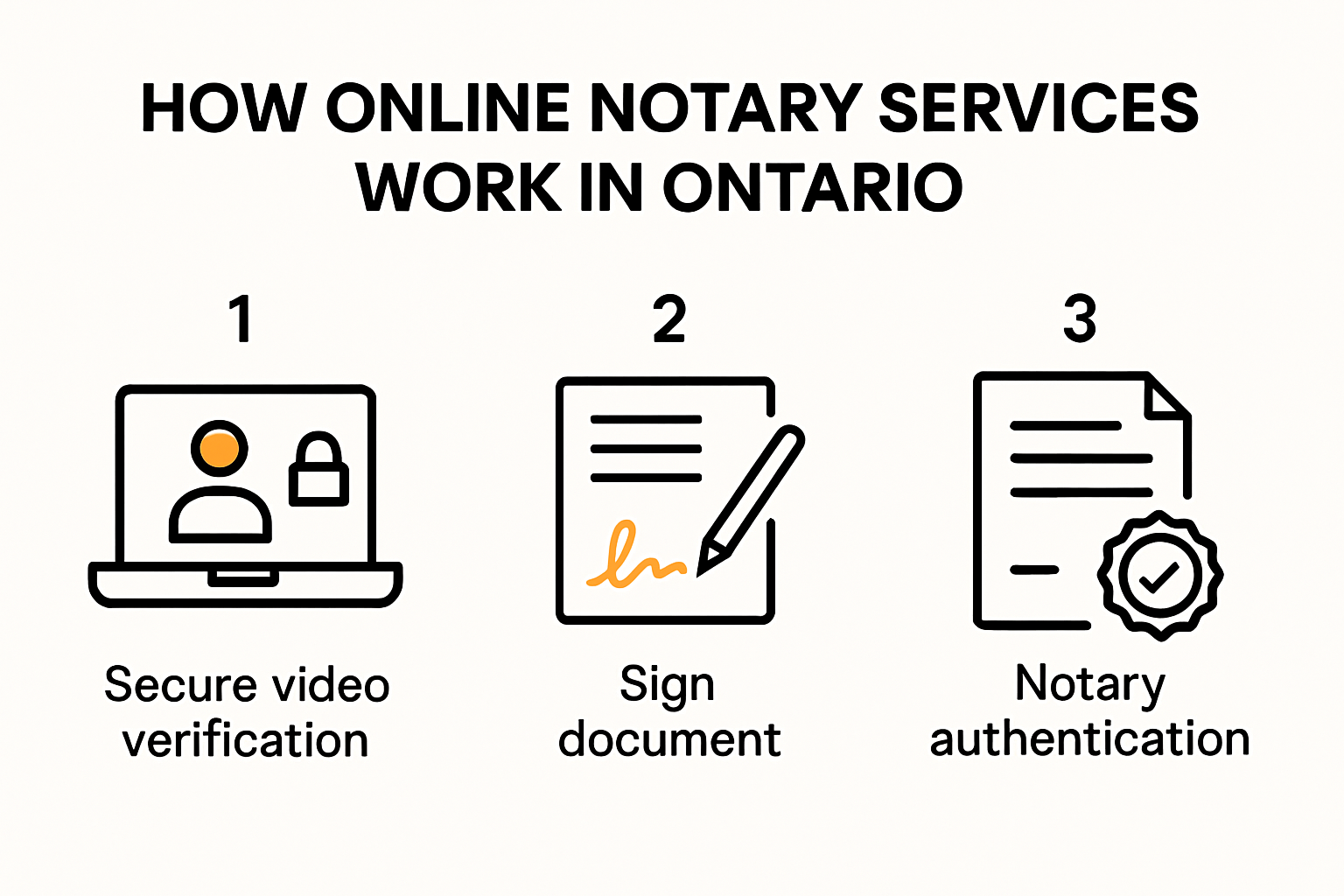
How Notary Online Services Work in Ontario
Notary services in Ontario currently operate within a complex regulatory landscape that balances traditional legal requirements with emerging digital technologies. While many individuals seek convenient online notarization options, the current legal framework presents specific challenges and limitations for remote document authentication.
Legal Framework for Document Authentication
In Ontario, document notarization is governed by strict regulatory standards. The Law Society of Ontario currently does not permit full online notary services in the traditional sense. Instead, the province has developed alternative mechanisms for remote document verification. Ontario Regulation 431/20 provides a framework for remote commissioning, which allows licensed professionals to witness signatures and administer oaths through secure video conferencing platforms.
The key requirements for remote document authentication include:
- Secure Video Verification: Commissioners must use encrypted video conferencing technologies
- Identity Confirmation: Rigorous methods to verify the identity of document signatories
- Real Time Interaction: Live video connection during document signing
Technology and Verification Process
Effective online notary services in Ontario rely on advanced technological solutions to meet legal standards. Authorized commissioners must follow specific protocols when conducting remote document authentication. This involves using platforms that can:
- Capture high resolution visual documentation
- Provide secure digital signature capabilities
- Maintain comprehensive audit trails
- Ensure end to end encryption
Professionals utilizing these platforms must maintain meticulous records and adhere to strict privacy protection guidelines. The process typically involves multiple verification steps, including government issued photo identification review, live video confirmation, and digital document management.

Compliance and Legal Considerations
Navigation of online notary services requires careful attention to legal nuances. Authorized professionals must be acutely aware that not all documents can be remotely authenticated. Certain legal instruments still require in person verification, and professionals risk regulatory action if they do not comply with established protocols.
While technological innovations continue to reshape document authentication, Ontario maintains a conservative approach to ensure document integrity and prevent potential fraud. Individuals seeking notary services must work closely with licensed professionals who understand these intricate regulatory requirements.
The evolving landscape of digital document verification suggests that more comprehensive online notary frameworks may emerge in the future. However, current regulations prioritize security and legal authenticity over pure convenience, requiring careful navigation of existing technological and legal constraints.
To provide clarity, here’s a summary table outlining which types of documents are typically eligible and not eligible for online notarization in Ontario, based on the article.
| Document Type | Eligible for Online Notarization? |
|---|---|
| Affidavits | Yes |
| Statutory Declarations | Yes |
| Invitation Letters | Yes |
| Solemn Declarations | Yes |
| Wills | No |
| Real Estate Transfers | No |
| Powers of Attorney | No |
| Some Government Documents | No |
Requirements for Online Notarization in 2025
Online notarization in Ontario represents a complex regulatory environment with specific requirements that professionals and individuals must carefully navigate. Understanding the current legal landscape is crucial for anyone seeking document authentication in 2025.
Legal Eligibility and Documentation Standards
To pursue online document authentication, individuals must meet stringent criteria established by provincial regulations. The Law Society of Ontario maintains strict guidelines regarding which documents can be remotely processed. Not all legal instruments qualify for digital verification, and professionals must conduct thorough assessments before proceeding.
Eligible documents typically include:
- Affidavits: Sworn written statements made under oath
- Statutory Declarations: Formal statements of fact made voluntarily
- Invitation Letters: Documents requiring official verification
- Solemn Declarations: Formal statements made without religious undertones
Professionals must verify the authenticity of documents through multiple verification mechanisms. Ontario Regulation 431/20 outlines specific protocols for remote document processing, emphasizing the need for comprehensive identity confirmation and secure technological platforms.
Technological and Identity Verification Requirements
Online notarization demands sophisticated technological infrastructure and rigorous identity verification protocols. Authorized commissioners must utilize platforms that provide:
- Advanced encryption technologies
- Real time video verification capabilities
- Secure digital signature mechanisms
- Comprehensive audit trail documentation
Identity verification involves multiple layers of confirmation. Individuals must present government issued photo identification during live video interactions. Commissioners are required to meticulously document verification processes, maintaining detailed records that can withstand potential legal scrutiny.
Compliance and Professional Obligations
Professionals engaging in online document authentication must adhere to stringent regulatory requirements. Authorized professionals face significant legal and professional risks if they do not comply with established protocols.
Key compliance considerations include:
- Strict adherence to privacy protection regulations
- Maintaining comprehensive documentation
- Ensuring secure technological platforms
- Verifying the legal validity of document authentication methods
While technological innovations continue to reshape document verification processes, Ontario maintains a conservative approach prioritizing legal authenticity and security. Professionals must remain current with evolving regulatory frameworks and technological standards to provide effective online notarization services.
The ongoing digital transformation suggests potential future modifications to existing regulations. However, current guidelines emphasize thorough verification, secure technological infrastructure, and unwavering commitment to legal standards in document authentication.
Benefits of Using a Notary Online in Ontario
While online notarization in Ontario presents unique challenges, the emerging digital landscape offers several strategic advantages for individuals and businesses seeking document authentication services. Understanding these benefits can help users navigate the complex regulatory environment more effectively.
Convenience and Accessibility
Digital document authentication provides unprecedented convenience for Ontario residents. Research from the Ontario Bar Association indicates that remote verification methods can significantly reduce time and geographical barriers associated with traditional notarization processes.
Key convenience factors include:
- Flexible Scheduling: Access notary services outside standard business hours
- Geographic Flexibility: Connect with authorized commissioners from anywhere in Ontario
- Reduced Travel Requirements: Eliminate physical transportation needs
- Faster Document Processing: Streamline verification procedures
Professionals and individuals can now complete critical documentation processes without compromising their existing commitments. This flexibility is particularly valuable for busy professionals, remote workers, and those with limited mobility.
Enhanced Security Measures
Cybersecurity experts highlight that modern online notarization platforms incorporate advanced security protocols that often exceed traditional in person verification methods. Digital platforms provide multiple layers of identity confirmation and document tracking that traditional processes cannot match.
Security advantages include:
- Encrypted communication channels
- Comprehensive digital audit trails
- Multi factor authentication processes
- Detailed record keeping mechanisms
These technological safeguards help prevent potential fraud and ensure document integrity throughout the authentication process. By leveraging sophisticated verification technologies, online notary services can provide more robust protection than conventional methods.
Cost Effectiveness and Efficiency
Economic research from the University of Toronto suggests that digital document authentication can generate significant cost savings for both service providers and clients. The elimination of physical infrastructure and reduced administrative overhead translates into more affordable notarization services.
Financial benefits encompass:
- Reduced administrative expenses
- Minimized travel related costs
- Faster document processing times
- Lower overall service charges
Businesses and individuals can allocate resources more strategically by adopting digital verification methods. The efficiency gains represent a substantial improvement over traditional notarization approaches.
While current regulations in Ontario maintain conservative standards for online document authentication, technological innovations continue to reshape service delivery. Professionals and clients must remain adaptable and informed about emerging digital verification technologies.
The future of notary services will likely involve continued integration of secure digital platforms, balancing convenience with rigorous legal and security standards. Users should stay informed about regulatory changes and emerging technological capabilities in document authentication.
Below is a summary table outlining key benefits of using an online notary in Ontario, as described above.
| Benefit Category | Description | Key Features |
|---|---|---|
| Convenience | Flexible, accessible notarization | Scheduling flexibility, remote access |
| Security | Advanced technology for secure transactions | Encryption, multi-factor authentication |
| Cost Effectiveness | Reduced overall expenses and faster processing | Lower fees, less travel, quick turnaround |
| Accessibility | Serves those with limited mobility or busy schedules | Geographic reach, online availability |
| Auditability | Digital records and audit trails | Comprehensive tracking & documentation |
Choosing the Right Notary Online Service
Selecting an appropriate online notary service requires careful consideration of multiple factors, given the complex regulatory landscape in Ontario. Individuals and businesses must evaluate potential services through a comprehensive lens that prioritizes legal compliance, technological security, and professional credibility.
Legal Compliance and Professional Credentials
The Law Society of Ontario emphasizes the critical importance of verifying a notary service’s legal standing and professional credentials. Not all online platforms meet the stringent requirements for document authentication in Ontario.
Key credential verification factors include:
- Professional Licensing: Confirm the commissioner’s active legal certification
- Regulatory Compliance: Ensure alignment with Ontario Regulation 431/20
- Professional Memberships: Check affiliations with recognized legal associations
- Disciplinary History: Review any professional conduct records
Professional credentials serve as the foundational element in determining a notary service’s reliability and legal authenticity. Potential users must conduct thorough background checks before engaging any online notarization platform.
Technological Security and Authentication Protocols
Cybersecurity experts recommend comprehensive security assessments when evaluating online notary services. Advanced technological infrastructure is crucial for protecting sensitive document information.
Critical security considerations include:
- End to end encryption technologies
- Multi factor authentication mechanisms
- Secure video verification platforms
- Comprehensive digital audit trail capabilities
- Compliance with privacy protection regulations
The technological ecosystem surrounding a notary service directly impacts document integrity and protection against potential fraudulent activities. Users must prioritize platforms demonstrating robust security frameworks.
Service Quality and User Experience
Consumer research from the University of Toronto indicates that user experience plays a significant role in selecting digital service providers. Online notary platforms must balance technological sophistication with intuitive, user friendly interfaces.
Evaluate service quality through:
- Clear pricing structures
- Transparent processing timelines
- Responsive customer support
- Comprehensive documentation guidance
- Flexible scheduling options
The ideal online notary service combines professional expertise, technological security, and seamless user interaction. Individuals should approach selection as a comprehensive evaluation process, considering multiple interconnected factors.
While current Ontario regulations maintain conservative standards for online document authentication, technological innovations continue to reshape service delivery. Users must remain adaptable and informed about emerging verification technologies and regulatory changes.
Careful selection of an online notary service requires a holistic approach that considers legal, technological, and experiential dimensions. By conducting thorough research and maintaining high standards, individuals can navigate the complex landscape of digital document authentication effectively.
Frequently Asked Questions
What is online notarization in Ontario?
Online notarization in Ontario involves remote document authentication using secure video conferencing. It allows individuals to sign and notarize documents without being physically present in the same location as the notary.
Which documents are eligible for online notarization in Ontario?
Eligible documents for online notarization in Ontario typically include affidavits, statutory declarations, invitation letters, and solemn declarations. However, documents like wills, real estate transfers, and powers of attorney are not eligible for online notarization.
What are the requirements for online notarization in 2025?
In 2025, online notarization in Ontario requires secure video verification, identity confirmation through government-issued ID, and compliant technological platforms that ensure end-to-end encryption and auditable document trails.
How do I choose a reliable online notary service in Ontario?
To choose a reliable online notary service, verify the notary’s professional credentials, ensure they comply with Ontario regulations, check their technological security measures, and assess their user experience through reviews and service features.
Get Peace of Mind with Secure Online Notary Services in Ontario
Are you worried about making a mistake when notarizing your important documents online? The latest regulations in Ontario make it clear that not every document qualifies, and skipping a detail in video verification or identity checks could leave your paperwork void. If you need help with affidavits, statutory declarations, or invitation letters, you deserve a notary service that stays updated with the changing laws and protects your documents with the strictest security. At The Online Notary, our professionals use advanced encrypted video technology and follow every provincial guideline for secure, real-time authentication.

Don’t take chances with your legal documents. Book your remote notarization now and see how easy it is to complete your affidavit or declaration from home. To start or learn more about our services, visit our Ontario online notary platform today. Get your paperwork done right and avoid costly mistakes—secure your appointment while regulations are fresh for 2025.