

More people in Ontario are relying on online notary services than ever before. Remote commissioning by lawyers and paralegals is now fully legal in Ontario and supported by strict new security protocols. Yet, despite this surge in digital notarizations, many don’t realize that not all documents actually qualify for online authentication. This surprising gap means even in a digital age, the rules can catch you off guard.
Table of Contents
- How Online Notary Works In Ontario
- Legal Requirements For Online Notary Services
- Benefits Of Online Notary For Businesses And Residents
- Choosing The Right Online Notary Provider
Quick Summary
| Takeaway | Explanation |
|---|---|
| Remote Commissioning | Licensed lawyers and paralegals in Ontario offer remote commissioning services, allowing for digital witnessing of signatures via secure video communication, adhering to strict regulatory standards. |
| Security Protocols | Online notary services prioritize security through measures such as identity verification, video interaction, and document encryption to ensure legal integrity. |
| Document Limitations | Not all documents are eligible for online notarization; some require traditional in-person verification. Users should review document-specific requirements carefully. |
| Choosing Providers | When selecting an online notary provider, ensure professional licenses, regulatory compliance, advanced security infrastructure, and positive user experience are prioritized. |
How Online Notary Works in Ontario
Notarization in Ontario operates within a specific legal framework that balances traditional practices with emerging digital technologies. While full remote notarization is not currently permitted, the province has developed innovative approaches to document authentication and verification.
Legal Framework for Document Authentication
Ontario’s notarization process is governed by strict regulatory standards. As of 2024, the Law Society of Ontario maintains precise guidelines for document authentication. Lawyers and paralegals can provide remote commissioning services, which allows for digital witnessing of signatures and administration of oaths through secure video communication platforms.
The key distinction lies in the specific mechanisms of verification. Under Ontario Regulation 431/20, licensed professionals can conduct remote document commissioning, which means they can verify identities and witness signatures electronically. This approach provides a flexible alternative to traditional in-person notarization while maintaining rigorous legal standards.
Technology and Security Protocols
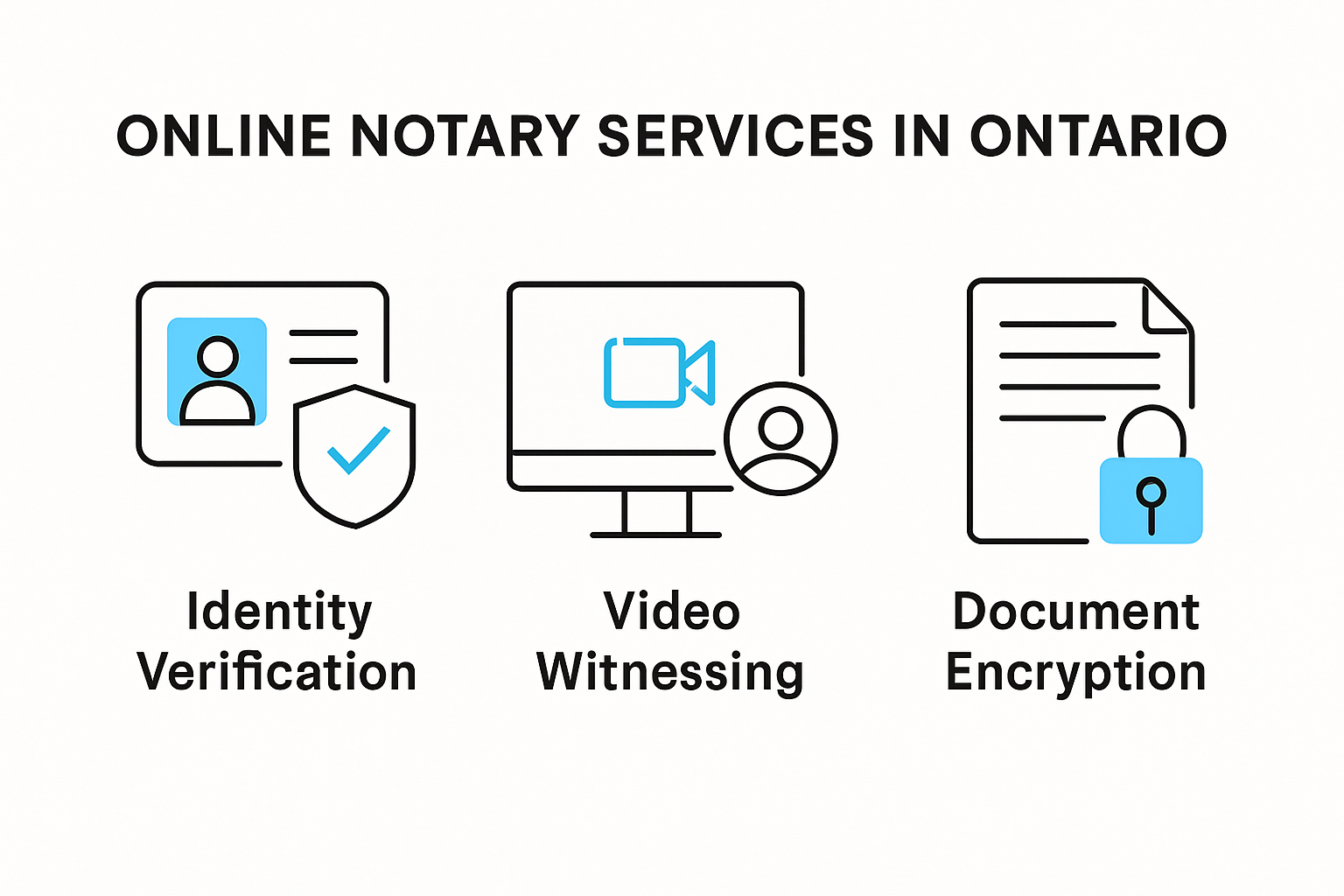
Online notary services in Ontario prioritize document security and legal integrity. The verification process typically involves multiple authentication steps:
- Identity Verification: Participants must provide government issued photo identification
- Video Verification: Real time video interaction with a licensed professional
- Document Encryption: Secure digital transmission of sensitive documents
The recent adoption of the Apostille Convention on January 11, 2024, has further streamlined document authentication processes for international use. This international agreement simplifies the verification of public documents across participating countries, reducing bureaucratic complexity.
Understanding Limitations and Requirements
While online notary services offer convenience, users must understand specific limitations. Remote notarization is not a blanket solution for all document types. Certain legal documents may still require traditional in person verification. Professionals recommend carefully reviewing the specific requirements for each document type before initiating an online notarization process.
Businesses and individuals seeking online notary services should:
- Confirm the specific document requirements
- Prepare valid government issued identification
- Ensure stable internet connection for video verification
- Have digital copies of documents ready for submission
The evolving landscape of digital document authentication in Ontario reflects a careful balance between technological innovation and legal precision. As regulations continue to adapt, online notary services are becoming an increasingly reliable and efficient method for document verification.

Legal Requirements for Online Notary Services
Online notary services in Ontario operate within a complex legal landscape that demands strict adherence to regulatory standards and professional guidelines. Understanding these legal requirements is crucial for both service providers and individuals seeking document authentication.
Regulatory Compliance and Professional Standards
The legal framework governing online notary services is primarily established by the Law Society of Ontario. Professional standards dictate that only licensed lawyers and paralegals can perform remote commissioning services. Ontario Regulation 431/20 provides specific guidelines for electronic document verification, establishing clear protocols for remote authentication.
Key compliance requirements include:
- Professional Licensing: Only registered legal professionals can conduct remote commissioning
- Identity Verification: Rigorous protocols for confirming participant identities
- Secure Communication: Use of encrypted video communication platforms
The Government of Canada’s electronic signature guidance emphasizes the importance of using industry-standard technologies that ensure document integrity and prevent unauthorized modifications.
Electronic Document Authentication
Electronic document authentication requires meticulous attention to legal standards. The process involves multiple layers of verification to ensure the legitimacy of digital documents. Canadian legal experts recommend a comprehensive approach that includes:
- Verifying the identity of all parties involved
- Ensuring the document has not been altered after signing
- Maintaining a secure audit trail of the authentication process
The recent implementation of the Apostille Convention on January 11, 2024, has further refined international document authentication processes. This agreement provides a standardized method for verifying the origin of public documents across participating countries.
Limitations and Legal Considerations
Despite technological advancements, online notary services in Ontario face significant legal constraints. Remote notarization is not universally permitted, and certain documents still require traditional in-person verification. Legal professionals advise careful review of specific document requirements before attempting electronic authentication.
Important legal considerations include:
- Understanding document-specific authentication requirements
- Recognizing limitations of electronic signatures
- Maintaining comprehensive records of the verification process
Businesses and individuals must work closely with licensed professionals to navigate the intricate legal landscape of online notary services. The evolving regulatory environment demands ongoing attention to emerging technologies and legal standards, ensuring that digital document authentication remains secure, reliable, and legally sound.
To clarify the legal and compliance differences between remote commissioning (allowed) and full remote notarization (not currently permitted), the table below summarizes the distinctions discussed above:
| Process | Permitted in Ontario | Who Can Perform | Typical Use Cases | Key Requirements |
|---|---|---|---|---|
| Remote Commissioning | Yes | Lawyers, Paralegals | Sworn statements, affidavits, statutory declarations | Video identity verification, encrypted platforms |
| Full Remote Notarization | No | N/A | Not permitted in Ontario as of 2025 | In-person may be required for certain documents |
| In-Person Notarization | Yes | Lawyers, Notaries | All document types (including restricted documents) | Physical presence and document review |
Benefits of Online Notary for Businesses and Residents
Online notary services are transforming document authentication for businesses and residents in Ontario, offering unprecedented convenience and efficiency in an increasingly digital world. These services provide strategic advantages that extend far beyond traditional notarization methods.
Enhanced Accessibility and Convenience
Online notary services break down geographical barriers, providing critical document authentication solutions for individuals and businesses across diverse locations. Research from accessibility experts indicates that remote notarization significantly improves access for people in rural or underserved areas.
Key accessibility benefits include:
- Flexible Scheduling: Document authentication available beyond traditional business hours
- Geographic Independence: Services accessible from any location with internet connectivity
- Reduced Travel Requirements: Elimination of physical travel for notarization
Economic and Operational Efficiency
Cost analysis from business efficiency experts demonstrates substantial economic advantages of online notary services. Businesses can significantly reduce administrative overhead and time investments associated with traditional document verification processes.
Financial benefits encompass:
- Time Savings: Streamlined document authentication processes
- Reduced Administrative Costs: Minimized paperwork and physical document handling
- Improved Workflow Efficiency: Faster turnaround times for critical documents
Security and Legal Compliance
Contrary to potential concerns, online notary services maintain rigorous security protocols. The Law Society of Ontario ensures that remote commissioning meets stringent legal standards, providing robust protection for digital document authentication.
Security features include:
- Advanced Encryption: Protecting document integrity during transmission
- Multi-Factor Authentication: Comprehensive identity verification processes
- Secure Digital Audit Trails: Comprehensive documentation of verification steps
Businesses and residents leveraging online notary services gain a competitive edge through improved efficiency, accessibility, and technological integration. As digital transformation continues, these services represent a critical evolution in document authentication, balancing convenience with legal precision.
The ongoing development of online notary services reflects a broader trend toward digital innovation in legal and administrative processes. By embracing these technologies, Ontario’s businesses and residents can navigate an increasingly complex document verification landscape with confidence and ease.
To provide a quick reference of the main benefits of online notary services for Ontario residents and businesses, here’s a summary table:
| Benefit | Description |
|---|---|
| Accessibility | Available from any location with internet; flexible scheduling |
| Time & Cost Savings | Faster processes; reduced administrative overhead |
| Security | Advanced encryption, secure video verification |
| Legal Compliance | Meets Ontario professional and regulatory standards |
| Convenience | No need for physical travel; instant digital documentation |
Choosing the Right Online Notary Provider
Selecting an appropriate online notary provider requires careful consideration of multiple factors beyond basic service offerings. The right provider ensures legal compliance, document security, and a seamless authentication experience for businesses and individuals in Ontario.
Legal Compliance and Professional Credentials
Professional legal experts emphasize the critical importance of verifying a notary provider’s credentials and regulatory compliance. Not all online notary services meet the stringent requirements established by the Law Society of Ontario.
Key credential verification steps include:
- Professional Licensing: Confirm the provider employs licensed lawyers or paralegals
- Regulatory Adherence: Verify compliance with Ontario Regulation 431/20
- Professional Certifications: Check for additional legal authentication qualifications
Research from digital authentication specialists recommends assessing providers against comprehensive compliance standards, including adherence to electronic transaction regulations.
Security and Technology Infrastructure
The technological framework supporting online notary services is paramount. Cybersecurity experts recommend evaluating providers based on their security protocols and technological capabilities.
Critical security considerations include:
- Advanced Encryption: Protecting document confidentiality during transmission
- Multi-Factor Authentication: Comprehensive identity verification processes
- Secure Digital Infrastructure: Robust platforms preventing unauthorized access
The Government of Canada’s digital security guidelines provide additional frameworks for assessing technological reliability in digital document services.
User Experience and Support
Beyond technical capabilities, the quality of user experience distinguishes exceptional online notary providers. Factors such as intuitive interfaces, responsive customer support, and transparent pricing contribute to a positive service experience.
Evaluate potential providers by examining:
- Platform Usability: Ease of document upload and authentication
- Customer Support: Availability of professional guidance
- Transparent Pricing: Clear fee structures without hidden costs
Businesses and residents should approach provider selection as a strategic decision, recognizing that the right online notary service can significantly streamline document authentication processes. Careful evaluation ensures not just compliance, but a reliable, efficient digital documentation experience.
The evolving landscape of digital legal services demands continuous assessment of online notary providers. By prioritizing legal compliance, technological security, and user experience, individuals and organizations can confidently navigate the complex world of digital document authentication.
Frequently Asked Questions
What is an online notary in Ontario?
An online notary in Ontario is a licensed professional, such as a lawyer or paralegal, who provides remote commissioning services through secure video communication. This allows for the digital witnessing of signatures and administration of oaths.
Are all documents eligible for online notarization in Ontario?
No, not all documents qualify for online notarization. Some legal documents still require in-person verification. It’s important to review the specific requirements for each document type before proceeding with online notarization.
What security measures are in place for online notary services?
Online notary services in Ontario prioritize security through various measures, including identity verification using government-issued photo IDs, real-time video verification during the notarization process, and document encryption to protect sensitive information.
How do I choose the right online notary provider in Ontario?
When selecting an online notary provider, ensure they have the proper licensing and regulatory compliance, a strong security infrastructure, and a positive user experience. Look for clear pricing and responsive customer support to facilitate a smooth notarization process.
Ready to Solve Online Notary Challenges in Ontario?
Are you frustrated by strict requirements and document limitations when searching for fast and legal e-notary solutions? The article highlighted how not all documents qualify for remote notarization and how confusing the legal protocols can feel. Whether you need affidavits, statutory declarations, or invitation letters officially commissioned with security and compliance, our service is designed for Ontarians like you. We cut through the complex regulations and give you direct access to certified professionals who handle secure online verification for the documents that matter most.

Stop struggling with travel hassles or worrying if your paperwork is valid. Choose The Online Notary for a smooth digital experience, trusted legal expertise, and strict security. Start your fast and secure notarization process now by visiting our main site. Discover how easy it is to meet Ontario rules and get your documents notarized right from home.