
Trying to get documents notarized in Ontario can feel like navigating endless paperwork and appointments. Yet as of 2025, you might be surprised to learn that full online notarization is still not universally allowed in Ontario, even though over 55 countries now accept international documents with new protocols. While the world rushes toward digital everything, Ontario still insists on strict rules and personal checks that leave most people wondering how truly ‘online’ the process can get.
Table of Contents
- What Does Notarize Online Mean In Ontario
- Steps To Notarize Documents Online Safely
- Legal Rules And Identification In Ontario
- Choosing The Best Online Notary Service
Quick Summary
| Takeaway | Explanation |
|---|---|
| In-person verification remains crucial | Although online notarization is evolving, critical steps still often require in-person or verified remote interaction. |
| Gather high-quality digital documents | Ensure all documents are legible and properly scanned to meet notarization requirements. |
| Follow strict identity verification protocols | Use government-issued IDs and ensure verification aligns with Ontario’s legal standards for enhanced security. |
| Choose compliant online notary services | Look for services demonstrating adherence to provincial regulations and strong identity verification processes. |
| Invest in reliable technology | Use secure platforms with encryption and proper record-keeping for document safety during online notarization. |
What Does Notarize Online Mean in Ontario
Navigating the world of legal documentation in Ontario requires a clear understanding of notarization processes. Online notarization remains a complex topic with specific legal considerations unique to the province. As of 2025, understanding what notarize online truly means involves examining the current regulatory landscape and available options for document authentication.
Legal Framework for Online Notarization
In Ontario, online notarization is not as straightforward as many might expect. Current regulations from the Law Society of Ontario clearly indicate that traditional in-person notarization remains the primary method for document authentication. The Notaries Act contemplates virtual notarization but has not yet implemented comprehensive regulations to fully enable remote processes.
According to Ontario Regulation 431/20, there are specific conditions for remote commissioning of documents. This regulation allows for some electronic document processing, but it does not provide a blanket authorization for complete online notarization. The key requirements include real-time electronic communication and robust identity verification methods.
What Online Notarization Currently Means in Ontario
For most Ontarians, online notarization currently means a hybrid approach. Documents may be partially processed electronically, but critical authentication steps still require some form of in-person or verified remote interaction. Learn more about the nuanced process of online notarization to understand the current limitations and possibilities.
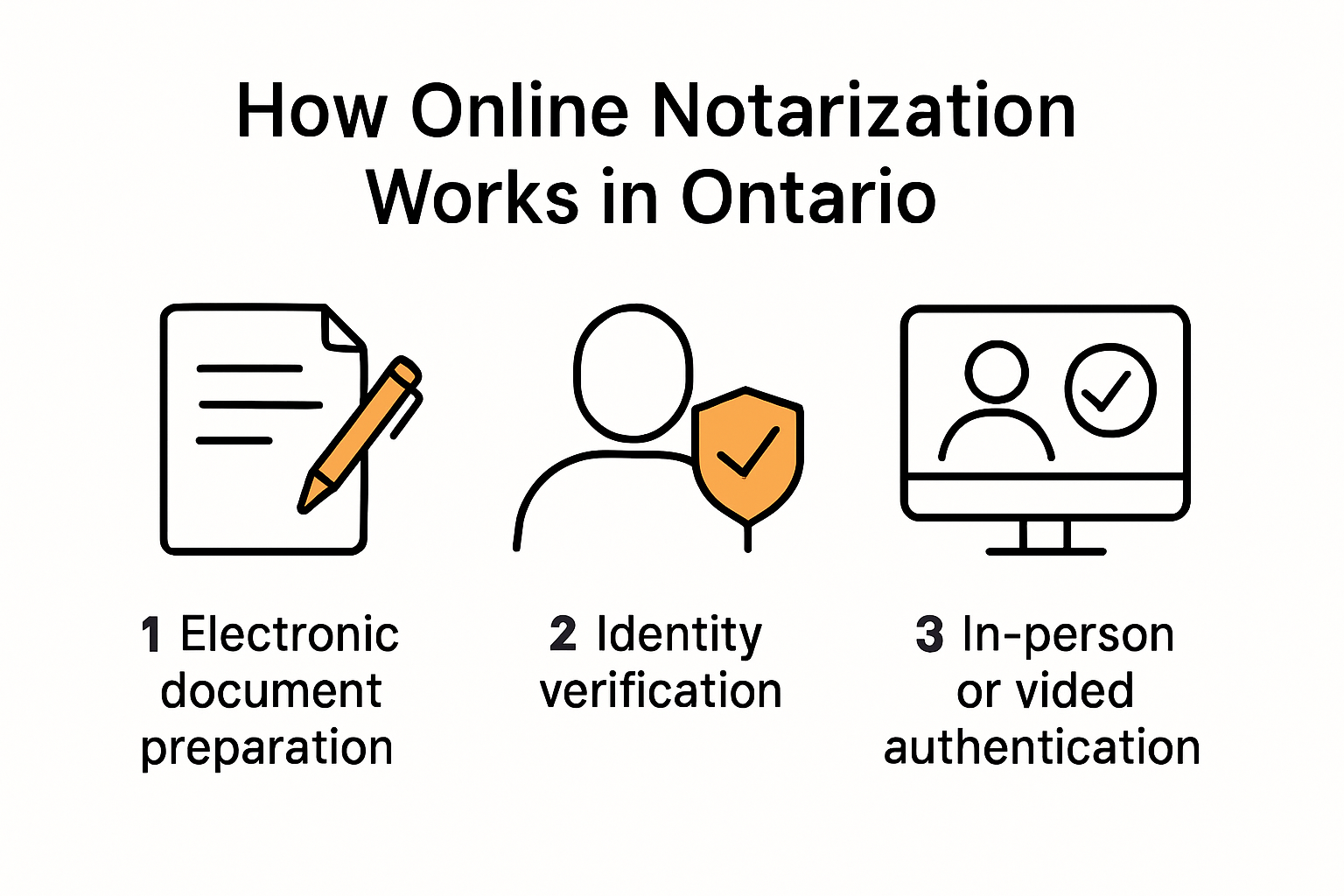
The practical interpretation of online notarization in Ontario involves several key components:
- Document Preparation: Electronic drafting and initial document setup
- Identity Verification: Strict protocols for confirming participant identities
- Partial Electronic Processing: Limited remote document handling
- Final Authentication: Typically requiring some form of direct verification
Businesses and individuals must recognize that while technology is advancing, legal authentication in Ontario remains cautious about fully digital processes. The province prioritizes document integrity and personal verification over complete digital transformation.
Professionals seeking to notarize documents should be prepared for a process that may involve multiple steps. This might include initial electronic submission, followed by specific in-person or real-time video verification methods that meet the stringent requirements of Ontario’s legal framework.
The landscape of online notarization continues to evolve. While complete digital notarization is not yet a reality in Ontario, the province is gradually developing more flexible approaches to document authentication that balance technological convenience with legal rigor.
Steps to Notarize Documents Online Safely
Notarizing documents safely requires a strategic approach, especially in Ontario where digital processes are still evolving. While complete online notarization remains limited, understanding the safest methods for document authentication is crucial for individuals and businesses seeking legal verification.
Preparing Your Documentation
Before initiating any document notarization process, thorough preparation is essential. Start by gathering all required original documents in digital format. Ensure that each document is clear, legible, and contains all necessary information. Scan or photograph documents using high-resolution settings to capture every detail accurately.
Identity verification stands as the most critical component of safe document notarization. Learn more about secure document authentication methods to understand the rigorous standards applied in Ontario. Prepare government-issued photo identification that can be verified through secure electronic channels.

Identity Verification Protocols
The Texas Secretary of State guidelines offer valuable insights into maintaining secure electronic records. While Ontario has its own specific regulations, the principles of maintaining document integrity remain universal. This includes creating a detailed electronic record that captures:
- Date and time of notarization
- Type of notarial act performed
- Comprehensive description of the document
- Clear evidence of identity verification
Professionals seeking to notarize documents must be prepared for multi-step verification processes. This typically involves real-time video communication, detailed document review, and strict authentication protocols. The goal is to ensure the highest level of security and legal validity.
Navigating Technical Requirements
Technology plays a crucial role in safe online document notarization. Colorado Secretary of State recommendations highlight the importance of understanding technological requirements for remote document processing. While Ontario has its own specific guidelines, key considerations include:
- Secure video communication platforms
- High-quality document scanning capabilities
- Robust identity verification technology
- Encrypted document storage and transmission
Individuals should invest in reliable technology that meets professional standards. This means using updated devices, secure internet connections, and platforms that comply with legal authentication requirements. Be prepared to demonstrate technical competence during the notarization process.
Remember that online notarization in Ontario remains a carefully regulated process. While technology continues to advance, legal authorities prioritize document integrity and personal verification. Approach online notarization with patience, preparation, and a commitment to following precise legal protocols.
To help you understand the essential steps for online notarization in Ontario, here is a table summarizing the typical process and their key requirements:
| Step | Purpose | Key Requirement |
|---|---|---|
| Document Preparation | Gather and digitize documents | High-resolution, legible digital copies |
| Identity Verification | Confirm participant identities | Government-issued ID, secure verification |
| Electronic Submission | Submit documents via secure platform | Encrypted transmission, accurate uploads |
| Real-Time Video Verification | Notary reviews and verifies in real-time | Secure video communication, tech setup |
| Final Authentication | Notary completes legal authentication | May require in-person or verified remote |
Legal Rules and Identification in Ontario
Navigating the legal landscape of document authentication in Ontario requires a comprehensive understanding of stringent identification and verification protocols. The province maintains rigorous standards to ensure document integrity and prevent fraudulent activities across various legal and administrative processes.
Identification Verification Requirements
Effective January 1, 2024, the Law Society of Ontario (LSO) implemented critical changes to client identity verification. Traditional virtual verification methods have been significantly restricted, mandating more robust authentication processes. Licensees must now authenticate government-issued identification with exceptional precision.
Two primary methods remain available for identity verification:
- Credit File Method: Verifying identity through comprehensive credit history checks
- Dual Process Method: Using multiple identification sources for cross-referencing
- Agent Verification: Employing a trusted third party to confirm individual identity
Document Authentication Protocols
Ontario’s approach to document authentication goes beyond simple identification. Official Documents Services (ODS) employs a meticulous process that involves comparing signatures, seals, and official stamps against authoritative records. Learn more about the intricacies of document verification to understand the comprehensive checks involved.
Key authentication criteria include:
- Signature matching with official records
- Clear display of seals and stamps
- Verification of issuing authority credentials
- Comprehensive document integrity assessment
International Document Verification
With the implementation of the Hague Convention on International Recovery of Child Support in October 2023, Ontario has enhanced its international document authentication capabilities. The province now supports robust verification processes for documents intended for use across over 55 countries.
International document authentication can be accomplished through:
- In-person verification at designated ServiceOntario centres
- Mail-based authentication services
- Apostille certification for international document recognition
Professionals and individuals must recognize that document verification is not a mere formality but a critical legal safeguard. The complexity of these processes reflects Ontario’s commitment to maintaining high standards of legal documentation and preventing potential fraud.
Whether you are dealing with personal, business, or international documents, understanding these legal rules and identification requirements is crucial. Stay informed, prepare your documentation meticulously, and always prioritize accuracy and compliance with Ontario’s evolving legal landscape.
To clarify the different methods available for identity verification in Ontario, here’s a table outlining the primary approaches and their main features:
| Method | Description | Key Feature |
|---|---|---|
| Credit File Method | Uses credit history checks to confirm identity | Relies on financial records |
| Dual Process Method | Cross-references multiple identification sources | Two independent ID sources |
| Agent Verification | Trusted third party confirms identity | Certified agent/deliberate check |
Choosing the Best Online Notary Service
Selecting the right online notary service in Ontario requires careful consideration of multiple factors. The digital landscape of legal document authentication demands a strategic approach to ensure compliance, security, and reliability. Understanding the key criteria for evaluating online notary services can help individuals and businesses make informed decisions.
Regulatory Compliance and Legal Standards
Ontario Regulation 43/20 provides critical guidelines for remote notarization services. When choosing an online notary, prioritize services that demonstrate strict adherence to provincial regulations. This means verifying that the service uses secure audio-visual technology, maintains comprehensive record-keeping, and follows rigorous identity verification protocols.
Key regulatory compliance indicators include:
- Explicit documentation of compliance with provincial notarization laws
- Transparent record retention practices
- Robust identity verification processes
- Clear communication of legal limitations and capabilities
Learn more about selecting a compliant online notary service to understand the nuanced requirements of legal document authentication in Ontario.
Technology and Security Features
The technological infrastructure of an online notary service is paramount. Look for platforms that offer:
- High-grade encryption for document transmission
- Secure video verification capabilities
- Multi-factor authentication systems
- Comprehensive audit trails
- Compatibility with various document formats
Professional online notary services should demonstrate a commitment to cutting-edge security technologies. This includes using advanced encryption methods, maintaining secure servers, and providing transparent security protocols that protect sensitive personal and legal information.
Service Reliability and Additional Support
Beyond technical capabilities, evaluate the overall reliability and customer support of the online notary service. Consider the following factors:
- Availability of customer support channels
- Response time for document processing
- Flexibility in handling different document types
- Transparent pricing structures
- User reviews and professional testimonials
A reputable online notary service should offer comprehensive support throughout the document authentication process. This includes clear guidance on document preparation, real-time assistance during verification, and post-notarization support.
Navigating the world of online notarization requires a discerning approach. While technology continues to evolve, the legal integrity of document authentication remains paramount. Take time to research, compare multiple services, and prioritize providers that demonstrate a commitment to legal compliance, technological security, and exceptional customer support.
Remember that the cheapest or fastest option is not always the most reliable. Invest time in selecting a notary service that provides comprehensive protection for your legal documents and personal information.
Frequently Asked Questions
What does it mean to notarize online in Ontario?
Notarizing online in Ontario generally refers to a hybrid approach where documents may be processed electronically, but essential authentication steps often require in-person or verified remote interaction due to regulatory limitations.
What are the steps to notarize documents online safely in Ontario?
The steps include gathering high-quality digital documents, verifying identities through secure methods, submitting documents electronically via a secure platform, conducting real-time video verification, and obtaining final authentication from a notary.
What identification is required for online notarization in Ontario?
Identification requirements include a government-issued photo ID such as a driver’s license or passport. The Law Society of Ontario mandates robust identity verification methods to ensure authenticity and prevent fraud.
How can I choose the best online notary service in Ontario?
Look for services that comply with Ontario regulations, offer strong technology and security features, demonstrate service reliability, and provide transparent customer support to ensure a smooth notarization process.
Tired of Ontario’s Notarization Hurdles? We Make Online Notary Simple
If navigating hybrid online notarization in Ontario feels tedious and confusing, you are not alone. Many Ontarians struggle with strict identity checks, complex technical requirements, and the uncertainty of which steps still need in-person verification for affidavits, invitation letters, or statutory declarations. The pain of uncertainty can easily hold back your plans.

Take the stress and guesswork out of your next document check. At theonlinenotary.ca, our secure, compliant platform guides you through every step of Ontario’s current requirements. We help you prepare digital documents, verify your ID safely, and complete real-time video sessions with an experienced notary so you never miss a detail. Explore how our online notary services for affidavits and statutory declarations can save you time and help you stay compliant in 2025. Visit theonlinenotary.ca to get started now and notarize smarter, not harder.
Recommended
- Why Opt for an Online Notary in Ontario – The Online Notary CA
- What is an Online Notary? – The Online Notary CA
- The Complete Guide to Using an Online Notary Public for Affidavits and Declarations in Ontario (2025) – The Online Notary CA
- Everything You Need to Know About Online Notarization in Ontario: Fast, Legal, and Convenient for Affidavits and Declarations (2025) – The Online Notary CA