Solemn declarations are a backbone of legal truth in Ontario, where a false statement made this way can lead to perjury charges just like lying under oath. Most people assume you always have to swear on a religious text when making a legal promise or verifying facts. Actually, anyone can skip religious wording entirely and still create a legally binding statement with the same power and legal weight as a sworn oath. That simple choice changes everything about how Ontarians handle official paperwork, and few realize how much flexibility the law actually gives.
Table of Contents
- What Is A Solemn Declaration And Its Purpose
- Why Solemn Declarations Are Important In Ontario
- Key Elements Of A Solemn Declaration Sample
- How A Solemn Declaration Functions In Legal Contexts
Quick Summary
| Takeaway | Explanation |
|---|---|
| Solemn declarations affirm truth without religious oaths. | These declarations allow individuals to verify facts legally while respecting diverse personal beliefs. |
| Making a false declaration can lead to perjury charges. | Individuals are legally accountable for the truthfulness of their statements, similar to sworn oaths. |
| They are vital for various legal and administrative processes. | Solemn declarations are commonly used in contexts like government documentation and legal proceedings in Ontario. |
| Key components include intent, signature, and notarization. | To be valid, solemn declarations must include specific structural elements such as the declarant’s name and a notary seal. |
| They enhance participation in legal processes for all. | Solemn declarations offer a universally accessible method for individuals, regardless of their beliefs, to engage in legal matters. |
What Is a Solemn Declaration and Its Purpose
A solemn declaration represents a formal legal statement where an individual affirms the truthfulness of certain facts without taking a traditional religious oath. Legal declarations provide individuals with a secular alternative for confirming information under potential legal consequences.
Understanding the Legal Significance
Solemn declarations serve multiple critical functions within legal and administrative contexts. Unlike traditional oaths that often involve religious language or references, these declarations allow individuals to make serious statements while respecting personal beliefs and maintaining legal integrity. They carry significant weight in legal proceedings, as making a false declaration can result in potential perjury charges.
Key characteristics of solemn declarations include:
- Providing a legally recognized method of affirming truth
- Offering an alternative to religious oath-taking
- Carrying similar legal consequences as sworn statements
- Applicable across various official documentation and legal contexts
Practical Applications in Ontario
In Ontario, solemn declarations are commonly used for various official purposes such as:
- Verifying personal information for government documents
- Confirming business or personal transactions
- Supporting legal documentation requiring formal verification
- Providing statements in legal proceedings where direct testimony is not possible
Through our comprehensive guide on declarations, individuals can gain deeper insights into the nuanced legal landscape surrounding these important affirmations. Understanding the purpose and implications of solemn declarations empowers residents to navigate complex administrative and legal requirements with confidence and clarity.
Below is a comparison table that highlights the differences and similarities between solemn declarations and traditional religious oaths in Ontario, providing a concise reference for understanding each approach.
| Aspect | Solemn Declaration | Traditional Religious Oath |
|---|---|---|
| Use of Religious Wording | No | Yes |
| Legal Consequences for False Statement | Perjury charges possible | Perjury charges possible |
| Accessibility | Universal (regardless of beliefs) | May exclude those with differing beliefs |
| Common Contexts | Government forms, legal documents | Court testimony, certain affidavits |
| Required Witness | Commissioner or Notary Public | Commissioner or Notary Public |
Why Solemn Declarations Are Important in Ontario
Solemn declarations play a pivotal role in Ontario’s legal and administrative systems by providing a flexible, inclusive mechanism for individuals to verify information without compromising personal beliefs or legal standards. Ontario’s legal framework recognizes these declarations as powerful tools for maintaining legal integrity and facilitating transparent communication.
Protecting Individual Rights and Beliefs
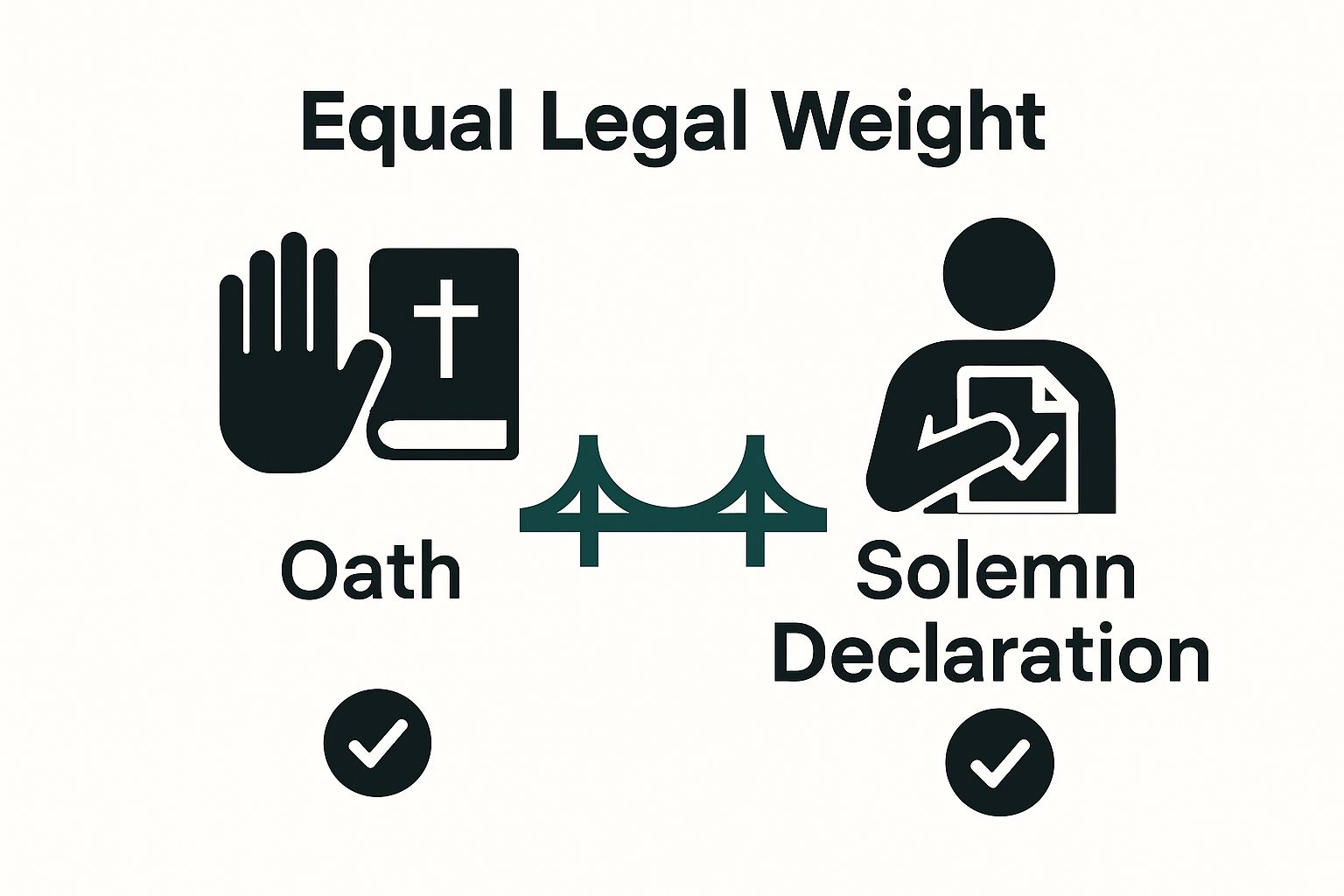
One of the most significant aspects of solemn declarations is their ability to respect individual religious and personal convictions. Not everyone feels comfortable taking traditional religious oaths, and these declarations offer a secular alternative that carries equal legal weight. This approach ensures that individuals from diverse backgrounds can participate fully in legal and administrative processes without feeling marginalized or uncomfortable.
Key benefits of solemn declarations include:
- Respecting personal religious and philosophical beliefs
- Providing a universally accessible method of legal verification
- Enabling participation in legal processes for all individuals
- Maintaining the same legal consequences as traditional sworn statements
Facilitating Administrative and Legal Processes
In Ontario, solemn declarations are crucial for streamlining various administrative and legal procedures. They are widely used in contexts ranging from government documentation to business transactions, legal proceedings, and personal affirmations. Through our comprehensive guide on declaration processes, individuals can understand how these declarations simplify complex verification requirements.
By offering a flexible, inclusive approach to formal statements, solemn declarations represent a modern legal solution that balances individual rights with the need for reliable, verifiable information. They embody Ontario’s commitment to creating an equitable legal system that accommodates diverse personal perspectives while maintaining robust standards of truth and accountability.
Key Elements of a Solemn Declaration Sample
A solemn declaration sample represents a structured legal document that requires specific components to ensure its validity and legal standing in Ontario. Official legal documentation emphasizes the importance of precise formatting and content requirements for these declarations.
Structural Components of a Declaration
The fundamental structure of a solemn declaration includes critical elements that authenticate the statement and provide legal context. Each declaration must clearly communicate the individual’s intent to make a truthful statement, demonstrating a commitment to accuracy and legal responsibility.
Key structural requirements include:
- Full legal name of the declarant
- Date of declaration
- Specific statement of facts being affirmed
- Clear language indicating the declaration is made solemnly and sincerely
- Signature of the declarant
- Signature and seal of a commissioner or notary public
Essential Legal Language and Formalities
The language used in a solemn declaration must be precise and unambiguous. Typically, declarations include a standard phrase such as “I solemnly declare that…” which signals the formal nature of the statement. Through our detailed guide on declaration processes, individuals can understand the nuanced legal requirements for crafting an effective declaration.
Important considerations when preparing a solemn declaration include maintaining clarity, avoiding ambiguous statements, and ensuring that every fact presented can be verified. The document must reflect a genuine and serious commitment to truthfulness, with the understanding that false statements can result in legal consequences.
The following table summarizes the key components that must be included in a valid solemn declaration in Ontario, making it easier to review the essential structural and legal elements at a glance.
| Component | Description |
|---|---|
| Full Legal Name | The complete name of the individual making the declaration |
| Date of Declaration | The specific date on which the declaration is made |
| Statement of Facts | Clear, specific facts that the individual affirms as true |
| Declaration Phrase | Standard wording such as “I solemnly declare that…” |
| Declarant’s Signature | The individual’s handwritten or electronic signature |
| Commissioner/Notary Signature | Signature and seal of an authorized official |

How a Solemn Declaration Functions in Legal Contexts
A solemn declaration operates as a critical legal mechanism that enables individuals to provide verifiable statements with significant legal implications. Legal proceedings documentation establishes the framework through which these declarations carry substantial weight in administrative and judicial settings.
Legal Accountability and Verification
When an individual makes a solemn declaration, they are effectively creating a legally binding document that carries similar consequences to sworn testimony. The declaration binds the individual to truthfulness under potential legal penalty, which means making false statements can result in serious legal repercussions including potential charges of perjury.
Key legal implications of solemn declarations include:
- Creating a legally recognized record of stated facts
- Providing an alternative to traditional oath-taking
- Establishing personal accountability for information presented
- Offering a mechanism for formal communication in legal processes
Jurisdictional Recognition and Enforcement
In Ontario, solemn declarations are recognized across various legal and governmental contexts, from court proceedings to administrative documentation. These declarations serve as credible evidence that can be used in legal arguments and official record-keeping. Through our comprehensive guide on legal documentation, individuals can gain deeper insights into the nuanced ways these declarations function within legal systems.
The power of a solemn declaration lies in its ability to create a formalized statement that bridges personal testimony with legal accountability. By requiring individuals to affirm their statements solemnly and sincerely, the legal system ensures a mechanism for truth-telling that respects individual beliefs while maintaining rigorous standards of legal integrity.
Ready to Make Your Solemn Declaration Easy and Legally Sound?
Are you feeling stressed about ensuring your solemn declaration uses the correct language and format? Many Ontario residents worry about making costly mistakes with these important legal documents. You need clarity and confidence when affirming facts for government forms, affidavits, and business matters as highlighted in our article on solemn declarations and their strict requirements.

Let us solve this challenge for you today. Our expert team at The Online Notary specializes in helping Ontario residents prepare and notarize solemn declarations, affidavits, and statutory declarations quickly and securely from home. We walk you through the process, ensure every detail is correct, and provide you with peace of mind. Don’t risk delays or rejections. Start your solemn declaration online now, get answers to your questions, and experience fast, professional service when you need it most.
Frequently Asked Questions
What is a solemn declaration sample in Ontario?
A solemn declaration sample is a structured legal document that outlines the specific facts an individual affirms to be true without taking a traditional religious oath. To create a valid declaration, include essential elements like your full name, date, and a clear statement of the facts you are affirming.
How do I format my solemn declaration sample?
To format your solemn declaration sample correctly, ensure it includes your full legal name, the date, a specific statement of facts, and a phrase indicating it is solemn. After drafting, sign the document and have it witnessed by a commissioner or notary public.
What are the key components that must be included in a solemn declaration?
Key components of a solemn declaration must include your full legal name, the date, a clear statement of the facts, and the phrase, “I solemnly declare that…” Ensure to also include your signature and the signature of a witnessing commissioner or notary public.
How can I ensure my solemn declaration is legally valid?
To ensure your solemn declaration is legally valid, follow the required structural components and use precise language without ambiguity. Review the final draft for clarity and ensure all required signatures are included before submission.
What are the potential consequences of making a false solemn declaration?
Making a false solemn declaration can result in serious legal consequences, including potential charges of perjury. Always ensure the facts you state are truthful to avoid any legal repercussions.
In what situations would I need to use a solemn declaration?
You may need to use a solemn declaration to verify personal information for government documents, confirm business transactions, or provide statements in legal proceedings. Identify the specific context in which you require the declaration, and prepare accordingly to meet those needs.