
Statutory declarations might sound like just another form you sign for the government. But think twice. Making a false statutory declaration in Ontario is a criminal offense and can land you in serious legal trouble. These documents are more than formalities. They hold the kind of legal weight that can decide everything from your immigration status to your business deals, so what actually sets them apart?
Table of Contents
- What Is A Statutory Declaration And Its Purpose?
- Key Roles And Qualifications For Signing Statutory Declarations
- The Importance Of Statutory Declarations In Legal And Business Contexts
- How Statutory Declarations Function In Ontario’s Legal Framework
- Common Situations Requiring Statutory Declarations In Ontario
Quick Summary
| Takeaway | Explanation |
|---|---|
| Statutory declarations affirm legal truths. | These declarations are formal documents asserting the accuracy of statements without needing court testimony. |
| Authorized professionals must validate declarations. | Only specific individuals, like lawyers and notaries, can oversee the signing process to ensure credibility. |
| False declarations carry serious penalties. | Deliberately making misleading statements can lead to legal consequences, including criminal charges. |
| Common uses include identity verification and employment history. | Statutory declarations are often used for confirming personal status or professional credentials in various situations. |
| Consult qualified professionals for accurate execution. | To ensure validity, individuals should seek assistance from authorized signatories who understand the legal requirements. |
What is a Statutory Declaration and Its Purpose?
A statutory declaration represents a powerful legal instrument in Ontario that allows individuals to affirm the truthfulness of specific statements without requiring traditional court testimony. Unlike a casual statement, a statutory declaration carries significant legal weight and credibility within judicial and administrative processes.
Understanding the Legal Framework
Statutory declarations are formal written statements made under the provisions of the Canada Evidence Act and section 5.3 of the Ontario Evidence Act. When an individual signs a statutory declaration, they are legally asserting that the information contained within the document is accurate and true to the best of their knowledge. This legal mechanism provides a structured way for people to communicate verified information across various personal, professional, and governmental contexts.
Key Characteristics of Statutory Declarations
Statutory declarations possess several distinctive features that set them apart from other legal documents:
- Legal Authenticity: These declarations are legally recognized documents that can be used as evidence in legal proceedings
- Voluntary Affirmation: The declarant voluntarily confirms the truthfulness of the statements without being compelled by external forces
- Authorized Verification: They must be signed in the presence of an authorized official, such as a commissioner for taking affidavits
According to the Ontario Evidence Act, statutory declarations made outside Ontario remain valid when executed before authorized officials, ensuring their legal recognition across different jurisdictions. This provision underscores the document’s reliability and adaptability in various legal contexts.
People typically use statutory declarations when sworn testimony is impractical or unnecessary. Common scenarios include confirming personal identity, verifying employment history, substantiating property ownership, or providing supporting documentation for immigration processes. The declaration serves as a formal mechanism for individuals to present factual information with legal credibility.
Making a false statutory declaration is considered a serious legal offense. Individuals who intentionally provide false information can face significant legal consequences, which reinforces the document’s importance as a tool for maintaining legal integrity and honest communication.
To help distinguish statutory declarations from other legal documents, the following table outlines their key characteristics and what makes them legally significant in Ontario.
| Characteristic | Description |
|---|---|
| Legal Authenticity | Legally recognized document admissible as evidence in legal proceedings |
| Voluntary Affirmation | Declarant confirms the truthfulness of statements without external compulsion |
| Authorized Verification | Must be signed in the presence of a legally authorized official (e.g., commissioner for affidavits) |
| Jurisdictional Recognition | Valid in and outside Ontario if executed before authorized officials |
| Legal Consequences | Making a false declaration is a criminal offense with serious penalties |
| Common Use Cases | Identity verification, employment history, property ownership, immigration documentation |
Key Roles and Qualifications for Signing Statutory Declarations
In Ontario, not everyone can sign a statutory declaration. The legal system has established specific roles and qualifications to ensure the integrity and reliability of these important documents. Understanding who can legally execute and witness these declarations is crucial for maintaining their legal validity.
Authorized Signatories
Statutory declarations must be signed by individuals with recognized legal authority. Commissioners for taking affidavits are the primary professionals authorized to oversee and validate these documents. These authorized officials include:
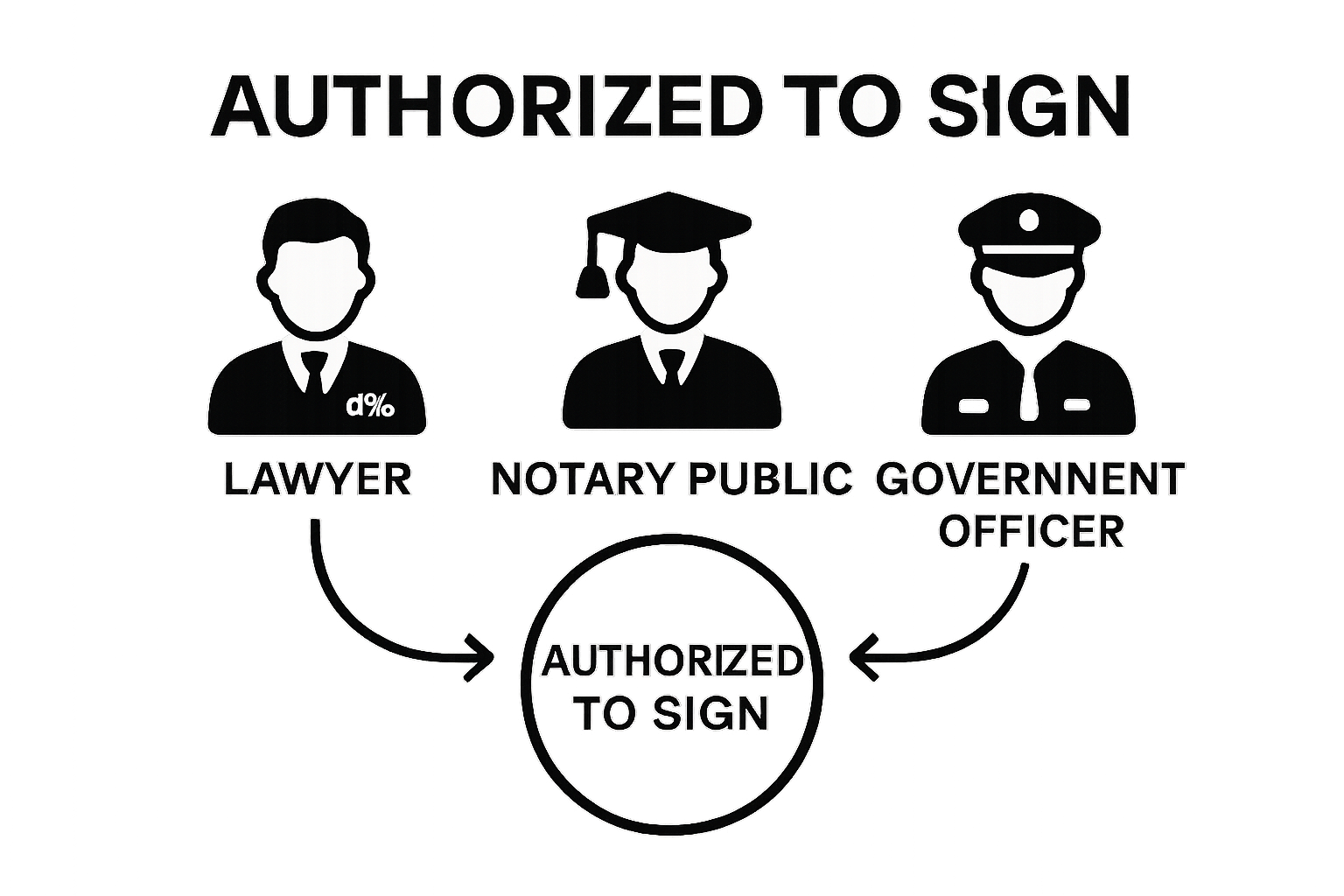
- Lawyers registered with the Ontario Bar Association
- Notary publics with current provincial certification
- Court clerks and judicial administrators
- Certain provincial government employees with specific legal designations
Verification and Credibility Requirements
To sign a statutory declaration, an authorized official must perform critical verification steps. They are responsible for confirming the identity of the declarant and ensuring the individual understands the legal implications of their statement.
Learn more about document verification processes that support the integrity of statutory declarations.
The qualifications for signing these documents extend beyond mere official status. Authorized signatories must:
- Maintain professional objectivity
- Have no personal interest in the declaration’s contents
- Verify the declarant’s identity through acceptable government-issued identification
- Ensure the declarant is signing voluntarily and comprehends the document’s significance
According to the Ontario Evidence Act, these professionals play a critical role in maintaining the legal authenticity of statutory declarations. Their oversight prevents potential misuse and protects the integrity of legal documentation.
The following table summarizes the main types of authorized signatories in Ontario who are qualified to oversee statutory declarations, along with their verification responsibilities.
| Authorized Signatory | Qualification / Role | Key Verification Responsibilities |
|---|---|---|
| Commissioner for affidavits | Provincially appointed legal authority | Identity verification, ensure voluntary & informed signing |
| Lawyer (Ontario Bar) | Registered Ontario lawyer | Verify declarant’s identity, maintain professional objectivity |
| Notary public | Holds valid provincial notarial commission | Confirm ID, check understanding of legal significance |
| Court clerk / judicial admin | Court-appointed or employed by the court | Authenticate identity, ensure adherence to protocol |
| Certain government employees | Appointed with specific legal designations | Perform identity and role verification |
Individuals seeking to have a statutory declaration signed should always consult with a qualified professional who understands the nuanced legal requirements. The combination of proper authorization, thorough verification, and professional integrity ensures that statutory declarations remain a reliable mechanism for communicating verified information in legal and administrative contexts.

The Importance of Statutory Declarations in Legal and Business Contexts
Statutory declarations serve as critical instruments in Ontario’s legal and business landscapes, providing a reliable mechanism for individuals and organizations to communicate verified information with significant legal credibility. These documents transcend simple written statements, offering a powerful tool for substantiating facts across various professional and personal scenarios.
Legal Significance and Applications
In legal contexts, statutory declarations play an essential role in situations where formal testimony might be impractical or unnecessary. Legal professionals and businesses rely on these documents to establish facts, resolve disputes, and provide authoritative documentation. Common legal applications include:
- Confirming personal identity during immigration processes
- Verifying property ownership transfers
- Substantiating employment history for professional credentials
- Providing evidence in civil litigation proceedings
Business and Administrative Utility
Businesses leverage statutory declarations as a crucial mechanism for maintaining operational integrity and compliance. Explore the benefits of professional document verification to understand how these declarations support organizational processes.
In corporate environments, statutory declarations are instrumental for:
- Verifying financial statements and corporate restructuring
- Confirming compliance with regulatory requirements
- Documenting corporate governance procedures
- Providing sworn statements for contractual agreements
According to the Corporations Canada guidelines, statutory declarations represent a standardized method for organizations to formally affirm critical information with legal weight.
The power of statutory declarations lies in their unique combination of legal authenticity and administrative flexibility. By providing a structured, legally recognized method of affirming information, these documents bridge the gap between informal communication and formal legal testimony. They offer individuals and organizations a pragmatic solution for documenting and verifying complex facts across personal, professional, and governmental domains.
How Statutory Declarations Function in Ontario’s Legal Framework
Statutory declarations operate as sophisticated legal instruments within Ontario’s judicial system, providing a structured mechanism for individuals and organizations to communicate verified information with significant legal standing. These documents represent more than simple written statements, functioning as powerful tools for establishing factual credibility across diverse administrative and legal contexts.
Legal Principles and Procedural Mechanics
At the core of statutory declarations are fundamental legal principles that govern their execution and validity. Legal authenticity emerges from precise procedural requirements, ensuring these documents maintain rigorous standards of credibility. Learn more about comprehensive document verification processes that underpin these critical legal instruments.
The functional mechanics of statutory declarations involve several key components:
- Voluntary and informed declaration of factual statements
- Verification by authorized legal professionals
- Explicit understanding of potential legal consequences
- Formal acknowledgment of statement truthfulness
Enforcement and Legal Consequences
Ontario’s legal framework treats statutory declarations with exceptional seriousness. According to the Ontario Works policy directives, making a false statutory declaration constitutes a significant legal offense with potential criminal implications.
The enforcement mechanisms surrounding statutory declarations include:
- Potential criminal prosecution for intentional misrepresentation
- Legal invalidation of documents containing false statements
- Professional disciplinary actions for authorized signatories who fail to follow proper procedures
- Potential civil liability for damages resulting from false declarations
Statutory declarations serve as a critical bridge between informal communication and formal legal testimony. By providing a legally recognized method of affirming information, these documents enable individuals and organizations to communicate complex facts with confidence and legal protection. Their versatility and structured approach make them an indispensable tool in Ontario’s comprehensive legal ecosystem.
Common Situations Requiring Statutory Declarations in Ontario
Statutory declarations serve as versatile legal instruments that address a wide range of personal, professional, and administrative needs in Ontario. These documents provide individuals and organizations with a reliable method to formally affirm facts and circumstances that require official documentation beyond standard written statements.
Personal and Identity-Related Scenarios
Statutory declarations become crucial in numerous personal contexts where verifying individual identity and personal circumstances is essential. Explore comprehensive document verification methods that support these critical personal declarations.
Common personal scenarios requiring statutory declarations include:
- Confirming name changes after marriage or divorce
- Establishing legal guardianship for minors
- Verifying personal status for immigration processes
- Documenting lost or stolen identification documents
- Declaring relationship status for legal or governmental purposes
Professional and Business Applications
In professional environments, statutory declarations play a pivotal role in substantiating critical information and maintaining organizational integrity. Businesses and professionals rely on these documents to:
- Verify employment history and professional credentials
- Confirm compliance with regulatory requirements
- Declare financial standing for business transactions
- Substantiate professional qualifications for licensing
- Document corporate governance procedures
According to the Ontario Works policy directives, statutory declarations provide a legally recognized mechanism for individuals and organizations to communicate verified information across diverse contexts.
Statutory declarations represent more than mere paperwork. They are powerful legal tools that bridge complex personal and professional scenarios, offering a structured approach to affirming facts with legal credibility. By providing a standardized method of documentation, these declarations enable individuals and organizations to navigate intricate administrative landscapes with confidence and legal protection.
To provide clarity on when statutory declarations are typically required in Ontario, the table below organizes common personal and professional scenarios and their purposes.
| Scenario Category | Common Use Case | Purpose of Declaration |
|---|---|---|
| Personal/Identity | Name change after marriage/divorce | Legally confirm personal status |
| Personal/Identity | Establish legal guardianship for minors | Document guardianship arrangement |
| Personal/Identity | Lost/stolen identification | Declare loss to enable replacement of documents |
| Personal/Immigration | Immigration/personal status verification | Support application processes |
| Professional/Business | Employment history verification | Substantiate past employment for references or credentials |
| Professional/Business | Compliance with regulations | Confirm adherence to legal or industry requirements |
| Professional/Business | Corporate governance documentation | Provide sworn statements for company procedure or agreements |
| Professional/Business | Licensure/qualifications substantiation | Affirm credentials for professional licensing |
Get Your Statutory Declaration Signed With Confidence in Ontario
Struggling to figure out who can legally sign your statutory declaration in Ontario? This article highlights the stress and confusion many face when trying to meet legal requirements for statutory declarations. When your legal documents need to be recognized and verified by an authorized official, any uncertainty can put your personal or business matters at risk.

Why take chances with your important documents? The team at theonlinenotary.ca provides fast and secure online notary services that meet all Ontario requirements for statutory declarations, affidavits, invitation letters, and more. Our professionals guide you step by step so you never have to wonder if your statement is valid or your signing process is correct. Ready to save time and avoid legal headaches? Book your statutory declaration online now and ensure your documents are handled by experts who truly care about your peace of mind.
Frequently Asked Questions
What is a statutory declaration in Ontario?
A statutory declaration is a formal written statement made under the provisions of the Canada Evidence Act and the Ontario Evidence Act, allowing individuals to affirm the truthfulness of specific statements without requiring court testimony.
Who is authorized to sign a statutory declaration in Ontario?
Authorized signatories include commissioners for taking affidavits, lawyers registered with the Ontario Bar, notary publics, court clerks, and certain provincial government employees with specific designations.
Why is it important to have a statutory declaration signed by an authorized official?
Having a statutory declaration signed by an authorized official ensures its legal authenticity and credibility, preventing misuse and maintaining the document’s integrity.
What are common situations that require a statutory declaration in Ontario?
Common situations include confirming personal identity for immigration, verifying property ownership, substantiating employment history, and declaring financial standing for business transactions.