
Did you know that a single mistake in an invitation letter can result in a visa denial for your guest? Every year, thousands of applications face delays due to incomplete details or unclear reasons for travel. If you want to help someone visit Ontario, paying attention to each step of the invitation letter process matters. This clear guide walks you through gathering information, choosing the right template, drafting, reviewing, and finalizing a strong invitation letter.
Quick Summary
| Key Point | Explanation |
|---|---|
| 1. Gather essential guest information | Collect detailed personal data to support the invitation, including name, birth date, address, and reason for the visit. |
| 2. Choose the appropriate invitation template | Select a template based on the type of visit to ensure it meets the specific visa category requirements. |
| 3. Include all necessary elements in the letter | Ensure the invitation letter contains inviter and guest details, purpose, duration of visit, and financial support information. |
| 4. Review the letter meticulously | Check for accuracy in personal details and formatting to avoid potential issues with immigration authorities. |
| 5. Consider notarization if required | Notarizing the letter can enhance its credibility, especially for visitors from countries with strict visa requirements. |
Table of Contents
- Step 1: Gather Recipient And Purpose Details
- Step 2: Select Proper Invitation Letter Template
- Step 3: Draft Invitation Letter With Required Elements
- Step 4: Review And Correct Invitation Letter For Accuracy
- Step 5: Finalize And Arrange Notarization If Needed
Step 1: Gather recipient and purpose details
When drafting an invitation letter for Ontario, your first mission is collecting comprehensive details about your guest and the reason for their visit. According to the Canadian government’s official IRCC guidance, you will need to compile a thorough profile that helps immigration officials understand the context of the visit.
Start by gathering your guest’s personal information with precision. This means recording their full legal name exactly as it appears on their passport, complete date of birth, current residential address, and contact telephone number. Think of this as creating a detailed snapshot that represents your guest in official documentation.
Next, outline the specific purpose of their trip to Canada. Will they be visiting family? Attending a business conference? Exploring tourism opportunities? Be clear and direct about their intentions. The immigration authorities want to understand why someone is entering the country and how long they plan to stay.
Describe your relationship with the guest. Are they a family member? A business colleague? A friend? This context helps establish the credibility of your invitation. You will want to explain how you know this person and why you are extending an invitation.
Pro Tip: Double check all information for accuracy. Even a small error can cause significant delays in the invitation letter process.
Include specific details about their travel plans such as anticipated arrival and departure dates, where they will be staying during their visit, and how their expenses will be managed. According to Notary Pro, demonstrating financial stability and clear travel intentions strengthens your invitation letter.
By meticulously gathering these details, you are setting the foundation for a strong invitation letter that increases the likelihood of a successful visa application.
Step 2: Select proper invitation letter template
Choosing the right invitation letter template is crucial for creating a professional and convincing document that meets Canadian immigration requirements. According to NotaryPro, there are specific templates available for different types of visits including temporary resident visas, super visas, transit visas, and business visits.
Your first task is to identify the precise type of visit you are supporting. Each visa category has nuanced requirements that will influence the template you select. For instance, a family visit invitation will look different from a business conference invitation. Take time to understand the specific purpose of your guest’s travel.
Look for templates that provide comprehensive sections covering all critical information. Notariz.ca recommends templates that include dedicated spaces for key details such as the inviter’s identity and status, visitor’s complete personal information, purpose and duration of visit, accommodation arrangements, and financial support documentation.
Pro Tip: Always choose a template from a reputable legal source to ensure it meets official immigration standards.
When reviewing templates, verify that they allow enough space to provide detailed and clear information. The template should feel like a structured guide that walks you through each required section without feeling overwhelming.
Do not simply fill in a template mechanically. Your goal is to create a personalized document that clearly communicates the genuine intent of the visit and establishes your credibility as an inviter.
By selecting an appropriate template, you are setting the stage for a well-organized invitation letter that will help your guest navigate the Canadian visa application process smoothly.
Step 3: Draft invitation letter with required elements
Now comes the critical moment of transforming your gathered information into a compelling invitation letter. According to the Immigration, Refugees and Citizenship Canada (IRCC), your letter must include comprehensive details that establish the legitimacy of the visit and the relationship between the inviter and visitor.
Begin by clearly stating your personal details. This means including your full legal name, date of birth, residential address, telephone number, current job title, and your citizenship or permanent resident status. If possible, include documentation that proves your legal status in Canada. These details build credibility and help immigration officials understand your background.
Next, focus on your guest’s information. Provide their complete legal name exactly as it appears on their passport, date of birth, current address, and contact details. Be precise and thorough. NotaryPro recommends including additional details like passport number and expiry date to strengthen the letter’s authenticity.
Pro Tip: Write the letter as if you are directly communicating with an immigration officer who knows nothing about you or your guest.
Describe the purpose and duration of the visit in clear language. Explain your relationship with the visitor, whether they are a family member, friend, or business associate. Outline specific plans such as where they will stay during their visit, how their expenses will be covered, and their intended departure date.
Include a formal statement confirming that you will be responsible for the visitor during their stay. This demonstrates your commitment and helps address potential concerns about the visitor’s financial support and intention to return to their home country.
Finish the letter with a professional closing that includes your signature and contact information. This provides a final layer of verifiability and shows your willingness to be contacted for additional information if needed.
By meticulously drafting your invitation letter with these elements, you create a powerful document that significantly improves your guest’s chances of a successful visa application.
Step 4: Review and correct invitation letter for accuracy
With your invitation letter drafted, you now enter a critical phase of careful review and verification. Think of this step as your final quality check that could make the difference between a successful or rejected visa application.
Read through the entire document slowly and methodically. Your goal is to catch any potential errors or inconsistencies that could raise red flags with immigration officials. Pay special attention to personal details such as names, dates of birth, passport numbers, and contact information. Even a tiny mistake can create significant complications in the visa process.
Compare every piece of information against the original documents you used to compile the letter. Cross reference your guest’s passport details with the information in your draft. Verify that addresses are complete and accurate. Confirm that dates make logical sense and align with the intended travel plans.
Pro Tip: Read the letter out loud. This technique helps you catch grammatical errors and awkward phrasing that might not be apparent when reading silently.
Check the formatting and presentation of the document. Ensure that the letter looks professional clean and well organized. Use a standard font like Arial or Times New Roman in a readable size typically between 11 and 12 points. Maintain consistent margins and spacing throughout the document.
Ask someone you trust to perform a second review. A fresh set of eyes can often spot mistakes or unclear sections that you might have overlooked. This external perspective can provide valuable insights and help you refine the letter.
Pay particular attention to the tone and language of the letter. It should sound sincere professional and straightforward. Avoid overly emotional or complicated language. The goal is to communicate clearly and directly.
Finally review the overall narrative of the letter. Does it tell a coherent story about the purpose of the visit? Does it demonstrate a genuine relationship and clear intent? Make sure the letter provides a complete and convincing picture of the planned visit.
Step 5: Finalize and arrange notarization if needed
As you approach the final stages of your invitation letter preparation, notarization emerges as a powerful tool to enhance your document’s credibility. According to Dodonotary, while not always mandatory, notarizing your invitation letter can significantly strengthen its legal standing especially for visa applications from certain countries.
Check the specific requirements for your guest’s home country. Some visa offices like those in India, Pakistan, Nigeria, and the Philippines specifically require notarized invitation letters. Notary Link confirms that notarization verifies both your signature and identity which can dramatically improve visa approval chances for visitor visas, super visas, and study permits.
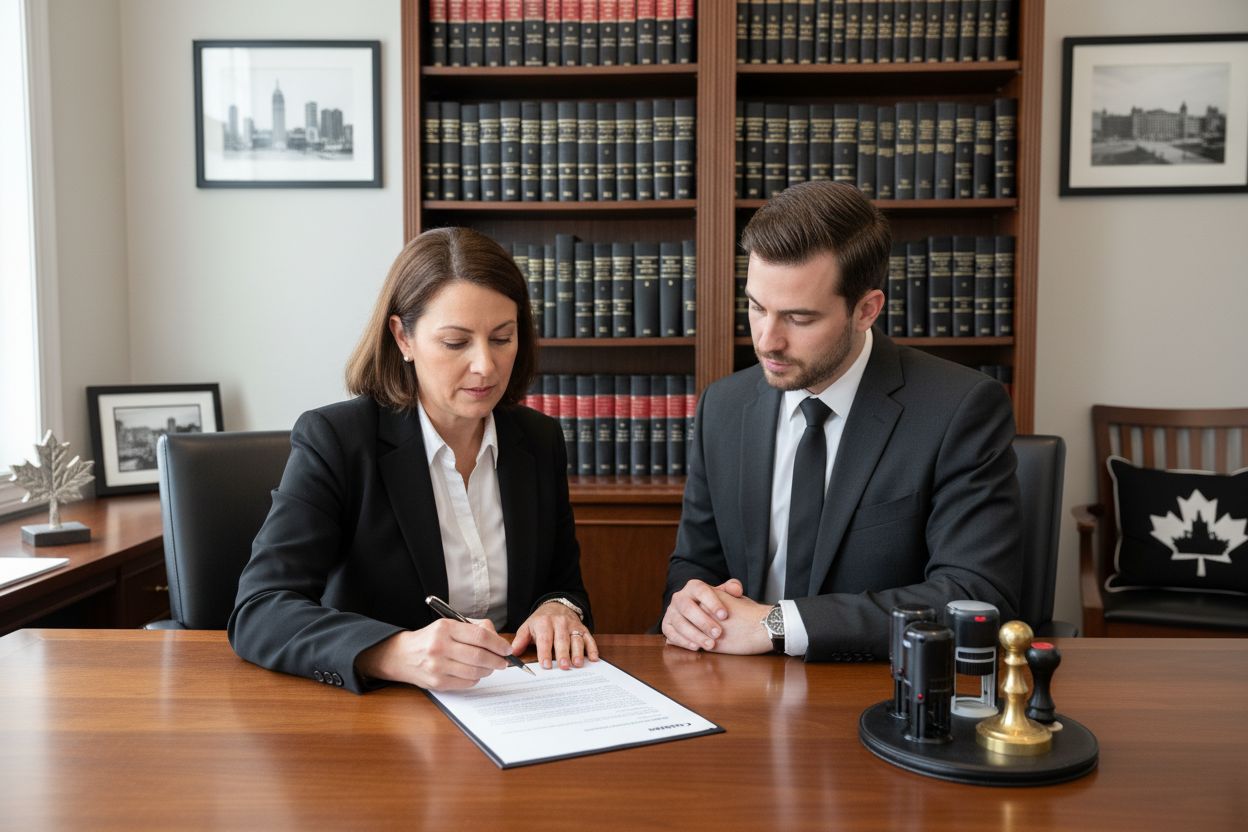
Schedule an appointment with a professional notary public who can formally witness your signature and validate the document. Bring your completed invitation letter original identification documents and be prepared to sign the document in the notary’s presence. This step transforms your letter from a simple document to a legally recognized statement.
Pro Tip: Call ahead to confirm the exact documentation you will need to bring for notarization to avoid last minute complications.
Ensure you understand the notarization fees and payment methods beforehand. Some notaries might require cash while others accept credit cards or electronic payments. Ask about the expected processing time to align with your guest’s visa application timeline.
After notarization, make multiple copies of the signed and stamped document. Keep one for your records and provide your guest with a certified copy to support their visa application. Learn more about document legalization to understand additional steps that might be necessary for international documents.
By taking this extra step of notarization, you demonstrate professionalism and commitment to supporting your guest’s travel plans.
Here’s a summary of the required elements at each invitation letter step:
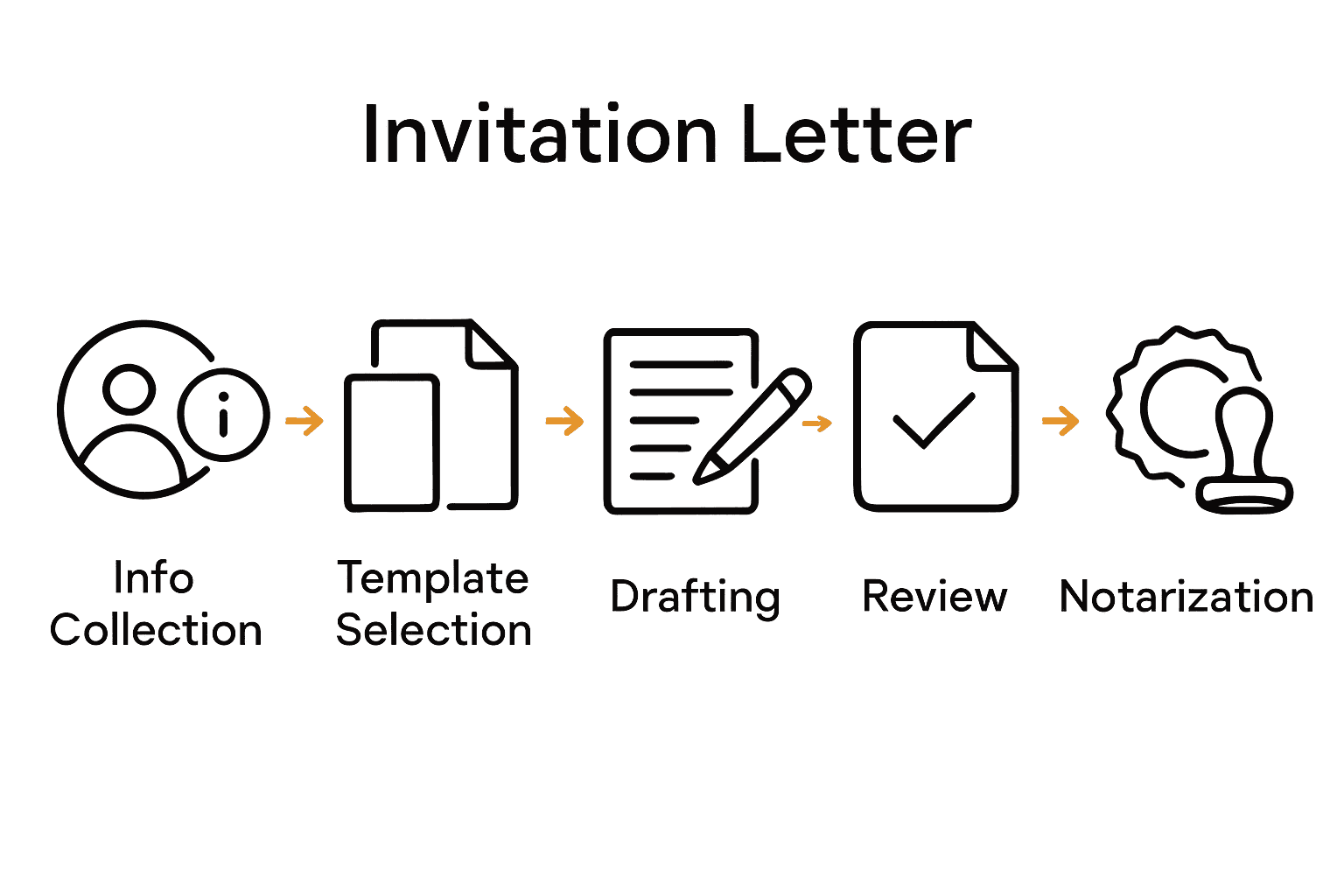
| Step | Key Actions | Essential Details |
|---|---|---|
| Gather Details | Collect guest info Define purpose Describe relationship | Full name Date of birth Address & phone Purpose of visit Relationship Travel plans Financial support |
| Select Template | Identify visa type Find reliable template | Visit type (family, business, etc.) Sections for inviter & guest info Accommodation info Financial support |
| Draft Letter | State all details Explain visit Include documentation | Inviter’s and guest’s full info Purpose & duration Relationship Support commitment |
| Review & Correct | Verify accuracy Check formatting Proofread | Correct names, dates Consistent formatting Clear, professional language |
| Finalize & Notarize | Notarize if required Copy & distribute | Confirm country rules Bring needed ID Keep notarized copies |
Proven Online Notary Solutions for Your Ontario Invitation Letter
Feeling nervous that a single paperwork mistake could ruin your loved one’s Canadian visa application? This guide showed how critical it is to get every detail right in your invitation letter and how the notarization step can make all the difference for approval. Trying to navigate these requirements on your own leaves room for costly errors. That is where we step in.

Let theonlinentoary.ca take the stress out of the process. Our online notary service turns confusion into confidence by reviewing, witnessing, and officially notarizing your invitation letter entirely online. No travel. No delays. Fast and secure. If you want to learn about document legalization as well, see our page on how to legalize a document in Ontario. Start your notarized invitation letter now at theonlinentoary.ca. Make your invitation letter error-free and stand out with legal assurance today.
Frequently Asked Questions
What details should I collect before drafting an invitation letter for Ontario?
You should gather your guest’s full legal name, date of birth, residential address, and contact number. Additionally, outline the purpose of their visit, your relationship, travel plans, and financial arrangements.
How do I choose the right invitation letter template for my guest’s visit?
Identify the specific type of visit, such as family, business, or tourism, to find an appropriate template. Look for templates that include essential sections for both inviter and guest information, along with travel and support details.
What key elements should be included in the invitation letter?
Your letter must contain your personal details, your guest’s information, the purpose and duration of the visit, and confirmation of your responsibility for the guest. Clearly state the relationship and travel arrangements to strengthen the letter’s credibility.
How can I ensure there are no errors in my invitation letter?
Carefully review the entire document for accuracy, comparing it against original documents. Read it out loud to catch any grammatical issues, and ask someone else to proofread it for additional clarity and fresh perspectives.
Is notarization necessary for the invitation letter?
Notarization is not always required, but it can enhance the letter’s credibility, especially for visitors from certain countries. If needed, schedule an appointment with a notary and prepare to present your identification and the letter for validation.
What is the best way to format the invitation letter?
Use a standard font like Arial or Times New Roman in a size between 11 and 12 points, and ensure consistent margins and spacing throughout. Organize the letter logically, with clear sections, to present a professional appearance.