
Online notary services are changing the way people handle legal documents by making authentication fully digital. Over 40 percent of organizations are expected to save both time and money by switching to digital notaries, with some seeing document processing drop from days to minutes. You might assume online notarization is just about speed and convenience but the real surprise is the security—these virtual services use face recognition, encrypted IDs, and advanced verification that actually outpaces many old school paper methods.
Table of Contents
- What Is An Online Notary And Its Purpose?
- The Importance Of Online Notary Services
- Key Legal Framework For Online Notarization In Ontario
- How Online Notarization Works: Processes And Technologies
- Challenges And Considerations In Online Notary Practices
Quick Summary
| Takeaway | Explanation |
|---|---|
| Online notarization enhances document accessibility | Digital notarization provides a convenient alternative to traditional methods without geographical limitations, benefiting those with mobility challenges. |
| Secure identity verification is essential | Advanced technologies like biometric recognition and multi-factor authentication confirm identities securely throughout the notarization process. |
| Rapid processing saves time and costs | Online notary services significantly reduce document processing times, increasing efficiency and potentially saving organizations up to 40% in administrative costs. |
| Legal frameworks ensure compliance | Ontario’s regulations mandate strict identity verification and encryption protocols, ensuring the integrity and legality of digitally notarized documents. |
| Technology addresses traditional notarization barriers | Online platforms overcome scheduling and physical presence challenges, enabling instant verification that meets legal standards effortlessly. |
What is an Online Notary and Its Purpose?
An online notary represents a modern digital solution transforming traditional notarial services by enabling document authentication through secure virtual platforms. Unlike conventional in-person notarization, online notaries leverage advanced technological tools to verify identities, witness signatures, and certify documents remotely.
Understanding Online Notarial Services
Online notary services provide a convenient alternative to traditional notarization methods. With digital authentication technologies, these services allow individuals and businesses to get documents legally certified without physical presence. Learn more about online notary processes to understand how technology streamlines legal document verification.
The core purpose of an online notary remains consistent with traditional notaries: confirming the authenticity of signatures, verifying identities, and preventing fraudulent document transactions. However, the digital format introduces several unique advantages:
- Increased accessibility for individuals with mobility challenges
- Faster document processing times
- Reduced geographical limitations
- Enhanced security through advanced identity verification technologies
Legal Framework and Digital Authentication
In Ontario, online notary services operate within strict regulatory frameworks that ensure legal compliance and document integrity. According to Ontario’s Digital Real Estate and Business Registry, digital notarization requires robust identity verification protocols, encrypted communication channels, and comprehensive audit trails.
The technological infrastructure supporting online notarization includes sophisticated verification methods such as:
- Government issued ID scanning
- Biometric facial recognition
- Multi factor authentication processes
- Secure video conferencing platforms
These advanced technologies work collaboratively to replicate the legal rigor of traditional notarization while providing unprecedented convenience and efficiency for document certification.
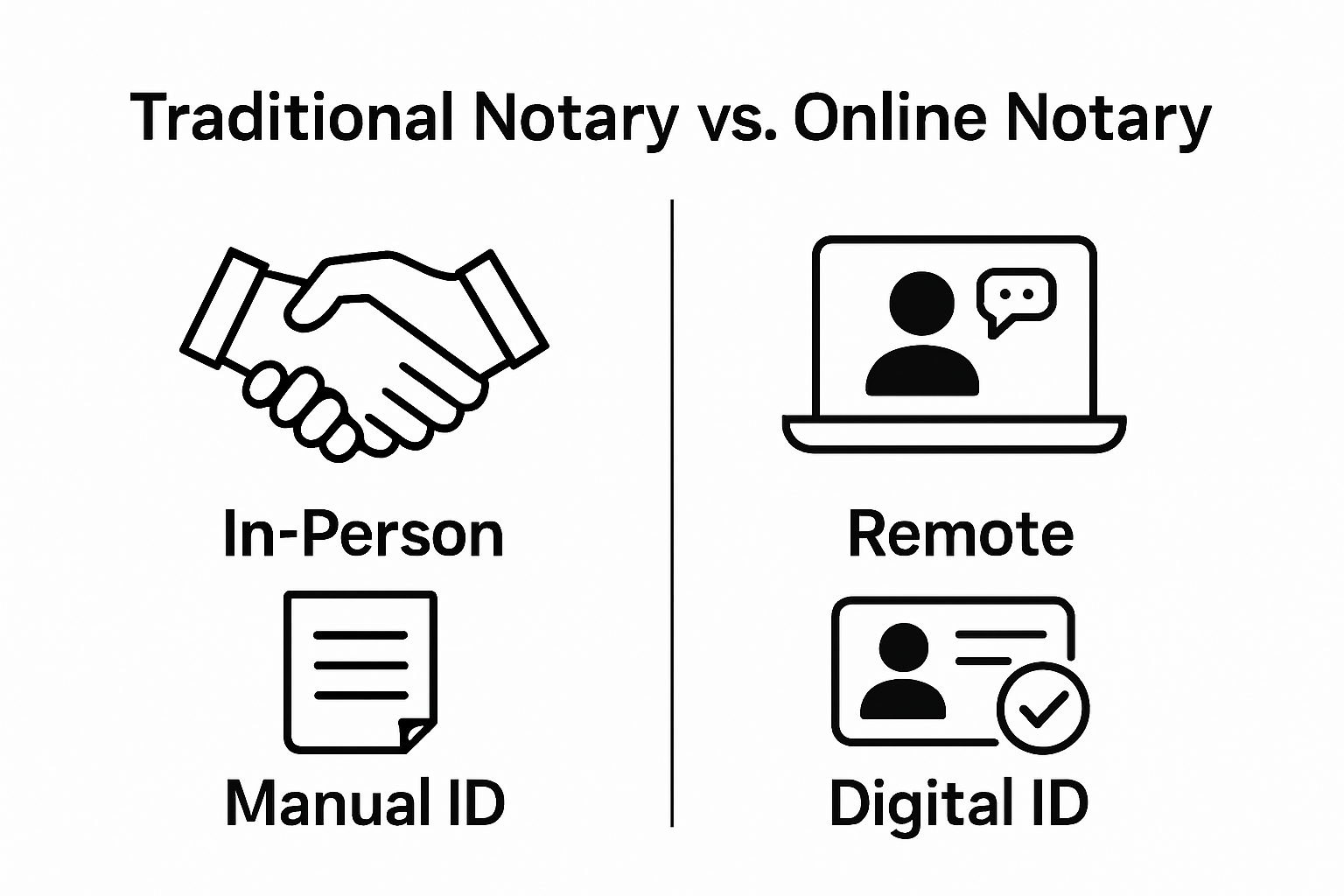
The following table compares key features of traditional notarization and online notarization, helping readers quickly see the differences and benefits of each approach.
| Feature | Traditional Notarization | Online Notarization |
|---|---|---|
| Physical Presence Required | Yes | No |
| Identity Verification Methods | In-person ID check | Biometric, ID scan, digital checks |
| Geographic Limitations | Yes | None |
| Processing Speed | Days | Minutes |
| Security Protocols | Manual verification, paper records | Encryption, audit trails, digital logs |
| Accessibility for Mobility Issues | Limited | High |
| Document Tracking | Manual, often limited | Comprehensive, real-time |
The Importance of Online Notary Services
Online notary services have emerged as a critical solution addressing the evolving needs of individuals and businesses seeking efficient, secure, and convenient document authentication. Notarize online in Canada has become increasingly important in our digital transformation landscape, offering unprecedented accessibility and flexibility.
Transforming Document Authentication
Traditional notarization processes often involve significant time investments, requiring physical presence and navigating complex scheduling constraints. Online notary services fundamentally disrupt these limitations by providing instant digital verification that meets legal standards while dramatically reducing processing time.
The importance of online notary services extends across multiple critical domains:
- Legal documentation processing
- Business contract authentication
- International document certification
- Personal identification verification
Economic and Practical Benefits
Beyond convenience, online notary services generate substantial economic advantages. By eliminating geographical restrictions, these digital platforms enable businesses and individuals to authenticate documents quickly without expensive travel or time-consuming bureaucratic processes.
According to Canadian Digital Transformation Research, digital authentication technologies are projected to save organizations approximately 40% in administrative processing costs while reducing document verification timelines from days to minutes.
The comprehensive benefits of online notary services include:
- Reduced administrative overhead
- Enhanced document security protocols
- Immediate global document recognition
- Simplified compliance with regulatory requirements
Moreover, online notary platforms incorporate advanced encryption and multi factor authentication technologies, ensuring that digital document certification maintains the highest standards of legal integrity and personal data protection. These technological safeguards provide users with confidence that their sensitive information remains protected throughout the verification process.
Key Legal Framework for Online Notarization in Ontario
The legal landscape for online notarization in Ontario represents a sophisticated intersection of technological innovation and regulatory compliance. Are online notaries legal in Ontario? Understanding the comprehensive legal framework is crucial for ensuring the validity and enforceability of digitally notarized documents.
Regulatory Compliance and Legal Standards
Ontario’s approach to online notarization is grounded in strict regulatory requirements that prioritize document integrity, identity verification, and legal authenticity. The provincial legal framework mandates specific protocols to ensure that digital notarization meets the same rigorous standards as traditional in-person notarization.
Key legal considerations for online notarization include:
- Mandatory identity verification processes
- Secure digital signature authentication
- Comprehensive document tracking mechanisms
- Explicit consent requirements from all parties
Technological Validation and Legal Recognition
According to Ontario’s Electronic Commerce Act, digital documents and signatures have the same legal standing as their physical counterparts, provided they meet specific technological and procedural standards. This legislative framework provides a robust foundation for online notarization, ensuring that digitally certified documents carry full legal weight.
The legal validation process for online notarization involves multiple critical components:
- Advanced encryption technologies
- Biometric identity verification
- Comprehensive audit trails
- Secure document storage mechanisms
Moreover, online notary services in Ontario must adhere to stringent data protection regulations, ensuring that personal information remains confidential and secure throughout the digital certification process. These legal safeguards protect both individuals and organizations from potential fraud or unauthorized document modifications, maintaining the highest standards of legal integrity in digital document authentication.

How Online Notarization Works: Processes and Technologies
Online notarization integrates advanced technological solutions to replicate and enhance traditional document authentication processes. Online notary public services in Ontario leverage sophisticated digital platforms that ensure secure, legally compliant document verification.
Digital Identity Verification
Digital identity verification represents the cornerstone of online notarization technology. Unlike traditional methods requiring physical document inspection, online platforms employ multiple sophisticated authentication mechanisms to confirm an individual’s identity with unprecedented accuracy.
The identity verification process typically involves:
- Government issued photo identification scanning
- Real time facial recognition technology
- Crossreferencing personal information databases
- Multipoint digital authentication protocols
Technological Infrastructure and Security Protocols
According to Cybersecurity and Digital Authentication Research, online notarization platforms utilize advanced encryption technologies that create tamperproof digital certificates. These technological frameworks ensure document integrity through comprehensive security measures.
The technological infrastructure supporting online notarization includes:
- 256bit encryption standards
- Blockchain verification technologies
- Secure video conferencing platforms
- Comprehensive digital audit trails
Moreover, these digital platforms integrate complex algorithmic checks that validate document authenticity in real time, creating a robust verification ecosystem that surpasses traditional manual documentation processes. By combining cutting edge technological solutions with stringent legal frameworks, online notarization provides a secure, efficient alternative to conventional document authentication methods.
This table summarizes the essential security technologies and protocols used to protect the online notarization process, providing a clear reference for users concerned with digital document safety.
| Security Feature | Description |
|---|---|
| 256-bit Encryption | Ensures data in transit and at rest is protected |
| Biometric Facial Recognition | Verifies user identity via unique facial features |
| Multi-Factor Authentication | Requires multiple verification steps for access |
| Secure Video Conferencing | Enables real-time verification in a secure manner |
| Blockchain Verification | Adds transparency and prevents unauthorized changes |
| Comprehensive Digital Audit Trails | Maintains detailed records of all actions taken |
| Secure Document Storage | Protects notarized documents from unauthorized access |
Challenges and Considerations in Online Notary Practices
Online notarization, while revolutionary, presents a complex landscape of technological, legal, and ethical challenges that require careful navigation. Professional online notary services in Canada must address these multifaceted considerations to maintain the highest standards of document authentication and legal compliance.
Technological and Security Vulnerabilities
Cybersecurity risks represent a significant challenge in online notarization practices. Digital platforms must continuously evolve to counteract sophisticated technological threats that could compromise document integrity and personal information security.
Potential technological vulnerabilities include:
- Potential data interception risks
- Advanced phishing techniques
- Sophisticated identity fraud methods
- Vulnerabilities in video conferencing platforms
Legal and Regulatory Compliance Complexities
According to Canadian Digital Identity Authentication Standards, online notary services must navigate a complex regulatory environment that varies across provincial jurisdictions. This regulatory complexity creates significant challenges for standardized digital document authentication.
Key compliance considerations encompass:
- Interprovincial legal recognition variations
- Evolving digital authentication standards
- Cross border document validity requirements
- Continuous regulatory framework updates
Moreover, online notary platforms must implement sophisticated risk mitigation strategies that balance technological innovation with rigorous legal and ethical standards. By proactively addressing these challenges, digital notarization services can build trust, enhance security, and provide reliable document authentication solutions that meet the dynamic needs of individuals and businesses in an increasingly digital world.
Take the Stress Out of Meeting Ontario’s Online Notary Requirements
Navigating Ontario’s online notary requirements can feel overwhelming, especially when your urgent document needs are on the line. Whether trying to ensure compliance with identity verification or facing confusion about digital authentication standards, it’s easy to worry about delays or errors. You deserve a notary solution that keeps you legally secure while saving time and eliminating geographic barriers. For readers exploring the vital details of this process, our Uncategorized – The Online Notary page offers guides and updates that answer your most pressing notary questions.

Ready to experience convenient, fully compliant digital notarization for affidavits, invitation letters, statutory or solemn declarations, and more? Visit The Online Notary now. Let our Ontario-based team handle your document certification with robust security, legal accuracy, and fast turnaround—so you can move forward with confidence today.
Frequently Asked Questions
What are the basic requirements for online notarization in Ontario?
Online notarization in Ontario requires robust identity verification processes, secure digital signature authentication, and explicit consent from all parties involved in the transaction.
How does digital identity verification work for online notarization?
Digital identity verification for online notarization typically includes scanning government-issued photo IDs, utilizing real-time facial recognition technology, and implementing multipoint digital authentication protocols.
Are online notarized documents legally valid?
Yes, online notarized documents hold the same legal standing as traditionally notarized documents, provided they meet the established technological and procedural standards as outlined in the Electronic Commerce Act.
What technologies are used to secure online notarization processes?
Online notarization processes utilize advanced encryption technologies, secure video conferencing platforms, and comprehensive digital audit trails to ensure document integrity and confidentiality.
Recommended
- How to Become a Notary Online in Ontario, Canada – The Online Notary
- Online Notary Public in Ontario: Services and Benefits 2025 – The Online Notary
- Online Notary Services in Ontario: What You Need to Know 2025 – The Online Notary
- Are Online Notaries Legal in Ontario? What You Need to Know – The Online Notary