
Statutory declarations might sound like just another piece of legal paperwork but in Ontario these documents are far from ordinary. Here is the surprise. A single statutory declaration can carry such weight that providing a false statement on one is considered a criminal offence under federal Canadian law. So what seems like routine paperwork actually stands as a trusted instrument that lets people officially confirm facts whenever traditional documents will not cut it.
Table of Contents
- Defining Statutory Declaration: What It Is
- Importance of Statutory Declaration in Ontario
- How Statutory Declarations Function
- Key Concepts Behind Statutory Declarations
- Common Uses and Real-World Applications
Quick Summary
| Takeaway | Explanation |
|---|---|
| Statutory declarations validate facts legally | These declarations confirm specific facts, providing a formal mechanism for legal recognition when documents are insufficient. |
| Verification is essential for authenticity | A statutory declaration must be affirmed in the presence of an authorized official to ensure its legal validity. |
| Used across various sectors in Ontario | These declarations are crucial in fields like immigration, real estate, and estate planning for verifying information. |
| Truthfulness carries legal consequences | Providing false information in a statutory declaration can lead to serious legal ramifications for the declarant. |
| Standardized process enhances credibility | The structured approach to statutory declarations ensures reliable communication of critical information, promoting honesty and accountability. |
Defining Statutory Declaration: What It Is
A statutory declaration represents a powerful legal instrument that allows individuals to formally confirm facts or circumstances under specific legal conditions. Unlike casual statements, these declarations carry significant legal weight and are recognized by governmental and judicial systems as credible evidence.
The Legal Foundation of Statutory Declarations
Statutory declarations are written statements made voluntarily by an individual, declaring specific facts to be true. According to the Canadian legal framework, these declarations are typically used when direct documentary evidence might be unavailable or challenging to obtain. The declarant must affirm the statement’s truthfulness in the presence of an authorized person, such as a commissioner for taking affidavits, notary public, or lawyer.
Key Characteristics and Legal Significance
Statutory declarations possess several distinctive attributes that distinguish them from other forms of legal documentation:
Below is a table summarizing the key features that distinguish statutory declarations from other types of legal documentation.
| Feature | Statutory Declaration | Other Legal Documentation |
|---|---|---|
| Voluntary Creation | Yes, declarant creates statement voluntarily | Often required by law or process |
| Formal Verification | Required, must be witnessed by authorized official | May or may not require witnessing |
| Legal Consequences | False statements can lead to criminal charges | Depends on document type and context |
| Use as Alternative Evidence | Serves as evidence when traditional documents are unavailable | Often relies on direct documentary evidence |
| Recognized as Legal Proof | Yes, by government and judicial systems | Varies by document type |
- They are voluntarily created by the declarant
- Require formal verification by an authorized official
- Carry potential legal consequences for false statements
- Serve as alternative evidence when traditional documentation is unavailable
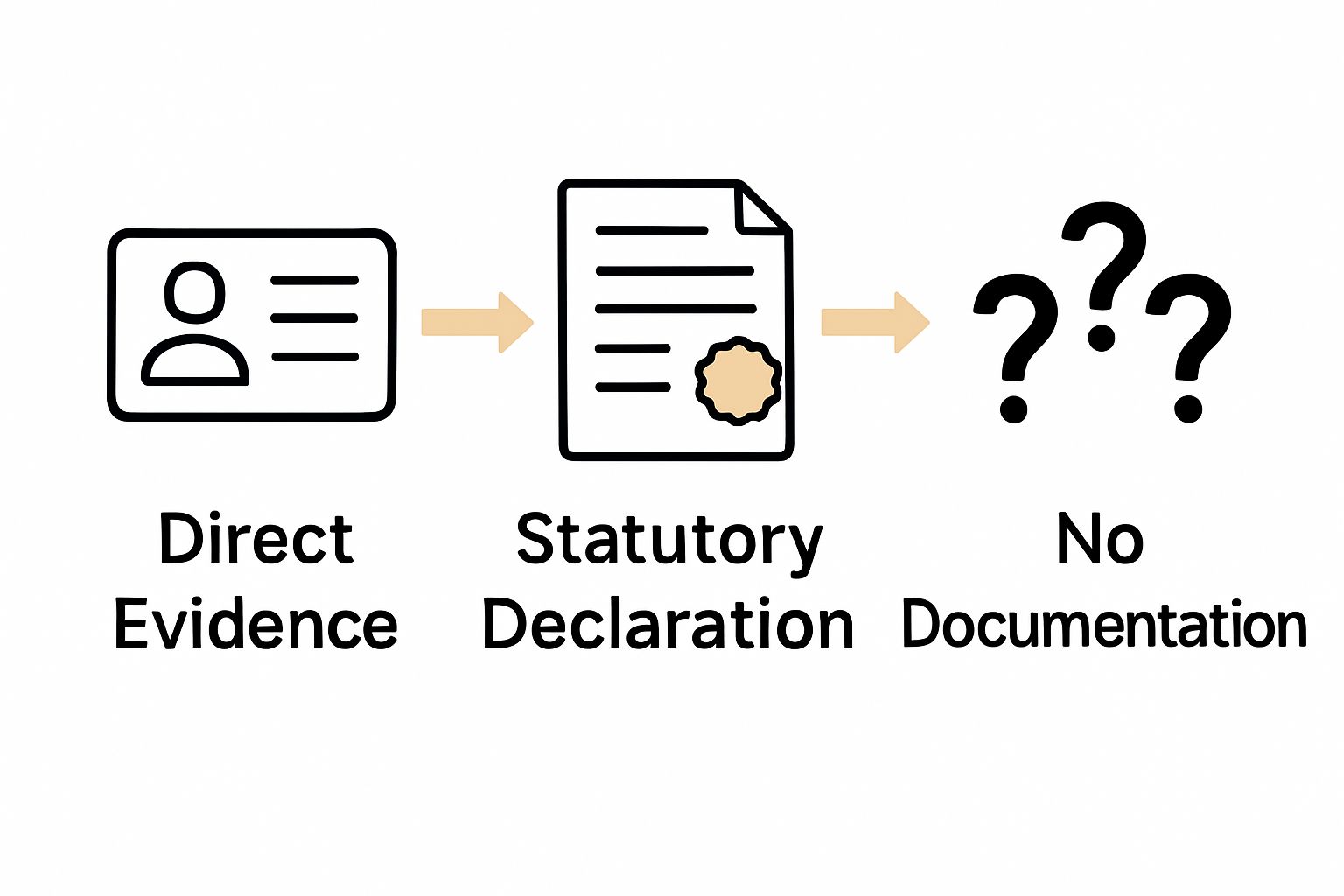
The purpose of a statutory declaration extends beyond mere documentation. It provides a formal mechanism for individuals to communicate important facts with legal recognition. Learn more about how statutory declarations are signed in Ontario to understand the precise procedural requirements.
Primarily, these declarations are utilized in various scenarios where written confirmation of facts becomes essential. This might include proving identity, confirming personal circumstances, supporting legal proceedings, or meeting administrative requirements for government agencies, financial institutions, or other official bodies.
Importance of Statutory Declaration in Ontario
Statutory declarations play a critical role in Ontario’s legal and administrative landscape, serving as essential instruments for verifying information and establishing legal credibility across multiple domains. These formal statements provide individuals and organizations with a reliable method to confirm facts when traditional documentation might be insufficient or unavailable.
Legal and Administrative Significance
According to the Ontario Attorney General’s guidelines, statutory declarations serve multiple crucial functions in the province. They act as powerful tools for individuals to make formal statements that can be used in various legal and governmental contexts. The significance of these declarations extends far beyond simple paperwork, offering a structured approach to verifying personal and professional information.
Practical Applications in Different Sectors
Statutory declarations are utilized across numerous sectors in Ontario, demonstrating their versatility and importance:
- Immigration and Citizenship processes
- Real Estate transactions and property transfers
- Business registration and corporate documentation
- Personal Identity verification
- Estate Planning and inheritance matters
These declarations provide a standardized method for individuals to communicate critical information with legal standing. Learn more about completing statutory declarations online in Ontario to understand the modern approach to this important legal tool.
The importance of statutory declarations in Ontario cannot be overstated. They offer a legally recognized mechanism for individuals to confirm facts, provide evidence, and fulfill administrative requirements with confidence and credibility.
By requiring verification from authorized professionals, these declarations help maintain the integrity of legal and governmental processes throughout the province.
How Statutory Declarations Function
Statutory declarations operate as a structured legal mechanism designed to provide individuals with a formal method of confirming factual information through a carefully regulated process. These declarations represent more than simple written statements, functioning as legally recognized instruments with specific procedural requirements and potential consequences.
The Verification Process
According to Canadian legal guidelines, statutory declarations require precise steps to ensure their authenticity and legal validity. The process involves the declarant voluntarily making a written statement and then affirming its truthfulness in the presence of an authorized official. This critical verification step distinguishes statutory declarations from casual or unverified statements.
The following table provides an overview of the core steps involved in the statutory declaration verification process to help clarify each requirement.
| Step | Description |
|---|---|
| Voluntary Submission | Declarant chooses to make a formal statement |
| Written Statement | Facts are documented clearly and precisely |
| Personal Appearance | Declarant appears before authorized official |
| Authorized Witness | Statement is verified by a notary public, commissioner, or lawyer |
| Affirmation of Truthfulness | Declarant affirms information is true under legal penalty |
Key Functional Components
The functional mechanism of a statutory declaration involves several essential elements that ensure its legal integrity:
- Voluntary Submission: The declarant must willingly create the statement
- Authorized Witness: An official such as a notary public or commissioner must verify the declaration
- Personal Appearance: The declarant must be physically present during verification
- Formal Language: The declaration must use precise, clear, and factual language
Learn more about who can sign statutory declarations in Ontario to understand the specific requirements for proper execution.
The functional process requires that the declarant understands the gravity of their statement. By affirming the declaration in front of an authorized witness, the individual acknowledges potential legal consequences for providing false information. This mechanism creates a powerful deterrent against misrepresentation and ensures the statement carries significant legal weight. The declaration becomes a credible document that can be used in various legal, governmental, and administrative contexts, providing a reliable method of confirming facts when traditional documentary evidence might be challenging to obtain.
Key Concepts Behind Statutory Declarations
Statutory declarations represent a sophisticated legal instrument rooted in principles of personal integrity, legal accountability, and formal communication of facts. Understanding their underlying conceptual framework requires examining the fundamental principles that govern their creation, execution, and legal significance.
Legal and Ethical Foundations
According to federal legislation governing legal documentation, statutory declarations are built upon critical principles that ensure their reliability and credibility. These declarations transcend mere paperwork, embodying a profound commitment to truthful representation and personal accountability within legal and administrative systems.
Core Conceptual Elements
The conceptual structure of statutory declarations revolves around several essential principles that define their unique legal character:
- Voluntary Consent: The declarant must willingly and consciously make the statement
- Personal Knowledge: Statements must be based on direct, firsthand information
- Truth and Accuracy: Complete honesty is paramount and legally mandated
- Formal Verification: An authorized official must witness and validate the declaration
Explore the specifics of who can sign statutory declarations in Ontario to understand the precise requirements of this legal mechanism.
The conceptual framework of statutory declarations extends beyond simple documentation. They represent a structured mechanism that balances individual testimony with official validation, creating a powerful tool for communicating critical information. By requiring personal appearance, sworn affirmation, and potential legal consequences for false statements, these declarations create a robust system that encourages truthful, responsible communication across various legal and administrative contexts.
Common Uses and Real-World Applications
Statutory declarations serve as versatile legal instruments with wide-ranging applications across multiple sectors and personal scenarios. These formal statements provide individuals and organizations with a reliable mechanism to confirm facts, establish identity, and meet various administrative and legal requirements when traditional documentation falls short.
Professional and Personal Documentation
According to Canadian legal documentation guidelines, statutory declarations are instrumental in scenarios requiring precise verification of personal or professional information. They bridge critical gaps in documentation, offering a credible alternative when standard proof becomes challenging to produce or is temporarily unavailable.
Diverse Practical Applications
Statutory declarations find utility in numerous practical contexts, demonstrating their flexibility and importance:
- Immigration and Citizenship processes requiring supplemental evidence
- Name Change confirmations and legal identity transitions
- Property and Real Estate transactions needing additional verification
- Employment background checks and credential confirmations
- Financial Services applications requiring alternative documentation
- Inheritance and Estate matters involving complex family situations
Learn more about completing statutory declarations online in Ontario to understand the modern approach to this essential legal tool.
These declarations provide a structured pathway for individuals to communicate critical information with legal standing. By offering a standardized method of verification that carries significant legal weight, statutory declarations enable people to navigate complex administrative landscapes more effectively, ensuring their personal and professional narratives are accurately represented when conventional documentation proves insufficient.
Here is a table outlining common professional and personal contexts in which statutory declarations are used, along with examples of their function in each area.
| Sector/Context | Example Application |
|---|---|
| Immigration | Supplemental evidence for applications |
| Name Change | Legal confirmation of identity changes |
| Real Estate | Verification in property transfer transactions |
| Employment | Credential or background verification |
| Financial Services | Alternative documentation for account opening |
| Inheritance/Estate | Confirming details for estate settlement or family circumstances |

Simplify Your Statutory Declaration Needs Online in Ontario
Understanding what a statutory declaration is and why it matters can feel overwhelming, especially when you need to confirm facts quickly and reliably. The article highlighted the stress and uncertainty that comes with needing legally recognized verification for facts, supporting documents, or professional and personal changes. When direct documentary proof is out of reach, or when every detail must carry legal weight, finding an efficient and trustworthy process to complete your statutory declaration is essential.
For those in Ontario who want to avoid the hassle of in-person appointments and confusing procedures, The Online Notary makes completing statutory declarations fast and secure from the comfort of your home. Our online notary team is fully authorized to witness and verify declarations so your statement meets all legal requirements. See more about the services we offer on our Uncategorized – The Online Notary category page.

You do not have to wait in line or second-guess if your paperwork will be accepted. Visit The Online Notary now to complete your statutory declaration online within minutes. Take the next step for your legal needs confidently and stay compliant with Ontario’s laws without delay.
Frequently Asked Questions
What is the main purpose of a statutory declaration?
A statutory declaration serves to formally confirm specific facts or circumstances under legal conditions. To utilize one, identify the facts that need verification and create a written statement to be affirmed in front of an authorized official.
How do I create a statutory declaration?
To create a statutory declaration, write a statement outlining the facts you wish to confirm. Then, schedule a meeting with an authorized official, such as a notary public, to affirm its truthfulness in their presence.
What are the legal consequences of providing false information in a statutory declaration?
Providing false information in a statutory declaration can lead to significant legal repercussions, including potential criminal charges for perjury. Always ensure that all statements within the declaration are accurate before submission to maintain legal integrity.
Where can I use statutory declarations in administrative processes?
Statutory declarations can be used in various administrative processes, such as immigration applications, property transactions, or verifying personal identity. Review the specific requirements for each process to determine where a statutory declaration is needed.
Who is authorized to witness a statutory declaration?
Authorized officials such as a notary public, commissioner for taking affidavits, or lawyers can witness a statutory declaration. Make sure to check if you need to arrange for one of these professionals to validate your declaration before submission.
Can I complete a statutory declaration online?
Yes, many jurisdictions now allow for statutory declarations to be completed online, simplifying the process. To access this option, look for online platforms that facilitate statutory declaration procedures and follow their guidelines for completion.
Recommended
- Understanding Who Signs Statutory Declarations in Ontario – The Online Notary
- Understanding Who Signs Statutory Declarations in Ontario – The Online Notary
- How to Complete a Statutory Declaration Online in Ontario – The Online Notary
- What is a Declaration? Understanding Its Importance – The Online Notary