
Over 15,000 people in Ontario apply for a legal name change each year according to government sources. This number highlights just how many residents need official documents to reflect major life changes, from marriage to personal identity. A name change affidavit is the linchpin for updating your legal records without confusion or delays. Understanding how this process works saves time and prevents costly mistakes when managing your identity under Ontario law.
Table of Contents
- Name Change Affidavit Explained for Ontario
- Types of Name Changes and Affidavit Uses
- Legal Requirements and Documentation Needed
- Step-By-Step Process for Name Change Affidavit
- Common Mistakes and Legal Risks to Avoid
Key Takeaways
| Point | Details |
|---|---|
| Name Change Affidavit Purpose | A name change affidavit is a legal document used in Ontario to officially document and validate a change in an individual’s legal name. |
| Types of Name Changes | Common scenarios for name changes include marriage, divorce, personal preference, gender transition, and correction of birth certificate names. |
| Documentation Requirements | Applicants must provide original documentation including a birth certificate, photo ID, residency proof, and relevant legal documents. |
| Avoiding Common Mistakes | To prevent delays or rejections, ensure complete and accurate documentation, adhere to procedural steps, and avoid inconsistent information. |
Name Change Affidavit Explained for Ontario
A name change affidavit is a crucial legal document that enables individuals in Ontario to officially document and validate a change in their legal name. According to ontario.ca, this process involves specific legal procedures designed to ensure accurate and recognized name modifications.
In Ontario, a name change affidavit serves multiple important purposes. It provides a formal, legally recognized method for individuals to update their name across various official documents and records. Legal Line highlights that this document is essential for ensuring consistency and legal recognition of your new name in government systems, financial institutions, and other critical administrative contexts.
Key aspects of a name change affidavit in Ontario typically include:
- Personal identification details
- Reason for name change
- Current legal name
- Desired new legal name
- Sworn declaration before a notary public or commissioner for taking affidavits
The process requires careful documentation and adherence to provincial legal standards. Proper preparation is critical to ensure your name change affidavit will be accepted by government agencies and other official institutions. For those seeking a comprehensive understanding of the name change process, understanding what is an affidavit can provide additional context and guidance.
Navigating a name change can seem complex, but with the right documentation and approach, individuals can successfully update their legal identity in Ontario. Each step, from gathering required documentation to swearing the affidavit, contributes to creating a legally recognized record of your name change.
Types of Name Changes and Affidavit Uses
Name change affidavits in Ontario encompass several distinct scenarios, each requiring a unique approach and specific documentation. Legal name changes can arise from various personal circumstances, such as marriage, divorce, gender transition, or personal preference. Understanding types of affidavits provides crucial insight into the nuanced legal processes surrounding these transformative documents.
The most common types of name changes in Ontario include:
- Marriage-related name changes: Adopting a spouse’s surname or creating a hyphenated last name
- Divorce-related name changes: Reverting to a previous surname or selecting a new legal name
- Personal preference changes: Selecting a name that better reflects personal identity
- Gender transition name changes: Aligning legal documentation with gender identity
- Correction of birth certificate names: Addressing errors in original documentation
Each type of name change requires specific documentation and potentially different legal procedures. Sworn affidavits play a critical role in legally validating these name modifications, providing official recognition across government agencies, financial institutions, and other critical administrative systems.
Here’s a comparison of the main types of name changes and their documentation requirements in Ontario:
| Type of Name Change | Common Reason | Key Documentation Needed |
|---|---|---|
| Marriage-related | Adopt spouse’s surname | Marriage certificate Photo ID |
| Divorce-related | Revert to previous name | Divorce decree Photo ID |
| Personal preference | Reflect personal identity | Birth certificate Statutory declaration |
| Gender transition | Align with gender identity | Supporting medical/legal docs Birth certificate |
| Birth certificate correction | Address documentation error | Original birth certificate Proof of correct name |
The complexity of name change processes underscores the importance of meticulous preparation. Individuals must gather comprehensive supporting documentation, which might include birth certificates, marriage licenses, divorce decrees, or court orders. By working with a qualified notary or legal professional, applicants can navigate these intricate requirements and ensure their name change affidavit meets all provincial legal standards.
Legal Requirements and Documentation Needed
Ontario.ca outlines critical legal requirements for name changes, emphasizing the importance of comprehensive documentation and adherence to provincial regulations. Individuals seeking a legal name change must meet specific eligibility criteria and prepare a carefully curated set of supporting documents to ensure a smooth and successful process.
Key documentation typically required includes:
- Original birth certificate
- Government-issued photo identification
- Proof of Ontario residency
- Marriage certificate (if applicable)
- Divorce decree (if applicable)
- Statutory declaration explaining name change reason
According to Legal Line, there are specific legal prerequisites for name changes in Ontario. Age is a critical factor – individuals must be at least 16 years old to independently apply for a name change. For those under 16, parental consent or court authorization is mandatory. Residency requirements are equally important, with applicants needing to have lived in Ontario for at least 12 consecutive months before submitting their name change application.
The documentation process can be intricate, requiring meticulous attention to detail. How to legalize a document in Ontario can provide additional guidance on ensuring your documents meet official standards. Applicants should be prepared to provide certified copies of all supporting documents and potentially undergo background checks to verify their identity and eligibility for a name change.
Step-By-Step Process for Name Change Affidavit
Ontario.ca provides a comprehensive framework for navigating the name change affidavit process. This legal procedure requires careful attention to detail and a systematic approach to ensure successful documentation of your name change.
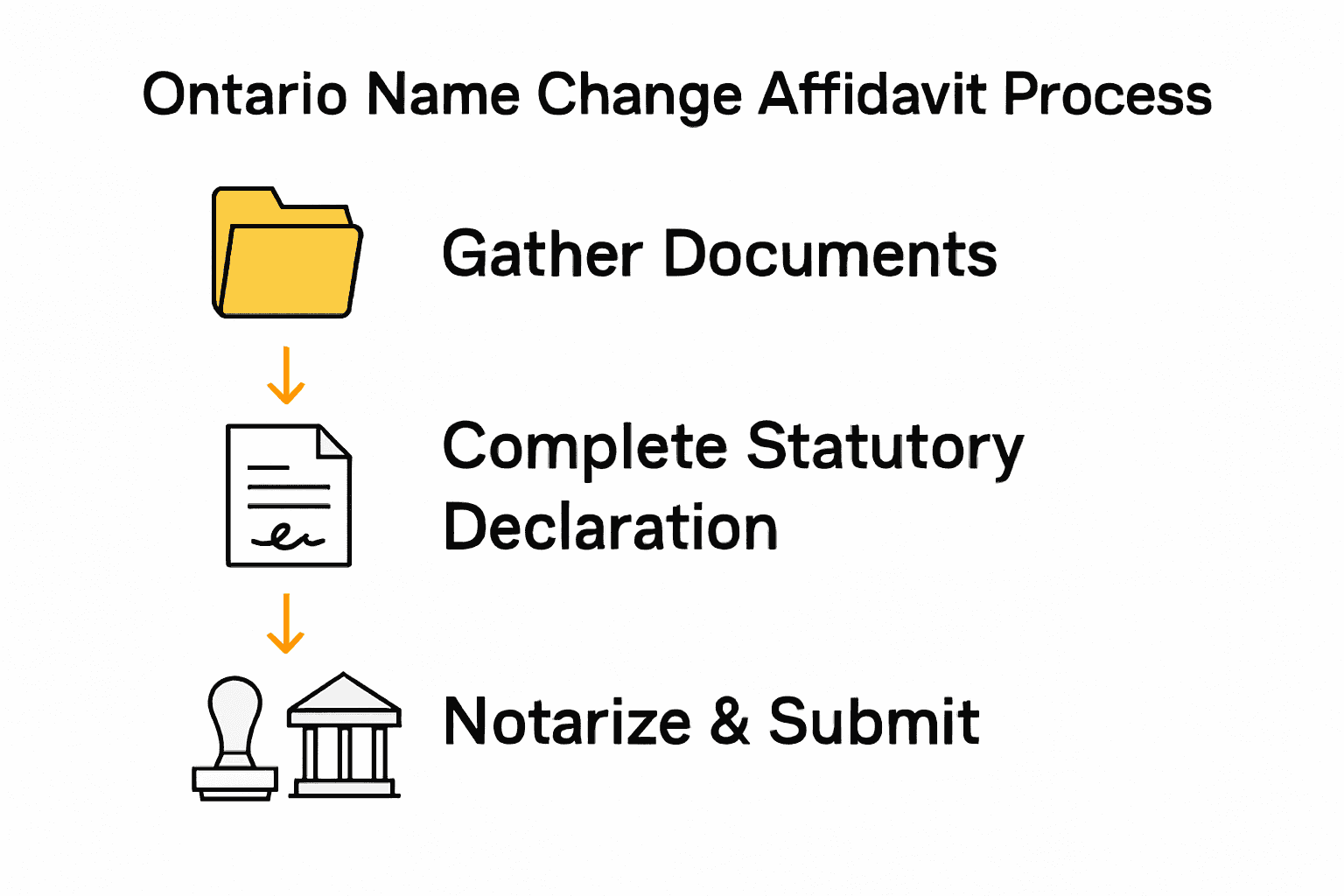
The step-by-step process for completing a name change affidavit typically involves:
- Gather Required Documentation
- Collect original identification documents
- Prepare proof of Ontario residency
- Compile supporting evidence for name change reason
- Complete Statutory Declaration
- Draft detailed explanation for name change
- Ensure all personal information is accurate
- Notarization and Verification
- Schedule appointment with authorized notary public
- Bring all original documents
- Swear or affirm the statutory declaration
According to Legal Line, the process requires precise documentation and legal compliance. Individuals must demonstrate a legitimate reason for their name change and provide comprehensive evidence supporting their request. The statutory declaration serves as a critical component, legally documenting the individual’s intent and rationale for changing their name.
For those seeking additional guidance on preparing legal documents, how to write an affidavit in Ontario can provide valuable insights into crafting a comprehensive and legally sound name change affidavit. The final step involves submitting the notarized documents to the appropriate provincial authorities for processing and legal recognition.
Common Mistakes and Legal Risks to Avoid
Just Magazine highlights the critical importance of avoiding common pitfalls in the name change affidavit process. Individuals often underestimate the complexity of legal name changes, which can lead to significant complications if not handled with precision and care.
Key mistakes to avoid include:
- Incomplete Documentation
- Failing to provide all required supporting evidence
- Submitting outdated or incorrect identification documents
- Inconsistent Information
- Mismatched details across different legal documents
- Unclear or vague explanations for name change
- Procedural Errors
- Skipping mandatory notarization steps
- Missing critical filing deadlines
- Incorrect form completion
According to Legal Line, the most significant legal risks stem from insufficient attention to detail. Potential consequences of mistakes can include delayed processing, outright rejection of the name change application, or even legal challenges to the name change validity. Applicants must ensure absolute accuracy and completeness in their documentation.

For those navigating the complex legal landscape of name changes, writing a legal letter in Ontario can provide additional insights into crafting precise and legally sound documentation. Ultimately, the key to a successful name change lies in meticulous preparation, thorough documentation, and strict adherence to provincial legal requirements.
Simplify Your Name Change Affidavit Process Today
Facing the complex and detailed requirements of a name change affidavit in Ontario can feel overwhelming. From gathering original birth certificates to drafting a precise statutory declaration and ensuring all documents are correctly notarized, the process demands careful attention to avoid delays and rejections. Common frustrations include navigating legal terms, meeting residency and age requirements, and providing consistent, complete documentation — all essential concepts outlined in the Complete Guide to Name Change Affidavit Ontario.
Take control of your name change journey with streamlined support from The Online Notary. Whether you need assistance with affidavits, statutory declarations, or notarizations, our online services make it easy to fulfill legal requirements correctly the first time.

Ready to avoid costly mistakes and speed up your name change approval? Explore trusted advice and professional online notary services in our Uncategorized – The Online Notary section. Start simplifying your legal name change now at The Online Notary and ensure your affidavit is prepared the right way.
Frequently Asked Questions
What is a name change affidavit in Ontario?
A name change affidavit is a legal document that officially documents and validates an individual’s change of name in Ontario, allowing for updates across official records and documents.
Who needs a name change affidavit in Ontario?
Individuals needing to update their legal name due to marriage, divorce, gender transition, or personal preference will require a name change affidavit to ensure legal recognition of their new name.
What documentation is required to submit a name change affidavit?
Key documents typically required include an original birth certificate, government-issued photo identification, proof of Ontario residency, and any relevant marriage or divorce certificates.
How do I prepare a name change affidavit?
To prepare a name change affidavit, gather all necessary documentation, complete the statutory declaration detailing the reason for the name change, and have it notarized by an authorized notary public before submitting it to the appropriate provincial authorities.
Recommended
- Understanding Change of Address Affidavit in Ontario – The Online Notary
- Understanding Affidavit for Correction of Name – The Online Notary
- Affidavit of Identity in Ontario: Guide for Individuals and Businesses – The Online Notary
- Affidavit of Identity in Ontario: Guide for Individuals and Businesses – The Online Notary
- The Home-Buying Timeline in Ontario – Fanis Makrigiannis
Realtor®