
An affidavit of identity in Ontario might sound like just another routine document, but the truth is these papers are at the core of serious life events. Imagine needing to verify your identity during a property deal, for immigration, or after losing major ID. It happens more often than you think and in fact, affidavits are required to legitimize personal identities in everything from name changes to banking and legal claims. Most people assume showing your driver’s license is enough. That is not always true in Ontario. Sometimes, only a sworn affidavit will work and a tiny mistake can make it worthless. The steps and details matter much more than you expect.
Table of Contents
- Understanding The Affidavit Of Identity In Ontario
- When Is An Affidavit Of Identity Needed
- Step-By-Step Process To Complete An Affidavit
- Legal Tips And Common Mistakes In Ontario
Quick Summary
| Takeaway | Explanation |
|---|---|
| Understand affidavit necessity for identity verification | Affidavits are critical in scenarios like name changes, property transactions, and immigration to legitimize personal identities. |
| Prepare comprehensive documentation | Gather valid ID, supporting documents, and proof of address to ensure a smooth affidavit process. |
| Follow proper submission protocols | Complete the affidavit with accurate personal information and submit it in person to an authorized official for validation. |
| Check for common mistakes | Be aware of incomplete details, incorrect witnessing, and using outdated documents to avoid legal issues. |
| Consult professionals if needed | Consider seeking help from legal professionals or notaries to ensure the affidavit meets all legal requirements. |
Understanding the Affidavit of Identity in Ontario
An affidavit of identity serves as a critical legal document that verifies an individual’s personal information and confirms their true identity. In Ontario, this formal written statement plays a significant role in various legal and administrative processes, providing a standardized method for individuals and businesses to authenticate personal details.
Legal Framework and Purpose
The affidavit of identity is a sworn statement made under oath, typically administered by a notary public or commissioner for taking affidavits. Its primary purpose is to provide a legally recognized method of identity verification. Government of Ontario legal resources highlight that these documents are essential for preventing identity fraud and ensuring the integrity of official transactions.
Individuals might require an affidavit of identity in numerous scenarios, such as:
- Name Changes: Documenting legal name transitions
- Property Transactions: Verifying personal information during real estate dealings
- Government Applications: Supporting passport, driver’s license, or immigration processes
- Financial Transactions: Confirming identity for banking or investment purposes
Key Components of an Affidavit of Identity
A comprehensive affidavit of identity typically includes several critical elements that establish an individual’s authentic personal information. Ontario Court Services recommend including the following details:
- Full legal name
- Current residential address
- Date of birth
- Place of birth
- Government issued photo identification details
- Signature of the individual
- Notary public or commissioner’s official certification
The document must be completed with precision and accuracy, as any discrepancies can potentially invalidate its legal standing. Individuals preparing an affidavit of identity should ensure all information is current, truthful, and matches official identification documents.
Verification and Authentication Process
The verification process for an affidavit of identity involves multiple layers of authentication. When creating this document, individuals must present valid government issued photo identification and appear in person before a authorized official. The notary public or commissioner will:
- Confirm the individual’s identity through official documentation
- Witness the individual’s signature
- Apply their official seal or stamp
- Administer an oath confirming the truthfulness of the provided information
This rigorous process ensures the document’s legal validity and helps prevent potential identity fraud. Read our comprehensive guide on getting an affidavit online for more detailed insights into the modern verification methods available in Ontario.
Whether you are an individual seeking to establish your identity or a business requiring formal identity verification, understanding the nuances of an affidavit of identity is crucial. The document serves as a powerful tool in legal and administrative contexts, providing a standardized and trustworthy method of personal identification.
When Is an Affidavit of Identity Needed
An affidavit of identity is a critical legal document that becomes necessary in various personal and professional scenarios where precise identity verification is paramount. Understanding the specific circumstances requiring this document helps individuals and businesses navigate complex legal and administrative processes more effectively.
Below is a table summarizing the most common personal and professional scenarios in Ontario that require an affidavit of identity, along with brief descriptions of each situation to help readers quickly identify when this document is needed.
| Scenario | Description |
|---|---|
| Legal Name Change | Formalizing a name transition by marriage, divorce, or choice |
| Immigration Process | Supporting visa, residency, or citizenship documentation |
| Passport/Travel Documentation | Resolving identity issues or renewing a passport |
| Lost or Stolen ID | Establishing identity after primary documents are lost/stolen |
| Employment Verification | Confirming identity for hiring or job-related processes |
| Banking/Financial Transactions | Verifying identity for opening accounts or major transactions |
| Real Estate Transactions | Establishing identity during property purchases or sales |
| Legal Settlements | Supporting claims in inheritance or other legal proceedings |
Personal Identity Verification Scenarios
Individuals often require an affidavit of identity during significant life transitions or administrative processes. Online Commissioner Resources indicate several key scenarios where this document becomes essential:
- Legal Name Changes: When legally changing one’s name through marriage, divorce, or personal choice
- Immigration Processes: Supporting visa applications, permanent residency, or citizenship documentation
- Passport and Travel Documentation: Resolving identity discrepancies or supporting passport renewal
- Lost or Stolen Identification: Providing a legal record when primary identification documents have been compromised
These situations demand a formal method of confirming personal identity that goes beyond standard identification documents. The affidavit serves as an additional layer of verification, ensuring accuracy and preventing potential identity fraud.
Professional and Financial Identity Verification
Businesses and financial institutions frequently require affidavits of identity to mitigate risks and comply with legal regulations. Notary Professional Guidelines highlight specific professional contexts where these documents are crucial:
- Employment Verification: Confirming employee identity for hiring processes
- Banking and Financial Transactions: Opening accounts, securing loans, or managing investments
- Real Estate Transactions: Verifying identity during property purchases, sales, or transfers
- Legal Settlements: Supporting inheritance claims or complex legal proceedings
The document provides a standardized method of identity confirmation that meets rigorous legal and professional standards. For businesses seeking streamlined identity verification, our comprehensive guide to online notary services offers modern solutions for obtaining these critical documents.
Complex Identity Verification Situations
Some scenarios require more nuanced identity verification that standard documents cannot adequately address. Individuals might need an affidavit of identity when:
- Resolving discrepancies between different identification documents
- Proving identity when standard identification is insufficient
- Supporting legal name variations or corrections
- Establishing identity for genealogical or historical research purposes
In these complex situations, an affidavit of identity becomes more than a simple form it transforms into a legal instrument that bridges gaps in personal documentation. The sworn statement provides a credible and legally recognized method of establishing one’s true identity, offering clarity and legitimacy where traditional documents might fall short.
Whether for personal, professional, or legal purposes, an affidavit of identity represents a powerful tool in maintaining accurate and verifiable personal information. Its versatility and legal standing make it an essential document for navigating the intricate landscape of modern identity verification.
Step-by-Step Process to Complete an Affidavit
Completely an affidavit of identity requires careful attention to detail and adherence to legal requirements. The process involves multiple critical steps that ensure the document’s legal validity and accuracy. Understanding these steps helps individuals navigate the documentation process with confidence.
Gathering Required Documentation
Ontario Government Resources emphasize the importance of comprehensive documentation when preparing an affidavit. Individuals must collect and prepare the following materials before initiating the process:
- Valid Government Issued Photo Identification: Driver’s license, passport, or provincial ID
- Supporting Identity Documents: Birth certificate, social insurance card
- Proof of Current Address: Utility bills, bank statements within the last 90 days
- Personal Information: Full legal name, date of birth, current residential address
Careful preparation of these documents minimizes potential delays or complications during the affidavit verification process. Accuracy and completeness are paramount in creating a legally recognized document.
Completing the Affidavit Submission
Small Claims Court Guidelines outline the critical steps for properly executing an affidavit:
- Draft the affidavit with precise personal information
- Review all details for accuracy and completeness
- Locate an authorized official for verification
- Bring original identification documents
- Appear in person before the authorized official
Authorized officials who can administer an affidavit include:
- Notary public
- Lawyers licensed by the Law Society of Ontario
- Commissioners for taking affidavits
- Small Claims Court staff members
When preparing to submit, individuals should explore our online notary service options to streamline the verification process and ensure compliance with legal requirements.
Verification and Authentication Process
The final stage involves a comprehensive verification process. The authorized official will:
- Examine all submitted identification documents
- Confirm the individual’s identity
- Witness the signing of the affidavit
- Administer an oath or solemn affirmation
- Apply their official seal or stamp
Individuals must be prepared to provide verbal confirmation of the document’s truthfulness. The official will ask you to swear or affirm that the information provided is accurate to the best of your knowledge.
Typical processing time varies, but most affidavits can be completed within 30-60 minutes during a single appointment. Additional time may be required if complex identity verification is necessary.
Preparing an affidavit of identity requires attention to detail, proper documentation, and cooperation with authorized officials. By following these systematic steps, individuals can successfully navigate the process and obtain a legally recognized document that confirms their personal identity.
This table outlines the step-by-step process for completing an affidavit of identity in Ontario, clarifying what is required at each stage to ensure legal compliance and a smooth experience.
| Step | Action Required |
|---|---|
| 1. Gather Documentation | Collect valid photo ID, supporting docs, proof of address |
| 2. Draft Affidavit | Complete form with accurate personal information |
| 3. Review for Accuracy | Double-check all details and information |
| 4. Locate Authorized Official | Find notary, lawyer, or commissioner |
| 5. Attend In-Person Appointment | Present documents and sign affidavit |
| 6. Complete Authentication | Swear/affirm oath; official applies seal/stamp |
Legal Tips and Common Mistakes in Ontario
Navigating the legal landscape of affidavits in Ontario requires a careful understanding of specific requirements and potential pitfalls. The process of creating a legally valid affidavit involves more than simply filling out a form it demands precision, attention to detail, and strict adherence to provincial regulations.
Formatting and Procedural Requirements
Ontario’s Rules of Civil Procedure provide explicit guidelines for preparing legally sound affidavits. The most critical formatting requirements include:
- Writing the document in the first person
- Providing the full legal name of the deponent
- Dividing the content into consecutively numbered paragraphs
- Ensuring each paragraph contains a specific statement of fact
- Maintaining clear and legible documentation
Common mistakes that can invalidate an affidavit include vague statements, unsupported claims, or improperly structured documentation. Individuals must be meticulous in preparing their documents to ensure legal acceptance.
Authentication and Verification Challenges
Commissioners for Taking Affidavits Guidelines highlight several complex scenarios that require special attention:
- Handling affidavits with multiple deponents
- Managing exhibits attached to the primary document
- Addressing language barriers during the verification process
- Accommodating individuals with visual impairments or reading difficulties
These specialized situations demand extra care and often require additional documentation or specific verification processes. Learn more about navigating notary requirements to understand the nuanced legal landscape of identity verification.
Avoiding Legal Pitfalls
Individuals and businesses must be aware of several critical mistakes that can compromise the legal validity of an affidavit:
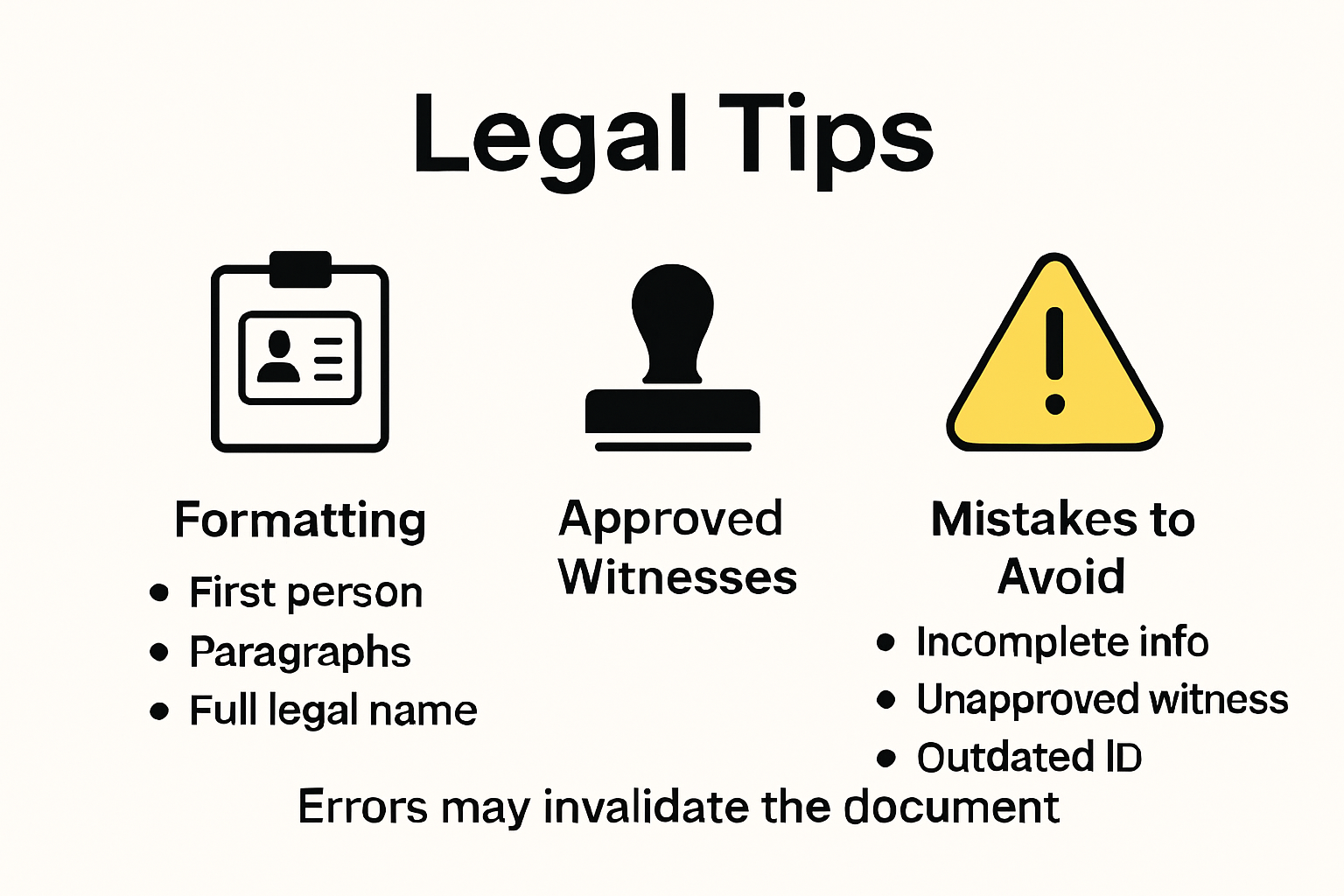
- Incomplete Information: Failing to provide comprehensive personal details
- Incorrect Witnessing: Using an unauthorized official to administer the oath
- Document Alterations: Making changes without proper notation and verification
- Outdated Documentation: Submitting identification documents that are expired or no longer current
The consequences of these errors can be significant. An improperly prepared affidavit may be rejected by legal institutions, government agencies, or financial organizations, potentially causing delays in critical personal or business processes.
Professional preparation is key. While individuals can complete affidavits independently, consulting with a legal professional or authorized notary can help prevent costly mistakes. These experts understand the intricate requirements of Ontario’s legal system and can provide guidance to ensure document accuracy.
Ultimately, an affidavit of identity is more than a simple form it is a legally binding document that requires careful preparation, precise documentation, and strict adherence to provincial regulations. By understanding these critical requirements, individuals and businesses can navigate the process with confidence and avoid potential legal complications.

Frequently Asked Questions
What is an affidavit of identity in Ontario?
An affidavit of identity in Ontario is a formal, sworn statement used to verify a person’s identity. It serves as a legal document essential for various scenarios, such as name changes, property transactions, and immigration processes.
When might I need an affidavit of identity?
You may need an affidavit of identity for situations like legal name changes, supporting immigration applications, resolving issues with lost or stolen identification, or verifying your identity for banking or real estate transactions.
What components must be included in an affidavit of identity?
An affidavit of identity should include your full legal name, current address, date and place of birth, details from your government-issued photo ID, your signature, and the official certification from a notary public or commissioner.
How do I complete an affidavit of identity in Ontario?
To complete an affidavit of identity, gather the necessary documentation, draft the affidavit with accurate personal information, locate an authorized official for verification, and attend an in-person appointment where you will sign the document and take an oath.
Ready to Secure Your Ontario Affidavit of Identity Without the Stress?
Struggling to prepare your affidavit of identity in Ontario can feel overwhelming. You have to provide exact personal details and follow provincial legal steps, and even one missed detail can cause costly delays. Our guide explained the risks of incomplete documents, outdated ID, and the constant worry of making a mistake with the legal format. You deserve peace of mind knowing your identity affidavit will be accepted the first time.

Let us help you eliminate the guesswork. Visit theonlinenotary.ca for simple and secure online notary services. You can complete affidavits, invitation letters, and statutory declarations from your home with real notaries. Stop worrying about paperwork errors and get started now. Your Ontario affidavit of identity is just a few clicks away—make this process simple and reliable today.
Recommended
- How to Get an Affidavit Online in Ontario 2025 – The Online Notary CA
- Everything You Need to Know About Online Notarization in Ontario: Fast, Legal, and Convenient for Affidavits and Declarations (2025) – The Online Notary CA
- Notary Identification Requirements in Ontario for 2025 – The Online Notary CA
- How to Notarize Documents in Ontario: Easy 2025 Guide – The Online Notary CA