
Legalizing a document in Ontario is never just a stack of paperwork. It is a careful process with steps that decide whether your document stands up internationally or stalls at the next border. Here is what you may not expect. Processing times for standard authentication can stretch to 15 business days and some documents even need more than one round of validation before they are accepted abroad. Most people miss key requirements in the very first stage and that single error can mean weeks of costly delays.
Table of Contents
- Step 1: Gather Required Documents And Information
- Step 2: Verify Notarization Or Authentication Needs
- Step 3: Obtain Necessary Signature Or Seal
- Step 4: Submit Document For Legalization
- Step 5: Confirm Completion And Collect Your Document
Quick Summary
| Key Point | Explanation |
|---|---|
| 1. Gather the right documents | Collect original documents or certified copies for the legalization process. Verify specific requirements for each document type to avoid delays. |
| 2. Understand authentication needs | Different documents require varying levels of notarization. Determine the correct verification based on the document’s purpose and destination. |
| 3. Engage a qualified professional | Select a notary public or other authorized professional to authenticate your documents, ensuring identity verification and document examination are performed. |
| 4. Organize your submission package | Prepare all documents thoroughly, maintain copies, and choose the appropriate submission method to avoid complications during legalization. |
| 5. Inspect documents upon collection | Verify all authentication markers and details upon receiving your legalized documents to ensure accuracy and compliance for international use. |
Step 1: Gather Required Documents and Information
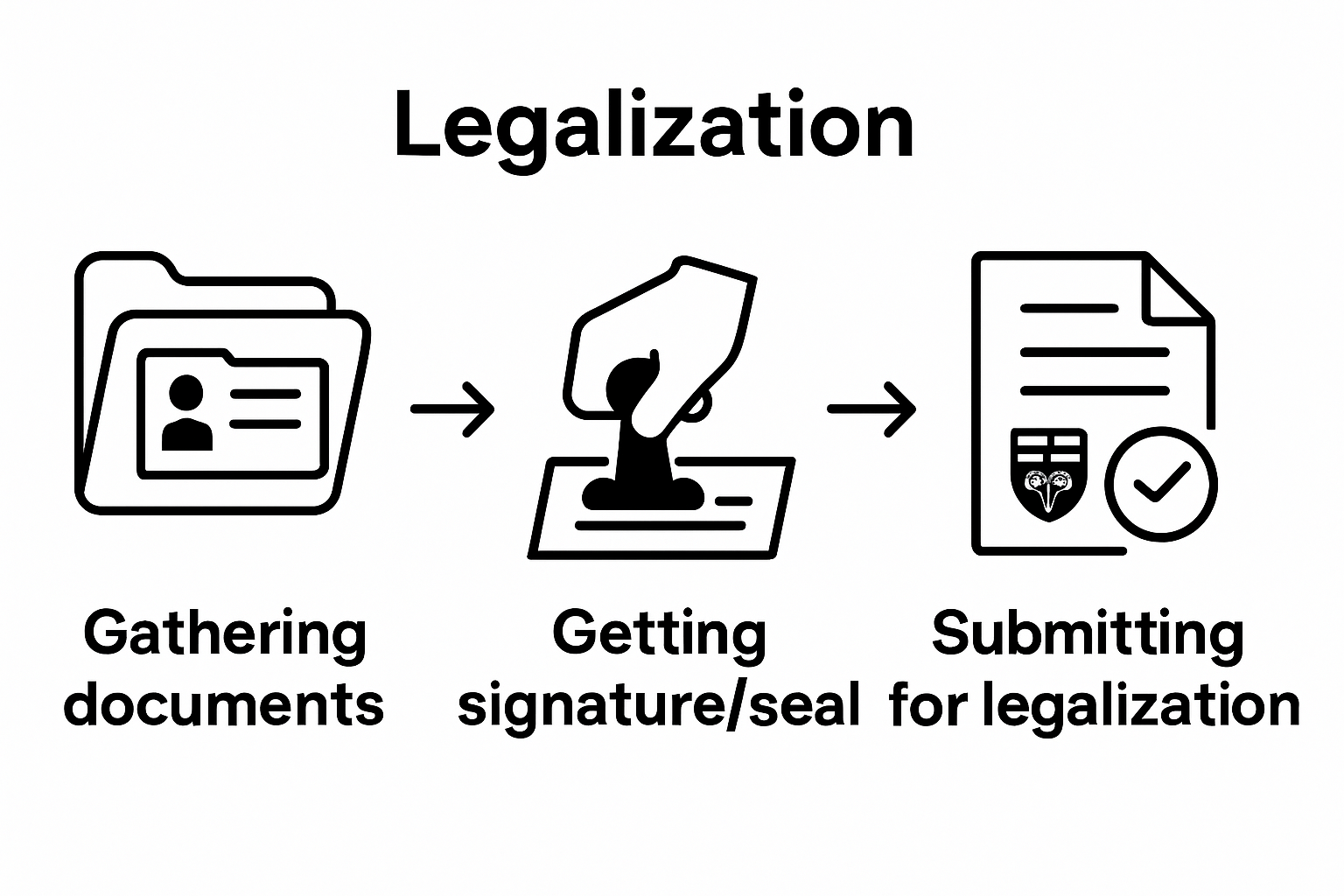
The first critical phase in legalizing a document in Ontario involves meticulous document preparation and information gathering. This foundational step determines the success of your entire legalization process. Understanding exactly what documents you need and how to compile them will streamline your journey and prevent potential administrative setbacks.
Identifying the Specific Document Types
Document legalization requires precision. You will need the original document or a certified true copy issued by the original document’s authorizing agency. Acceptable documents typically include birth certificates, marriage licenses, academic transcripts, corporate records, and legal agreements. Each document type might have unique requirements, so verifying the specific authentication needs is crucial.
For personal documents like birth certificates, you’ll want to obtain an official copy directly from the vital records office. Business documents such as corporate registration papers should be sourced from official provincial registries. Academic credentials require verification directly from the issuing educational institution.
Preparing Supporting Documentation
Beyond the primary document, you’ll need supplementary materials to complete the legalization process. Most legalization procedures in Ontario require presenting valid government issued photo identification. Acceptable identification typically includes:
- Canadian passport
- Provincial driver’s license
- Ontario photo card
- Permanent resident card
If you are representing an organization, additional documentation like corporate authorization letters or board resolutions might be necessary. Learn more about authentication requirements to ensure you have all required materials before proceeding.
Preparing thoroughly means checking each document for completeness. Ensure all materials are current, undamaged, and contain original signatures where required. Any missing elements can cause significant delays in the legalization process. Take time to review and double check your documentation package before submission, saving yourself potential future complications.
Step 2: Verify Notarization or Authentication Needs
After gathering your documents, the next critical phase involves understanding the specific notarization or authentication requirements for your particular document. Not all documents require the same level of verification, and the process can vary significantly depending on your intended use and destination.
Understanding Document Authentication Levels
Authentication involves confirming the legitimacy of a document’s signature, seal, or stamp. In Ontario, different documents require different levels of verification. Official government documents typically need provincial authentication, while personal documents might require notarization from a licensed professional. The destination of your document plays a crucial role in determining the exact authentication process.
For documents intended for international use, you may need additional steps beyond local notarization. Countries have varying requirements for document acceptance. Some might require an Apostille certification, while others demand a more complex multi step authentication process through global authorities. Explore the nuances of document authentication to ensure you meet all necessary standards.
The authentication needs can differ based on several key factors:
- Purpose of the document (legal, educational, business)
- Intended country of use
- Original issuing authority
- Type of original document
Contact the relevant provincial or federal authority if you are uncertain about your specific authentication requirements. Government service centers and professional notary services can provide targeted guidance. Some documents might need translation or additional certified copies, so confirming these details early prevents potential delays in your legalization process. Careful verification at this stage saves significant time and prevents potential rejections in later stages of document legalization.
Step 3: Obtain Necessary Signature or Seal
Obtaining the correct signature or seal represents a pivotal moment in document legalization. This step transforms your document from a standard piece of paper into an officially recognized legal instrument. Precision and attention to detail are paramount during this critical phase of authentication.
Selecting the Right Professional
The process of obtaining an official signature or seal requires engaging with a qualified professional. In Ontario, this typically means working with a notary public, commissioner for taking affidavits, or a lawyer authorized to provide notarial services. Not all professionals can authenticate every type of document, so matching your specific document type with the appropriate certification expert is crucial.
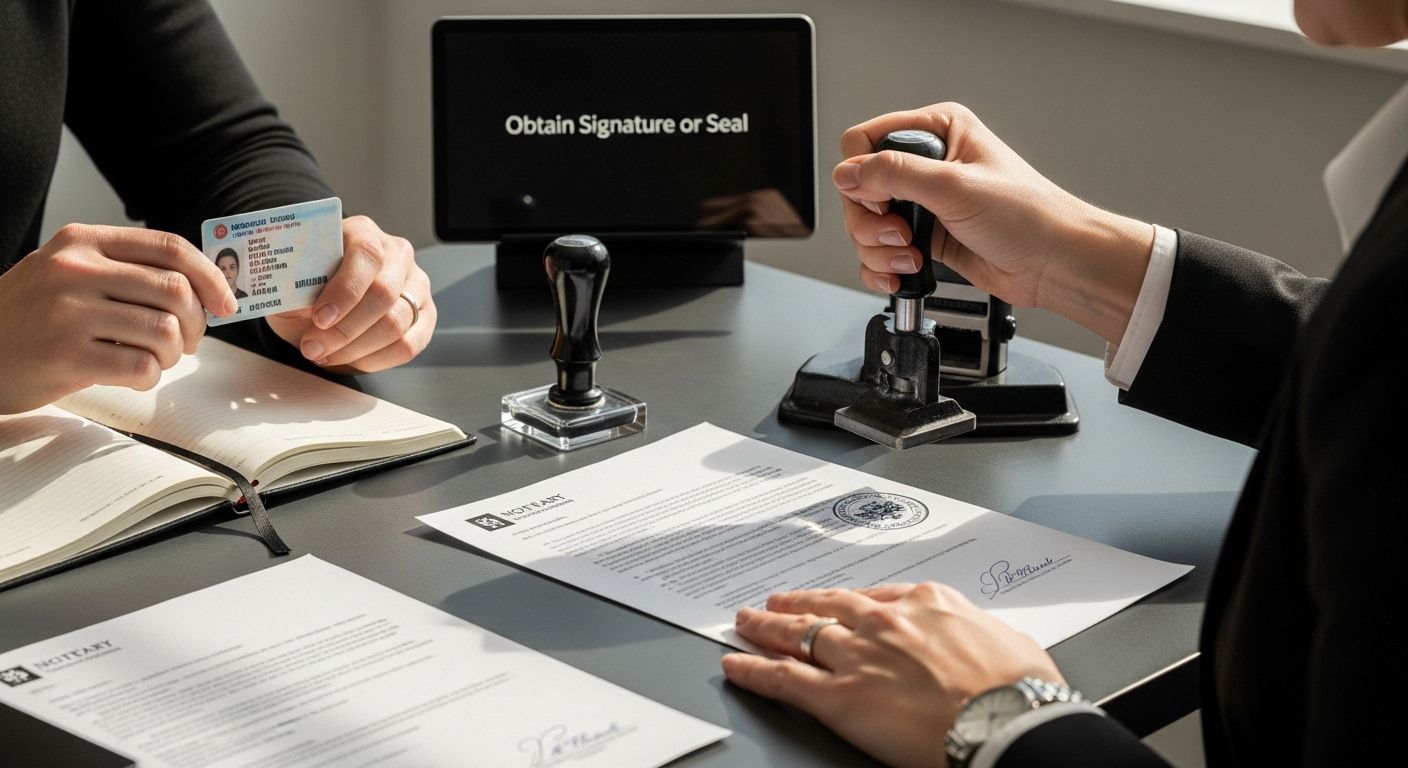
When seeking a professional, verify their credentials and specific areas of expertise. Government issued identification must be presented during the signing process, and all parties involved will need to be physically present. The professional will carefully examine your original documents, verify your identity, and confirm the authenticity of the signatures or information contained within.
Some documents require additional specialized handling. Corporate records might need corporate seal authentication, while academic transcripts could demand verification directly from the issuing institution. Understand the intricacies of document certification to ensure you select the most appropriate professional for your specific needs.
During the signature or seal process, expect the following key actions:
- Presentation of original documents
- Verification of personal identification
- Careful examination of document contents
- Application of official seal or signature
- Completion of notarial certificate
Professionals will typically charge a fee for their services, which varies depending on the document complexity and time required. Some may request appointments in advance, so plan accordingly. Always request a receipt and ensure the professional provides a clear, legible seal or signature that meets the specific authentication requirements for your document’s intended use.
Step 4: Submit Document for Legalization
Submitting your document for legalization represents the culmination of your careful preparation. This critical phase transforms your meticulously prepared document into an internationally recognized legal instrument. Understanding the submission process will help you navigate potential complexities and ensure a smooth authentication experience.
Choosing Your Submission Method
Legalization submissions in Ontario offer multiple pathways, each with unique requirements and processing times. In person submissions provide immediate verification but demand more personal time investment. Mail submissions offer convenience but require additional preparation to ensure document safety and completeness. Online submission portals are increasingly becoming a preferred option for many individuals seeking document authentication.
When preparing your submission package, organization is paramount. Compile all required documents, including your notarized original, supporting identification, and any additional certifications. Create a comprehensive checklist to verify you have every necessary component before sending. Learn more about streamlining your document submission to minimize potential delays or rejections.
Each submission method requires specific attention to detail:
- Ensure all documents are clean, undamaged, and clearly legible
- Include all required supporting documentation
- Prepare appropriate payment methods
- Maintain copies of all submitted materials
- Track your submission using provided reference numbers
Processing times vary depending on the document type and submission method. Provincial authentication services typically require between 5 to 15 business days for standard processing. Expedited services are often available for an additional fee, which can reduce waiting times to 2 to 3 business days.
The following table summarizes the main submission methods for document legalization in Ontario, outlining their key characteristics and processing times for easy comparison.
| Submission Method | Key Features | Typical Processing Time |
|---|---|---|
| In-Person | Immediate verification, requires appointment | 5-15 business days |
| Convenient, requires careful preparation | 5-15 business days | |
| Online Portal | Digital uploads, growing in popularity | 5-15 business days |
| Expedited (extra fee) | Available for urgent needs, higher cost | 2-3 business days |
Step 5: Confirm Completion and Collect Your Document
The final stage of document legalization involves carefully verifying and collecting your authenticated materials. This crucial step ensures that your meticulously prepared document meets all required legal standards and is ready for its intended international use. Attention to detail during document retrieval can prevent future complications or rejections.
Verifying Document Authenticity
Immediate document inspection is critical when collecting your legalized materials. Upon receipt, carefully examine every aspect of the authenticated document. Check that all official seals, signatures, and stamps are clearly visible and match the original certification details. The authentication certificate should be securely attached and include specific details about the document’s verification process.
Typically, legalized documents will feature distinctive authentication markers such as official government seals, notary stamps, or specialized certification annotations. These elements demonstrate the document has undergone thorough verification. Explore the nuances of document authentication to understand what constitutes a properly legalized document.
When collecting your document, be prepared to verify the following:
- Matching original document details
- Correct and complete authentication certificates
- Unaltered document physical condition
- Presence of all required official markings
- Alignment with initial submission requirements
Make multiple copies of your legalized document and store the original in a secure, protective folder. Consider creating both physical and digital backups to safeguard against potential loss or damage. Some international authorities may require additional copies or specific storage conditions, so research the exact requirements for your document’s destination country. If any discrepancies are noticed during collection, immediately contact the authentication office for clarification or potential re examination of your document.
Use this checklist table to verify you have completed all essential steps before collecting your legalized document, minimizing the risk of errors or omissions.
| Checklist Item | Description | Completion Required? |
|---|---|---|
| Match original document details | Ensure recipient details and contents are accurate | Yes |
| Check authentication certificates | Confirm all certificates are present and filled out | Yes |
| Inspect physical condition | Document should be unaltered and undamaged | Yes |
| Confirm all official markings | Look for required seals, signatures, or notary stamps | Yes |
| Align with submission requirements | Review that document matches original application criteria | Yes |
Eliminate Legalization Headaches with Easy Online Notary Solutions
Getting a document legalized in Ontario can be overwhelming, especially when you face issues like missing documents, complicated authentication steps, and strict signature requirements. If you struggled with gathering paperwork or worried about the risk of delays from improper verification, you’re not alone. Many readers feel uncertain about whether their notarized documents will actually be accepted by local or international authorities.
Let us take away the stress. The Online Notary streamlines every step, from notarizing affidavits, invitation letters, and statutory declarations to helping you prepare for safe, secure legalization. Our professionals ensure all seals, signatures, and official marks match the standards needed for fast and smooth acceptance.

Don’t risk rejection or wasted time on paperwork mistakes. Visit The Online Notary now to book your fully remote, compliant notarization. Take the first step toward reliable, legally recognized documents today.
Frequently Asked Questions
What documents are required for legalization in Ontario?
You need the original document or a certified true copy, such as a birth certificate, marriage license, academic transcript, or corporate record. Additional identification, like a government-issued photo ID, is also required.
How do I verify the notarization or authentication needs of my document?
Determining the notarization or authentication requirements involves understanding the document’s purpose and intended use. Contact relevant provincial or federal authorities for guidance based on what you need.
How do I select the right professional for obtaining a signature or seal?
Choose a qualified professional, such as a notary public or a lawyer authorized for notarial services. Ensure that the professional matches your specific document type and check their credentials.
What steps should I take when submitting my document for legalization?
Prepare a submission package that includes your notarized original, supporting ID, and any additional certifications. Double-check your documents for completeness and choose a submission method (in-person, mail, or online) that suits your needs.