
People often think anyone can notarize a document in Ontario if you just find a willing witness and bring your papers. Surprise, that could land your paperwork straight in the rejection pile because only certified professionals like lawyers or paralegals are legally allowed to notarize—Ontario law strictly bans remote notarization, requiring every signature to be witnessed in person. So if you thought an online shortcut would save you a trip, think again. The truth is most Ontarians are risking having their documents declared invalid without even realizing the rules have changed.
Table of Contents
- Who Is Allowed To Notarize Documents In Ontario
- Key Rules And Legal Requirements For Notarization
- Steps To Get Your Document Properly Notarized
- Notary Options For Businesses And Individuals
Quick Summary
| Takeaway | Explanation |
|---|---|
| Only authorized professionals can notarize | In Ontario, only lawyers, paralegals, and certain government officials are legally allowed to notarize documents. |
| Prepare documents and ID in advance | Ensure all documents are original, complete, and accompanied by valid photo identification before your appointment. |
| In-person notarization is mandatory | All notarization must occur in person; remote or virtual notarization is not permitted under Ontario law. |
| Notaries must maintain neutrality | Notaries cannot notarize documents in which they have a personal interest, ensuring impartiality during the notarization process. |
| Research notarial options for efficiency | Explore various notary services to find the most convenient and cost-effective option based on your documentation needs. |
Who Is Allowed to Notarize Documents in Ontario
Notarizing documents in Ontario requires specific legal authorization and professional credentials. Understanding who can officially notarize documents helps individuals and businesses ensure their important paperwork meets legal standards.
Professional Notaries in Ontario
In Ontario, several professional groups have the legal authority to notarize documents. Lawyers and paralegals licensed by the Law Society of Ontario automatically qualify as notaries public. These professionals undergo rigorous training and maintain strict professional standards, making them trusted representatives for document authentication.
According to official government guidelines, certain government employees and corporate professionals can also become authorized notaries. This includes employees working in federal, provincial, municipal, and First Nations government agencies, as well as staff from Ontario-registered corporations engaged in international or interprovincial trade.
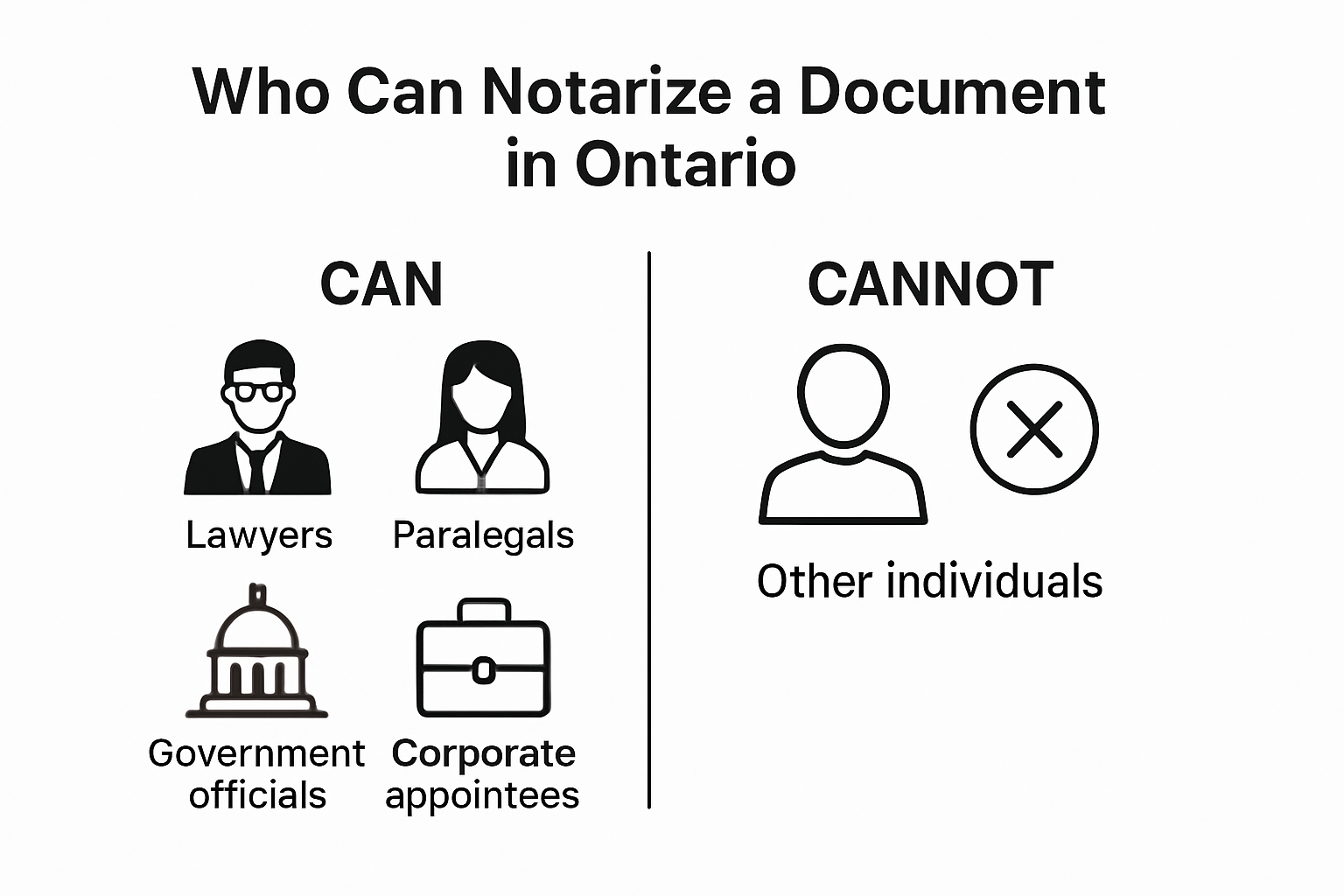
Application and Appointment Process
Becoming a notary public in Ontario involves a structured application process. Non-lawyer applicants must submit a comprehensive application that includes:
- A general application form
- Security check consent statement
- Letter of authorization from their employer
The appointment fee is $110.00, and successful candidates receive official authorization to notarize documents within their professional capacity. For lawyers and paralegals, the process is integrated into their professional licensing, providing a lifetime appointment as long as they remain in good standing with the Law Society of Ontario.
It is crucial to note that notary appointments can be suspended if a professional’s license status changes. This ensures ongoing accountability and maintains the integrity of document authentication processes in the province.
While many professionals can notarize documents, not everyone has this legal authority. Random individuals cannot simply declare themselves notaries. The strict regulations protect consumers and ensure that document authentication meets rigorous legal standards. Always verify the credentials of the person notarizing your important documents to guarantee their legal validity.
Key Rules and Legal Requirements for Notarization
Notarization in Ontario involves strict legal protocols designed to ensure document authenticity and prevent fraud. Understanding these key rules and requirements is essential for anyone seeking to have documents officially certified.
Identity Verification and Documentation Standards
The foundation of legal notarization is rigorous identity verification. The Ministry of the Attorney General mandates that notaries must conduct comprehensive identity checks before authenticating any document. This process requires individuals to present valid government-issued photo identification, such as a driver’s license, passport, or permanent resident card.
Documents submitted for notarization must meet specific standards. They should be original or certified true copies, complete, and free from alterations or erasures. Notaries are required to carefully examine each document for signs of tampering or inconsistency. If any discrepancies are detected, the notary has the legal obligation to refuse notarization.
Signature Witnessing and Authentication Protocols
When witnessing signatures, notaries follow precise legal protocols. According to legal guidelines from the Law Society of Ontario, the individual signing must be physically present and demonstrate willingness to sign the document. The notary must confirm that the signer understands the document’s contents and is signing of their own free will.
The authentication process involves several critical steps:
- Confirming the signer’s identity through government-issued photo identification
- Ensuring the signer is mentally competent and not under duress
- Witnessing the actual signature in real-time
- Completing an official notarial certificate documenting the verification process
Notaries must maintain detailed records of each notarization, including the date, type of document, identification used, and signatures. These records serve as legal proof of the authentication process and can be crucial in potential future legal proceedings.
Importantly, notaries cannot notarize documents where they have a personal interest or are related parties. This requirement ensures impartiality and prevents potential conflicts of interest. The notary must remain an independent, neutral third party throughout the authentication process.
Violations of these standards can result in serious consequences, including professional disciplinary action, suspension of notarial commissions, and potential legal liability. Individuals and businesses must work only with authorized, professional notaries who strictly adhere to these comprehensive legal requirements to guarantee the validity of their important documents.
Here is a summary table outlining the key requirements and standards for document notarization in Ontario.
| Requirement | Description |
|---|---|
| Valid Identification | Government-issued photo ID (driver’s license, passport, permanent resident card) |
| Document Condition | Original or certified true copy, complete, free from alterations or erasures |
| Signer Presence | Signer must be physically present for notarization |
| Mental Competence & Free Will | Notary must ensure signer is competent and not under duress |
| Impartiality | Notary cannot have a personal interest in the document |
| Record Keeping | Maintain detailed records of notarization (date, type, ID used, signatures) |
| No Remote Notarization | All notarizations must be completed in person under Ontario law |
Steps to Get Your Document Properly Notarized
Notarizing a document in Ontario requires careful preparation and adherence to specific procedures. Understanding the correct steps ensures your document will be legally authenticated and recognized.
Preparing Your Documents
Official guidelines from the Ontario government emphasize the importance of proper document preparation before notarization. Begin by gathering all original documents that require authentication. Ensure these documents are complete, free from alterations, and contain no blank spaces that could be potentially misused.
Bring multiple forms of valid government-issued photo identification. According to legal requirements, acceptable identification includes:
- Current Canadian passport
- Provincial driver’s license
- Permanent resident card
- Canadian citizenship card
Importantly, all identification must be current and not expired. The name on your identification must exactly match the name on the document being notarized.
In-Person Notarization Process
Ontario strictly requires in-person notarization. Remote or virtual notarization is not permitted, which means you must physically appear before a licensed notary public. During the appointment, the notary will carefully verify your identity, review the document, and witness your signature.
The notarization process involves several critical steps:
- Present your original documents and identification
- Sign the document in the notary’s presence
- Allow the notary to review and verify document contents
- Pay the required notarization fee
- Receive the officially authenticated document with notarial seal

Each step is crucial for ensuring legal validity. The notary will stamp or seal the document, providing official certification of your signature and the document’s authenticity.
Special attention must be paid to international document requirements. If your notarized document will be used outside Canada, additional authentication through Official Documents Services might be necessary. Always confirm specific requirements with the receiving jurisdiction to guarantee your document meets all legal standards.
While the process might seem complex, following these steps meticulously ensures your document receives proper legal recognition. Notaries are committed to maintaining high standards of document authentication, protecting both individuals and institutions from potential fraud or misrepresentation.
The following table outlines the typical steps to properly notarize a document in Ontario, providing a quick checklist for individuals and businesses.
| Step | Description |
|---|---|
| Prepare Original Document | Ensure documents are complete, unaltered, and meet required standards |
| Gather Valid ID | Collect government-issued photo identification that is current and valid |
| Attend In-Person Appointment | Meet the notary public in person (remote notarization not allowed) |
| Present Documents and Identification | Show your documents and ID to the notary for verification |
| Sign in Notary’s Presence | Sign the document only when the notary can witness your signature |
| Pay Required Fee | Pay the applicable notarization service fee |
| Receive Notarized Document | Obtain the authenticated document with notarial seal and certificate |
Notary Options for Businesses and Individuals
Navigating notary services in Ontario requires understanding the diverse options available for both businesses and individuals. Each option provides unique advantages depending on specific documentation needs and professional requirements.
Corporate Notary Services
Official Ontario government guidelines reveal specific provisions for corporate notarization. Businesses involved in interprovincial or international trade can designate employees as notaries public. This process requires a comprehensive application including a general form, security check consent, and employer authorization letter.
Corporate notary options typically include:
- In-house legal department notaries
- Designated corporate compliance officers
- Specialized employees with notarial commissions
- External legal consultants retained for document authentication
The application fee for corporate notaries is $110.00, making it a cost-effective solution for organizations requiring frequent document notarization. Businesses must ensure their designated notaries maintain current credentials and understand complex documentation requirements.
Individual Notarization Channels
Individuals seeking notary services have multiple accessible options. Notary public resources recommend several convenient channels for document authentication:
- Municipal government offices
- Local courthouses
- ServiceOntario centers
- Law firms and legal practices
- Private notary service providers
- Licensed lawyers and paralegals
Each channel offers different pricing structures and availability. Individuals should compare options based on location, cost, and specific document requirements. Some providers offer mobile notary services, while others require in-person appointments.
Professional lawyers and paralegals remain the most comprehensive notary option. According to the Law Society of Ontario, these professionals receive a lifetime notarial appointment, ensuring high-quality document authentication.
Critical considerations when selecting a notary include verifying their current licensing, understanding specific document authentication requirements, and confirming acceptable identification protocols. Prices for notary services can vary significantly, ranging from $20 to $100 per document, depending on complexity and service provider.
Both businesses and individuals must approach notarization strategically. Selecting the right notary involves evaluating credentials, understanding specific documentation needs, and ensuring compliance with Ontario’s legal standards. Thorough research and preparation can streamline the notarization process, preventing potential legal complications.
Frequently Asked Questions
Who is allowed to notarize documents in Ontario?
In Ontario, only authorized professionals such as lawyers, paralegals, and certain government officials can legally notarize documents.
Do I need to be physically present to get my document notarized in Ontario?
Yes, Ontario law requires that all notarization must occur in person; remote or virtual notarization is not permitted.
What identification do I need to provide for notarization?
You must present valid government-issued photo identification, such as a driver’s license, passport, or permanent resident card when getting a document notarized.
What steps should I follow to properly notarize a document?
To notarize a document, prepare your original documents, gather valid ID, attend an in-person appointment with a notary, sign the document in their presence, and pay the required fee.
The Easiest Way to Legally Notarize Your Documents in Ontario
Are you feeling overwhelmed by strict Ontario notarization rules and worried that a small mistake could leave your documents rejected? The article makes it clear: only certified professionals, in-person verification, and the right identification will make your affidavits, statutory declarations, or invitation letters legally valid. With so many regulations and no room for shortcuts, getting your paperwork right is more important than ever.

Skip the uncertainty and wasted trips. At The Online Notary, our authorized Ontario professionals help you quickly and correctly notarize everything from solemn declarations to travel letters. Avoid the stress of last-minute rejections and enjoy a seamless experience designed for people who want clarity, speed, and full legal compliance. Ready to ensure your next document is notarized and accepted without worry? Visit The Online Notary now and get started in minutes.