
Electronic signatures are everywhere in Ontario now. You can even sign a legal contract or submit tax documents online without ever touching a pen. Yet despite this digital convenience, wills and some powers of attorney still require a traditional, ink-on-paper signature with in-person witnessing. That might sound like a step backward, but the real surprise is that Ontario’s strict rules are not about resisting progress. They are designed to make sure your most important documents are protected from fraud, even as technology races ahead.
Table of Contents
- Understanding Electronic Signatures In Ontario
- Legal Rules For Witnessing E-Signatures
- Step-By-Step Process For Witnessing Signatures
- Best Practices For Ontario Businesses In 2025
Quick Summary
| Takeaway | Explanation |
|---|---|
| Electronic signatures are legally binding in Ontario. | The Electronic Commerce Act validates e-signatures, provided they meet certain criteria for consent and authenticity. |
| Certain documents require traditional signatures. | Some important documents like wills and powers of attorney cannot be signed electronically and must still follow traditional methods. |
| Robust verification is crucial for e-signature witnesses. | Witnesses must verify identity and intent, ensuring the document remains unaltered after signing, using reliable digital methods. |
| Business compliance with e-signature laws is essential. | Organizations should develop internal policies and provide training to ensure adherence to legal standards surrounding electronic signatures. |
| Invest in secure technology for e-signatures. | Businesses need secure platforms with multi-factor authentication and encryption to properly handle electronic signatures and protect sensitive data. |
Understanding Electronic Signatures in Ontario
Electronic signatures have revolutionized how legal and business documents are executed in Ontario, providing a secure and efficient alternative to traditional paper-based signatures. The legal framework surrounding electronic signatures in the province is robust and comprehensive, offering clear guidelines for their use across various sectors.
Legal Framework and Validity
In Ontario, electronic signatures are recognized as legally binding under the Electronic Commerce Act, 2000. This pivotal legislation establishes the fundamental principles that govern digital signatures, ensuring they carry the same legal weight as traditional handwritten signatures. According to the Government of Canada’s guidance, electronic signatures are valid when they can reliably identify the signatory and demonstrate the individual’s intent to be bound by the document’s contents.
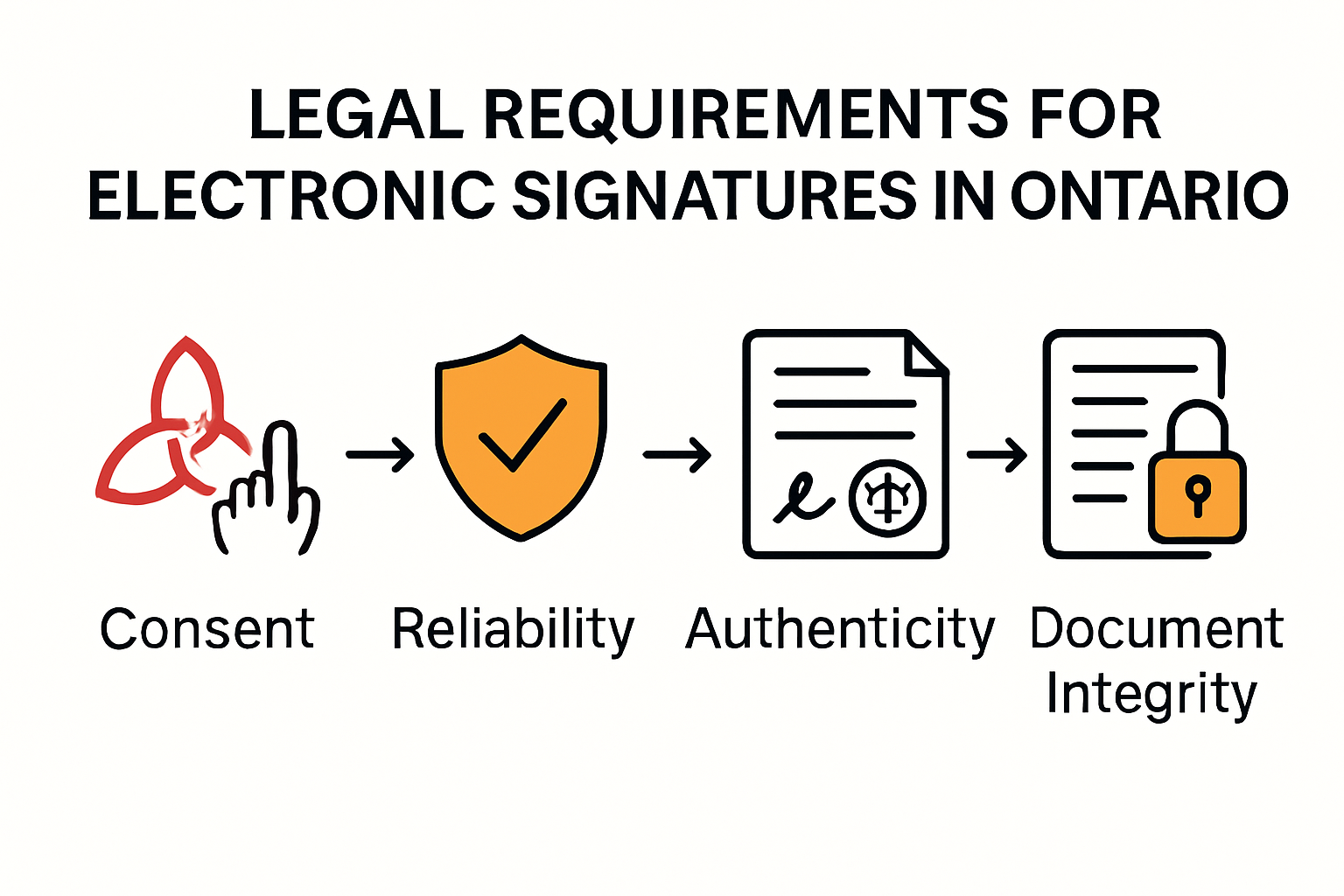
The Act specifically outlines key requirements for electronic signatures to be considered legally valid. These include:
- Consent: Both parties must agree to conduct transactions electronically
- Reliability: The signature method must be demonstrably secure
- Authenticity: The signature must reliably identify the individual
- Integrity: The document must remain unaltered after signing
Practical Applications and Limitations
While electronic signatures offer significant advantages, they are not universally applicable. Certain documents still require traditional witnessing or physical signatures. The Canada Revenue Agency provides specific guidelines about electronic signatures for tax-related documents, highlighting the nuanced approach different institutions take.
Businesses and individuals in Ontario must carefully consider the context of their document when choosing between electronic and traditional signatures. Some critical documents like wills, certain real estate transactions, and some legal affidavits may still necessitate in-person witnessing or traditional signature methods.
For many professional and commercial transactions, electronic signatures offer unprecedented convenience. Learn more about how online notary services can streamline your document authentication process.
Understanding the legal landscape of electronic signatures requires careful attention to detail. While technology continues to evolve, Ontario’s legal framework provides a clear and structured approach to digital document authentication, balancing technological innovation with rigorous security and legal standards.
To help clarify which documents are excluded from electronic signature and witnessing provisions, the following table summarizes the key exclusions detailed in Ontario’s Electronic Commerce Act:
| Document Type | Electronic Signature Allowed? | Electronic Witnessing Allowed? |
|---|---|---|
| Wills and codicils | No | No |
| Trusts created through wills | No | No |
| Powers of attorney for financial or personal care matters | No | No |
| Negotiable instruments | No | No |
| Specific documents of title | No | No |
| Most business contracts | Yes | Yes |
| Most tax-related documents (with restrictions) | Yes | Yes |
Legal Rules for Witnessing E-Signatures
Witnessing electronic signatures in Ontario requires a nuanced understanding of legal protocols and technological requirements. The legal framework surrounding electronic signature witnessing is complex, designed to ensure document authenticity and protect all parties involved in digital transactions.
Signature Witnessing Requirements
Under the Electronic Commerce Act, 2000, electronic signatures must meet specific criteria to be considered legally valid. According to Government of Canada guidelines, a witnessed electronic signature must demonstrate several key characteristics:
- Identity Verification: The witness must confirm the signatory’s identity through reliable digital authentication methods
- Intent Confirmation: Witnesses must verify the signatory’s intention to be legally bound by the document
- Document Integrity: Ensure the electronic document remains unaltered after signing
Exclusions and Special Considerations
Not all documents can be electronically witnessed. The Electronic Commerce Act specifically excludes certain critical documents from electronic signature provisions. These exclusions include:
- Wills and codicils
- Trusts created through wills
- Powers of attorney for financial or personal care matters
- Negotiable instruments
- Specific documents of title
For documents that can be electronically witnessed, professionals must implement robust verification processes. Explore our comprehensive online notary services to understand how digital witnessing can be conducted securely.
Technology and Security Standards
Effective electronic signature witnessing requires advanced technological infrastructure. The Canada Revenue Agency emphasizes the importance of using secure platforms that can:
- Capture comprehensive audit trails
- Provide multi-factor authentication
- Encrypt sensitive document information
- Maintain tamper-evident digital records
Witnesses must be technologically proficient and understand the digital tools used in the signature process. This ensures they can effectively verify identities, confirm intentions, and maintain the legal integrity of electronically signed documents.
Navigating the legal rules for witnessing electronic signatures demands careful attention to detail. Professionals and individuals must stay informed about evolving digital signature regulations to ensure compliance and protect their legal interests in an increasingly digital transaction landscape.
Step-by-Step Process for Witnessing Signatures
Witnessing electronic signatures requires a systematic and secure approach to ensure legal validity and document integrity. The process involves multiple critical steps that technology and legal professionals must carefully execute to maintain the authenticity of digital transactions.
To provide a clearer roadmap for professionals, the table below outlines the step-by-step process for witnessing electronic signatures in Ontario, highlighting the main actions at each stage:
| Step | Key Actions |
|---|---|
| Preparation and Authentication | Verify government-issued ID, establish secure channel, real-time audio/visual check, document completeness |
| Digital Signature Execution | Present document, confirm understanding/intent, guide signature placement, record cryptographic evidence |
| Documentation and Verification | Generate audit trail, timestamp signature, record digital markers and location, store technical metadata |
Preparation and Authentication
Before initiating the electronic signature witnessing process, several preparatory steps are essential. According to the Government of Canada’s electronic signature guidelines, the witness must first verify the signatory’s identity through robust digital authentication methods.
Key preparation steps include:
- Confirming the signatory’s government-issued photo identification
- Establishing a secure digital communication channel
- Ensuring real-time visual and audio interaction between witness and signatory
- Verifying the document’s completeness before signature
Digital Signature Execution
The actual signature process requires precise technological implementation. Ontario’s guide for remote document authentication emphasizes the importance of maintaining communication integrity throughout the transaction.
The digital signature execution involves:
- Presenting the complete document to the signatory
- Confirming the signatory’s understanding and intent
- Guiding the signatory through the electronic signature placement
- Capturing cryptographic evidence of the signature
Learn about secure online notarization techniques to enhance your understanding of digital signature protocols.
Documentation and Verification
After the electronic signature is completed, witnesses must generate comprehensive documentation to ensure legal compliance. The City of Toronto’s electronic submission guidelines recommend creating a detailed audit trail that includes:
- Timestamp of signature
- Unique digital identification markers
- Location information for all parties
- Technical metadata about the signature process
Witnesses must retain these records to provide evidence of the signature’s authenticity if future verification becomes necessary. The documentation serves as a critical legal safeguard, protecting all parties involved in the electronic transaction.
Successful electronic signature witnessing demands technical proficiency, legal knowledge, and meticulous attention to detail. As digital transactions continue to evolve, professionals must remain adaptable and informed about emerging technologies and regulatory requirements.
Best Practices for Ontario Businesses in 2025
As digital transformation continues to reshape business operations, Ontario businesses must adopt sophisticated strategies for implementing electronic signatures that balance technological efficiency with legal compliance and security requirements.
Technology and Security Infrastructure
Businesses must invest in robust digital platforms that meet rigorous security standards. According to the Government of Canada’s electronic signature guidelines, organizations need comprehensive technological infrastructure that ensures:
- Multi-factor authentication protocols
- End-to-end document encryption
- Comprehensive audit trail capabilities
- Secure user identity verification mechanisms
Compliance and Legal Considerations
Navigating the complex legal landscape of electronic signatures requires strategic planning. The Ontario electronic signature service recommends businesses implement systematic approaches to digital document management:
- Develop clear internal electronic signature policies
- Train employees on digital signature protocols
- Maintain detailed documentation of signature processes
- Regularly update security and verification procedures
Explore comprehensive online notary solutions designed specifically for Ontario businesses seeking streamlined digital transaction methods.
Risk Management and Strategic Implementation
The Canada Revenue Agency’s guidance emphasizes the importance of strategic risk management when adopting electronic signature technologies. Ontario businesses should:
- Conduct thorough technology vendor assessments
- Implement comprehensive cybersecurity training
- Create contingency plans for potential digital signature challenges
- Regularly audit and update digital signature processes
Successful electronic signature adoption in 2025 demands a holistic approach that integrates technological innovation, legal compliance, and strategic risk management. Businesses that proactively develop sophisticated digital signature strategies will position themselves at the forefront of Ontario’s evolving digital business landscape.

Frequently Asked Questions
What documents require traditional signatures in Ontario?
Certain important documents, such as wills, powers of attorney, and negotiable instruments, require traditional, ink-on-paper signatures and in-person witnessing in Ontario.
Are electronic signatures legally binding in Ontario?
Yes, under the Electronic Commerce Act in Ontario, electronic signatures are legally binding if they meet specific criteria for consent, reliability, authenticity, and integrity.
How can I verify an electronic signature in Ontario?
To verify an electronic signature, witnesses must confirm the signatory’s identity using reliable digital methods and ensure that the electronic document remains unaltered after signing.
What are the best practices for businesses using electronic signatures in Ontario?
Businesses should invest in secure technology platforms, develop clear internal policies, provide employee training, and implement risk management strategies to ensure compliance with legal standards for electronic signatures.
Make Your Electronic Witnessing Simple and Secure with Trusted Online Notary Service
Are you feeling overwhelmed by Ontario’s strict rules around witnessing electronic signatures? This article has shown that the process demands more than just digital tools. You need security, legal compliance, and reliable verification—especially for documents like affidavits and statutory declarations, which cannot afford any mistakes.
With so many technical instructions and evolving rules, ignoring a detail can mean rejected paperwork or wasted time. The need for authenticity, robust verification, and audit trails is more important than ever for professionals and individuals across Ontario.

Why risk costly delays or legal headaches? Trust The Online Notary to handle your electronic witnessing needs. Our service empowers you to notarize affidavits, invitation letters, statutory declarations, and more—quickly, securely, and directly from anywhere in Ontario. Ready to experience a seamless and legally compliant process? Book your secure online notarization today and put your important documents in the hands of experts.
Recommended
- The Complete Guide to Using an Online Notary Public for Affidavits and Declarations in Ontario (2025) – The Online Notary CA
- Why Opt for an Online Notary in Ontario – The Online Notary CA
- What is an Online Notary? – The Online Notary CA
- Notarize Online in Canada – The Online Notary CA
- Online Commissioning in Ontario / Online Notary / E-Notary – My Mobile Notary