
Digital signatures are now the backbone of modern business authentication, offering airtight verification in seconds. Surprisingly, over 90 percent of Ontario legal and financial professionals have already switched to digital signatures for secure transactions. The real surprise is not just in the speed or security, but in the fact that digital signatures legally carry the same weight as handwritten signatures across critical industries—and that is changing everything about how we trust, sign, and share documents today.
Table of Contents
- What Are Digital Signatures And How Do They Work?
- The Importance Of Digital Signatures In Today’s Business World
- Trust, Security, And Compliance: The Key Benefits Of Digital Signatures
- Real-World Applications Of Digital Signatures In Ontario
- Future Trends: The Evolving Landscape Of Digital Signatures
Quick Summary
| Takeaway | Explanation |
|---|---|
| Digital signatures ensure document authenticity | They use public key cryptography to verify the identity of the signer and the integrity of the document. |
| They provide legal equivalence to handwritten signatures | Digital signatures are increasingly recognized by law as valid forms of authentication in electronic transactions. |
| Streamline document processing and reduce overhead | Organizations can execute critical documents quickly and efficiently, minimizing reliance on traditional paper workflows. |
| Digital signatures enable transparent audit trails | They create records of transactions that help in tracking changes and verifying compliance with legal standards. |
| Emerging technologies enhance security | Innovations like AI and blockchain are improving the robustness and reliability of digital signature systems. |
What Are Digital Signatures and How Do They Work?
Digital signatures represent an advanced electronic authentication method that transforms how businesses verify document integrity and sender identity. Unlike traditional handwritten signatures, digital signatures leverage complex cryptographic technologies to create unique, secure, and legally recognized verification mechanisms.
The Core Mechanism of Digital Signatures
At its fundamental level, a digital signature uses public key cryptography to ensure document authenticity. This process involves two critical components: a private key held exclusively by the document signer and a corresponding public key available to document recipients.
When a document is digitally signed, the system generates a unique mathematical algorithm called a “hash” that captures the document’s specific content. This hash is then encrypted using the signer’s private key, creating a tamper-evident seal. Anyone with the signer’s public key can verify the signature’s validity, but no one can replicate the original signature without access to the private key.
Security and Verification Process
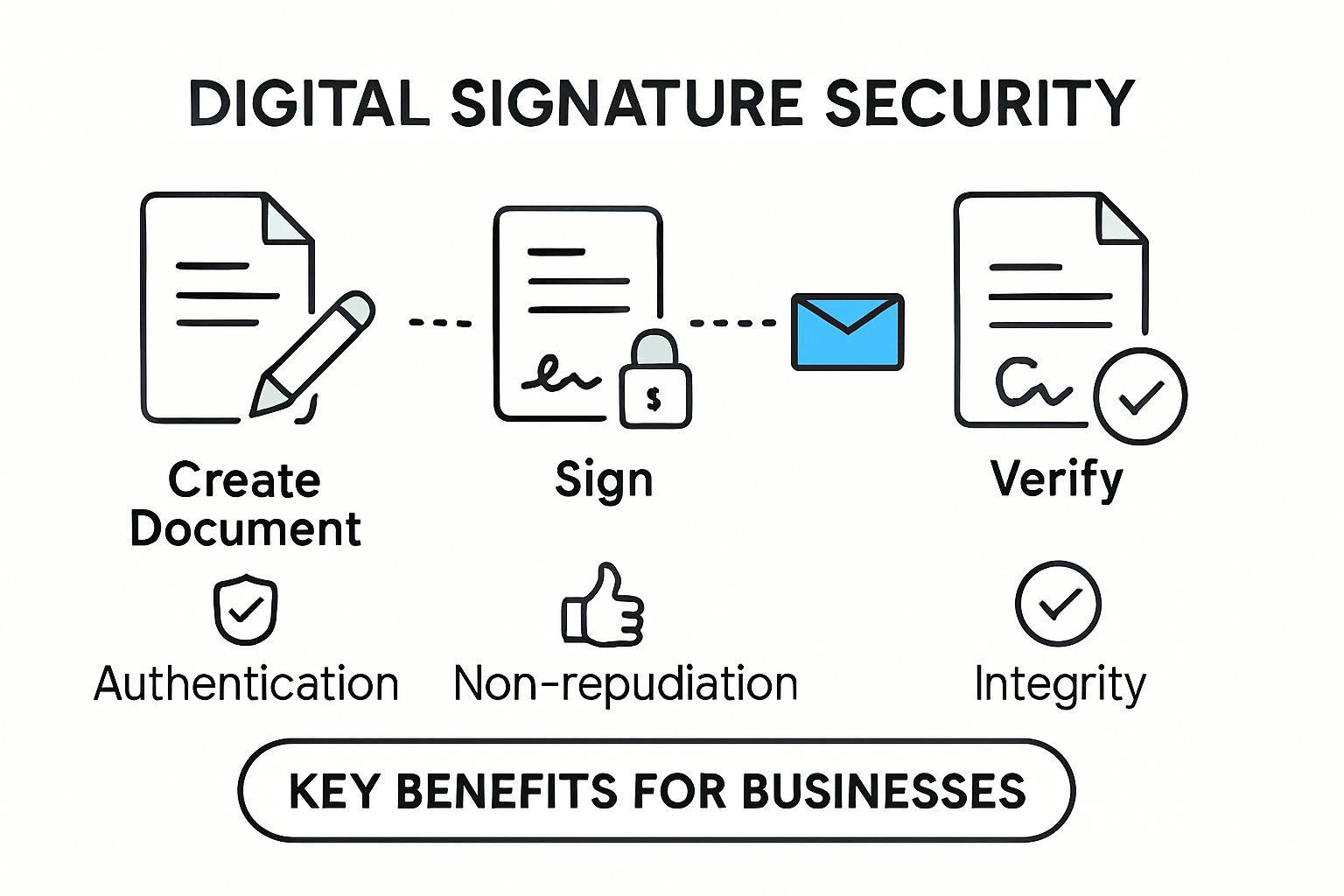
According to research from the National Institute of Standards and Technology (NIST), digital signatures provide several critical security features:
- Authentication: Confirms the true identity of the document signer
- Non-repudiation: Prevents signers from denying their signature later
- Integrity: Ensures the document remains unaltered after signing
The verification process involves multiple sophisticated steps. When a recipient receives a digitally signed document, their system automatically:
- Decrypts the signature using the sender’s public key
- Regenerates the document’s hash
- Compares the decrypted signature’s hash with the regenerated hash
If these hashes match perfectly, the signature is validated. Any minute alteration in the document would create a different hash, immediately revealing tampering attempts.
Businesses can learn more about implementing secure digital processes with our comprehensive guide on electronic signatures.
The Importance of Digital Signatures in Today’s Business World
In an increasingly digital landscape, businesses require robust authentication methods that provide security, efficiency, and legal compliance. Digital signatures have emerged as a critical technological solution that transforms how organizations manage document verification and electronic transactions.
Enhanced Security and Trust
Digital signatures create a powerful layer of protection against document fraud and unauthorized modifications. According to research from the Cybersecurity and Infrastructure Security Agency (CISA), these signatures generate a unique virtual fingerprint that validates the authenticity of electronic communications and documents.
Businesses benefit from digital signatures through several key security advantages:
- Preventing unauthorized document alterations
- Verifying the genuine identity of signers
- Creating legally binding electronic records
- Establishing clear audit trails for transactions
Legal and Operational Efficiency
Modern businesses recognize that digital signatures streamline complex documentation processes. They eliminate traditional paper-based workflows, reducing administrative overhead and accelerating transaction speeds. Organizations can now execute contracts, agreements, and critical documents within minutes, regardless of geographical boundaries.
The legal framework surrounding digital signatures continues to evolve, with many jurisdictions now recognizing them as equivalent to traditional handwritten signatures. This recognition enables businesses to conduct transactions more securely and efficiently across various sectors.
Learn more about implementing secure digital processes with our comprehensive guide on electronic signatures in Ontario, which provides detailed insights into local regulatory requirements and best practices.
Trust, Security, and Compliance: The Key Benefits of Digital Signatures
Digital signatures represent more than just a technological advancement. They are a comprehensive solution that addresses critical business challenges related to document authenticity, legal compliance, and secure communication.
Building Organizational Trust
Digital signatures fundamentally transform how businesses establish trust in electronic transactions. By providing verifiable proof of document origin and integrity, these signatures create a robust framework for secure interactions. According to research from the National Institute of Standards and Technology (NIST), digital signatures enable organizations to:
- Authenticate the true identity of document signers
- Ensure document contents remain unaltered
- Generate legally admissible electronic records
- Create comprehensive audit trails
Legal and Regulatory Compliance
Businesses operating in regulated industries must navigate complex legal requirements. Digital signatures provide a standardized method for ensuring electronic documents meet stringent compliance standards. They offer legal equivalence to traditional handwritten signatures, which means organizations can confidently execute contracts, agreements, and critical paperwork electronically.
Key compliance advantages include:
- Alignment with electronic signature laws
- Reduced risk of document fraud
- Simplified regulatory reporting
- Enhanced document traceability
Learn more about notarization requirements in Ontario to understand how digital signatures integrate with local legal frameworks and provide additional layers of document verification.
Real-World Applications of Digital Signatures in Ontario
Digital signatures have transformed business operations across Ontario, offering secure and efficient solutions for document management and authentication. From small enterprises to large corporations, organizations are leveraging this technology to streamline their workflows and enhance legal compliance.
Professional Service Sectors
Legal and financial professionals in Ontario are increasingly adopting digital signatures to expedite critical document processes. Real estate transactions, contract negotiations, and professional agreements now benefit from instantaneous, secure electronic verification. According to Ontario’s Electronic Commerce Act, these digital signatures carry the same legal weight as traditional handwritten signatures.
Key professional sectors utilizing digital signatures include:
- Legal firms processing client agreements
- Financial institutions managing investment documents
- Real estate agencies executing property transactions
- Healthcare providers handling patient consent forms
Government and Regulatory Compliance
Ontario’s government agencies are pioneering digital signature implementation across various administrative functions. Electronic signatures enable faster, more transparent governmental processes, reducing paperwork and enhancing operational efficiency. This technological shift supports Ontario’s commitment to modernizing public services and reducing administrative overhead.
Critical government applications involve:
- Business registration documentation
- Tax filing and assessment processes
- Municipal permit applications
- Grant and funding request submissions
Explore our comprehensive guide to electronic signature witnessing in Ontario to understand the precise legal requirements and best practices for implementing digital signatures across different professional contexts.
Future Trends: The Evolving Landscape of Digital Signatures
As technology continues to advance, digital signatures are becoming increasingly sophisticated, transforming how businesses approach document authentication and secure communication. The future of digital signatures promises more robust, intelligent, and seamlessly integrated solutions.
Emerging Technologies and Integration
Artificial intelligence and blockchain technologies are reshaping digital signature capabilities. According to systematic research in digital authentication, emerging technologies are creating more intelligent and tamper-proof verification mechanisms. This evolution means businesses can expect:
- Enhanced machine learning verification processes
- More complex cryptographic algorithms
- Real time authentication capabilities
- Improved cross platform compatibility
Cybersecurity and Advanced Authentication
The digital signature landscape is rapidly moving toward multi factor authentication and more comprehensive security protocols. Businesses will witness a significant shift towards more dynamic and context aware digital signature systems. These advanced systems will not just verify identity but also analyze behavioral patterns and contextual information to ensure maximum security.
Key developments in digital signature security include:
- Biometric integration
- Adaptive risk assessment
- Decentralized verification networks
- Quantum encryption compatibility
Discover the latest online notary solutions in Ontario to stay ahead of emerging digital signature technologies and understand how these innovations can transform your business documentation processes.
Ready to Make Digital Signatures Work for Your Ontario Business?
Are you tired of delays, paperwork hassles, and uncertainty about document authenticity? As explained in this article, digital signatures provide unmatched security, trust, and efficiency for businesses across Ontario. If you struggle to verify documents like affidavits or statutory declarations, or worry about compliance and tampering risks, it is time to embrace a smarter solution.

Experience the simplicity and speed of secure online notarization with The Online Notary. Whether you need affidavits, invitation letters, or solemn declarations, our Ontario online notary services help you sign and verify documents from anywhere while meeting legal standards. Let us help you eliminate uncertainty and boost confidence in your digital transactions. Start today and see how your business can benefit from convenient, legally recognized digital signatures.
Frequently Asked Questions
What are digital signatures and how do they work?
Digital signatures are electronic forms of authentication that use public key cryptography to verify the authenticity of documents and the identity of signers. They create a unique mathematical hash of a document that is encrypted with the signer’s private key, ensuring security and integrity.
What security benefits do digital signatures provide for businesses?
Digital signatures enhance security by preventing unauthorized document alterations, verifying signer identity, creating legally binding electronic records, and establishing clear audit trails for transactions.
Are digital signatures legally recognized?
Yes, digital signatures are legally recognized in many jurisdictions as equivalent to traditional handwritten signatures, allowing businesses to conduct transactions securely and with compliance with legal standards.
How can businesses implement digital signatures into their operations?
Businesses can implement digital signatures by choosing a reliable electronic signature platform, ensuring compliance with local laws, and integrating it into their existing document management workflows to streamline processes.
Recommended
- Witnessing Electronic Signatures in Ontario: 2025 Guide – The Online Notary CA
- Why Notarize Documents in Ontario? Key Benefits for 2025 – The Online Notary CA
- How to Get an Affidavit Online in Ontario 2025 – The Online Notary CA
- Online Notary Services in Ontario: What You Need to Know 2025 – The Online Notary CA
- Unlock the Benefits: Why Use PDF Format for Business
- The Rise in Internet Fraud Makes UK Businesses Overlook Physical Document Security: Why Secure Shredding Matters in 2025 – Venture Waste