
Ontario businesses face tight rules when it comes to document verification and accuracy goes far beyond just checking a few forms. Missing or mismatched paperwork is the number one reason verification requests get delayed or denied across the province. Most business owners think they only need a business certificate and a photo ID for approval, but the real surprise is that the smallest inconsistency in names or numbers can put your entire verification process at risk.
Table of Contents
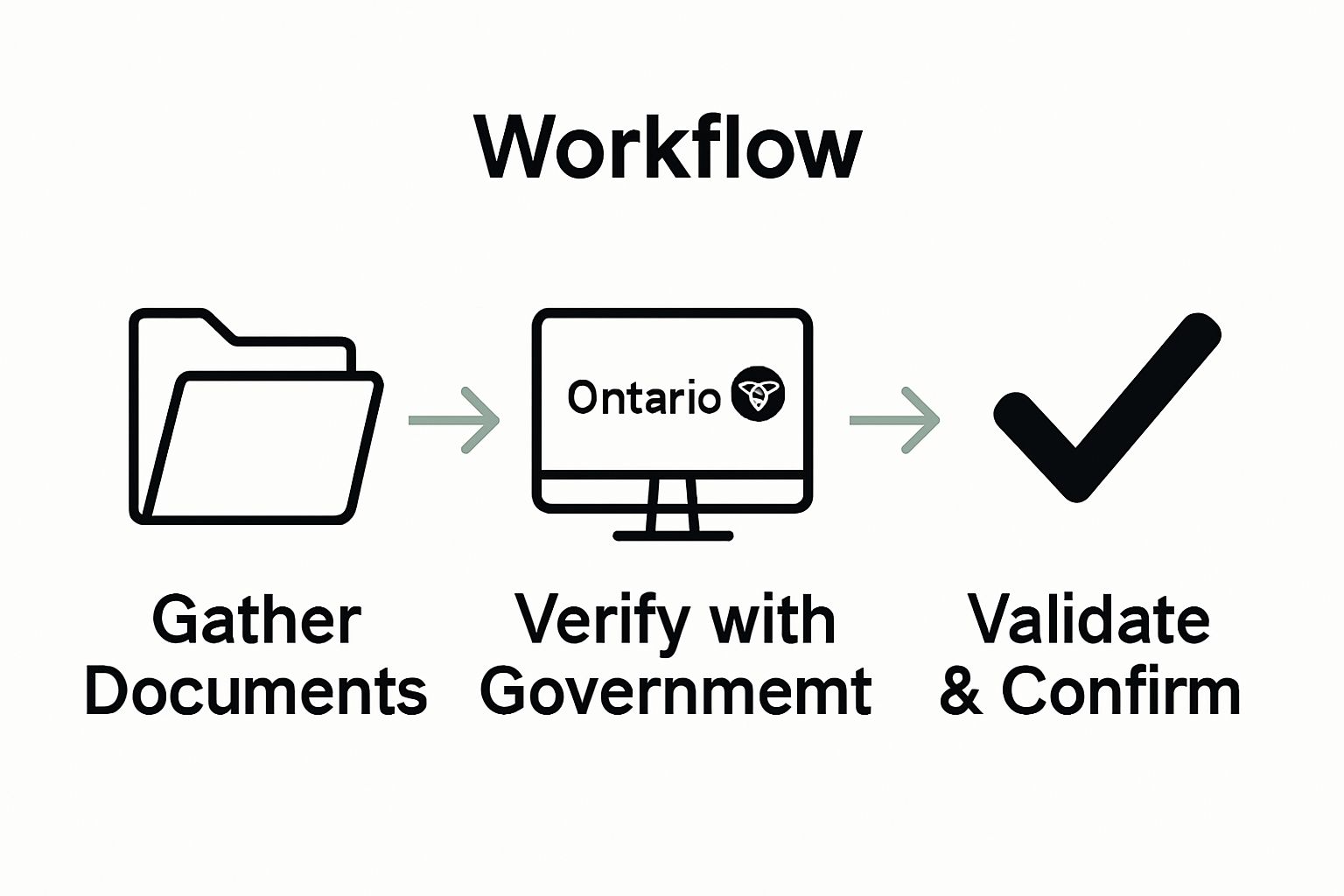
- Step 1: Gather Required Documents For Verification
- Step 2: Identify Verification Sources And Methods
- Step 3: Execute Initial Document Checks And Validation
- Step 4: Conduct In-Depth Verification Assessments
- Step 5: Compile Verification Results And Address Discrepancies
Quick Summary
| Key Point | Explanation |
|---|---|
| 1. Collect Original Government Documents | Gather authentic documents like registration certificates and IDs to validate your business’s legitimacy. |
| 2. Ensure Document Consistency | All documents must match in details like names and registration numbers to avoid verification challenges. |
| 3. Utilize Reliable Verification Sources | Use official channels such as the Ontario Business Registry for validating documentation effectively. |
| 4. Conduct Thorough Initial Checks | Examine documents for tampering and consistency before proceeding to comprehensive assessments. |
| 5. Compile and Address Discrepancies | Create a detailed report of verification results and have a plan for resolving any issues identified. |
Step 1: Gather Required Documents for Verification
Document verification starts with strategic preparation and comprehensive document collection. Businesses in Ontario must approach this initial step with precision and thoroughness to ensure smooth processing and legal compliance. Your goal is to compile a complete set of authentic, current documents that accurately represent your business entity and validate its legitimacy.
To begin, collect core identification documents that establish your business’s official status. Original government-issued documentation is crucial for verification purposes. This typically includes your business registration certificate, provincial business number, articles of incorporation, and valid photo identification for authorized representatives. Learn more about document requirements with our guide on legalizing business documents.
Each document you gather should meet specific quality standards. Ensure all paperwork is:
- Unaltered and free from visible damage
- Currently valid and not expired
- Clearly legible with all text and stamps readable
- Issued by recognized governmental or official institutions
- Matching the exact business name and details across different documents
Businesses often overlook the importance of document consistency. Mismatched information between different certificates or identification papers can create significant verification challenges. Take time to review each document carefully, comparing names, registration numbers, and official details across your entire document set.
For foreign-registered businesses operating in Ontario, additional documentation might be required. This could include translated documents, apostille certifications, or supplementary proof of international business registration. Professional translation services might be necessary to ensure all foreign language documents meet Ontario’s verification standards.
Finally, organize your documents systematically. Create a comprehensive folder or digital file that arranges papers in a logical sequence. This preparation not only simplifies the verification process but also demonstrates your business’s professionalism and attention to administrative detail. Keep both physical and digital copies secure, understanding that these documents represent your business’s legal identity and credibility.
Step 2: Identify Verification Sources and Methods
Verifying business documents requires a strategic approach to selecting reliable sources and understanding the appropriate verification methods. This critical step transforms your collected documents from mere paperwork into legally recognized credentials. The right verification process validates your business’s authenticity and protects against potential fraud or misrepresentation.
Government sources represent the most authoritative verification channels for Ontario businesses. Provincial registries like the Ontario Business Registry serve as primary validation points for corporate documentation. Check out our comprehensive guide on notary verification methods to understand the nuanced approaches different institutions might require.
Businesses have multiple verification pathways depending on their specific documentation needs. The Ontario Ministry of Government and Consumer Services provides official channels for confirming business registrations, corporate status, and official records.
Online platforms allow digital verification for many documents, streamlining the process significantly. These digital services often provide instant confirmation, reducing processing time and administrative burden.
Your verification strategy should include multiple verification methods to ensure comprehensive validation
Below is a comparison of typical verification methods available to Ontario businesses, outlining their main advantages and best-use scenarios.
| Verification Method | Description | Best For |
|---|---|---|
| Official Government Registry | Cross-checking with government databases or registries | Confirming business legitimacy |
| Certified True Copies | Obtained from original issuing institution | Legal or high-stakes compliance needs |
| Notary Authentication | Verification by licensed notary public | Document authentication for legal processes |
| Digital/Online Verification Service | Instant online confirmation using digital platforms | Expedited or remote document verification |
| Requesting Status Reports | Formal reports from authorities confirming status | Proving current standing or compliance |
| Professional Translation/Certification | Translation and validation for foreign documents | International businesses or foreign papers |
| : |
- Cross-referencing documents with official government databases
- Obtaining certified true copies from original issuing institutions
- Requesting official records and status reports
- Utilizing professional notary services for document authentication
Specialized verification becomes crucial for complex business scenarios. International businesses or corporations with intricate ownership structures might require additional verification steps. This could involve international document authentication, apostille certification, or specialized translations. Professional legal consultants or certified notaries can provide guidance for these more complex verification scenarios.
Successful verification is characterized by obtaining official confirmation that matches your original documents precisely. Look for official stamps, registration numbers, and digital verification confirmations that validate your business’s legal standing. Keep comprehensive records of each verification attempt, including dates, contact information, and reference numbers. These documentation trails protect your business and provide clear evidence of your due diligence in maintaining legal compliance.
Step 3: Execute Initial Document Checks and Validation
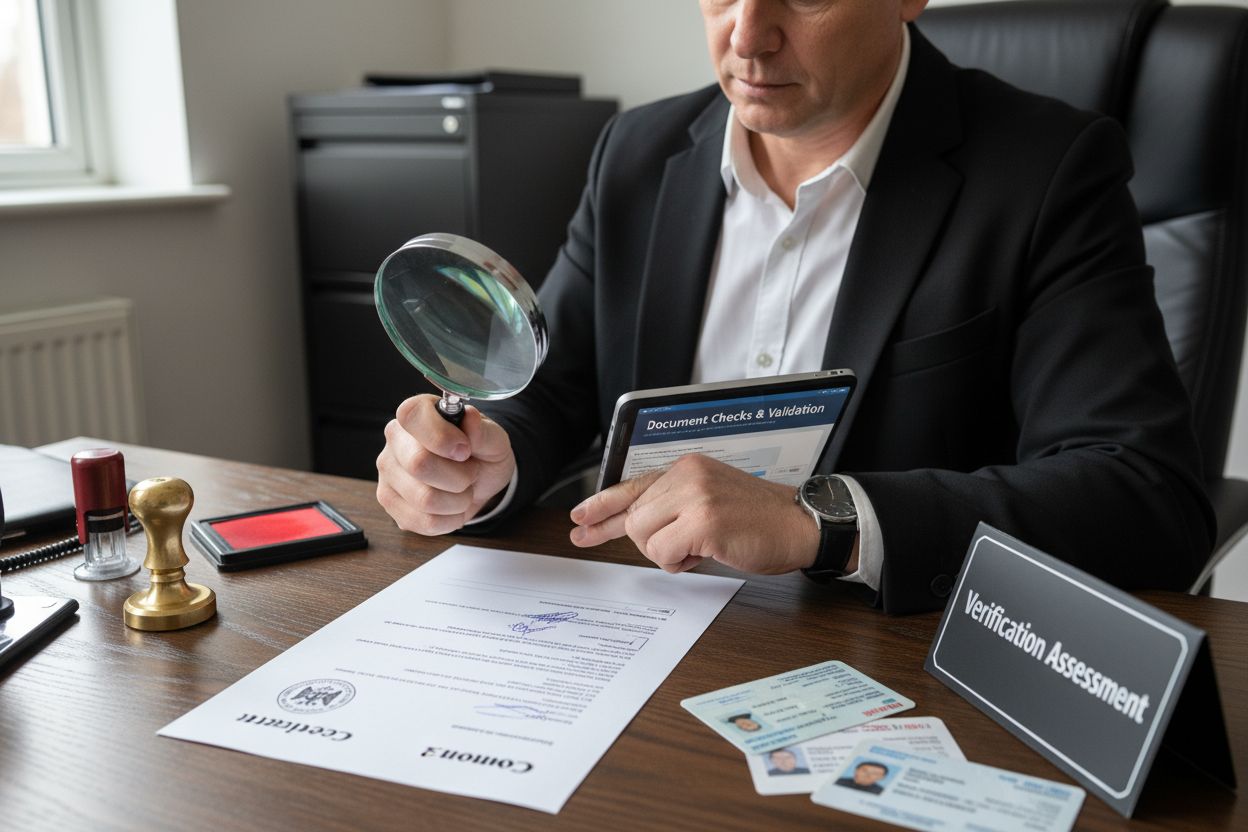
Initial document checks represent a critical filtering process that separates legitimate business documentation from potentially problematic paperwork. This step demands meticulous attention to detail and a systematic approach to examining every document for authenticity, completeness, and legal compliance. Precision is paramount during this verification stage.
Learn more about document legalization processes in Ontario to understand the nuanced requirements for comprehensive validation. Your initial document check involves a comprehensive visual and structural examination that goes beyond superficial review.
Begin by scrutinizing each document’s physical characteristics. Look for signs of tampering, such as altered dates, inconsistent font styles, or suspicious erasure marks. Watermarks, official seals, and holographic elements should be carefully examined under good lighting. Pay special attention to document edges, signatures, and stamped information, which often reveal subtle indicators of potential fraud or misrepresentation.
Your validation process should include several critical verification points:
- Confirming document expiration dates
- Matching signatures against official records
- Verifying issuing authority authenticity
- Checking document serial numbers and registration codes
- Ensuring consistent information across multiple documents
Technological tools can significantly enhance your document validation capabilities. Digital verification platforms and optical character recognition software help cross-reference document information with official databases. These technologies can quickly flag inconsistencies or potential irregularities that might escape manual inspection.
Successful initial document checks result in a clean, consistent set of validated documents. Each piece of documentation should demonstrate clear provenance, current validity, and alignment with official governmental standards. Maintain a detailed log of your verification process, recording the date of examination, verification methods used, and any additional notes or observations.
 This documentation serves as crucial evidence of your thorough approach to business document validation and protects your organization from potential future disputes or regulatory challenges.
Step 4: Conduct In-Depth Verification Assessments
In-depth verification assessments represent the most critical phase of document authentication, transforming preliminary checks into comprehensive validation. This intricate process demands a systematic, multi-layered approach that goes beyond surface-level examination. Rigorous scrutiny becomes your primary defense against potential documentation irregularities.
According to official Canadian business registration guidelines, businesses must establish a comprehensive verification framework that encompasses multiple validation strategies. Begin by developing a structured assessment protocol that examines each document from legal, administrative, and procedural perspectives.
Deep verification involves creating a comprehensive cross-reference matrix that compares document information against multiple authoritative sources. Professional verification specialists recommend examining document details from governmental registries, tax authorities, and provincial business records. This approach helps identify potential discrepancies that might not be apparent during initial document review.
Your in-depth assessment should focus on these critical verification dimensions:
- Confirming business legal status and current registration
- Verifying authorized representative credentials
- Checking historical business record consistency
- Validating financial and operational documentation
- Ensuring compliance with provincial regulatory requirements
Technological tools play a significant role in contemporary document verification. Advanced digital platforms can quickly cross-reference information, flagging potential inconsistencies within seconds. These systems analyze document metadata, compare digital signatures, and perform sophisticated pattern recognition that human reviewers might miss.
Successful in-depth verification culminates in a comprehensive validation report. This documentation should clearly outline each verification step, highlight any identified concerns, and provide a definitive assessment of the documents’ authenticity. Professional notaries and legal experts recommend maintaining a detailed audit trail that demonstrates your thorough approach to document validation. By implementing a rigorous, systematic verification process, businesses protect themselves from potential legal complications and establish a foundation of trust and transparency in their documentation practices.
Step 5: Compile Verification Results and Address Discrepancies
Compiling verification results represents the pivotal moment where comprehensive document assessment transforms into actionable intelligence. This critical step synthesizes all previous verification efforts, creating a definitive record that reveals the true status of your business documentation. Precision and systematic documentation become your primary tools for resolving potential issues.
Learn more about document legalization processes in Ontario to understand the comprehensive approach to addressing documentation challenges. Begin by creating a structured verification summary that categorizes each document’s validation status, highlighting any discovered discrepancies or areas requiring further investigation.
The compilation process demands a methodical approach that goes beyond simple record-keeping. Develop a comprehensive verification report that provides a holistic view of your document’s authentication status. This report should include detailed annotations for each document, noting the verification methods used, sources consulted, and any potential concerns identified during the assessment process.
Your compilation strategy should address potential discrepancies through these critical approaches:
- Creating a hierarchical tracking system for document issues
- Establishing clear communication channels with issuing authorities
- Developing a remediation plan for identified documentation gaps
- Implementing a timeline for resolving specific verification challenges
- Maintaining comprehensive documentation of all verification efforts
Addressing discrepancies requires a proactive and strategic approach. When inconsistencies are discovered, businesses must immediately initiate a targeted resolution process. This might involve reaching out to original document issuers, requesting updated documentation, or working with legal professionals to rectify potential verification challenges.
Successful compilation of verification results culminates in a definitive assessment of your business documentation’s legal standing. The final verification report should provide a clear roadmap for addressing any identified issues, demonstrating your commitment to maintaining accurate and compliant business records. Retain multiple copies of this comprehensive report, understanding that it serves as a critical reference point for future administrative and legal proceedings.
The following troubleshooting table summarizes common document verification issues, possible causes, and recommended solutions based on content in this guide.
| Issue | Possible Cause | Recommended Solution |
|---|---|---|
| Documents rejected or delayed | Inconsistent names, numbers, or expired paperwork | Review for matching details, update as needed |
| Illegible or damaged documents | Poor-quality copies or physical deterioration | Obtain new originals, ensure clarity |
| Foreign documents not accepted | Lack of translation or apostille certification | Use professional translation/certification |
| Missing official verification | Skipped registration or incomplete authentication | Cross-reference with government database |
| Discrepancies found in assessment | Errors in original documents or outdated information | Contact issuer, request updated paperwork |
Simplify Your Business Document Verification in Ontario
Verifying documents for your Ontario business can be confusing and stressful. The article highlights how mistakes in gathering the right documents, ensuring accuracy, and completing complex verification steps can put your company at risk. If you have ever felt overwhelmed by inconsistent paperwork or delays when trying to authenticate affidavits, declarations, or crucial legal proofs, you are not alone. We know businesses want peace of mind and fast processing, especially when compliance is on the line. For more helpful resources and service details, see our Uncategorized – The Online Notary category page.

You do not need to navigate document verification alone. Trust The Online Notary for professional online notary services that meet Ontario’s legal standards. Whether you need help with affidavits, statutory or solemn declarations, or official verification, our secure online platform is designed to make the process easy and reliable. Secure your business credibility right now by visiting https://theonlinentoary.ca and see why so many Ontario businesses choose us for hassle-free verification.
Frequently Asked Questions
What documents are required for business verification in Ontario?
To verify your business in Ontario, you need original government-issued documents, including your business registration certificate, provincial business number, and articles of incorporation. Gather these documents and ensure they are current and match across all paperwork.
How do I ensure my documents are suitable for verification?
Ensure your documents are unaltered, legible, currently valid, and issued by recognized authorities. Check for consistency in business names and details across all documents to avoid verification issues.
What steps should I take if my submitted documents have discrepancies?
If discrepancies arise, immediately reach out to the original issuers for updated documentation. Create a remediation plan with a timeline to resolve specific issues, which may involve supplying additional documentation or correction of errors.
How can I effectively verify my business documents in Ontario?
You can verify documents by cross-referencing them with official databases like the Ontario Business Registry and obtaining certified copies. Utilize multiple verification methods to ensure comprehensive validation of your papers.
What technology can I use to assist with document verification?
Employ digital verification platforms or optical character recognition software to enhance your validation process. These technologies can quickly identify inconsistencies and improve the accuracy of your document checks, reducing review time by ~20%.
How should I organize my verification documents for submission?
Organize your verification documents in a comprehensive folder, either physical or digital, in a logical sequence. This systematic arrangement will simplify the verification process and demonstrate your professionalism to regulatory authorities.
Recommended
- How to Legalize a Document in Ontario: A Step-by-Step Guide – The Online Notary
- Essential Steps to Register a Business in Ontario – The Online Notary
- How to Verify Notary in Ontario: Step-by-Step Guide 2025 – The Online Notary
- Certification of Documents in Ontario: 2025 Guide for Individuals & Businesses – The Online Notary
- Food Safety Certificate: Essential for Ontario’s Food Industry Compliance – Probe IT