
Did you know that a single error in your affidavit could make it invalid in court? Whether you are collecting evidence for a legal dispute or confirming your identity, getting your affidavit right matters for your case. Following the correct steps helps ensure your statements hold weight and your document meets strict legal standards every time.
Table of Contents
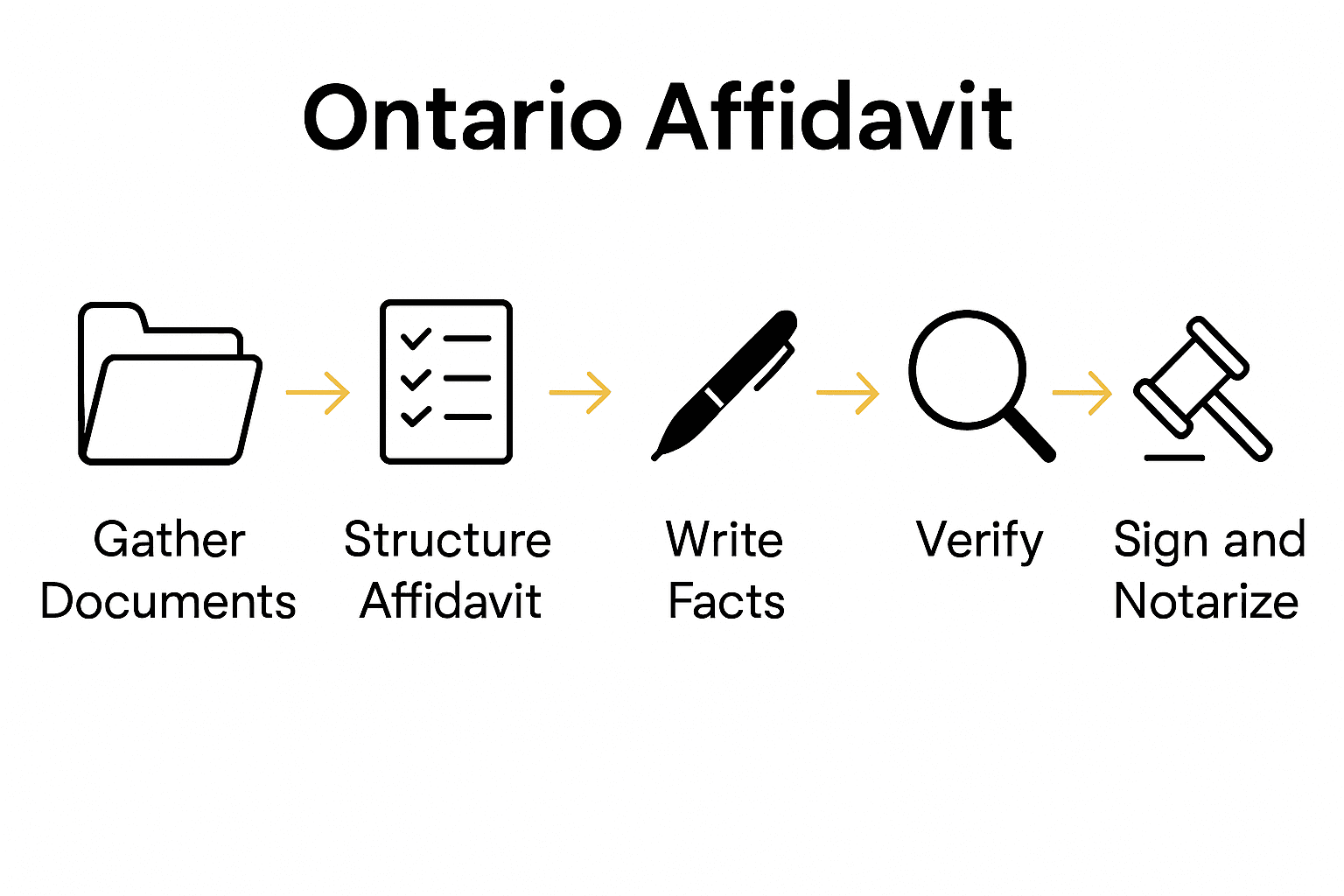
- Step 1: Gather Required Information and Documents
- Step 2: Structure Your Affidavit Properly
- Step 3: Write Clear and Factual Statements
- Step 4: Verify Affidavit Content for Accuracy
- Step 5: Sign and Notarize the Affidavit Correctly
Quick Summary
| Key Point | Explanation |
|---|---|
| 1. Gather all necessary documents | Collect identification, proof of address, and supporting records relevant to your affidavit’s purpose before proceeding. |
| 2. Follow proper affidavit structure | Number paragraphs, use clear language, and maintain 1.5 line spacing for professionalism and clarity in your document. |
| 3. Ensure all statements are factual | Write truthfully and directly, avoiding exaggeration or speculation to maintain the affidavit’s legal integrity. |
| 4. Verify content accuracy | Carefully review each statement for factual accuracy and ensure alignment with supporting documents before finalizing. |
| 5. Sign in presence of authorized official | Complete the affidavit by signing it before an authorized individual, ensuring it becomes legally valid for submission. |
Step 1: Gather Required Information and Documents
Creating a legally valid affidavit starts with collecting the right information and documents. According to Ontario Courts, an affidavit is a written statement of facts that you swear are true, functioning as direct evidence just as if you were testifying in court.
To prepare effectively, you will need to collect several key documents and pieces of information. Start by gathering all relevant personal identification documents such as government issued photo ID, proof of address, and any supporting documentation specific to your affidavit’s purpose. If you are creating an affidavit for legal proceedings, court registration, or identity verification, make sure you have original or certified copies of necessary records.
As a critical reminder, Ontario Courts notes that your affidavit can be sworn or affirmed before specific authorized professionals including court staff, licensed lawyers or paralegals, notary publics, or appointed commissioners for taking affidavits. Ensure you have all required documents ready before scheduling your swearing or affirmation session to streamline the process.
The next step involves understanding the specific formatting and content requirements for your particular affidavit type. We will explore those details in the upcoming section on drafting your document.
Step 2: Structure Your Affidavit Properly
Structuring an affidavit requires precision and attention to detail. Ontario Courts provides clear guidance on creating a professional and legally acceptable document. The length of your affidavit can range from a concise one or two paragraphs to multiple pages, depending on the specific purpose.
When drafting your affidavit, follow these key structural guidelines. First, number each paragraph on the left side and keep them focused on a single idea. Aim for clarity and brevity. Spacing is crucial set your document to at least 1.5 line spacing with a clear separation between paragraphs. Use a standard 12point font for the main text and avoid using larger or smaller font sizes that could make your document appear unprofessional.
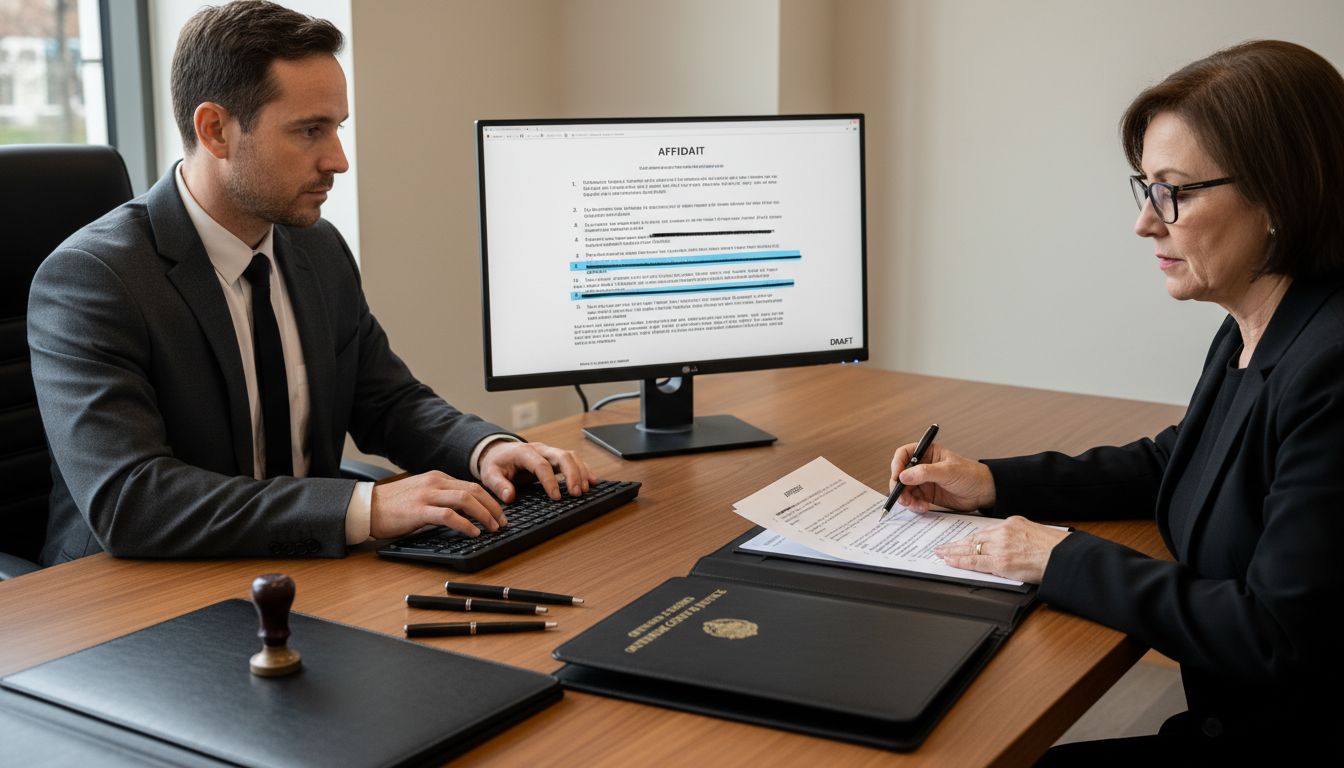
Pro Tip: Ontario Courts emphasizes that any alterations or corrections in your affidavit must be initialled by the person taking the affidavit to maintain its legal validity.
As you complete your affidavit structure, remember that clarity and precision are key. Each statement should be factual and direct. Our next step will focus on reviewing and finalizing your document to ensure it meets all legal requirements.
Step 3: Write Clear and Factual Statements
Writing a legally sound affidavit demands absolute honesty and precision. Ontario Courts emphasizes that everything within your affidavit must be true to the best of your knowledge. Making false statements can lead to serious consequences including potential criminal charges of perjury.
To craft compelling and credible statements, focus on presenting facts objectively. Use clear language and avoid exaggeration or speculation. Words like “frequently” “seldom” or “not often” can help provide a balanced perspective and demonstrate your reasonable approach. Each statement should be direct concise and based on personal knowledge or verifiable information. Avoid including hearsay opinions or speculative claims that you cannot definitively prove.
Pro Tip: When in doubt about the absolute truth of a statement leave it out. Your credibility depends on the accuracy and integrity of the information you present.
If multiple people are involved in creating the affidavit Ontario Courts notes that separate jurats will be required for each deponent unless they are making the affidavit together at the same time. Our next step will guide you through the final review process to ensure your document meets all legal standards.
Step 4: Verify Affidavit Content for Accuracy
Ontario Courts emphasizes that an affidavit is serious legal documentation where accuracy is paramount. Since this document will serve as potential evidence in court, every statement must be true relevant and carefully examined before submission.
To verify your affidavit content thoroughly consider these critical steps. First review each paragraph meticulously checking for factual accuracy personal knowledge and relevance. Cross reference any supporting documents or evidence to ensure alignment with your statements. Pay special attention to specific details dates names and events ensuring they are precisely documented. Courthouse libraries can provide additional resources on court rules regarding affidavit preparation including Rule 4.06 of the Rules of Civil Procedure which outlines specific legal requirements.
Pro Tip: Ontario Courts warns that any alterations must be initialled by the person taking the affidavit. Uncertified changes can render your entire document inadmissible.
If you discover any inaccuracies during your review it is crucial to correct them before finalizing. Understanding types of affidavits in Ontario can provide additional context to help ensure your document meets all necessary legal standards. The final step will involve swearing or affirming your completed affidavit before an authorized official.
Step 5: Sign and Notarize the Affidavit Correctly
The final stage of creating a legally valid affidavit involves proper signing and notarization. Ontario Courts specifies that your document must be sworn or affirmed before specific authorized professionals including Court of Appeal staff members commissioners for taking affidavits lawyers or paralegals licensed by the Law Society of Upper Canada notary publics or appointed commissioners.
When preparing to sign your affidavit ensure you are in the presence of an authorized official who can witness and validate your document. Bring your completed affidavit original identification and be prepared to swear or affirm the truthfulness of your statements. If multiple individuals are involved in creating the affidavit each person must follow specific procedures. Ontario Courts requires separate jurats for each deponent unless all parties are making the affidavit simultaneously before the same official.
Pro Tip: Choose your notarization official carefully. Not all professionals are authorized to take affidavits so confirm their credentials beforehand.
Learn how to swear an affidavit to ensure you complete this crucial final step correctly. After notarization your affidavit becomes a legally recognized document ready for submission to the appropriate legal or administrative authorities.
Simplify Your Affidavit Process with Expert Online Notary Support
Writing an affidavit for Ontario can be challenging when you need to ensure every statement is accurate, clear, and legally valid. The pressure to gather the right documents, draft precise facts, and have your affidavit correctly notarized often causes stress and delays. If you want to avoid common pitfalls like unsigned corrections or incorrect jurats, professional help is here to make the journey smoother and more reliable.

Explore our Uncategorized – The Online Notary for valuable resources and discover how our service at The Online Notary provides convenient online notarization tailored for affidavits, statutory declarations, and more in Ontario. Don’t risk costly mistakes or wasted time. Take control today by visiting The Online Notary and get your affidavit notarized quickly and correctly with just a few simple steps.
Frequently Asked Questions
What documents do I need to prepare an affidavit in Ontario?
To create an affidavit in Ontario, gather personal identification documents, proof of address, and any supporting records relevant to the affidavit’s purpose. Collect original or certified copies for accuracy and legal validity.
How do I properly structure my affidavit?
Structure your affidavit by numbering each paragraph on the left and keeping them focused on single ideas. Use at least 1.5 line spacing, a standard 12-point font, and ensure clarity by following these formatting guidelines.
What should I include in my affidavit statements?
Include clear and factual statements in your affidavit, ensuring each is true to the best of your knowledge. Focus on objective facts, avoid hearsay, and if unsure about a statement’s truth, it’s best to leave it out.
How can I verify the accuracy of my affidavit’s content?
Verify your affidavit by reviewing each paragraph for factual accuracy and alignment with supporting documents. Check names, dates, and events carefully before finalizing to ensure that all information is correct and precise.
What is the correct process for signing and notarizing my affidavit?
To sign and notarize your affidavit, ensure it is done in the presence of an authorized official, such as a notary public. Bring your identification and your completed document, as each involved party must follow the notarization process correctly.