
More than 40 percent of Canadians will need a notarized copy of a document at some point, yet many still feel uncertain about the process. When it comes to notarizing a driver’s license, the rules and requirements can be surprisingly strict. Knowing how notarization works protects you from costly mistakes and helps ensure your documentation is accepted by authorities. This guide clears up what notarizing a driver’s license involves, who needs it, and how to avoid common pitfalls.
Table of Contents
- What Is Notarizing a Driver’s License?
- Ontario Laws Governing Driver’s License Notarization
- Required Documents and Identification Standards
- Situations Requiring a Notarized Driver’s License
- Common Mistakes and Legal Risks to Avoid
Key Takeaways
| Point | Details |
|---|---|
| Notarization Purpose | Notarizing a driver’s license creates a legally recognized copy to prevent fraud and verify identity in various contexts. |
| Legal Requirements | In Ontario, notarization must be conducted in person, with strict protocols to verify identity and document authenticity. |
| Required Documentation | An original driver’s license, secondary government-issued ID, and proof of address are essential for notarization. |
| Common Pitfalls | Avoid notarizing incomplete documents or using expired IDs, as these actions can lead to legal complications and invalidation. |
What Is Notarizing a Driver’s License?
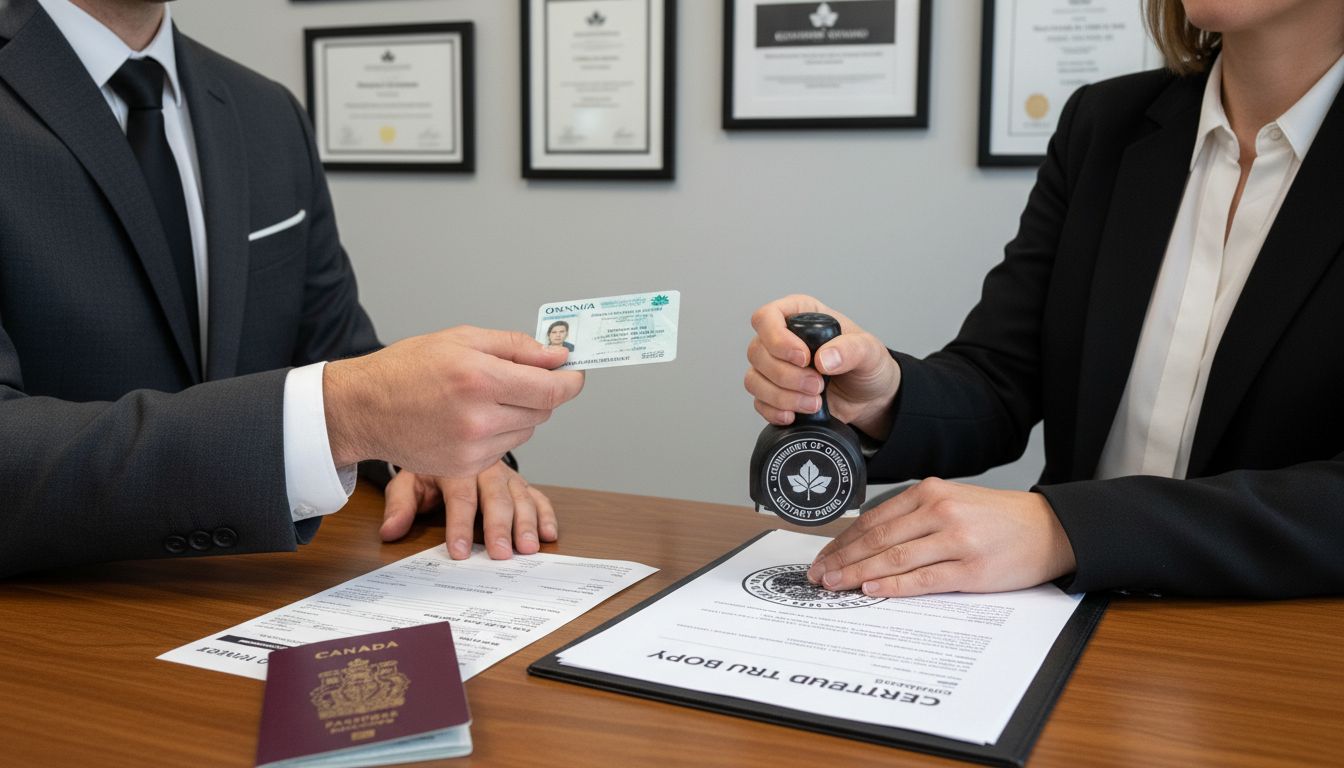
Notarizing a driver’s license is a formal process where a notary public verifies and certifies the authenticity of your driver’s license document. According to the Law Society of Ontario, this certification confirms that the document is a true representation of the original, providing legal validation for various official purposes.
The primary goal of notarizing a driver’s license is to create an officially recognized copy that can be used in legal, governmental, or administrative contexts where an original document might be required but cannot be physically submitted. This process helps prevent document fraud and provides a standardized method of verifying an individual’s identity and documentation.
When you have your driver’s license notarized, the notary public will typically follow a specific set of steps:
- Physically examine the original driver’s license for authenticity
- Compare the physical document against any digital or secondary identification
- Create a certified true copy with an official stamp or seal
- Potentially require the document owner to sign an affidavit confirming the document’s legitimacy
It’s important to understand that notarization is not just a simple rubber stamp process. The notary public takes on a significant responsibility in verifying the document’s integrity and the identity of the person presenting the license. Understanding Requirements for Notarization in Ontario can provide additional insights into the detailed verification process that ensures document authenticity and legal compliance.
Ontario Laws Governing Driver’s License Notarization
Ontario’s legal framework for driver’s license notarization is structured to ensure document authenticity and prevent fraud. The Law Society of Ontario provides clear guidelines that strictly regulate the notarization process. According to their regulations, notarization of a driver’s license must be performed in person, with remote notarization explicitly prohibited under current legal standards.
The legal requirements for notarizing a driver’s license in Ontario are comprehensive and designed to protect individuals’ identities and document integrity. Notaries public must follow strict protocols that include:
- Personally verifying the identity of the document holder
- Examining the original driver’s license for authenticity
- Ensuring the document is current and valid
- Maintaining detailed records of the notarization process
Specific legal considerations make the notarization process more than a simple administrative task. Notaries are legally responsible for confirming the document’s legitimacy and the presenter’s identity. Public Notary Requirements in Ontario outline the professional standards that notaries must meet to ensure compliance with provincial regulations.
Drivers seeking notarization should be aware that not all notaries are authorized to certify every type of document. The legal framework requires notaries to have specific qualifications and to follow precise procedures when creating certified true copies of driver’s licenses. Failure to adhere to these regulations can result in legal complications and potential invalidation of the notarized document. Understanding these nuanced legal requirements is crucial for anyone navigating the driver’s license notarization process in Ontario.
Required Documents and Identification Standards
When notarizing a driver’s license in Ontario, the identification requirements are stringent and designed to prevent fraud and ensure document authenticity. Notary Identification Requirements in Ontario provides comprehensive guidance on the specific documentation needed for a successful notarization process.
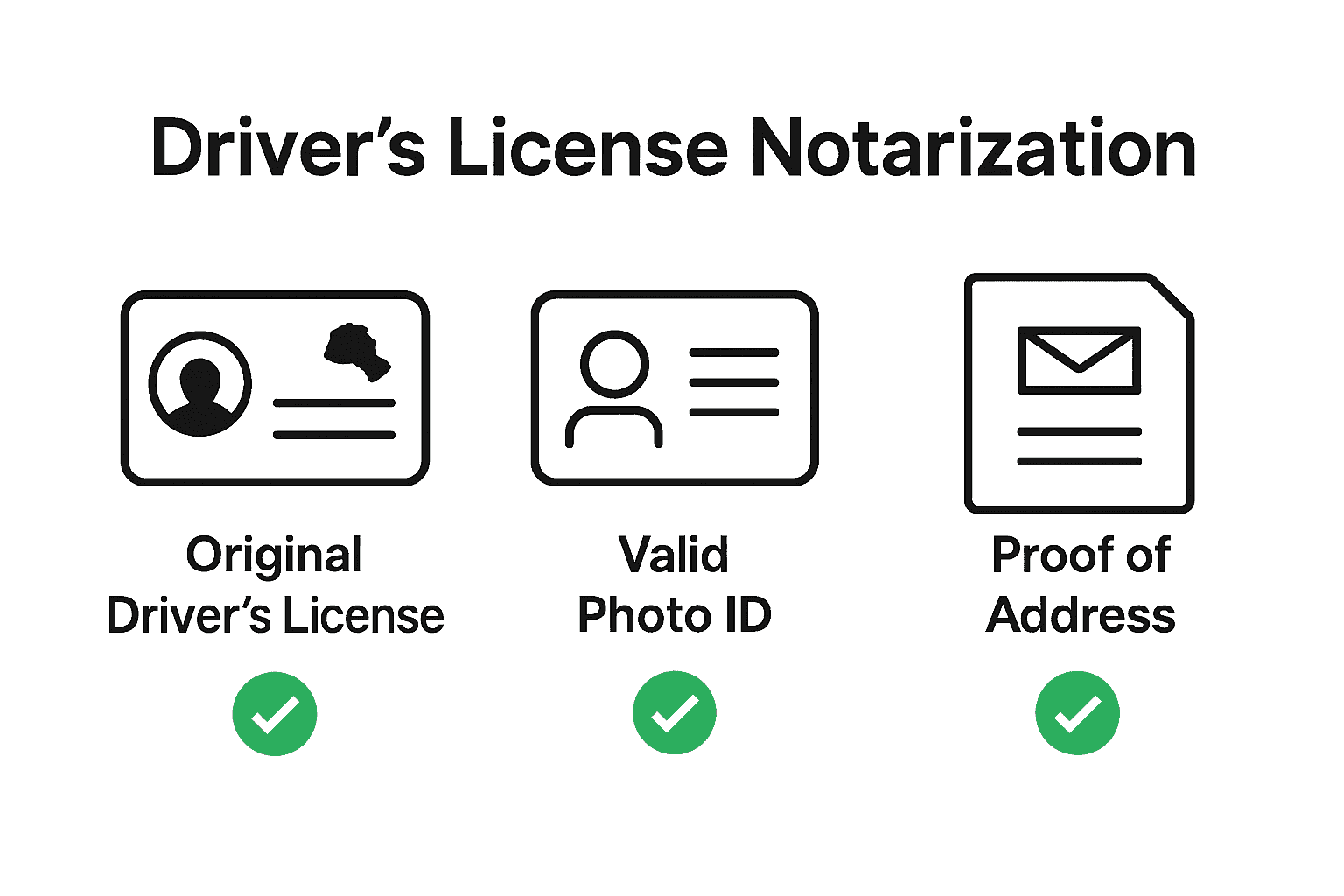
To successfully notarize a driver’s license, you will need to provide the following primary documents:
- Original Driver’s License: The physical, current driver’s license issued by the Ontario Ministry of Transportation
- Valid Government-Issued Photo ID: A second form of identification such as a passport, permanent resident card, or Canadian citizenship card
- Proof of Address: A recent utility bill, bank statement, or government correspondence showing your current residential address
Beyond the basic documentation, the notary will conduct a thorough verification process. This typically involves comparing the information across multiple documents, checking the validity of each identification piece, and ensuring that the presented documents match the individual seeking notarization.
For individuals with complex identification situations, such as recent name changes or international documentation, an additional layer of verification might be required. Affidavit of Identity in Ontario can provide supplemental guidance for those needing extra documentation to complete their notarization process. The goal is always to maintain the highest standards of document integrity and personal identification verification.
Situations Requiring a Notarized Driver’s License
Certain life situations demand a notarized driver’s license to validate your identity and documentation authenticity. When Is Notary Required in Ontario highlights the critical scenarios where notarization becomes essential. These scenarios range from legal proceedings to international documentation requirements.
International contexts frequently necessitate notarized driver’s licenses. According to legal experts, international students often require notarized copies of their driver’s licenses when applying for:
- Study permits
- Work visas
- Immigration documentation
- Foreign educational enrollment
- Banking services abroad
Beyond international scenarios, notarized driver’s licenses are crucial in several domestic situations. These include legal name changes, property transactions, court proceedings, and verifying identity for government services. The notarization provides an additional layer of authentication that standard photocopies cannot offer.
Specific professional and personal circumstances might also require a notarized driver’s license. This could involve employment verification, professional licensing applications, insurance claims, or complex legal documentation processes. The key is understanding that notarization transforms a simple identification document into a legally recognized and authenticated piece of personal documentation.
Common Mistakes and Legal Risks to Avoid
Notarizing a driver’s license involves several potential pitfalls that can compromise legal validity and personal documentation integrity. Writing a Legal Letter provides insights into the precision required in legal documentation, which applies equally to driver’s license notarization.
According to the Notary Public Association, one of the most critical legal risks is notarizing incomplete or blank documents. Specific mistakes to avoid include:
- Presenting expired or damaged driver’s licenses
- Submitting photocopies instead of original documents
- Failing to provide multiple forms of government-issued identification
- Using outdated or non-standard identification
- Attempting to notarize documents without personal appearance
Legal complications can arise from seemingly minor documentation errors. Notaries are legally obligated to verify the identity of the document holder, ensure the document’s completeness, and confirm the individual’s willingness to sign. Any deviation from these strict protocols can result in the notarization being declared invalid, potentially causing significant personal and professional complications.
Additionally, individuals must understand that intentionally misrepresenting information during the notarization process can lead to serious legal consequences. This includes providing false identification, submitting altered documents, or attempting to notarize a document under duress. The notarization process is designed to protect both the individual and the broader legal system from potential fraud and misrepresentation.
Simplify Your Driver’s License Notarization with Trusted Online Services
Dealing with the complex process of notarizing your driver’s license in Ontario can feel overwhelming. The article highlights the challenges of strict identification requirements, legal risks, and the necessity of personal verification—making it clear that a minor mistake can invalidate your document and cause unwanted delays. If you want to avoid the stress of incomplete documentation and legal complications while ensuring your notarized driver’s license meets Ontario’s standards, help is just a click away.

Discover how online notary services can ease your journey by providing reliable, legally compliant notarizations without leaving your home. Our platform supports critical documents including affidavits and solemn declarations that align with your driver’s license notarization needs. Don’t wait until a small error costs you time or opportunity. Visit Notary Identification Requirements in Ontario and Affidavit of Identity in Ontario for detailed guidance, then take the next step by securing your authentic notarization today at theonlinentoary.ca. Your peace of mind is just a few clicks away.
Frequently Asked Questions
What does it mean to notarize a driver’s license?
Notarizing a driver’s license involves a notary public verifying and certifying the authenticity of the document, creating an officially recognized copy for legal, governmental, or administrative purposes.
What documents are required to notarize a driver’s license?
To notarize a driver’s license, you need to provide the original driver’s license, a valid government-issued photo ID, and proof of address, such as a recent utility bill or bank statement.
When is a notarized driver’s license required?
A notarized driver’s license is often required for situations such as applying for study permits, work visas, legal name changes, property transactions, and verifying identity for various government services.
What common mistakes should be avoided when notarizing a driver’s license?
Common mistakes include presenting expired or damaged licenses, submitting photocopies instead of originals, failing to provide multiple forms of identification, or notarizing documents without personal appearance.