
Legal documents move across borders and languages every day, and a single mistake in translation can lead to confusion or outright rejection. Shockingly, even minor errors in translated legal paperwork have caused major applications to be denied in Ontario. Most people focus on just getting the language right, but the real game is about combining professional translation with airtight notarization. This unexpected pairing is what truly safeguards your documents and gives them power in official processes.
Table of Contents
- What Is Translation And Notarization?
- Why Translation And Notarization Matter For Legal Documents?
- How Translation Works: Key Concepts And Methods
- The Role Of Notarization In Authenticating Documents
- Practical Applications Of Translation And Notarization In Ontario
Quick Summary
| Takeaway | Explanation |
|---|---|
| Translation is vital for legal clarity. | Accurate translation preserves the original intent and legal implications of documents across jurisdictions. |
| Notarization adds legal validity. | Notarization authenticates documents, ensuring signatures and contents are legally recognized. |
| Combined services are essential for official processes. | Notarized translations facilitate immigration, academic, and legal procedures, ensuring compliance with jurisdictional standards. |
| Precision in terminology is crucial. | Maintaining specific legal terminology prevents misunderstandings and preserves the document’s integrity and intent. |
| Use trusted professionals for accuracy and legality. | Engaging certified translators and notaries helps maintain document integrity for international recognition. |
What is Translation and Notarization?
Translation and notarization are critical processes for authenticating and legalizing documents across languages and jurisdictions. These services ensure that official documents maintain their legal validity and are accurately understood when used in different contexts.
Understanding Translation Services
Translation involves converting written text from one language to another while preserving the original meaning, tone, and context. Professional translators work meticulously to capture nuanced linguistic elements, ensuring that every word and phrase accurately reflects the source document.
In Ontario, translation services become crucial when individuals need to present documents in official settings such as:
- Immigration applications
- Academic credential submissions
- Legal proceedings
- Government documentation
The Role of Notarization
Notarization adds an official layer of authentication to documents. A public notary verifies the identity of individuals signing documents and confirms the legitimacy of signatures and document contents. This process involves:
- Checking the signer’s government issued identification
- Witnessing document signatures
- Applying an official seal or stamp
- Creating a sworn statement of document authenticity
When translation and notarization intersect, they provide a comprehensive solution for legal document verification. A certified translation that has been notarized carries significant legal weight, ensuring that the translated document is both accurate and officially recognized across different jurisdictions. This combined process is particularly important for international documents requiring formal recognition in Ontario’s legal and administrative systems.
Why Translation and Notarization Matter for Legal Documents?
Legal documents require precise communication and authentication to maintain their integrity and legal standing. Translation and notarization serve as critical safeguards that protect the legal validity of important paperwork across different linguistic and jurisdictional boundaries.
Ensuring Legal Accuracy and Comprehension
Translation and notarization are fundamental to preserving the original intent and legal meaning of documents. When legal documents cross language barriers, subtle nuances can be lost or misinterpreted, potentially creating significant legal complications. Professional translation ensures that every technical term, contractual obligation, and legal concept is accurately rendered in the target language.
Key considerations for legal document translation include:
- Maintaining precise legal terminology
- Preserving original document structure
- Capturing contextual legal implications
- Avoiding potential misunderstandings
Establishing Legal Authenticity
Notarization provides critical legal verification that transforms a standard document into an officially recognized instrument. This process confirms the authenticity of signatures, verifies the identity of signatories, and creates a reliable record that can withstand legal scrutiny. For international documents, notarization serves as a universal language of legal credibility.
In Ontario, notarized translations become essential for numerous official processes such as:
- Immigration and citizenship applications
- Academic credential recognition
- Property transfer documentation
- Business contract validations
By combining professional translation with official notarization, individuals and organizations can confidently navigate complex legal landscapes, ensuring their documents are both linguistically accurate and legally recognized across different jurisdictions.
How Translation Works: Key Concepts and Methods
Translation is a sophisticated linguistic process that goes far beyond simple word-for-word conversion. It requires deep understanding of language structures, cultural contexts, and semantic nuances to effectively communicate meaning across different linguistic systems.
Linguistic Transformation Principles
Professional translation involves a complex approach that prioritizes meaning preservation over literal interpretation. Translators must navigate intricate linguistic landscapes, understanding that each language has unique grammatical rules, idiomatic expressions, and cultural references that cannot be directly substituted.
Key principles of effective translation include:
- Capturing contextual meaning
- Maintaining original document tone
- Respecting cultural linguistic variations
- Ensuring conceptual accuracy
Translation Methodological Approaches
Research in translation technology reveals multiple methodological approaches that professionals utilize. These methods range from human translation to advanced computer-assisted techniques, each serving different complexity levels of document translation.
Translation professionals typically employ several core methodological strategies:
- Human professional translation
- Computer-aided translation tools
- Collaborative translation platforms
- Machine translation with human verification
The goal of these methods is to create linguistically precise and culturally appropriate translations that retain the original document’s legal, technical, or emotional essence. Professional translators do not merely replace words but reconstruct meaning to ensure the translated text communicates exactly what the original document intends.
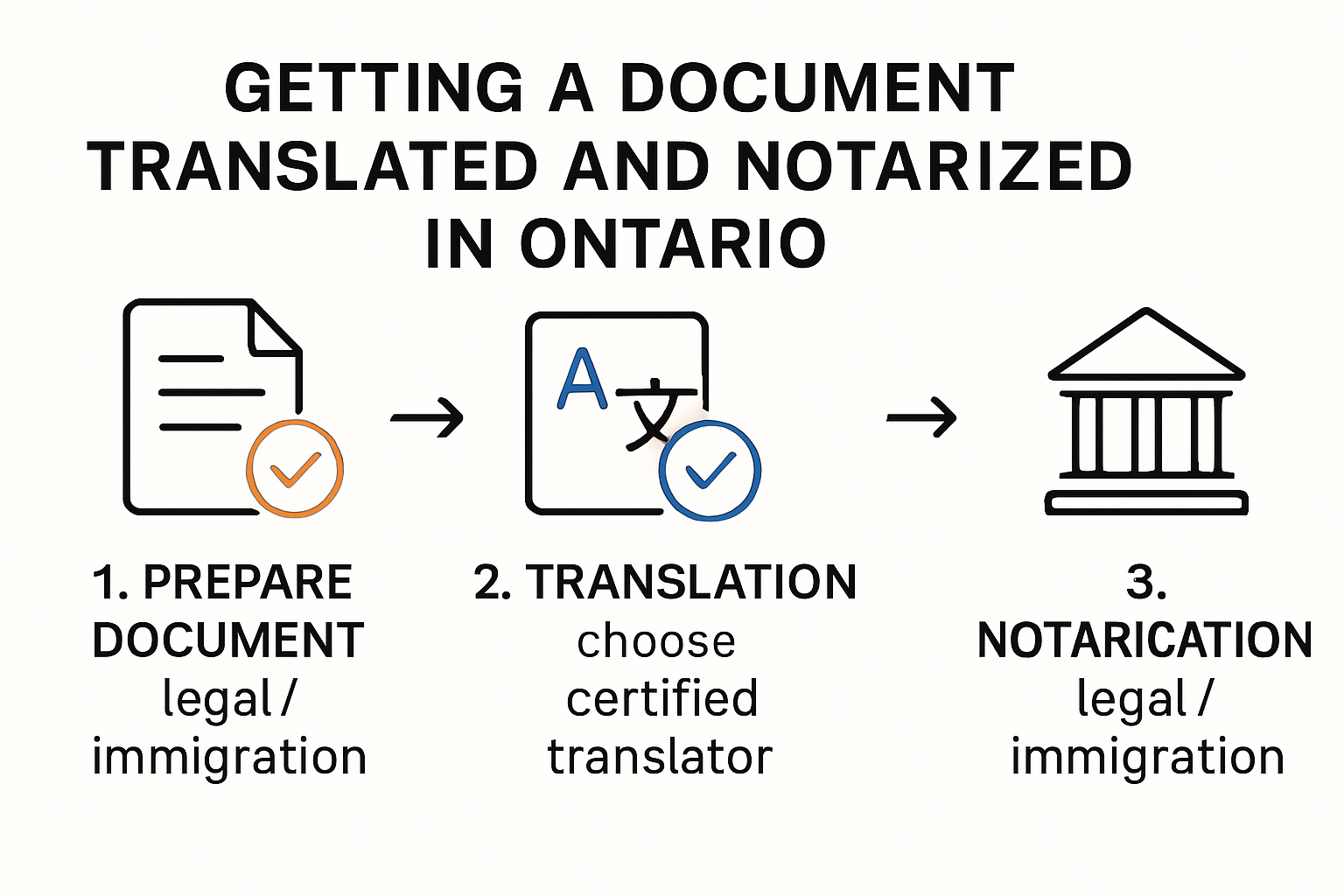
The Role of Notarization in Authenticating Documents
Notarization serves as a critical legal mechanism for verifying document authenticity, providing an official seal of credibility that transforms ordinary paperwork into legally recognized instruments. This process creates a trusted layer of verification that protects against fraud and ensures the legitimate representation of important legal and personal documents.
The Legal Verification Process
The notarization process involves a rigorous authentication protocol that goes beyond simple signature witnessing. A licensed notary public carefully examines the document, verifies the identity of signatories, and confirms their willingness to sign without coercion. This meticulous approach ensures that each document meets stringent legal standards of legitimacy.
Key elements of the notarization verification include:
- Checking government issued photo identification
- Confirming the signer’s mental competence
- Witnessing the actual signing process
- Applying an official notarial seal
- Creating a permanent record of the authentication
Establishing Document Credibility
Learn more about document authentication methods that provide legal protection. Notarization transforms documents from simple pieces of paper into legally binding instruments with recognized authority. This process is particularly crucial for documents that require official recognition across different jurisdictions, such as international contracts, property transfers, and legal agreements.
Notaries function as impartial witnesses who validate the authenticity of signatures and document contents. Their official seal represents a guarantee of document integrity, signaling that the document has been properly executed and can be trusted in legal and administrative contexts. By adding this layer of official verification, notarization provides crucial protection against potential document fraud and misrepresentation.
Practical Applications of Translation and Notarization in Ontario
In Ontario, translation and notarization play pivotal roles across numerous official and legal domains, providing critical authentication and communication services for individuals and organizations navigating complex bureaucratic landscapes.
Immigration and Citizenship Processes
For immigrants and international students, translation and notarization are essential gateway services. Official documents such as academic transcripts, birth certificates, marriage licenses, and professional credentials must be accurately translated and legally authenticated to be recognized by Canadian authorities.
Key document requirements include:
- Precise translations from original language
- Certification by professional translators
- Notarization to verify translation accuracy
- Compliance with specific governmental standards
Legal and Business Documentation
Learn more about document authentication requirements that impact legal and business interactions. In the professional realm, translation and notarization ensure seamless communication and legal compliance for contracts, corporate documents, intellectual property registrations, and international business agreements.
Critical areas requiring translation and notarization include:
- International corporate contracts
- Patent and trademark documentation
- Real estate transaction papers
- Cross-border business agreements
Accurately translated and notarized documents serve as universal communication tools, bridging linguistic gaps and providing legal certainty in complex interprovincial and international contexts. By adhering to rigorous translation and notarization standards, Ontario professionals and individuals can confidently engage in diverse legal and bureaucratic environments.

Get Peace of Mind with Secure Online Notarization and Certified Translation
Handling the translation and notarization of your vital documents in Ontario can be overwhelming. Mistakes lead to costly delays. Not having the right certification or legal authentication for your affidavits, statutory declarations, or invitation letters puts your applications at risk. Our platform understands the worry of ensuring your paperwork is both accurately translated and legally verified. We combine the best of translation accuracy and official notarization, so your documents meet every legal and government standard in Ontario.

Do not let paperwork pitfalls derail your plans. Visit theonlinentoary.ca today and discover how easy it is to get your affidavits, statutory declarations, and more notarized online. Let our experts handle both the translation and legal verification, so you can submit with confidence and avoid unnecessary stress. Start your secure and simple online notarization process now.
Frequently Asked Questions
What is the difference between translation and notarization?
Translation involves converting written text from one language to another while preserving the meaning and context. Notarization is the legal process of verifying the authenticity of signatures and the legitimacy of documents.
To help clarify the distinction between translation and notarization, the following table compares their key purposes and processes.
| Aspect | Translation | Notarization |
|---|---|---|
| Main Function | Converts text from one language to another | Verifies identity, signatures, and document content |
| Performed By | Certified translator | Licensed notary public |
| Focus | Meaning, context, and linguistic accuracy | Legal authentication and credibility |
| Legal Role | Ensures comprehension and intent are preserved | Confirms legitimacy for official/legal use |
| Typical Documents | Immigration, academic, legal, and business docs | Sworn statements, contracts, translations |
Why is notarization important for translated documents in Ontario?
Notarization adds an official layer of authentication to translated documents, ensuring they are legally recognized and can withstand legal scrutiny in official matters like immigration, business, and legal proceedings.
What types of documents typically require translation and notarization in Ontario?
Common documents that require translation and notarization include immigration applications, academic transcripts, legal documents, and business contracts that need to be recognized in a different language or jurisdiction.
For reference, this table summarizes the main types of documents in Ontario that commonly require both translation and notarization, as discussed in the article.
| Document Type | Purpose/Context |
|---|---|
| Immigration Applications | Citizenship, permanent residency, and visa filings |
| Academic Transcripts | Credential recognition for schools/employment |
| Legal Documents | Affidavits, statutory declarations, court materials |
| Business Contracts | Cross-border agreements, partnerships, transactions |
| Birth/Marriage Certificates | Personal identification for government processes |
| Property Transfer Papers | Real estate and asset ownership documentation |
How does the translation process work for legal documents?
The translation process for legal documents involves understanding linguistic nuances, maintaining precise legal terminology, and ensuring that the translated text accurately reflects the original document’s intent and legal meaning.
Recommended
- How to Notarize Documents in Ontario: Easy 2025 Guide – The Online Notary CA
- Can Anyone Notarize a Document in Ontario? 2025 Guide – The Online Notary CA
- When Is a Notary Required in Ontario? Essential 2025 Guide – The Online Notary CA
- How to Notarize Online in Ontario 2025: Easy Guide – The Online Notary CA