
Navigating legal documents can feel overwhelming for seniors in Ontario, especially when terms like affidavit, power of attorney, and notarization come into play. Many assume notary services are expensive, complicated, or only needed for complex estate planning. The truth is simpler: notarization provides essential legal protection for everyday documents that safeguard your personal affairs and future. Whether you’re managing health decisions, property matters, or family responsibilities, understanding when and how to use notary services empowers you to handle legal paperwork with confidence and peace of mind.
Table of Contents
- Key takeaways
- What are notary services and why seniors need them in Ontario
- Common legal documents seniors must notarize in Ontario
- How to find and verify reliable notary services for seniors in Ontario
- Benefits of online notary services for seniors in Ontario
- Take the next step with trusted Ontario notary services
- Frequently asked questions
Key Takeaways
| Point | Details |
|---|---|
| Notary role | Notaries certify documents by witnessing signatures verifying identity and applying an official seal to create a legally recognized record. |
| Documents needing notarization | Common items include affidavits, powers of attorney, statutory declarations, certified true copies, and consent forms. |
| Verify notary credentials | Verify the notary’s government issued photo ID and confirm they witnessed the signing to ensure legitimacy. |
| Appointment prep matters | Gather all required documents and valid photo identification before your notary appointment to speed the process and avoid delays. |
What are notary services and why seniors need them in Ontario
Notary services provide official certification that makes your legal documents authentic and enforceable. A notary public in Ontario authorizes and certifies important legal documents by witnessing your signature, verifying your identity, and adding their official seal. This process creates a legal record that courts, government agencies, and financial institutions recognize and accept.
Seniors benefit from notary services in several critical ways. First, notarization establishes trust by confirming you signed documents willingly and understood their contents. Second, it provides legal acceptance, ensuring institutions honor your wishes regarding health care, property, and financial matters. Third, it simplifies managing affairs by creating properly authenticated records that prevent future disputes or delays.
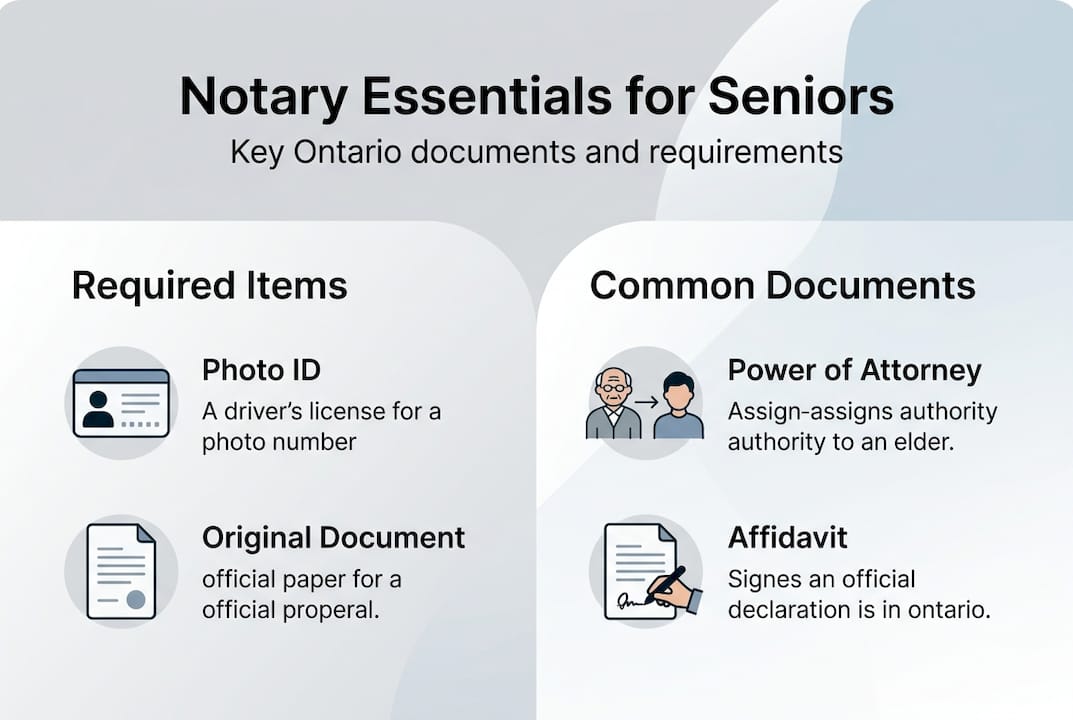
Common documents requiring notarization include:
- Affidavits for court proceedings or personal declarations
- Powers of attorney for health care and financial decisions
- Statutory declarations for government applications
- Certified true copies of important identification or property documents
- Consent forms for travel or guardianship matters
Ontario regulations require notaries to follow strict protocols. They must verify your identity using government-issued photo ID, confirm you understand the document’s purpose, and ensure you’re signing voluntarily without pressure. The notary then completes a certificate stating they witnessed your signature and verified these elements. Understanding the benefits of notarizing documents helps you appreciate why this step matters for legal protection.
Pro Tip: Gather all required documents, valid photo identification, and any supporting materials before your notary appointment. This preparation speeds the process and ensures you don’t need to reschedule due to missing paperwork.
Common legal documents seniors must notarize in Ontario
Affidavits represent sworn written statements you make under oath, used in legal proceedings or to declare facts officially. Seniors commonly use affidavits for estate matters, property transfers, or confirming relationship status for government benefits. The notary verifies your identity and witnesses your oath that the statement’s contents are truthful.
Powers of attorney require notarization to ensure legal effectiveness and prevent challenges to their validity. A power of attorney lets you appoint someone to make decisions on your behalf if you become unable to do so. Ontario recognizes two main types: power of attorney for property (financial matters) and power of attorney for personal care (health decisions). Notarization confirms you created these documents while mentally capable and understood their significance.
Other essential documents seniors frequently notarize include:
- Statutory declarations for pension applications or insurance claims
- Certified true copies of passports, birth certificates, or property deeds
- Consent letters for grandchildren traveling internationally
- Affidavits of execution confirming will signing procedures
- Transfer documents for vehicle or property ownership changes
| Document Type | Primary Purpose | Why Notarization Required |
|---|---|---|
| Power of Attorney | Authorize financial or health decisions | Prevents fraud and confirms mental capacity at signing |
| Affidavit | Sworn statement for legal or official use | Creates legally binding testimony under oath |
| Statutory Declaration | Formal declaration for government processes | Provides official verification without court involvement |
| Certified True Copy | Authenticate document copies | Confirms copy matches original for legal acceptance |
| Will Affidavit | Verify proper will execution | Supports probate process and reduces estate disputes |
Understanding different types of affidavits helps you recognize when this document format serves your needs. Each type addresses specific legal requirements, from confirming identity to declaring financial information.
Pro Tip: Notarization becomes legally mandatory when institutions or courts specifically require it for document acceptance. Even when optional, notarization adds protection by creating an official record that’s harder to dispute later.
How to find and verify reliable notary services for seniors in Ontario
Finding trustworthy notary services starts with understanding where to look and what credentials matter. Follow these steps to ensure you work with legitimate, qualified professionals:
- Check the Law Society of Ontario’s directory for licensed lawyers who can provide notary services
- Search the Ontario Ministry of the Attorney General registry for commissioned notaries public
- Verify the notary’s commission is current and not expired or suspended
- Confirm their physical address or registered business location
- Request to see their official commission certificate before proceeding
- Ask about their experience with the specific document type you need notarized
Verifying a notary’s license and credentials prevents legal issues that arise from invalid notarizations. The verification process takes only minutes but protects you from documents that courts or institutions might reject.
Watch for these red flags indicating unreliable services:
- Refusing to show commission credentials or identification
- Offering to notarize documents without seeing you in person or via secure video
- Charging fees significantly higher than typical market rates
- Pressuring you to sign quickly without reading documents thoroughly
- Operating from unmarked locations or providing only mobile phone contact
- Unable to explain the notarization process or legal requirements clearly
Seniors have multiple service options tailored to different accessibility needs. Traditional in-person notaries work from law offices or dedicated notary locations. Mobile notaries travel to your home, retirement community, or care facility for added convenience. Online notary services use secure video conferencing to provide remote notarization from anywhere with internet access.

Preparing for your appointment ensures smooth processing. Bring valid government-issued photo identification showing your current name and signature. Have all documents ready but unsigned, as you must sign in the notary’s presence. If documents require witnesses beyond the notary, arrange for them to attend. Know the document’s purpose so you can answer questions about why you’re signing and what it accomplishes.
Pro Tip: When using online services, test your camera and microphone beforehand, ensure good lighting for ID verification, and choose a quiet location free from distractions. These simple steps prevent technical delays and create clear records of the notarization session.
Benefits of online notary services for seniors in Ontario
Online notarization transforms accessibility for seniors who face mobility challenges, live in remote areas, or prefer handling legal matters from home. Online notary services provide 24/7 accessibility and convenience, eliminating travel time and offering flexible scheduling that fits your routine rather than office hours.
| Feature | Traditional Notary | Online Notary |
|---|---|---|
| Availability | Business hours only | 24/7 access |
| Location | Must travel to office | From home or anywhere |
| Wait Time | May require appointment days ahead | Often same-day service |
| Mobility Requirements | Must physically attend | No travel needed |
| Document Delivery | In person or mail | Instant digital delivery |
| Cost | Standard fees plus travel | Competitive rates, no travel costs |
Key advantages include:
- Remote access from any location with internet connectivity
- Reduced physical strain from eliminating travel to offices
- Flexible scheduling accommodating health appointments or family commitments
- Faster processing with digital document handling and immediate completion
- Secure platforms protecting personal information through encryption
- Clear video records of the notarization session for future reference
Security measures ensure online notarizations meet Ontario legal standards. Platforms use identity verification technology comparing your live video image against photo ID. Multi-factor authentication confirms you’re the actual document signer. Encrypted connections protect information during transmission. Digital audit trails record every step, creating tamper-proof evidence of proper procedures. Notaries receive specialized training in remote identity verification and fraud detection techniques.
Seniors can notarize most common documents online, including powers of attorney, affidavits, statutory declarations, consent letters, and certified copies. Some documents requiring physical presence, like real estate transfers or wills in certain situations, may still need traditional notarization. Check with your online notary service in Ontario to confirm your specific document qualifies for remote processing.
Pro Tip: Choose platforms specifically designed for Ontario legal requirements rather than generic services. Ontario-focused providers understand provincial regulations and ensure notarizations comply with local institutional requirements, preventing rejection due to technical non-compliance.
Take the next step with trusted Ontario notary services
Managing legal documents doesn’t have to feel complicated or stressful. Professional notary services simplify the process, providing expert guidance tailored to your specific needs as an Ontario senior. Whether you’re establishing powers of attorney, creating affidavits, or certifying important documents for estate planning, accessible support makes every step straightforward.

Explore trusted Ontario notary services offering 24/7 online access designed specifically for convenience and reliability. Get expert assistance with document preparation, understand exactly what notarization accomplishes for your situation, and complete the process from the comfort of home. Comprehensive resources help you navigate power of attorney notarization requirements and understand different affidavit types for various legal purposes. Professional notaries provide personalized attention, answer your questions clearly, and ensure your documents meet all legal standards for acceptance. Take control of your legal affairs with confidence, knowing experienced professionals support you every step of the way.
Frequently asked questions
What legal documents do seniors commonly need notarized?
Seniors most frequently notarize powers of attorney for financial and health care decisions, affidavits for estate or legal matters, and statutory declarations for government applications. Certified true copies of identification documents, consent letters for grandchildren’s travel, and transfer documents for property or vehicles also commonly require notarization. These documents gain legal validity and institutional acceptance through proper notarization, protecting your interests and ensuring your wishes are honored.
Can seniors use online notary services in Ontario safely?
Yes, online notarization is legally valid in Ontario when conducted through authorized platforms following provincial regulations. Secure video conferencing, identity verification technology, and encrypted document transmission protect your information while meeting legal standards. Online services offer the same legal weight as traditional in-person notarization, with added convenience and accessibility benefits particularly valuable for seniors with mobility limitations or those living in remote areas.
How can I verify the credentials of a notary public?
Check the Law Society of Ontario directory if working with a lawyer providing notary services, or search the Ontario Ministry of the Attorney General registry for commissioned notaries public. Request to see the notary’s commission certificate showing their authorization is current and valid. Confirm their business address and ask for government-issued identification during your appointment. These verification steps take minutes but prevent problems from working with unauthorized individuals whose notarizations lack legal standing.
Why is notarization important for powers of attorney?
Notarization authenticates your power of attorney by creating an official record that you signed willingly, understood the document’s purpose, and possessed mental capacity when executing it. This authentication prevents family disputes about the document’s legitimacy and ensures financial institutions or health care providers accept and honor your designated representative’s authority. Proper notarization becomes especially critical if anyone later questions whether you truly intended to grant these powers or were capable of making such decisions.