
Over 80 percent of Ontario rental disputes involve some form of legal documentation. When conflicts arise between landlords and tenants, clarity and proof become more important than ever. A landlord tenant affidavit carries serious legal weight, making it a crucial tool for anyone facing a disagreement or claim about a rental property. Knowing how and when to use this sworn document can mean the difference between a quick resolution and a drawn-out conflict.
Table of Contents
- What Is A Landlord Tenant Affidavit?
- Key Types And Common Affidavit Uses
- Legal Requirements In Ontario For Affidavits
- How To Prepare And Notarize Affidavits Online
- Rights, Responsibilities, And Common Pitfalls
Key Takeaways
| Point | Details |
|---|---|
| Legal Binding Nature | A landlord tenant affidavit is a sworn document that carries legal weight and must be truthful to avoid charges of perjury. |
| Common Uses | These affidavits are essential for documenting lease violations, property damage, non-payment of rent, and security deposit disputes. |
| Preparation Requirements | Affidavits must be based on personal knowledge, written in the first person, and signed in the presence of an authorized official. |
| Online Notarization | The process for notarizing affidavits online has been streamlined, allowing for valid remote commissioning through video conferencing. |
What Is a Landlord Tenant Affidavit?
A landlord tenant affidavit is a sworn legal document that provides a formal, written statement of facts related to a rental property dispute or situation in Ontario. According to Ontario Courts, an affidavit is “a written statement of facts that you swear are true, used as evidence in court proceedings.”
These legal documents serve critical purposes in residential tenancy matters, allowing both landlords and tenants to formally document key information, grievances, or claims. Typical scenarios where a landlord tenant affidavit might be used include:
- Documenting lease violations
- Reporting property damage
- Proving non-payment of rent
- Verifying occupancy status
- Resolving security deposit disputes
The power of a landlord tenant affidavit lies in its legal weight. When you sign an affidavit, you are making a solemn declaration under oath that the information contained within is accurate and truthful. This means that providing false information can result in serious legal consequences, including potential charges of perjury. The document must be signed in the presence of an authorized official who can administer oaths, such as a commissioner for taking affidavits, notary public, or lawyer.
Understanding the nuances of these documents is crucial for protecting your rights and interests in a rental situation. For more context, you might want to review our guide on understanding types of affidavits to gain deeper insights into legal documentation in Ontario.
Key Types and Common Affidavit Uses
In the realm of landlord tenant legal documentation, several key types of affidavits play crucial roles in resolving disputes and documenting rental relationships. Ontario confirms that affidavits serve as “written equivalents of oral evidence under oath, used to assert the truth of facts or accounts in writing” when standard verification methods are unavailable.
The primary types of landlord tenant affidavits include:
Here’s a summary of key types of landlord tenant affidavits and their primary uses:
| Affidavit Type | Main Purpose | Common Evidence Required |
|---|---|---|
| Non-Payment of Rent | Prove unpaid rent by tenant | Lease agreement Rent ledger |
| Property Damage | Document tenant-caused damage | Photos Repair estimates |
| Lease Violation | Record rental agreement breaches | Written warnings Affected clauses |
| Occupancy Status | Confirm current tenant residency | Government ID Utility bills |
| Security Deposit Dispute | Resolve deposit return disagreements | Move-in checklist Receipts |
- Non-Payment of Rent Affidavit: Documents consistent failure to pay rental fees
- Property Damage Affidavit: Provides detailed evidence of tenant-caused property destruction
- Lease Violation Affidavit: Records specific breaches of rental agreement terms
- Occupancy Status Affidavit: Verifies current residency and tenant information
- Security Deposit Dispute Affidavit: Outlines claims regarding deposit retention or return
These legal documents require meticulous preparation and precise documentation. Each affidavit must comprehensively detail specific incidents, include relevant dates, and provide clear, factual descriptions without emotional language or speculation. The goal is to create an objective record that can withstand legal scrutiny and potentially be used in rental board hearings or court proceedings.
For those navigating complex rental situations, understanding the nuanced applications of these affidavits is critical. If you want to explore more about legal documentation, check out our guide on understanding affidavit types, which provides deeper insights into crafting effective legal statements.
Legal Requirements in Ontario for Affidavits
Navigating the legal requirements for affidavits in Ontario demands precision and careful attention to detail. According to Ontario Regulations, affidavits must be strictly confined to statements of fact within the personal knowledge of the deponent, ensuring that only directly experienced or verifiable information is included.
The critical legal requirements for creating a valid affidavit in Ontario include:
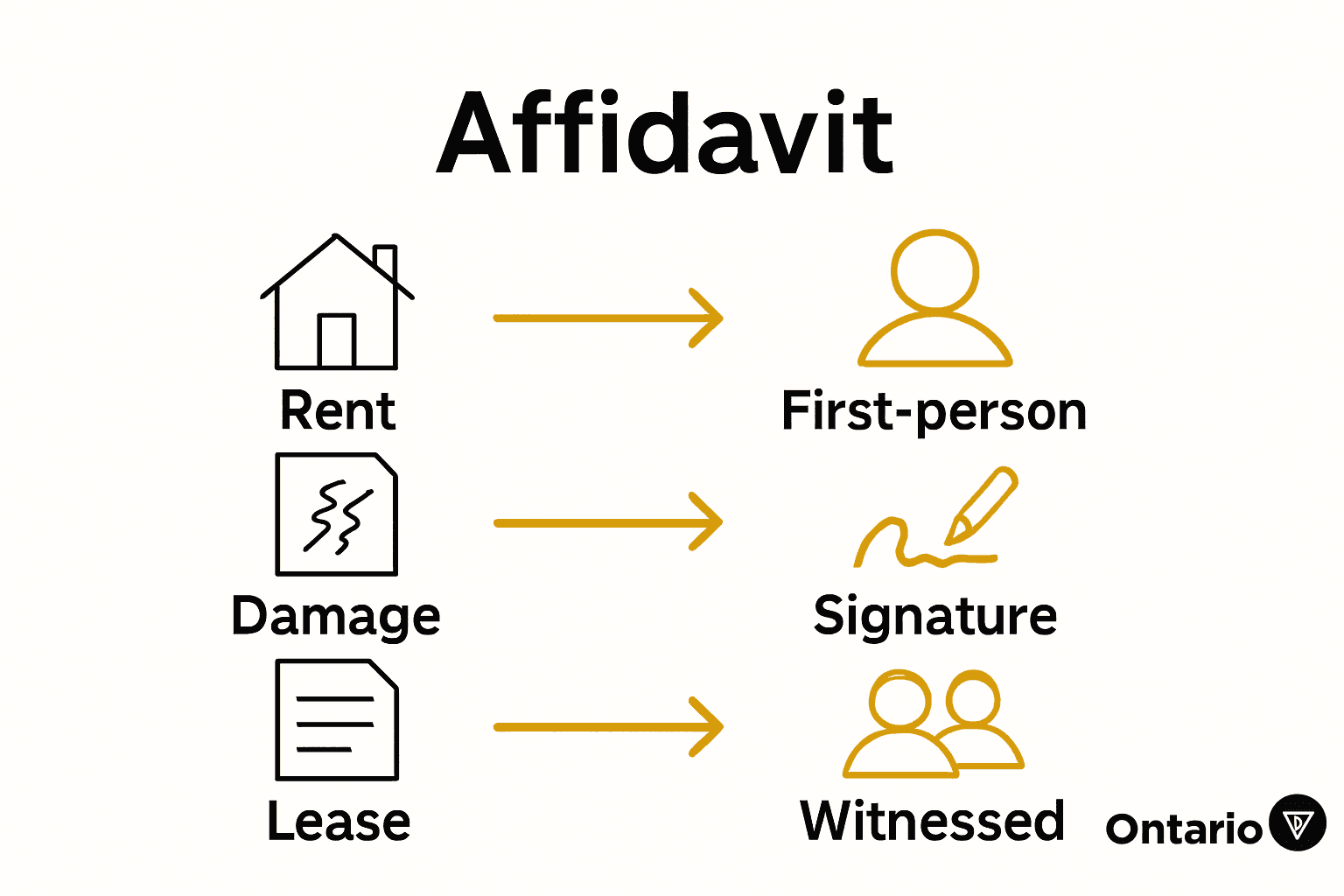
- First-Person Perspective: Must be written in the first person
- Personal Knowledge: Statements must be based on direct personal experience
- Signature Requirements: Deponent’s full name and signature are mandatory
- Witnessed Verification: Must be signed in the presence of an authorized official
The sworn process is equally important. Ontario Guidelines mandate that affidavits must be sworn or affirmed before an authorized individual such as a commissioner for taking affidavits or a notary public. The deponent must physically sign the document in the presence of this authorized official, who then certifies the authenticity of the sworn statement.
For landlords and tenants preparing complex legal documentation, understanding these nuanced requirements is crucial. If you’re looking to create a legally sound affidavit, our guide on creating an affidavit in Ontario provides comprehensive step-by-step instructions to ensure your document meets all provincial legal standards.
How to Prepare and Notarize Affidavits Online
Online affidavit preparation and notarization has revolutionized legal documentation processes, making it easier than ever to complete these critical documents from the comfort of your home or office. Centre Info Juridique confirms that remote commissioning of affidavits has been permitted since 2020, allowing individuals to sign documents via video conferencing with a commissioner for taking affidavits.
To successfully prepare and notarize an affidavit online, follow these essential steps:
- Draft Your Document: Write a clear, factual statement in first person
- Gather Supporting Documentation: Collect relevant evidence and records
- Verify Identity: Prepare valid government-issued photo identification
- Schedule Online Commissioning: Book a video conference with a notary
- Complete Video Verification: Swear or affirm the document’s contents
Technical requirements for online notarization are specific. You’ll need a stable internet connection, a device with a camera, and clear audio. The commissioner must be able to verify your identity and observe you signing the document in real-time. This process ensures the same legal validity as an in-person commissioning, maintaining the document’s integrity and legal standing.

For landlords and tenants seeking a seamless online notarization experience, our guide on getting an affidavit online in Ontario provides comprehensive step-by-step instructions to navigate this modern legal process effectively.
Rights, Responsibilities, and Common Pitfalls
Navigating the legal landscape of landlord tenant affidavits requires a thorough understanding of both rights and potential risks. Ontario Courts emphasize the serious legal implications, warning that swearing an affidavit is a legal declaration where providing false information can result in criminal charges of perjury.
Key rights and responsibilities for both landlords and tenants include:
- Truthful Reporting: Obligation to provide only factual, verifiable information
- Personal Knowledge Requirement: Statements must be based on direct experience
- Evidence Substantiation: Ability to support claims with relevant documentation
- Protection from False Accusations: Right to challenge inaccurate statements
- Confidentiality: Ensuring sensitive information is appropriately handled
Runco Law highlights that affidavits must contain admissible evidence and should strictly avoid hearsay. Common pitfalls include including speculative statements, relying on second-hand information, or emotional language that undermines the document’s credibility. Successful affidavits demand precision, objectivity, and a laser focus on provable facts.
To ensure you’re navigating these legal waters effectively, our tutorial on swearing an affidavit provides comprehensive guidance on avoiding potential legal complications and maintaining the integrity of your documentation.
Take Control of Your Landlord Tenant Affidavit Needs with Expert Online Notary Services
Navigating landlord tenant affidavits can feel overwhelming, especially when you need to meet strict legal requirements and avoid common pitfalls. This guide highlights the importance of precise documentation, truthful reporting, and proper notarization to protect your rights and interests. Whether you are a landlord needing to prove non-payment of rent or a tenant aiming to challenge false claims, having access to reliable and convenient affidavit services is essential.

Don’t let complex affidavit rules hold you back. Explore our Uncategorized – The Online Notary page to discover how our streamlined, professional online notary solutions can help you prepare and notarize affidavits securely from anywhere in Ontario. Take immediate action to avoid costly delays and legal risks by visiting The Online Notary and ensure your affidavit is legally sound and ready when you need it most.
Frequently Asked Questions
What is a landlord tenant affidavit?
A landlord tenant affidavit is a sworn legal document that provides a formal statement of facts related to a rental property dispute or situation, often used in legal proceedings to document key information such as lease violations or property damage.
What types of affidavits are commonly used in landlord-tenant disputes?
Common types of affidavits include those for non-payment of rent, property damage, lease violations, occupancy status, and security deposit disputes, each serving specific purposes for documenting various issues.
What are the legal requirements to create a valid affidavit in Ontario?
To create a valid affidavit in Ontario, it must be written in the first person, include statements based on personal knowledge, contain the deponent’s full name and signature, and be signed in the presence of an authorized official who verifies the affidavit.
How can I prepare and notarize an affidavit online?
To prepare and notarize an affidavit online, draft your document, gather supporting evidence, verify your identity with valid ID, and schedule a video conference with a notary who can witness your signing of the document during the meeting.