
Every year, more than one million people apply for visitor visas to Canada, but only those with clear and credible documentation stand a real chance. A well-written Canada invitation letter can make a significant difference in how immigration officials view your application. Knowing exactly what this letter includes and why it matters gives you a stronger foundation for a successful visa process.
Table of Contents
- What Is A Canada Invitation Letter
- Types Of Invitation Letters Explained
- Required Information For Invitation Letters
- Notarization And Supporting Documents
- Risks, Limitations And Best Practices
Key Takeaways
| Point | Details |
|---|---|
| Invitation Letter Purpose | A Canada invitation letter serves as a formal request for a foreign visitor’s entry and is a supporting document for visa applications, though it does not guarantee approval. |
| Types of Invitation Letters | The main types include personal visits, business visits, and super visa applications, each requiring specific information about the host and visitor. |
| Essential Information | Comprehensive details about both the inviter and invitee are necessary, including identity, relationship, purpose of visit, and financial capability. |
| Best Practices | Ensure accurate information, establish the visit’s legitimacy, include strong supporting documents, and demonstrate the invitee’s intent to return home. |
What Is A Canada Invitation Letter
A Canada invitation letter is an official document that serves as a formal request from a Canadian citizen or permanent resident for a foreign visitor to come to Canada. According to Canada.ca, this letter provides critical personal details about both the person extending the invitation and the potential visitor, outlining the purpose and expected duration of their stay.
In essence, an invitation letter acts as a supporting document for visa applications, though it does not guarantee automatic approval. The letter typically includes key information such as:
- Personal details of the host in Canada
- Personal details of the invited guest
- Purpose of the visit
- Planned duration of stay

- Confirmation of financial and accommodation support
While most commonly used for personal visits, invitation letters are also crucial in business contexts. Canada.ca notes that in business scenarios, these letters confirm the nature of professional relationships and provide context for a visitor’s trip to Canada.
When drafting an invitation letter, precision and clarity are paramount. The document must provide comprehensive information that helps immigration officials understand the legitimacy and intent of the proposed visit. For those looking to create a comprehensive and legally sound invitation letter, drafting a detailed guide on Ontario invitation letters can provide additional insights into creating an effective and persuasive document.
Types Of Invitation Letters Explained
Canada recognizes several distinct types of invitation letters, each serving a unique purpose for visitors entering the country. According to Canada.ca, these invitation letters can be categorized into three primary types: personal visits, business visits, and super visa applications.
Personal Visit Invitation Letters
Personal visit invitation letters are designed for friends and family members wanting to visit Canada. These letters must detail the specific relationship between the host and visitor, including:
- Expected duration of stay
- Accommodation arrangements
- Financial support commitment
- Purpose of the visit
Business Visit Invitation Letters
Canada.ca highlights that business invitation letters are specialized documents issued by Canadian companies to foreign business professionals. These letters must comprehensively outline:
- Specific business relationship details
- Purpose of the professional visit
- Planned meeting or conference specifics
- Confirmation of the hosting company’s support
Super Visa Invitation Letters
Super visa invitation letters are unique documents specifically for parents and grandparents of Canadian citizens or permanent residents.
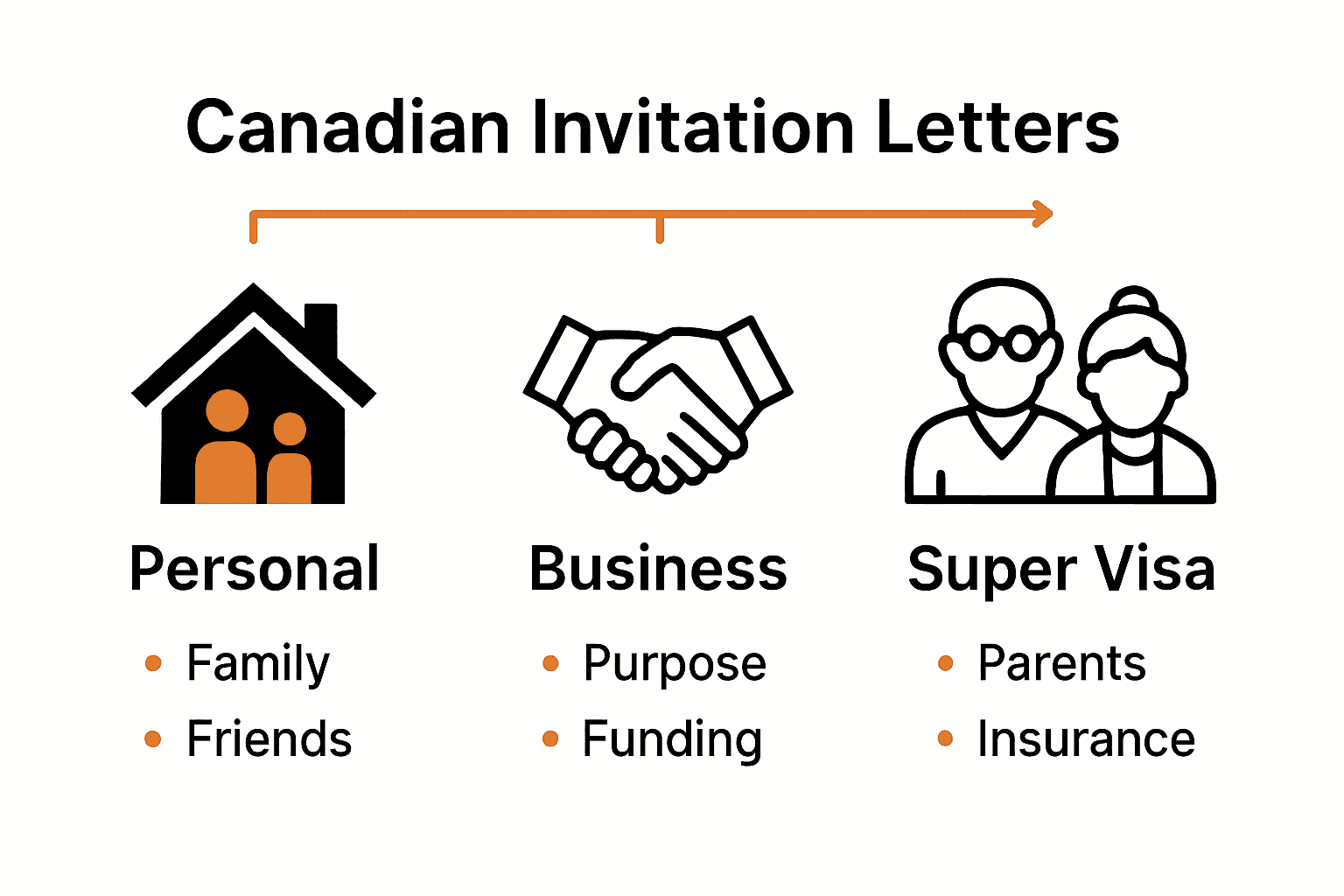 These letters require additional detailed information, including:
- Proof of relationship
- Host’s financial capability to support the visitor
- Commitment to providing health insurance
- Detailed family size and living arrangements
For those seeking to draft a comprehensive and legally sound invitation letter, drafting a detailed guide on Ontario invitation letters can provide invaluable insights into creating an effective document that meets all necessary requirements.
Required Information For Invitation Letters
Crafting a comprehensive invitation letter requires meticulous attention to detail. According to Canada.ca, these documents must include extensive information about both the invitee and the inviter to ensure a thorough and credible application.
Information About the Invitee
The invitation letter must provide exhaustive details about the person being invited to Canada, including:
- Full legal name
- Date of birth
- Current residential address
- Passport or travel document details
- Relationship to the inviter
- Purpose of the visit
- Planned duration of stay
- Specific travel and accommodation plans
Information About the Inviter
Equally crucial are the details of the Canadian host. Canada.ca specifies that the invitation letter must include:
- Full legal name
- Date of birth
- Canadian residential address
- Contact phone number
- Citizenship or permanent resident status
- Proof of ability to support the visitor
- Employment or financial information
Additional Verification Requirements
For business-related invitations, Canada.ca notes that some visa offices may require additional verification, such as notarization. This extra step helps validate the authenticity of the invitation and provides immigration officials with confidence in the visitor’s intentions.
To ensure your invitation letter meets all necessary requirements, drafting a detailed guide on Ontario invitation letters can help you navigate the complex process of creating a comprehensive and legally sound document.
Notarization And Supporting Documents
Navigation of notarization requirements for Canadian invitation letters can be complex and varies depending on the specific visa office processing the application. According to Canada.ca, some Canadian visa offices may require the invitation letter to be officially notarized by a notary public, making it crucial to verify specific documentation requirements beforehand.
Key Supporting Documents
The documentation needed to support an invitation letter typically includes:
- Proof of Canadian citizenship or permanent resident status
- Financial support evidence
- Detailed contact information
- Passport or identification copies
- Proof of relationship (for personal invitations)
- Employment or business verification documents
Notarization Process
Canada.ca emphasizes that notarization requirements can differ significantly between business and personal invitation letters. Business invitations may require additional documentation proving the professional relationship and purpose of the visit.
Verification Recommendations
To ensure a smooth application process, it’s essential to:
- Contact the specific visa office processing the application
- Confirm exact notarization and supporting document requirements
- Prepare all documents well in advance of the application
For those seeking detailed guidance on navigating the intricate notarization process, understanding the importance of notarization in Ontario can provide valuable insights into meeting legal documentation standards.
Risks, Limitations And Best Practices
Crafting an invitation letter for Canadian visa applications requires careful attention to detail and a comprehensive understanding of potential risks and limitations. According to Canada.ca, while an invitation letter can strengthen a visa application, it does not guarantee automatic approval. Visa officers conduct a thorough assessment of the applicant’s overall eligibility.
Key Risks to Avoid
Potential pitfalls in the invitation letter process include:
- Providing inaccurate or incomplete information
- Misrepresenting the purpose of the visit
- Failing to demonstrate strong ties to the home country
- Insufficient financial documentation
- Incomplete or inconsistent supporting documents
Limitations of Invitation Letters
Canada.ca emphasizes that invitation letters have clear limitations. The document serves as supporting evidence but does not override the visa officer’s comprehensive evaluation of the applicant’s eligibility. This means that even a perfectly crafted invitation letter cannot compensate for other weak points in a visa application.
Best Practices for Success
To maximize the effectiveness of an invitation letter, consider these critical strategies:
- Ensure 100% accuracy in all provided information
- Be transparent about the visit’s purpose
- Provide comprehensive and verifiable supporting documents
- Clearly demonstrate the invitee’s intent to return to their home country
- Include detailed contact and financial support information
For individuals seeking to navigate the complex landscape of invitation letters, understanding the importance of notarization in Ontario can provide additional guidance on meeting legal and documentation standards.
Simplify Your Canada Invitation Letter Process Today
Navigating the complex requirements of Canada invitation letters can be overwhelming, especially with the need for detailed information, notarization, and precise documentation. You might worry about missing crucial details or facing delays that could impact your visitor’s visa approval. Don’t let these challenges hold you back. Whether you are preparing a personal, business, or super visa invitation letter, having trusted online notary services can make all the difference.

Explore our trusted Uncategorized – The Online Notary services designed to help you get your invitation letters properly notarized and supported by all necessary affidavits and declarations. Act now to ensure your documents meet all legal standards and boost your visitor’s chances of approval. Visit The Online Notary and secure your peace of mind today.
Frequently Asked Questions
What is a Canada invitation letter?
A Canada invitation letter is a formal document from a Canadian citizen or permanent resident requesting a foreign visitor to come to Canada. It provides essential information about both the host and the visitor, outlining the purpose and duration of the stay.
What types of invitation letters are there for visiting Canada?
There are three primary types of invitation letters: personal visit invitation letters, business visit invitation letters, and super visa invitation letters. Each type serves a specific purpose and requires different details and information.
What essential information should be included in an invitation letter?
An invitation letter must include comprehensive information about the invitee, such as their full name, date of birth, residential address, purpose of the visit, and planned duration of stay, as well as relevant details about the inviter, including their citizenship status, financial support capability, and contact information.
Do invitation letters require notarization?
Notarization requirements for invitation letters can vary depending on the visa office processing the application. Some offices may require the letter to be notarized to validate its authenticity, while others may not. It’s essential to check specific requirements beforehand.