
Signing documents sounds routine, but the reality is much more serious. Each year, millions of dollars are lost to document fraud that could have been prevented by proper notarization. Most people think a notary just watches you sign and stamps the page, yet notarization actually shields your biggest life moments from expensive legal disasters and hidden risks.
Table of Contents
- What Is Notarization And Its Role In Legal Matters?
- The Importance Of Notarization In Protecting Legal Documents
- How Notarization Ensures Trust And Authenticity
- Key Concepts Of Notarization: Types And Processes
- Real-World Applications Of Notarization In Ontario
Quick Summary
| Takeaway | Explanation |
|---|---|
| Notarization validates document authenticity | It ensures signatures are genuine, creating legally recognized documents critical for legal processes. |
| Identity verification is fundamental | Notaries confirm signers’ identities and willingness, reducing fraud risks significantly. |
| Notarized documents hold greater legal weight | They provide substantial evidentiary value in courts, standing firm against potential disputes. |
| Essential for personal and business transactions | Notarization is vital for legal documents like powers of attorney, real estate, and international contracts. |
| Prevents document fraud effectively | The structured verification process deters unauthorized alterations and ensures genuine agreement between parties. |
What is Notarization and Its Role in Legal Matters?
Notarization represents a critical legal authentication process that validates the authenticity and integrity of important documents. In Ontario, this official procedure ensures that signatures are genuine, voluntarily executed, and legally recognized. Official legal verification plays a fundamental role in preventing fraud and establishing document credibility.
The Purpose of Notarization
The primary objective of notarization extends beyond mere signature witnessing. It provides a formal mechanism to:
- Confirm the identity of individuals signing documents
- Verify that signatories are acting of their own free will
- Create an official record of document execution
- Deter potential fraudulent activities
- Establish a reliable chain of legal accountability
Notaries public serve as impartial witnesses who validate critical legal interactions. When a document receives notarial certification, it gains enhanced legal standing and evidentiary weight in various judicial proceedings.
Legal Implications and Document Authentication
Legal documents requiring notarization often involve significant personal and financial transactions. Understanding notary requirements becomes crucial for individuals navigating complex legal landscapes. Real estate transfers, affidavits, power of attorney documents, and international business contracts frequently demand professional notarial authentication.
The notarization process involves a structured verification where the notary public confirms the identities of involved parties, ensures their comprehension of document contents, and witnesses their voluntary signatures. This meticulous approach creates a robust legal safeguard, transforming an ordinary document into a legally recognized instrument with substantial credibility in courts and official registries.
The Importance of Notarization in Protecting Legal Documents
Legal documents represent pivotal moments in personal and professional life, making their protection and authenticity paramount. Notarization serves as a critical shield against potential legal vulnerabilities, ensuring documents maintain their integrity and legal standing. Official legal authentication transforms ordinary paperwork into legally robust instruments.
Preventing Document Fraud and Misrepresentation
Document fraud poses significant risks across various sectors. Notarization provides multiple layers of protection by establishing clear verification mechanisms:
- Verifying the true identity of document signatories
- Confirming signatories understand document contents
- Creating an official record of document execution
- Establishing a traceable chain of legal accountability
- Deterring potential fraudulent manipulations
By requiring physical presence and official identification, notaries significantly reduce the probability of unauthorized document alterations or impersonation attempts.
Legal Credibility and Evidentiary Value
Notarized documents carry substantially greater legal weight compared to unverified paperwork. Essential examples of notarized documents demonstrate their widespread importance across multiple legal domains. Real estate transactions, affidavits, power of attorney documents, and international contracts rely on notarial certification to establish their legitimacy.
The comprehensive verification process ensures that each document represents a genuine, voluntary agreement between informed parties. This meticulous approach transforms a simple signature into a legally recognized instrument with robust evidentiary value, capable of withstanding potential legal challenges and providing clear documentation of intent and agreement.
How Notarization Ensures Trust and Authenticity
Notarization operates as a sophisticated legal mechanism designed to establish unassailable credibility and genuine document integrity. In the complex landscape of legal interactions, notaries serve as critical guardians who validate and authenticate critical transactions. Official legal verification standards underscore the rigorous processes that transform ordinary documents into legally recognized instruments.
Identity Verification and Personal Confirmation
The foundation of trust in notarization rests on meticulous identity verification protocols. Notaries implement comprehensive screening mechanisms to ensure absolute authenticity:
- Demanding government issued photo identification
- Cross referencing multiple identification documents
- Confirming the physical presence of signatories
- Assessing mental competence and voluntary participation
- Documenting precise details of identification verification
These stringent steps create an unbreakable chain of personal accountability, dramatically reducing opportunities for fraudulent representation or unauthorized document execution.
To help clarify the core functions and safeguards provided by notarization, the table below summarizes the key verification steps and their role in the process.
| Verification Step | Purpose |
|---|---|
| Confirming identity | Ensures the signer is who they claim to be |
| Verifying voluntary action | Confirms the signer is acting of their own free will |
| Assessing mental competence | Ensures the signer understands the document |
| Witnessing signatures | Provides an official record of document execution |
| Documenting identification | Creates traceable evidence to deter fraud |
| Creating legal accountability | Establishes responsibility and reduces risk of dispute |
Legal Integrity and Document Reliability
Understanding notarized statements reveals how professional authentication transforms potential legal vulnerabilities into robust, defensible documentation. Notarization transcends simple signature witnessing by creating an official record that carries significant legal weight. Businesses, government agencies, and judicial systems recognize notarized documents as reliable evidence of genuine intent and informed consent.
The comprehensive verification process systematically eliminates ambiguity, providing a clear, legally recognized pathway for documenting critical personal and professional agreements. By establishing a standardized protocol of trust, notarization ensures that every signed document represents a genuine, voluntary commitment between fully informed parties.
Key Concepts of Notarization: Types and Processes
Notarization encompasses a complex legal framework designed to validate document authenticity and personal intent across various contexts. Official legal verification establishes multiple mechanisms to ensure comprehensive legal protection and credibility.
Types of Notarial Services
Notaries in Ontario provide diverse services tailored to specific legal requirements. Each type of notarization serves a unique purpose in establishing document integrity:
- Signature witnessing for legal and financial documents
- Administering oaths and affirmations
- Certifying true copies of original documents
- Preparing and authenticating affidavits
- Handling statutory declarations
These specialized services enable individuals and organizations to create legally recognized documentation that withstands potential scrutiny in administrative and judicial contexts.
The following table organizes common types of notarial services in Ontario and explains their specific role in establishing document integrity.
| Notarial Service | Description |
|---|---|
| Signature witnessing | Observing and confirming genuine signatures on documents |
| Oaths and affirmations | Administering sworn statements for legal proceedings |
| Certifying true document copies | Confirming photocopies match the original documents |
| Preparing/Authenticating affidavits | Drafting or verifying affidavits used in legal matters |
| Handling statutory declarations | Certifying personal declarations for official or legal uses |
Procedural Verification and Authentication
Understanding the differences between legalization and notarization reveals the intricate processes involved in document authentication. The notarial procedure involves a systematic approach that goes beyond simple signature verification.
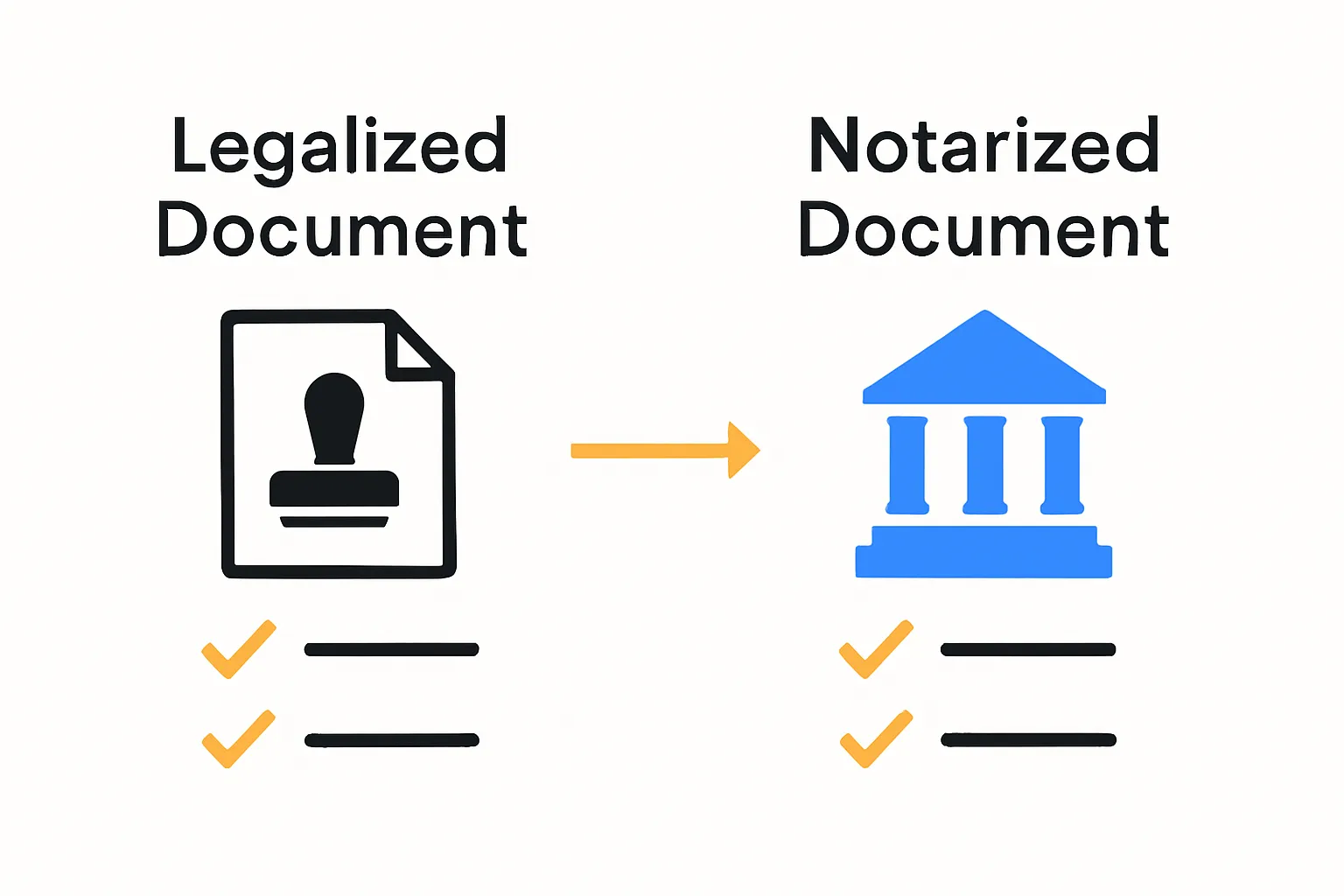 Notaries meticulously confirm the identity of signatories, assess their mental competence, and ensure voluntary participation.
The comprehensive authentication process transforms ordinary documents into legally robust instruments. By establishing a standardized protocol of verification, notarization provides a critical layer of legal protection that validates the genuine intent and informed consent of all parties involved in a transaction.
Real-World Applications of Notarization in Ontario
Notarization extends far beyond abstract legal concepts, playing a critical role in numerous practical scenarios across personal, professional, and governmental domains. Official legal verification demonstrates its practical significance through diverse real-world applications that protect individual and institutional interests.
Personal and Family Documentation
Individuals rely on notarization for critical life events and documentation that require absolute legal authenticity:
- Consent letters for minors travelling internationally
- Power of attorney documents
- Guardianship agreements
- Affidavits for name changes
- Statutory declarations for personal circumstances
These notarized documents provide legal protection and recognition across various administrative and personal contexts, ensuring individuals can confidently manage complex legal situations.
Business and Professional Transactions
Exploring who can notarize documents in Ontario reveals the extensive legal requirements in professional settings. Business transactions frequently demand notarized documentation to establish credibility and legal compliance. Real estate transfers, contract agreements, corporate resolutions, and international business documents all require precise notarial authentication.
Notarization serves as a critical mechanism for verifying the legitimacy of business interactions, protecting all parties involved by creating an official, legally recognized record of agreement and intent. This process ensures transparency, reduces potential disputes, and provides a reliable framework for complex professional negotiations.

Make Your Legal Documents Count—Choose Trusted Online Notarization Today
When it comes to protecting your most important documents, uncertainty is not an option. As explained in “Understanding the Importance of Notarization in Ontario,” notarization gives your affidavits, declarations, and contracts the credibility and assurance you need to avoid legal headaches. If you want peace of mind that your documents meet strict legal standards in Ontario, you need a service that makes this simple and secure every step of the way. Explore more about our approach in Uncategorized – The Online Notary

Do not let document authenticity or last-minute deadlines put your agreements at risk. Take action now and safeguard your rights. Start your convenient and legally recognized online notarization with The Online Notary today. Your legal documents deserve real authority—get started now for reliable results you can trust.
Frequently Asked Questions
What is notarization and why is it important?
Notarization is a legal process that authenticates the signatures on documents, ensuring they are genuine and executed voluntarily. It prevents fraud, establishes document credibility, and provides a formal record of the transaction.
What types of documents typically require notarization?
Documents such as real estate transactions, affidavits, power of attorney, and international business contracts commonly require notarization to validate authenticity and legal standing.
How does the notarization process work?
During the notarization process, a notary public verifies the identity of the signatories, confirms their understanding of the document, and witnesses their signatures. This creates a legally recognized record that prevents fraud and misrepresentation.
What are the benefits of having documents notarized?
Having documents notarized enhances their legal standing and evidentiary value, making them more credible in court or administrative matters. It also protects against alterations and establishes a clear chain of accountability.