
You hand over a photocopy of your passport at the immigration office, confident it will be accepted. Days later, you receive a rejection notice. The reason? Your copy was not notarized. Many people wrongly assume any copy of a document is legally acceptable, but notarized copies are essential for legal validity and smooth processing in Ontario. This guide will explain what notarized copies are, why they matter for individuals and businesses, and how to get them correctly to avoid costly delays and rejections.
Table of Contents
- What Is A Notarized Copy And Why Is It Important?
- Types Of Documents And Notarization Requirements In Ontario
- Common Mistakes And Legal Pitfalls When Obtaining Notarized Copies
- How To Obtain Notarized Copies In Ontario: Step-By-Step Process
- Expert Ontario Notary Services To Simplify Your Notarization Needs
- FAQ
Key takeaways
| Point | Details |
|---|---|
| Legal validity | Notarized copies are legally accepted true copies verified by a notary public in Ontario |
| Document protection | They prevent original document loss while ensuring acceptance in legal and official processes |
| Specific requirements | Different documents and uses have distinct notarization rules under Ontario law |
| Common pitfalls | Improper notarization leads to delays, costs, and document rejection |
| Professional help | Expert notary services ensure compliance and reduce mistakes |
What is a notarized copy and why is it important?
A notarized copy is a true copy certified by a licensed notary public. The notary verifies your identity, witnesses your signature, and confirms the copy matches the original document exactly. This process gives the copy legal status as a substitute for the original, allowing you to keep your valuable documents safe while meeting official requirements.
Many people think any photocopy will work, but true certification is required for legal acceptance. Notarized documents are legally recognized substitutes for original documents in Ontario, provided the notarization adheres to specific legal requirements under the Ontario Evidence Act and Notaries Act. Without proper notarization, your documents may be rejected by courts, government agencies, or educational institutions.
The notary public plays a critical role in this process. The notarization process involves verifying identity and certifying that the copy is a true copy of the original. The notary examines the original document, compares it to the photocopy, then stamps and signs the copy with their official seal. This certification carries legal weight because notaries are licensed professionals bound by strict standards.
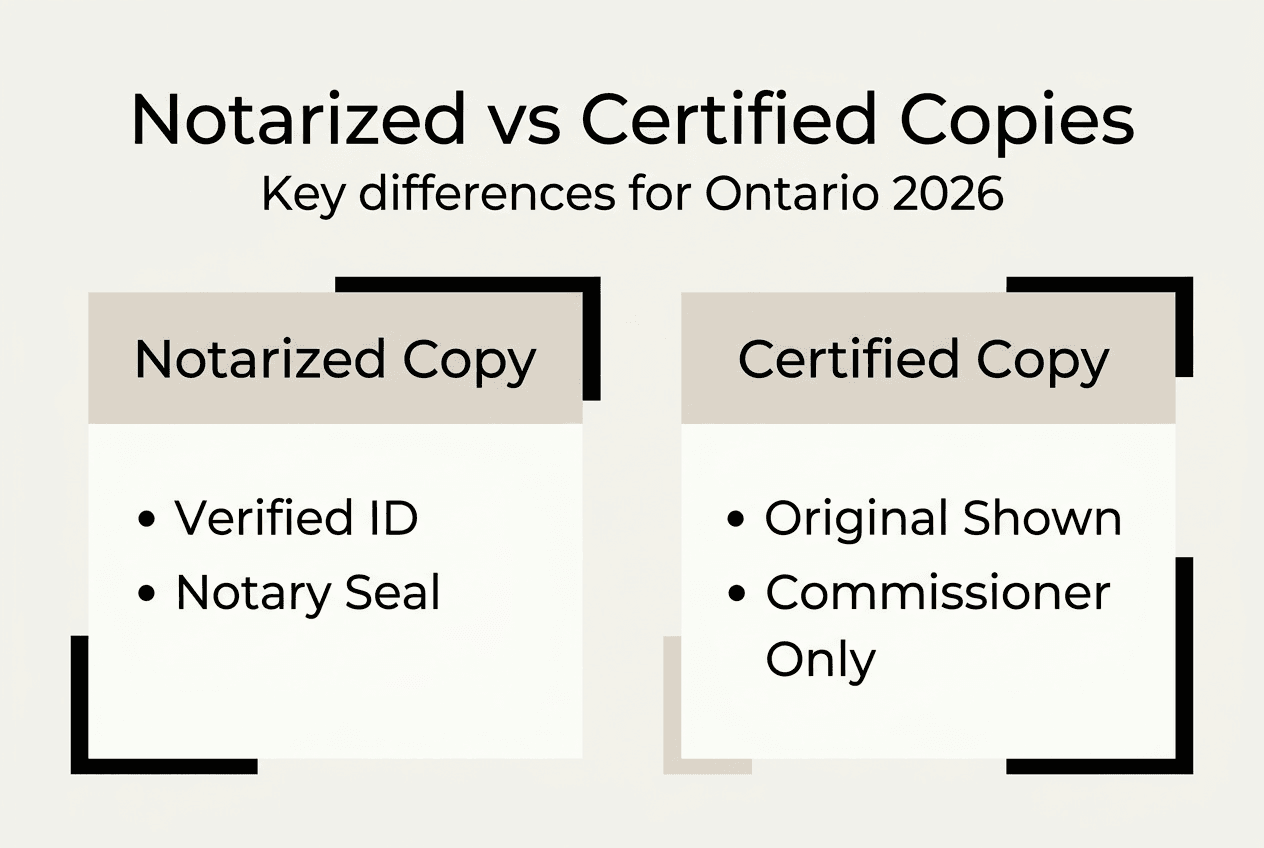
Understanding the difference between a certified copy vs notarized ontario document is crucial. While both involve certification, notarization provides stronger legal authentication because it includes identity verification and witness of signature. This matters when you submit documents for immigration applications, court proceedings, real estate transactions, or business registrations.
Pro Tip: Always bring your original document to the notary appointment. Notaries cannot certify copies without seeing and comparing the original first.
Protecting your original documents while enabling their official use is the primary benefit of notarization. You avoid the risk of losing irreplaceable documents like birth certificates, diplomas, or property deeds. Learning how to notarize documents ontario correctly saves time and prevents rejections that delay critical applications.
Types of documents and notarization requirements in Ontario
Different documents have distinct notarization or certification rules in Ontario. Common types requiring notarized copies include:
- Affidavits and statutory declarations for court proceedings
- Identity documents like passports, driver’s licenses, and birth certificates
- Educational certificates and transcripts for immigration or employment
- Marriage certificates and divorce decrees
- Property deeds and real estate documents
- Corporate documents and business agreements
Affidavits and statutory declarations require specific commissioning and notarization for Ontario court proceedings. These sworn statements must follow strict protocols to be valid. A commissioner of oaths or notary public must witness your signature and administer the oath or declaration. Without proper commissioning, courts will reject your affidavit, potentially derailing legal cases.
Immigration applications frequently demand notarized copies. Certified true copies are required for immigration and official applications in Ontario. Immigration, Refugees and Citizenship Canada often requests notarized identity documents, educational credentials, and employment records. Each document must meet specific standards, or your application faces delays or denial.
The general process for notarizing various document types follows these steps:
- Identify which documents need notarization based on your specific requirement
- Make clear, legible photocopies of your original documents
- Gather valid government-issued photo identification
- Schedule an appointment with a licensed notary public
- Present originals, copies, and ID to the notary for verification
- Receive your notarized copies with official stamps and signatures
Understanding understanding types of affidavits helps you prepare the right documents. Different affidavits serve different purposes, from name change affidavits to affidavits of support. Each type may have unique notarization requirements based on its intended use.
Pro Tip: Contact the receiving organization beforehand to confirm their exact notarization requirements. Some institutions accept certified copies from certain professionals, while others strictly require notary public certification.
For court-related documents, consult the statutory declaration court guide to ensure compliance. Courts have zero tolerance for improperly notarized documents, and mistakes can result in case dismissals or sanctions. Meeting specific requirements for each document type avoids submission delays and keeps your legal, immigration, or business processes moving forward smoothly.
Common mistakes and legal pitfalls when obtaining notarized copies
Submitting unbound multi-page documents or missing official seals ranks among the most frequent errors. Documents with multiple pages must be bound and stamped with an official seal to be considered complete and accepted. When you staple pages together without proper notary binding and sealing, receiving organizations often reject the entire submission.
Incorrect or incomplete notarization leads to document rejection or processing delays that cost you time and money. Common errors include:
- Missing notary stamps or signatures on multi-page documents
- Photocopies that are unclear, cut off, or missing portions of the original
- Notarization performed by someone not licensed in Ontario
- Failure to include all required pages or attachments
- Using outdated or expired identification during notarization
Translations present another major pitfall. Documents in languages other than English or French must be accurately translated by certified translators for acceptance. The translation itself then requires notarization to confirm it is a true translation of the original. Skipping this step or using uncertified translators results in automatic rejection by immigration authorities, courts, and government agencies.
Misunderstanding different notarial services and requirements causes invalid documents. Not every document needs full notarization. Some situations accept certification by commissioners of oaths, lawyers, or other designated professionals. However, notarization requirements vary and documents lacking proper notarization can be rejected, causing delays and extra costs. Choosing the wrong service wastes your money and forces you to start over.
“Meticulous preparation is critical when obtaining notarized copies. A single oversight can derail immigration applications, court cases, or business transactions, resulting in substantial financial and personal costs.”
Verify specific notarization rules based on your document and its intended purpose beforehand. Check the requirements for notarization for your situation. Different organizations have different standards, and what works for one application may fail for another. Immigration offices, courts, foreign governments, and educational institutions each have unique requirements.

Pro Tip: Keep a checklist of all required elements before your notary appointment. Verify you have originals, clear copies, proper ID, translations if needed, and knowledge of specific organizational requirements.
Review ontario notarized letter requirements 2026 if you need notarized correspondence. Letters require specific formatting, language, and notarial elements to be valid. Errors in notarized letters are especially problematic for invitation letters, consent letters for minors traveling, and authorization letters for legal representatives.
Errors can cause costly delays that derail time-sensitive applications. Immigration applications have strict deadlines, court filing dates cannot be extended, and business transactions often depend on quick document processing. Taking time to avoid these common mistakes protects your interests and keeps your plans on track.
How to obtain notarized copies in Ontario: step-by-step process
Getting notarized copies correctly requires following a clear process. Here are the exact steps:
- Prepare your original document and make a clear, complete photocopy on white paper
- Locate a licensed notary public in Ontario through professional directories or online services
- Schedule an appointment and confirm the notary’s fees and availability
- Gather valid government-issued photo identification such as a passport or driver’s license
- Bring the original document, photocopy, and ID to your appointment
- Present all materials to the notary for examination and verification
- The notary compares the copy to the original and verifies your identity
- The notary certifies the copy as a true copy with their official stamp and signature
- Collect your notarized copy and store it safely for official use
- Keep the original document in a secure location
The notarization process typically involves verifying government-issued photo ID and confirming the copy as a true representation. The notary examines security features on your ID, confirms your identity matches, then proceeds with certification. This identity verification is legally required and protects against fraud.
Choosing between in-person and online notarization depends on your needs and timeline. Here is a comparison:
| Factor | In-Person Notarization | Online Notarization |
|---|---|---|
| Convenience | Requires travel to notary office | Complete from home or office |
| Availability | Limited to business hours | Often available 24/7 including weekends |
| Speed | Same-day service possible | Immediate service often available |
| Technology needed | None | Computer, webcam, internet connection |
| Document types | All documents accepted | Most documents accepted, some exceptions |
| Cost | Varies by notary, typically lower | May include technology fees |
Not everyone can perform notarization in Ontario. Understanding can anyone notarize documents Ontario rules prevents mistakes. Only licensed notary publics, lawyers, and certain other designated professionals can legally notarize documents. Using an unlicensed person invalidates your notarization completely.
Pro Tip: Schedule notarization ahead of legal deadlines to avoid last-minute rushes. Notaries can be fully booked during peak periods, and technical issues with online services occasionally cause delays.
For comprehensive guidance, review how to notarize documents ontario resources. These guides walk you through preparation, appointment booking, and post-notarization steps. Understanding the full process reduces stress and ensures you get valid notarized copies on your first attempt.
Online notarization has grown significantly in 2026, offering flexibility for busy professionals and people in remote areas. The technology uses secure video conferencing, digital identity verification, and electronic seals. While not all documents qualify for online notarization, many routine certifications can be completed virtually, saving you travel time and expanding access to notary services.
Expert Ontario notary services to simplify your notarization needs
Navigating notarization requirements can feel overwhelming, especially when dealing with time-sensitive legal or immigration matters. Professional notary services reduce the risk of mistakes and rejections that derail your plans. Expert notaries understand Ontario’s legal frameworks and stay current with changing requirements across different organizations and jurisdictions.

24/7 online notary options enhance accessibility for busy individuals and businesses who cannot visit offices during regular hours. Whether you need an urgent affidavit notarized for court or certified copies for an immigration application with a tight deadline, round-the-clock availability ensures you meet critical timelines. Access trusted notary services Ontario that combine convenience with legal expertise.
Client education resources help you understand your specific notarization needs before appointments. Detailed guides explain requirements for different document types, saving you time and preventing costly errors. Review the notarize documents guide to prepare properly and bring the right materials to your appointment.
Convenient appointment scheduling and expert advice ensure compliance with all legal requirements. Professional notaries answer your questions, verify your documents meet standards, and provide guidance on next steps after notarization. For complex situations like court affidavits, explore affidavits explained Ontario resources that clarify different types and their specific notarization needs.
FAQ
What makes a copy notarized and not just certified?
A notarized copy is certified by a notary public after verifying your identity and witnessing your signature, giving it legal authenticity under Ontario law. A certified copy may be certified by other officials like commissioners of oaths or lawyers without full notarization, but notarization carries stronger legal weight in Ontario and is more widely accepted internationally. The key difference lies in the notary’s role as an impartial witness who verifies identity and confirms the copy matches the original. Understanding certified copy vs notarized ontario distinctions helps you choose the right service for your needs.
Do notarized copies expire or need renewal in Ontario?
Notarized copies generally do not expire under Ontario law, but acceptance can depend on how recent the notarization is for specific purposes. Some organizations require notarized documents to be within a certain timeframe, such as six months or one year, especially for immigration applications or financial transactions. The document’s content may also become outdated even if the notarization remains valid, requiring a new copy and fresh notarization. Always check with the receiving organization about their specific timeline requirements before submitting older notarized copies.
Can I notarize my own documents in Ontario?
No, you cannot notarize your own documents in Ontario because notarization requires an impartial licensed notary public who is not involved in the transaction. Notaries must verify your identity and witness your signature impartially to ensure legality and prevent fraud. Self-notarization would defeat the entire purpose of having an independent third party confirm document authenticity. Review notarize a document Ontario rules to understand who can legally perform notarization and why impartiality is essential.
Are notarized copies required for international use of documents?
Notarized copies are often necessary for international use but may require further legalization like apostilles or consular authentication depending on the destination country. Some documents require notarization plus additional authentication for acceptance abroad under international treaties. Requirements vary widely by destination country, so check specific rules with the foreign embassy or consulate before submitting documents. Countries that are part of the Hague Apostille Convention accept apostilles, while others require consular legalization through Global Affairs Canada.
How much does notarization cost in Ontario?
Notarization costs in Ontario vary by notary and document complexity, typically ranging from $20 to $100 per document or signature. Online notary services may charge additional technology fees but offer convenience and speed. Complex documents requiring multiple signatures or extensive verification cost more than simple copy certifications. Always confirm fees before your appointment to avoid surprises, and ask whether the notary charges per document, per signature, or per page.
What happens if my notarized copy is rejected?
If your notarized copy is rejected, contact the receiving organization immediately to understand the specific reason for rejection. Common causes include missing notary seals, unclear photocopies, or failure to meet specific formatting requirements. You will likely need to obtain a new notarized copy that addresses the deficiency, which means additional time and expense. Working with experienced notary services from the start minimizes rejection risk and ensures your documents meet all requirements on the first submission.