
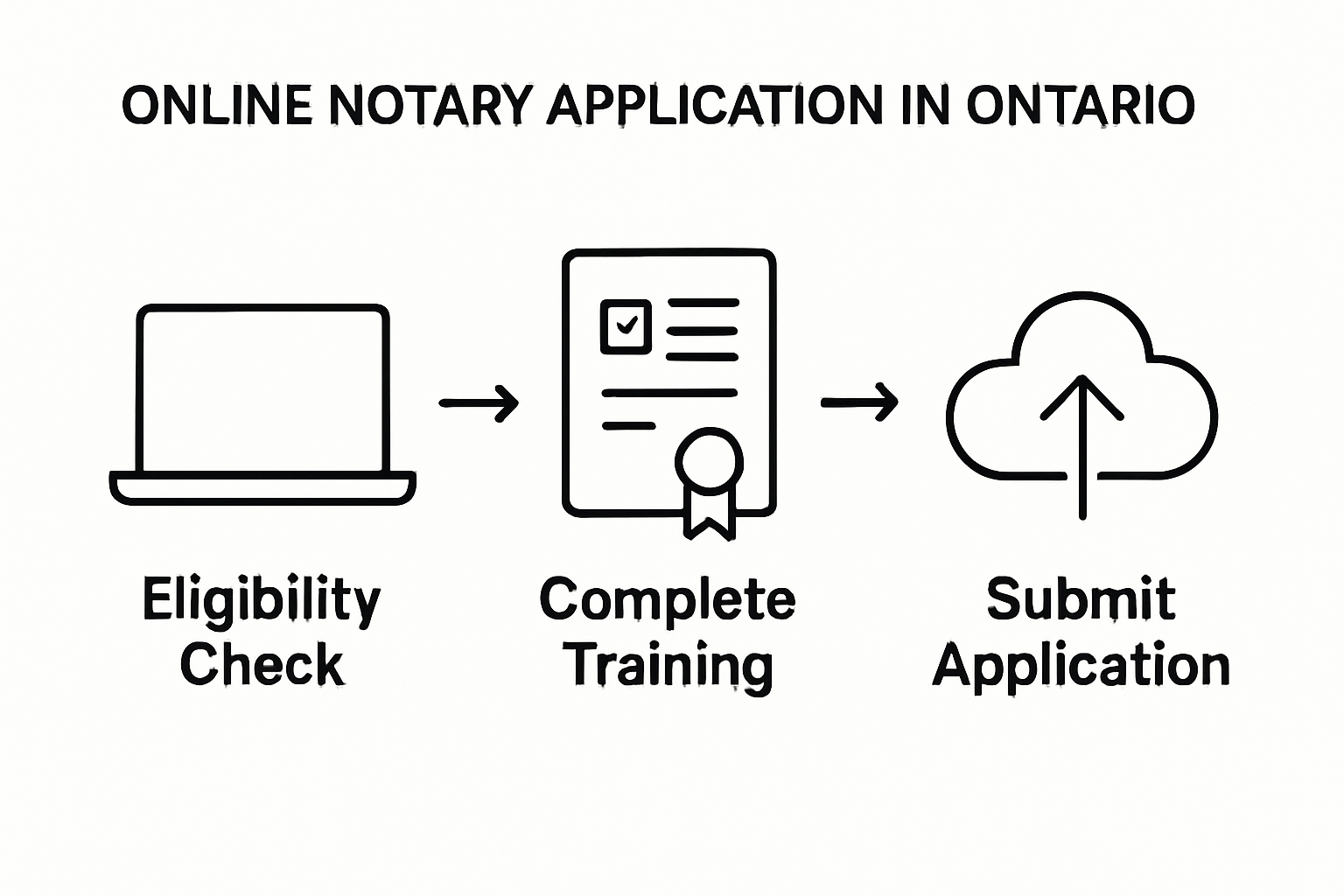
Thinking about becoming a notary in Ontario? You might imagine a long, tangled process with endless requirements, but there is one number that stands out and changes everything. Lawyers and paralegals in Ontario can skip the notary exam entirely and apply directly, while others need extra training and testing. This single rule flips the entire pathway on its head and makes the process much faster for some than most people realize.
Table of Contents
- Step 1: Research Your Eligibility Requirements
- Step 2: Complete An Approved Notary Training Course
- Step 3: Obtain Necessary Documents And Identification
- Step 4: Submit Your Application Online
- Step 5: Pass The Notary Exam (If Required)
- Step 6: Verify Your Notary Status And Start Practicing
Quick Summary
| Key Point | Explanation |
|---|---|
| 1. Confirm Eligibility Before Applying | Ensure you meet age and professional requirements to become a notary in Ontario. Only eligible professionals like lawyers and paralegals have a simpler path. |
| 2. Complete an Approved Training Course | Enroll in a recognized course covering legal procedures and responsibilities. This training is essential for understanding your duties as a notary. |
| 3. Gather Necessary Documents | Collect required identification and professional documents needed for the application. Accuracy and completeness are key to avoid delays. |
| 4. Submit Your Application Online | Organize and submit your notary application through the Ontario government portal. Ensure all details are accurate to expedite processing. |
| 5. Verify Your Notary Status | Once approved, confirm your notarial credentials and establish a professional practice setup, including insurance and document management. |
Step 1: Research Your Eligibility Requirements
Becoming a notary in Ontario requires careful preparation and understanding of specific eligibility criteria. This initial step is crucial for determining whether you can pursue a career or role as a notary public.
Understanding Basic Eligibility
To become a notary in Ontario, you must first meet several foundational requirements. You must be at least 18 years old and legally eligible to work in Canada. Your professional background plays a significant role in your eligibility. Typically, individuals who can become notaries include lawyers, paralegals, and certain professionals whose job responsibilities demand document authentication.
The Law Society of Ontario provides clear guidelines about professional qualifications. Not everyone can automatically become a notary public. Your current professional status determines your pathway. For instance, licensed lawyers and paralegals have a more straightforward route to becoming notaries compared to other professionals.
Professional Pathways and Requirements
Different professional paths offer unique opportunities for becoming a notary. If you are a licensed lawyer or paralegal registered with the Law Society of Ontario, you can typically apply directly for notary public status. For other professionals, the process might involve additional steps and potentially completing specific certification or training programs.
Key verification steps include confirming your professional credentials, ensuring you have no legal restrictions, and understanding the specific documentation requirements for your professional category. Some professionals might need to provide additional documentation proving their professional standing and need for notarial services.
Carefully review the official requirements and consider consulting with professional regulatory bodies to confirm your specific eligibility. Each professional pathway might have nuanced requirements that could impact your application process.
Step 2: Complete an Approved Notary Training Course
After confirming your eligibility, the next critical step in becoming a notary in Ontario is completing a comprehensive and approved training course. This educational phase ensures you understand the legal responsibilities, procedural requirements, and professional standards associated with notarial services.
Selecting the Right Training Program
Choosing an appropriate training course requires careful consideration. Look for programs specifically designed for Ontario notaries, which cover provincial legal requirements and document authentication protocols. Many professional organizations and educational institutions offer specialized courses that provide both theoretical knowledge and practical skills.
Online training programs have become increasingly popular, offering flexibility for working professionals. These digital courses typically include modules on legal documentation, signature verification, fraud prevention, and ethical standards. When selecting a program, verify that it is recognized by Ontario’s regulatory bodies and provides a certification or completion document that supports your notary public application.
Navigating Course Requirements and Certification
A comprehensive notary training course will equip you with essential skills and knowledge. Expect to invest approximately 20-30 hours in completing the program, which may include both self-paced online learning and potential live webinar components. Key areas of focus include understanding different types of documents, learning proper witnessing techniques, and comprehending the legal implications of notarization.
Upon successful completion, you will receive a certificate that demonstrates your professional training. Retain all documentation, as you will need to submit proof of completed training when applying for your notary public designation. Learn more about the specific requirements for notarization in Ontario to ensure you are fully prepared for the next steps in your professional journey.
Remember that continuous learning is crucial in this profession. Stay updated on any changes in provincial regulations and consider pursuing additional specialized training to enhance your credentials and professional capabilities.
Step 3: Obtain Necessary Documents and Identification
Gathering the appropriate documentation is a critical phase in your journey to becoming a notary public in Ontario. This step requires meticulous attention to detail and preparation of multiple official documents that will validate your professional identity and eligibility.
Preparing Your Professional Documentation
Identification is the cornerstone of your notary application. You will need several key documents to establish your legal identity and professional standing. Begin by collecting government-issued photo identification, such as a valid driver’s license or passport. These primary documents must be current and clearly display your full legal name and date of birth.
In addition to personal identification, you will require professional documentation that demonstrates your eligibility. This typically includes your completed notary training certificate, proof of employment or business registration, and a letter of authorization from your employer or organization. Employers must confirm that notarization is a required component of your professional responsibilities.
Navigating the Documentation Process
Carefully review each document to ensure accuracy and completeness. Make high-quality color copies of all original documents, as you will need to submit these with your application. Check out our comprehensive guide on notary identification requirements to ensure you have everything in order.
The Ontario Ministry of the Attorney General requires a specific set of documents for your application. Key items include:
- A completed application form
- Security check consent statement
- Letter of authorization from your employer
- Copies of professional credentials
- Government-issued photo identification
Prepare a comprehensive document portfolio that demonstrates your professional qualifications and legal eligibility. Double-check that all documents are current, clearly legible, and accurately represent your professional identity. Remember that incomplete or incorrect documentation can significantly delay your notary public application process.
Below is a checklist of the required documents and identification you need to gather before submitting your notary application in Ontario.
| Document/Item | Description/Requirement |
|---|---|
| Government-issued Photo ID | Valid driver’s license or passport displaying full legal name and birth date |
| Notary Training Certificate | Proof of completion from an approved training program |
| Proof of Employment/Business | Documentation verifying current employment status or business registration |
| Letter of Authorization (if needed) | Employer’s confirmation that notarization is required for your professional duties |
| Security Check Consent Statement | Signed consent for a background security check |
| Completed Application Form | Official notary public application form as required by Ontario |
Step 4: Submit Your Application Online
Submitting your notary public application online marks a pivotal moment in your professional journey. This digital submission process requires precision, attention to detail, and a systematic approach to ensure your application receives proper consideration.
Preparing for Digital Submission
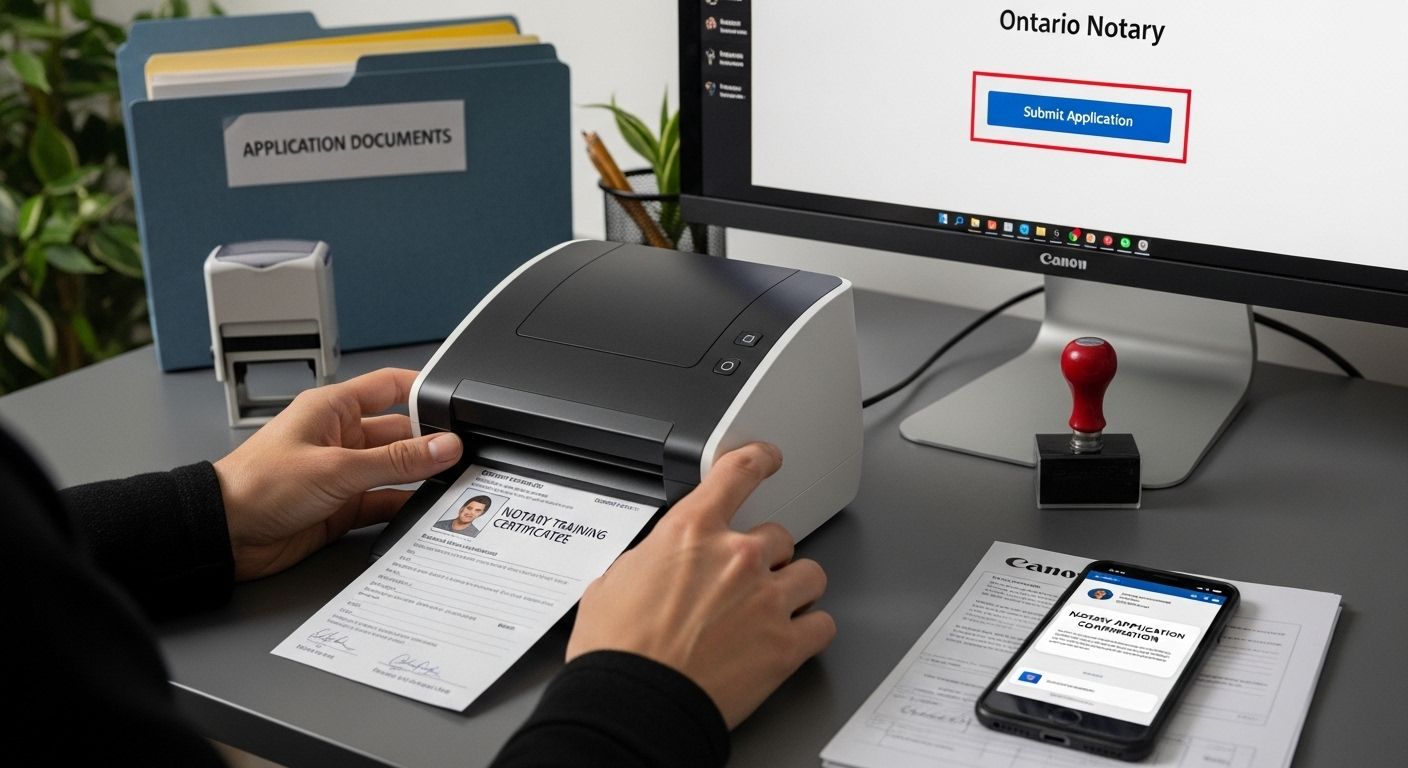
Before clicking submit, organize all your digital documents meticulously. Scan your identification, training certificates, and authorization letters at high resolution, ensuring each file is clear, legible, and saved in standard formats like PDF. Most government portals prefer documents that are less than 5MB per file, so compress larger files if necessary.
Navigate to the official Ontario government online submission portal for notary public applications. You will need a reliable internet connection and a computer with updated web browsers. Create a dedicated folder on your computer to store all application-related documents, making it easier to track and retrieve information during the submission process.
Completing the Online Application
When filling out the online application, be extraordinarily careful with data entry. Double-check every field for accuracy, ensuring your personal information matches the documents you are submitting exactly. Even minor discrepancies can cause significant delays in processing. Read our comprehensive guide on online notary services to understand the nuances of digital documentation.
The application will typically require you to:
- Upload scanned copies of all required identification documents
- Enter personal and professional contact information
- Provide details about your notary training and certification
- Pay the required application fee online
- Consent to a background security check
After submission, carefully review the confirmation page and save or print any reference numbers or digital receipts. These will be crucial for tracking your application’s progress. Most online systems will send a confirmation email, so ensure the email address you provide is accurate and monitored regularly.
Expect a processing time of several weeks. During this period, be prepared to respond promptly to any additional requests for information from the licensing authority.
Step 5: Pass the Notary Exam (if required)
Navigating the notary public application process in Ontario involves understanding the potential examination requirements. While not all applicants will need to complete a formal exam, being prepared and informed is crucial to successfully advancing your notarial career.
Understanding Exam Requirements
Professional status significantly influences exam requirements. Licensed lawyers and paralegals registered with the Law Society of Ontario typically bypass additional testing, as their professional credentials already demonstrate comprehensive legal knowledge. However, professionals from other backgrounds might need to demonstrate their understanding of notarial practices through a specialized examination.
Preparing for a potential exam requires a strategic approach. Review your training course materials thoroughly, focusing on legal documentation standards, signature verification protocols, and ethical guidelines for notarial services. Learn more about document notarization requirements to strengthen your knowledge base and increase your chances of success.
Exam Preparation and Strategies
If an exam is required, develop a comprehensive study plan that covers key areas of notarial practice. Your preparation should include:
- Reviewing all documentation from your notary training course
- Practicing sample questions and scenarios
- Understanding provincial legal requirements for document authentication
- Familiarizing yourself with different types of documents and notarial certificates
Approach the exam with confidence and methodical preparation. Many testing centers offer practice materials or mock exams that can help you understand the format and types of questions you might encounter. Some professional organizations also provide study guides or preparatory workshops specifically designed for notary public candidates.
After completing the exam, carefully review your results and maintain all documentation. A passing score demonstrates your professional competence and brings you one step closer to becoming a certified notary public in Ontario. Remember that continuous learning and staying updated on legal requirements are essential aspects of maintaining your professional credentials.
Step 6: Verify Your Notary Status and Start Practicing
Reaching the final stage of your notary public journey requires careful verification and strategic preparation for professional practice. This critical step transforms your certification from a theoretical achievement into a practical professional capability.
Confirming Your Official Notary Credentials
Official recognition is the cornerstone of your notarial practice. Contact the Ontario Ministry of the Attorney General to confirm your official appointment status. Verify that all submitted documentation has been processed and your credentials are fully authorized. Keep multiple copies of your official notary public appointment document, as these will be essential for establishing your professional legitimacy.
Prepare a professional notary seal or stamp that meets Ontario’s legal requirements. This official mark will authenticate the documents you notarize and demonstrate your professional standing. Learn more about verifying your notary status in Ontario to ensure you understand all regulatory nuances.
Establishing Your Professional Practice
Developing a systematic approach to your notarial services is crucial. Create a dedicated workspace with secure storage for important documents, ensuring you can maintain confidentiality and professionalism. Invest in high-quality record-keeping systems and develop standardized processes for document verification and authentication.
Key initial steps for launching your notary practice include:
- Obtaining professional liability insurance
- Creating a comprehensive document tracking system
- Establishing clear fee structures for your services
- Developing a secure method for digital and physical document management
Consider joining professional notary associations that offer ongoing education, networking opportunities, and resources for staying current with legal requirements. Your initial months of practice will be crucial in building reputation and understanding the nuanced responsibilities of a notary public in Ontario.
Remember that continuing education and staying informed about legal changes are essential components of maintaining your professional credibility. Your commitment to excellence will distinguish you in the professional notarial community.
The following table offers an overview of the main steps to become a notary in Ontario, with estimated time to complete each and their key outcomes.
| Step | Estimated Time | Key Outcome |
|---|---|---|
| Confirm Eligibility | 1-2 days | Know if you meet initial requirements |
| Complete Approved Training | 1-2 weeks | Gain notary procedures and legal knowledge |
| Gather Necessary Documentation | 2-5 days | All required ID and supporting documents organized |
| Online Application Submission | 1 day | Application submitted via Ontario portal |
| Pass Notary Exam (if required) | 1-3 weeks | Demonstrate notarial knowledge |
| Verify Status & Begin Practice | 1-2 weeks | Official status received, able to offer notary services |
Ready to Put Your Notary Skills to Work Online in Ontario?
You have worked hard to meet eligibility requirements, completed your notary training, and prepared your documents. Now comes the challenge that many new notaries in Ontario face: finding a secure, convenient way to start offering services as soon as you are officially recognized. It can feel overwhelming trying to establish a trustworthy presence, manage client documentation, and keep up with the latest digital requirements for notarizing affidavits, statutory declarations, and other essential records.

Take the next step and make your notary practice accessible and effortless. The fastest way to get started is by using The Online Notary. Our platform lets you securely notarize affidavits, invitation letters, and more, directly online from anywhere in Ontario. If you want guidance or want to understand more about how to notarize documents in Ontario, we provide simple instructions and expert support. Ready to reach clients and start your notarial work with no hassle? Visit https://theonlinentoary.ca today and move your practice forward.
Frequently Asked Questions
What are the eligibility requirements to become a notary in Ontario?
To become a notary in Ontario, you must be at least 18 years old, legally eligible to work in Canada, and typically belong to a professional background such as a lawyer or paralegal. Specific documentation and professional credentials are also required.
Do I need to take a training course to become a notary in Ontario?
Yes, after confirming your eligibility, you must complete an approved notary training course that covers legal responsibilities, procedural requirements, and professional standards for notarial services in Ontario.
What documents do I need to submit with my notary application?
You will need to gather several documents, including government-issued photo identification, your completed notary training certificate, proof of employment or business registration, and a letter of authorization from your employer confirming the need for notarial services.
Is there an exam I need to pass to become a notary in Ontario?
Depending on your professional status, you may need to take an exam. Licensed lawyers and paralegals usually do not need to sit for an additional test, but other professionals may need to demonstrate their knowledge of notarial practices through a specialized examination.